A full roof replacement isn’t always the right answer. When to repair vs replace a roof depends on the extent of the damage, the roof’s age and material condition, and whether earlier repairs have held. Isolated damage on an otherwise sound roof often calls for repair; widespread deterioration, recurring leaks, or sagging may point to replacement.
It’s understandable to want a clear answer before committing to work on your home. The right choice can address current problems without overlooking signs that the roof needs more comprehensive attention.
This article explains how damage patterns, roofing materials, warranties, inspections, and maintenance factor into the decision. You’ll also find practical signs to watch for and a decision guide to help you understand which option may suit your roof.
Key Takeaways
- Match the scope of work to the damage: isolated problems may suit a repair, while widespread deterioration can point to replacement.
- Consider the roof’s age alongside its material, past repairs, and whether leaks keep returning.
- Look for warning signs such as curling or brittle shingles, sagging areas, and moisture beneath the roof surface.
- A professional inspection can help identify damage after a major storm and assess concerns you can’t safely see from the ground.
- Review the roof’s warranty and maintenance history as part of deciding which option offers the more suitable long-term solution.
Is it better to repair or replace a roof?
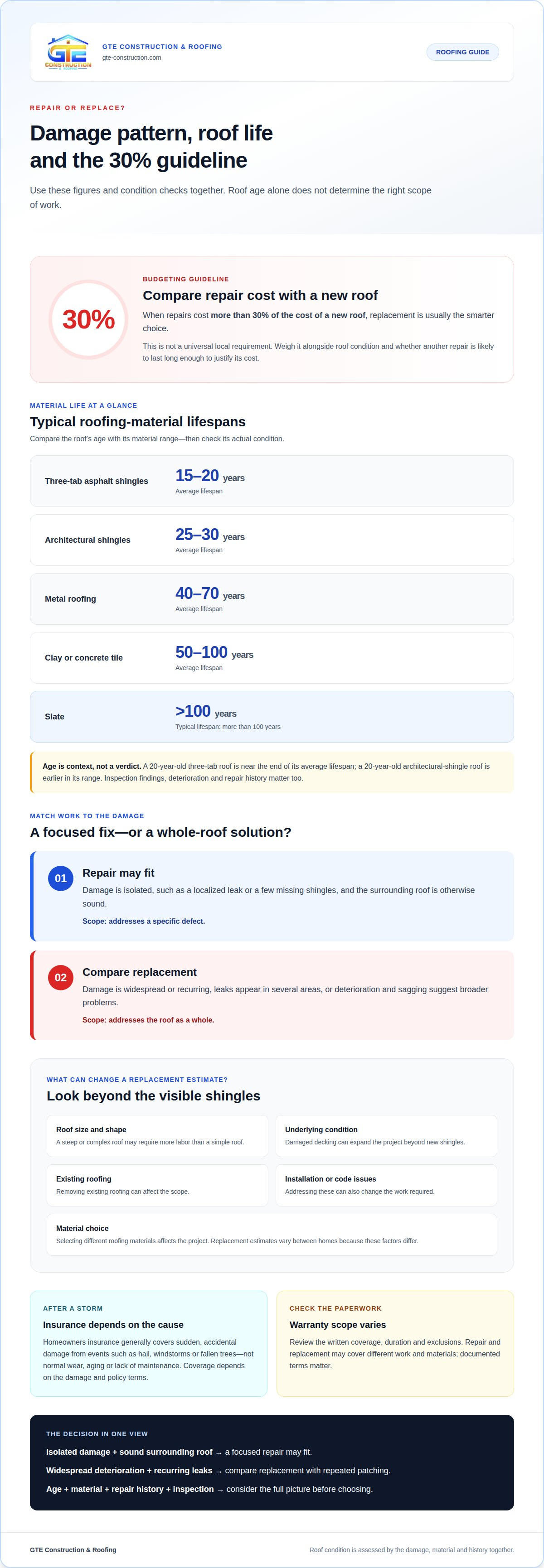
A localized leak or a few missing shingles can often be repaired if the surrounding roof remains sound. Widespread damage, recurring leaks, or deterioration in several areas can make replacement more practical. Deciding when to repair vs replace a roof depends on the extent of damage, material condition, repair history, and moisture beneath the surface.
Repair and Replacement Costs
A repair addresses a specific problem, such as missing shingles after a localized storm or a small leak around a vent. Replacement covers the roof more broadly, so compare a focused repair with the work needed across the whole roof. Repair may suit a roof within its expected lifespan when damage is isolated and earlier work held. Repeated leaks or old patches change the comparison because another repair may leave broader deterioration unresolved.
Factors Affecting Replacement Costs
Replacement costs depend on roof size, shape, material, and the condition beneath the visible surface. A steep or complex roof may require more labor than a simple roof, while damaged decking can expand the scope beyond new shingles. Removing existing roofing, addressing installation or code issues, and selecting different materials also affect the project. These variables explain why replacement estimates vary between homes without relying on a single typical price.
| Option | Damage pattern | Roof condition | Cost consideration |
|---|---|---|---|
| Repair | One localized area | Otherwise sound | Targets a specific defect |
| Replacement | Widespread or recurring | Near or past expected lifespan | Addresses the roof as a whole |
When weighing when to repair vs replace a roof, compare the damage pattern, repair history, and remaining material life.
The 30% rule is a budgeting guideline: replacement is usually the smarter choice when repairs cost more than 30% of the cost of a new roof. It isn’t a universal local requirement, so weigh it alongside roof condition and whether another repair is likely to last long enough to justify its cost.
Permit and building-code requirements depend on local jurisdiction and project scope. The rules that apply to a particular replacement are local, and roof condition alone doesn’t determine them.
Homeowners insurance generally covers sudden, accidental roof damage from events such as hail, windstorms, or fallen trees, but not normal wear, aging, or lack of maintenance. Whether a claim supports repair or replacement depends on the damage and policy terms; gradual deterioration differs from sudden storm damage.
For example, a few storm-damaged shingles on a healthy roof point toward focused repair, while leaks across multiple areas call for comparing replacement with repeated patching. Consider repair results, material condition, and the full extent of the damage together.
Roofing materials, installation, and warranties
Roofing material affects expected service life, while installation quality and existing condition shape whether repair remains practical. Compare the roof’s age with its material’s typical lifespan, then consider deterioration and warranty terms.
Repair generally preserves the existing roof, while replacement renews its roofing system. Replacement can create an opportunity to select different materials, but neither option alone guarantees improved energy efficiency or resale value; warranty coverage depends on the documented terms.
Lifespans of Roofing Materials
Typical lifespans vary considerably by material: three-tab asphalt shingles average 15-20 years, while architectural shingles average 25-30 years. Metal roofing averages 40-70 years, clay or concrete tile 50-100 years, and slate more than 100 years.
These ranges help put age in context, but they don’t establish the condition of an individual roof. For example, a 20-year-old three-tab roof is near the end of its average lifespan, while a 20-year-old architectural-shingle roof is earlier in its range.
Roof Age and Material Deterioration
Age is one factor, not a verdict on its own. An inspection should consider the material’s typical lifespan alongside visible condition, prior repairs, and signs of deterioration. Curling, cracking, brittleness, or depleted granules can suggest asphalt shingles are wearing, even before leaks appear inside.
Granule loss needs context: a new asphalt-shingle roof may shed some granules during its first year or two after installation. Widespread deterioration differs from a few isolated defects, so the location and extent of damage matter alongside the roof’s age.
Repair and Replacement Warranties
A repair addresses a specific area, while replacement involves new roofing materials across the roof. Warranty documents may therefore cover different work and materials; the scope and terms distinguish the protection. Review what the written warranty covers, its duration, and any exclusions before comparing the options.
Installation matters to warranty considerations because the work and materials are part of a roofing project. A new roof can be installed over an existing roof only when there is a single layer of asphalt shingles, no underlying damage or curling, and local rules allow it. That condition can affect the project approach and its documentation.
For energy efficiency, a repair preserves the existing roof, while replacement allows material selection and installation choices to change. Neither automatically improves resale value; roof condition and documented warranty terms provide useful context for buyers. Compare the roof’s age, material, observed deterioration, and warranty coverage to decide whether targeted repair or replacement better addresses its condition.
Roof inspections and maintenance
A professional inspection helps connect visible symptoms with the roof’s condition beneath the surface. Schedule one after a major storm, when visible damage appears, or when the roof is older and its condition is uncertain.
Wind or hail can loosen shingles, damage flashing, and create entry points that aren’t obvious from the ground. Indoors, ceiling stains can reveal moisture, but the stain’s location may not identify where water entered the roof. Water can travel along roof framing before becoming visible inside, so an inspection should assess both the suspected area and nearby roofing details.
Safety matters during an inspection. Avoid climbing onto a damaged roof because the surface can be hazardous, and foot traffic may worsen existing damage. A professional can examine the roof without asking homeowners to walk across unstable shingles or investigate a soft area themselves.
An inspection can include a structured review of:
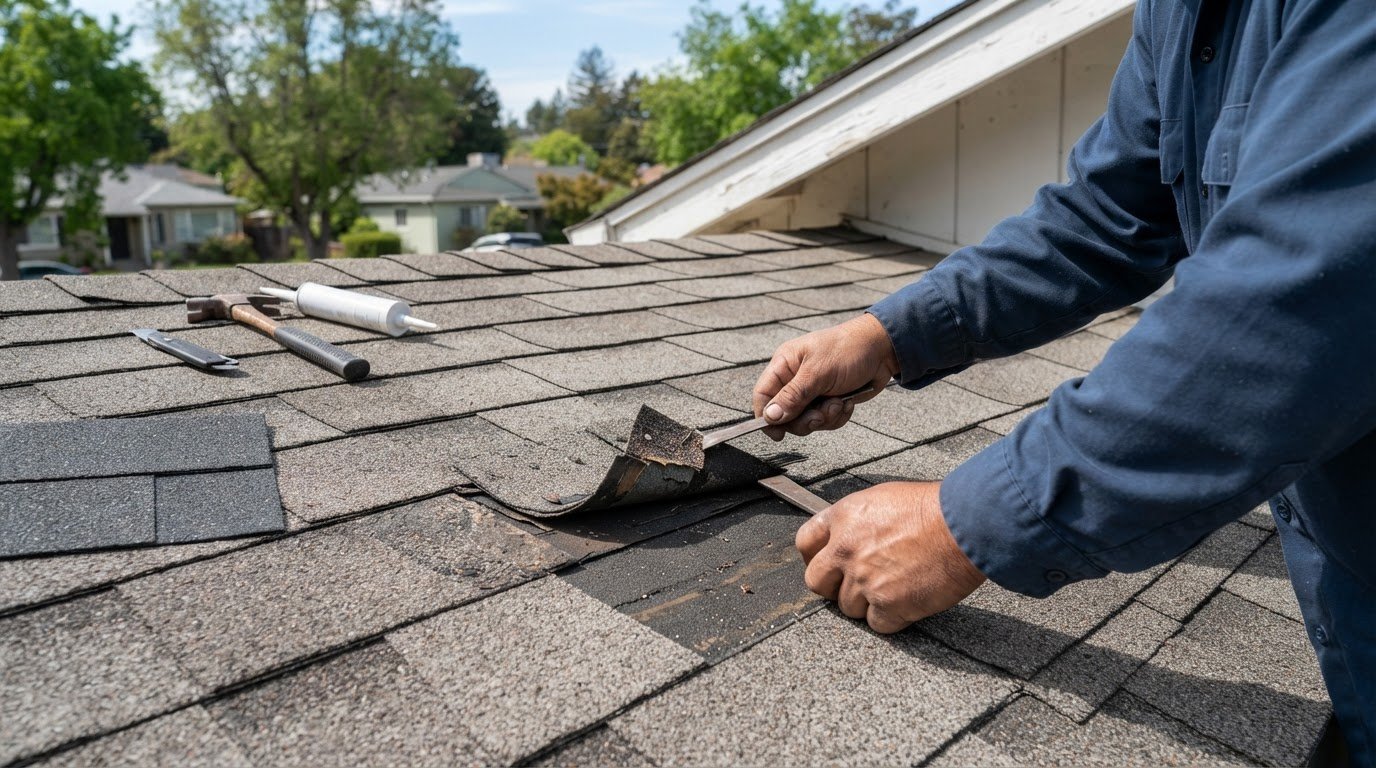
- Shingles: Look for missing, cracked, curling, brittle, or loose pieces, plus areas with notable granule loss.
- Roof details: Examine flashing, vents, and other transitions where water may enter.
- Interior signs: Note ceiling stains, damp areas, or moisture visible in the attic.
- Repair history: Compare current damage with earlier patches and recurring leak locations.
After a storm, noting the date and affected rooms gives the inspection useful context. For example, a new ceiling stain appearing after wind damage may indicate a recent leak, while an older stain can signal a persistent problem. Share these observations and whether previous repairs stopped the leak.
Maintenance helps catch changes before they become harder to assess. Keep a record of inspections, repairs, and storm-related symptoms, including the affected room and whether a stain grows after rainfall. This history helps distinguish a new, isolated issue from recurring moisture and gives the inspector a clearer starting point than a single symptom.
For example, an inspection may find one loose shingle while the surrounding roof remains intact, or moisture and deterioration across several areas. Those findings help determine whether a targeted repair addresses the cause or broader work deserves consideration. A clear record of the roof’s condition also makes later comparisons more meaningful.
Don’t wait for a ceiling stain to be the only signal. Visible roof damage, storm exposure, recurring moisture, or an aging roof are practical reasons to arrange an inspection. The findings should identify observed damage, its location, and whether the roof shows isolated concerns or a wider pattern.
Signs that indicate roof replacement
Replacement becomes more likely when damage appears across several areas, repairs keep failing, or the roof shows broader deterioration. A visible defect matters, but its location and relationship to other signs help reveal whether the problem is isolated or systemic.
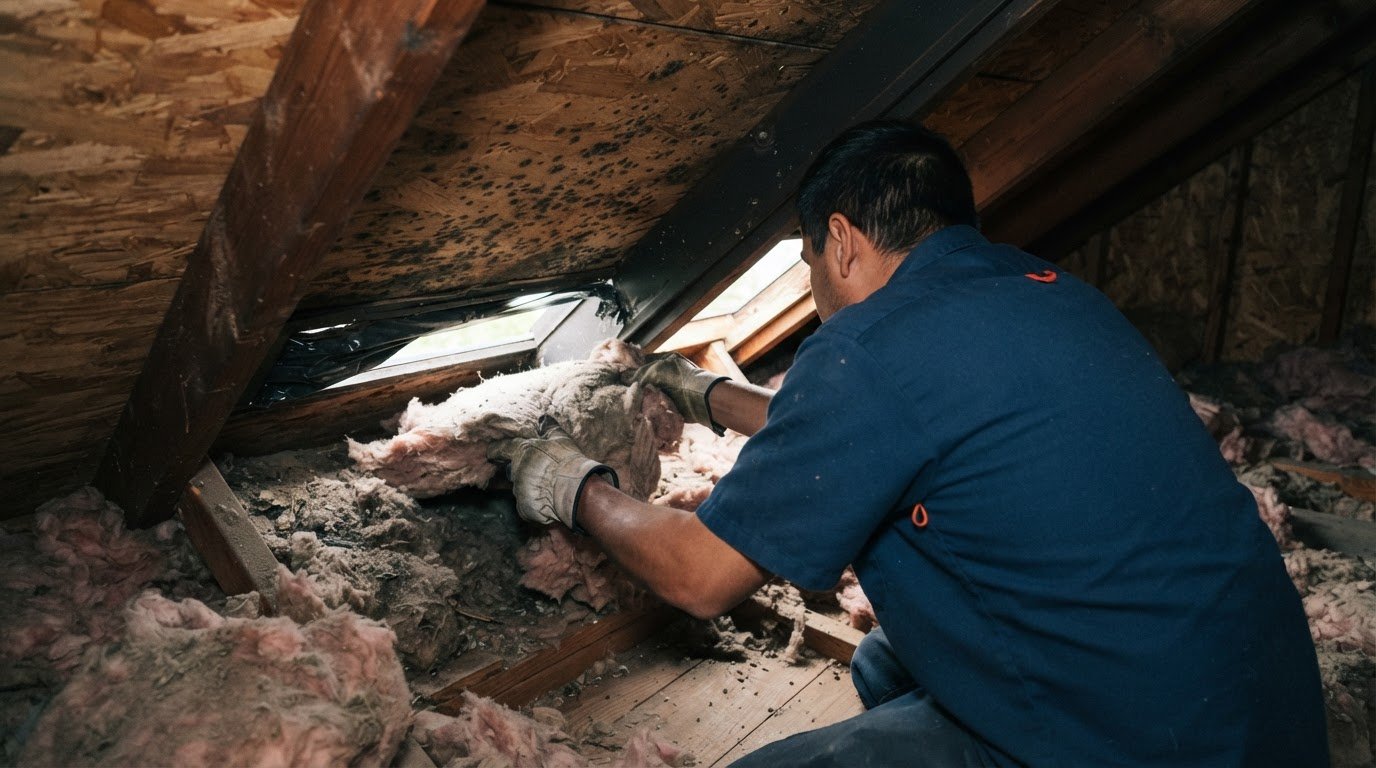
Delaying needed work can allow water to enter through broken shingles, leading to leaks and mold. Moisture and mold can deteriorate a home’s structural integrity, so persistent leaks, sagging, or attic moisture deserve prompt attention.
Look beyond one damaged shingle. Curling, cracking, brittleness, or widespread granule loss across multiple roof areas points to material deterioration rather than a localized defect. A few damaged shingles in an otherwise sound section differ from the same signs repeated across the roof.
- Leaks in multiple areas: Water entering at separate locations can indicate a broader roofing problem.
- Recurring leaks: Leaks that return after repairs suggest earlier work hasn’t resolved the underlying issue.
- Sagging or soft spots: These signs can point to damage beneath the roof surface.
- Persistent moisture: Wet areas, sagging along the ridgeline, or daylight through attic boards indicate concerns beyond a surface defect.
Repeated patches also deserve careful evaluation. If earlier repairs didn’t last, another patch may leave the surrounding deterioration untouched. A roof with numerous old patches and continuing leaks presents a different decision from one with a single successful repair.
Flat roofs have distinct warning signs. Splitting or separating seams can indicate that the roofing system needs replacement rather than another localized repair. Wet insulation beneath a commercial or low-slope roof is another sign of moisture below the surface, not merely a visible flaw.
Damage across multiple areas often signals a systemic problem that needs comprehensive attention. For example, cracked shingles across several slopes combined with leaks in separate rooms suggest a wider pattern than one missing shingle after a localized event.
Read visible signs together. Curling shingles alone describe material condition; recurring leaks, soft spots, and moisture add evidence about performance beneath the surface. A professional inspection can establish whether damage is concentrated or widespread and whether previous repairs addressed the cause.
Replacement deserves serious consideration when deterioration spans the roof, leaks recur in different areas, or repairs repeatedly fail. Isolated damage on a sound roof calls for a different scope of work. The distinction rests on the pattern of defects, moisture beneath the roofing, and the results of past repairs.
Benefits of a comprehensive roof replacement
A comprehensive replacement addresses the roof as a system rather than repeatedly treating separate symptoms. For a home with recurring leaks in several areas, replacing the roofing can address widespread deterioration and provide a consistent surface across the structure.
One benefit is a clearer view of the roof’s underlying condition during the project. Once existing roofing is removed, damaged decking or moisture-related concerns can be identified and addressed as part of the broader work. This matters when water has reached the interior, because a surface patch alone won’t correct damage beneath the shingles.
Replacement also creates a fresh starting point for material selection and installation planning. A homeowner choosing between three-tab asphalt shingles, architectural shingles, metal, tile, or slate can weigh each material’s expected lifespan against the home’s needs. The right comparison considers the roof’s existing condition and the scope of the project, not material choice alone.
- One coordinated scope: Address widespread roofing deterioration together instead of accumulating separate patches.
- Updated materials: Select a roofing material suited to the project and its expected service life.
- Renewed documentation: Keep installation and warranty records with the home’s maintenance history.
- Insurance context: Review how roof age affects the policy’s coverage terms.
That last point can affect long-term planning. Many insurers automatically switch roof coverage from replacement cost value to actual cash value when a roof reaches a certain age, often 15 to 20 years. A new roof doesn’t determine every policy term, but homeowners can consider its age and the policy’s stated coverage when weighing replacement.
A replacement may also make sense for owners planning to stay in their home for 20 years or more. A roof is a substantial part of the home’s protection, so a longer ownership horizon can make a comprehensive project more relevant than repeated repairs. The decision still depends on roof condition, material, and whether localized repair can address the problem effectively.
Replacement isn’t automatically better for every roof. A sound roof with one isolated defect may need only a focused repair, while extensive deterioration can make patching a less complete solution. Compare the scope of recurring repairs with the condition of the whole roof, then consider how long you expect to remain in the home.
If widespread damage or repeated repairs point toward a full project, explore comprehensive roof replacement options as the next step in evaluating the work.
GTE Construction & Roofing
GTE Construction & Roofing helps homeowners move from uncertainty to a clear roofing plan. When an inspection reveals isolated damage, roofing repairs can address the affected area; when deterioration is widespread, new roofing installation can provide a comprehensive solution.
Share what you’ve observed, such as recurring leaks, visible shingle damage, or moisture in the attic. These details help frame the decision around the roof’s condition and the work it needs, rather than assuming every problem calls for replacement. If repairs have repeatedly failed, a broader assessment can clarify whether another targeted fix makes sense.
For a professional evaluation of your roof repair or replacement needs, contact GTE Construction & Roofing.
Choose the Next Step With Confidence
Deciding when to repair vs replace a roof is also a chance to plan the work around your home’s future. Consider how the project fits your household’s priorities, what scope addresses the diagnosed problem, and which questions you need answered before approving work. A clear written assessment can help you understand the proposed work and keep its details organized with your home records.
You don’t need to settle the decision based on one symptom alone. Use the roof’s condition and the professional assessment to choose a practical path, then move forward when the scope makes sense for your home. If you’re ready to discuss your roofing needs, contact GTE Construction & Roofing.
A well-considered next step can make a significant home project feel more manageable. Start with the information you have, ask for clarity about the recommended scope, and choose the approach that best supports your home.
Frequently Asked Questions
What signs indicate a roof needs repair versus replacement?
Repair generally suits a problem confined to one area, while replacement becomes more relevant when several parts of the roof show deterioration. For example, one displaced shingle with no related damage differs from leaks in separate rooms or damage spanning multiple roof sections. A professional assessment can connect interior symptoms with roof conditions and determine whether the issue is isolated or affects the broader roofing system.
How old is too old for a roof to repair?
There isn’t one age that automatically makes a roof unsuitable for repair. The material’s expected lifespan provides context, but condition and repair history matter too. A roof approaching the end of its typical lifespan may still have a localized defect; a younger roof with widespread deterioration may need broader work. Consider whether another repair can address the problem and serve the roof’s remaining useful life.
How much does roof repair cost compared with roof replacement in the United States?
Repair and replacement costs depend on the roof and the work required, and a project price is provided after a quote request. A localized repair differs from replacing roofing across the full structure. Factors include roof size and complexity, material choice, removal of existing layers, damage beneath the surface, and the scope of work. Comparing the same documented damage and project scope makes estimates more meaningful than comparing repair and replacement as general categories.
How do roof material, damage extent, and remaining lifespan affect repair-or-replace decisions?
Material affects how much useful life the roof may have left, while damage extent shows whether the problem is localized or widespread. For example, a small defect on a roof with sound surrounding materials may justify repair. Similar damage on a roof with deterioration across several sections can point toward replacement. Consider whether previous repairs held and whether the proposed work addresses the cause, not just the visible symptom.
When does a leaking roof require immediate replacement rather than a repair?
A leak alone doesn’t establish that immediate replacement is necessary. Replacement becomes a stronger consideration when leaks recur in separate areas, the roof shows widespread deterioration, or moisture has affected underlying materials. A single leak with a clear, localized source may call for repair. Persistent water entry deserves prompt professional assessment because continued moisture can damage interior finishes and weaken structural materials.
How can a roofing professional safely inspect roof damage and provide a reliable assessment?
A professional can inspect visible roofing, relevant roof details, and interior signs without asking homeowners to climb onto a damaged surface. The assessment should identify where damage appears, whether moisture is present, and how the findings relate to previous repairs. For a reliable picture, share when leaks or stains appeared and whether they changed after rainfall. That context helps distinguish a new symptom from a recurring problem.