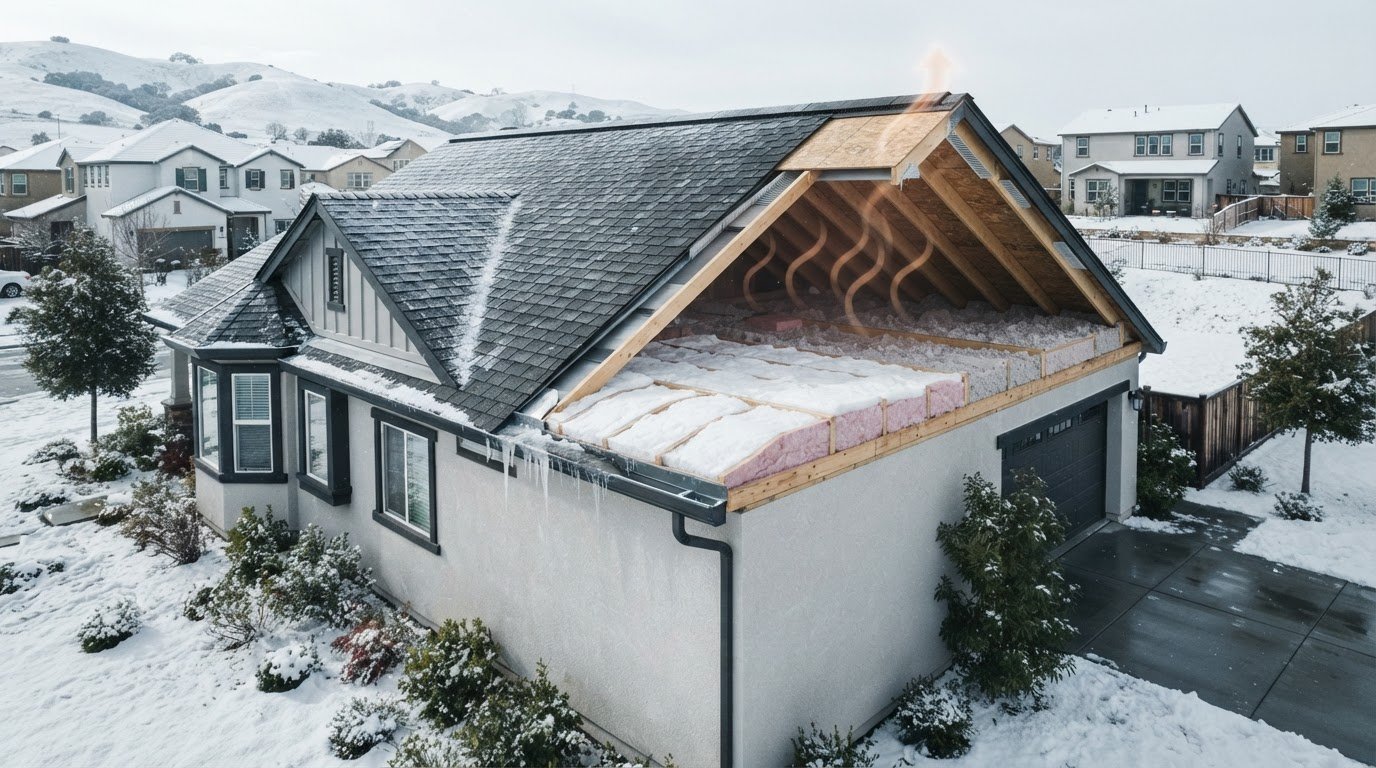
A visible dip may be a symptom rather than the root problem. A loose bracket is one possibility, but debris, poor drainage, or damaged fascia can also pull a gutter out of position. Before deciding how to fix sagging gutters, look for clues to the cause. The wrong repair may leave water spilling onto siding, foundations, or landscaping.
It’s tempting to tighten a fastener and move on, especially when the gutter appears to need only a small adjustment. But ladder work carries risks, and tightening a support won’t solve the problem if the attachment surface is damaged or the gutter is bent. A careful ground-level inspection can help you decide whether the issue appears minor or needs a professional assessment.
This guide covers common causes of sagging, the limited repairs that may suit a careful DIYer, and signs that it’s safer to call a professional. You’ll also learn how to check for loose supports and damaged fascia without tugging on the gutter or taking an unnecessary risk.
Key Takeaways
- Note where the gutter dips, then look for pooling, separated joints, or displaced supports from a safe position.
- Compare visible clues with possible causes, including debris, drainage problems, loose hangers, and weakened fascia.
- Attempt a DIY repair only when the cause is clear, the section is safely accessible, and the attachment surface appears sound.
- Stop if access is risky, the gutter is distorted, or more than one support or section appears to be failing.
- Check periodically for returning sag, buildup, or separation before runoff reaches the home.
How to Diagnose a Sagging Gutter Before You Repair It
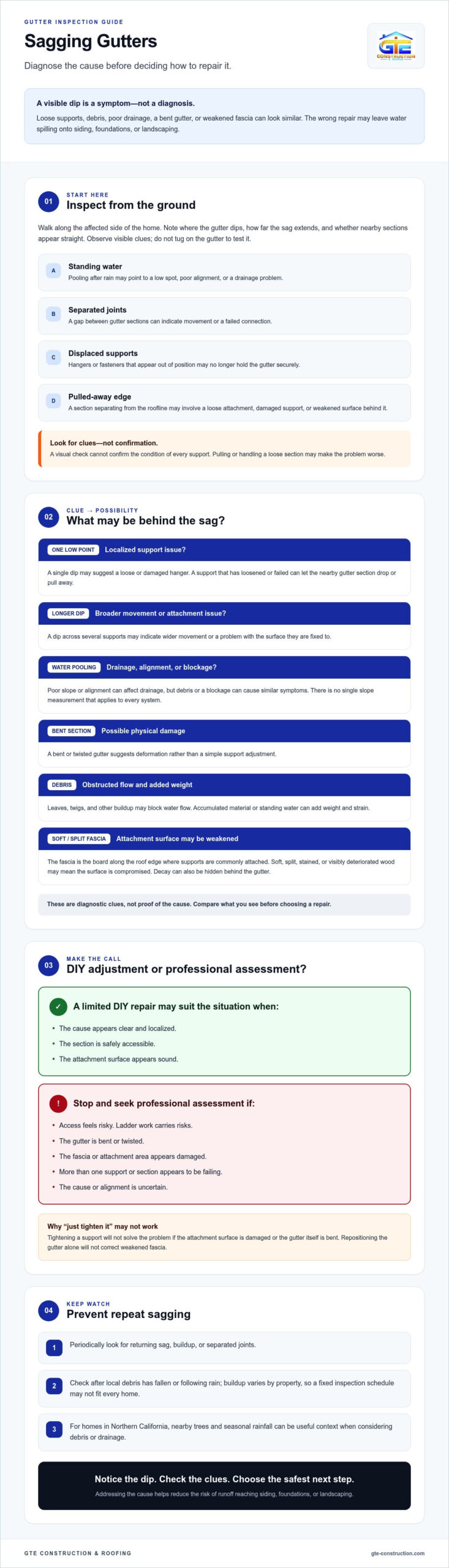
Start with a ground-level inspection. Walk along the affected side of the house and note where the gutter dips, how far the sag extends, and whether the sections on either side appear straight. A sag is a section that no longer holds its intended position or allows water to drain as designed. Because a rain gutter directs roof runoff away from the building, a change in its shape or alignment can send water where it shouldn’t go.
Look for visible clues rather than assuming the first dip tells the whole story:
- Standing water: Pooling after rain may point to a low spot, poor alignment, or a drainage problem.
- Separated joints: A gap between sections can indicate movement or a failed connection.
- Loose hangers or fasteners: Supports that appear displaced may no longer hold the gutter securely.
- A pulled-away edge: A section separating from the roofline may have a loose attachment, a damaged support, or a weakened surface behind it.
Make a note of what you see, but don’t tug on the gutter to test it. A visual check can’t confirm the condition of every support, and pulling may worsen a loose section. If the gutter looks bent or twisted, or the attachment area appears damaged, a professional assessment can help identify what needs attention before you decide how to fix sagging gutters.
What visible signs point to a loose gutter support?
From the ground, look for a section pulling away from the roofline or fasteners that appear displaced compared with nearby ones. One distinct low point may suggest a localized support problem. A dip extending across several supports may indicate broader movement or a problem with the surface they’re fixed to. These are clues, not a definitive diagnosis, so don’t handle the gutter to investigate.
Could the fascia board be causing the gutter to sag?
The fascia is the board along the roof edge where gutter supports are commonly attached. Soft, split, stained, or visibly deteriorated wood near the gutter may mean the attachment surface is compromised. Simply repositioning the gutter won’t correct that underlying problem. Because decay can also be hidden behind the gutter, a qualified professional may need to inspect the area before repairs are planned.
Why Gutters Sag: Loose Hangers, Debris, Slope, and Damage
A visible dip can have several possible causes. A single low point may suggest a loose or damaged hanger; a bent section may point to physical damage; and pooling along a longer run may indicate poor drainage or an alignment issue. Weakened fascia can undermine the attachment, while leaves and other debris may obstruct water flow and add weight. These clues help narrow the possibilities, but they don’t confirm the cause by themselves.
How do loose hangers and debris contribute to sagging?
Hangers support the gutter along the roof edge. If one loosens or fails, the nearby section may drop or pull away. If several supports are compromised, a longer stretch may shift. Debris creates a different kind of strain. Leaves, twigs, and other buildup can block water flow, while accumulated material or standing water can add weight. Don’t assume either is the cause of every sag. Look for evidence before choosing a repair.
For homeowners in Northern California, nearby trees and seasonal rainfall can be useful context when considering debris or drainage. Buildup varies by property, so check after local debris has fallen or following rain rather than relying on a fixed inspection schedule.
When do fascia damage or incorrect slope matter?
Gutter hangers need a sound surface to hold securely. If the fascia is deteriorated, even a sound hanger may not stay firmly attached. Adjusting the gutter alone won’t fix the underlying issue. Pooling, or water that doesn’t appear to drain toward the outlet, may point to a slope or alignment problem. Debris or a blockage can cause similar symptoms. A visibly bent section suggests deformation rather than a simple support adjustment.
There isn’t one slope measurement that applies to every gutter system. Follow the relevant manufacturer guidance, or seek a professional assessment if the alignment or attachment surface is uncertain. Diagnose the cause before deciding how to fix sagging gutters: an isolated support issue calls for a different response than widespread movement, a distorted section, or compromised fascia.
If supports, fascia, or a gutter section appear to need more than a minor adjustment, professional gutter repair may be the more appropriate next step.
Can You Fix Sagging Gutters Yourself, or Is a Professional Needed?
A small adjustment may be manageable if the gutter is easy to reach, the cause is clear, and the supports and attachment surface appear sound. But a fastener that looks loose isn’t the whole story. Tightening it won’t make a lasting repair if the fascia behind it is damaged, the gutter is distorted, or several sections are failing. Consider both the gutter’s condition and whether you can reach it safely before attempting a repair.
Use these clues to distinguish a possible DIY task from a reason to pause:
- Potentially DIY-suitable: A clearly loose support on a low, safely accessible section, with no visible damage to the gutter or attachment surface.
- Stop and reassess: The gutter remains loose, distorted, or difficult to align after a simple adjustment, or the cause is unclear.
- Seek professional assessment: You see rotted fascia, repeated separation, widespread sagging, or leaking joints, or the repair requires risky access.
Which gutter repairs may be manageable for a homeowner?
A limited adjustment may be reasonable when the work is at a safe height, access is secure, and the issue is clearly confined to compatible support hardware. Follow the gutter manufacturer’s instructions rather than forcing a bracket or fastener into a position that doesn’t fit the system. Stop if the section won’t sit securely or align as intended. Don’t attempt to hold a loose gutter in place by hand while making a repair.
When should you stop and call a gutter professional?
Don’t proceed if the ladder feels unstable, the roofline is beyond your comfort level, or the work is near electrical hazards. Rotted fascia, repeated separation, broad sagging, and leaking joints also warrant professional assessment. These problems can involve both the gutter and its supporting surface, so repairing only the visible symptom may not solve the cause.
Decide based on the cause, condition, and access, not just on whether a fastener seems easy to tighten. A professional can assess the supports, gutter sections, and attachment surface together when the repair goes beyond a straightforward adjustment. Homeowners in San Francisco, Sacramento, Alameda County, and Contra Costa County can learn more about residential gutter repair from GTE Construction & Roofing.
How to Fix a Sagging Gutter: A Safe, Step-by-Step Approach
Proceed only if the cause is clear and the work is safely accessible. If you would need to climb to an unstable or elevated area, work near electrical hazards, or reach beyond a stable position, stop and arrange professional help. Don’t work in rain, wind, or other poor weather. Completing the repair yourself is less important than working safely.
- Assess from the ground. Note where the gutter dips, whether the sag is localized or extends across several supports, and whether the gutter or fascia appears damaged.
- Clear only safe obstructions. Remove accessible debris only if you can do so without climbing or putting yourself at risk. If clearing requires unsafe access, leave it to a professional.
- Inspect the supports. Look for loose or displaced hangers and check whether nearby supports also appear to have shifted. Don’t pull on the gutter to test it.
- Repair only a suitable, isolated issue. If access is safe and the attachment surface is sound, use hardware compatible with the gutter system and follow the manufacturer’s instructions. Don’t force a fastener or adjust a section that remains loose or distorted.
- Recheck alignment and drainage. From a safe position, look for continued sag or separation. If conditions are suitable, observe water flow without climbing into or onto the gutter.
A lasting repair must restore secure support and unobstructed drainage. Tightening a fastener alone may not be enough if the attachment material is damaged or the gutter has lost its shape.
How do you resecure a loose gutter hanger?
First check whether the material behind the hanger appears sound and whether adjacent supports show movement. Any replacement or adjusted hardware must suit the gutter system and attach securely to sound material. If the fascia is soft or deteriorated, or more than one support has shifted, don’t treat the visible loose point as an isolated problem. A professional can assess the gutter and its attachment together.
How should you check the repair and water flow?
After an adjustment, review the gutter’s position from a safe location. In suitable conditions, observe how water moves through it without climbing into or onto the gutter. If pooling, leakage, or movement continues, stop rather than making repeated adjustments. The cause may need further assessment before you decide how to fix sagging gutters.
If access is unsafe or the supports, fascia, or gutter section need more than a simple adjustment, contact GTE Construction & Roofing about gutter repair.
Prevent Repeat Gutter Sagging and Know When to Get Help
A repair is more likely to last when you also monitor the conditions that may have contributed to the sag. Make periodic visual checks for loose supports, debris, pooling, separated joints, or a gutter edge pulling away from the roofline. Timing depends on the property. Nearby trees may leave more debris at certain times of year, while seasonal rain can reveal drainage problems that aren’t obvious in dry weather. Check after noticeable weather-related stress, too.
What maintenance helps keep repaired gutters secure?
Clear debris before it obstructs drainage, but don’t climb or use equipment unless you can do so safely. If the gutter is difficult to reach, arrange professional help rather than risking a fall. After maintenance, check the supports and joints again from a safe position. If runoff is affecting the soil around your home, erosion control landscaping may be relevant as a separate consideration.
Pay attention to changes along the roof edge. If you notice fascia concerns or other roofline issues, ask whether professional new roof installation is relevant or whether the problem is limited to the gutter and its attachment.
What should you ask before hiring a gutter repair contractor?
Before agreeing to work, ask what the assessment will cover and how the recommended repair addresses the cause, not just the visible sag. A clear explanation helps you understand the scope and decide whether the proposed approach suits your home.
- Will the assessment include hangers, gutter condition, fascia, joints, and drainage?
- What is causing the sag, and how will the repair address it?
- Are there related roofline concerns that need separate attention?
Repeated sagging, damaged fascia, or unsafe access are good reasons to seek professional assessment instead of attempting another adjustment. GTE Construction & Roofing provides residential gutter repair in San Francisco, Sacramento, Alameda County, and Contra Costa County. If you’re in one of these areas and the problem needs more than a simple correction, consider having the gutter assessed before the damage progresses.
Protect Your Home with a Well-Planned Gutter Repair
A sagging gutter is easier to address when you identify the cause before choosing a repair. Loose supports or debris may call for a different response than damaged fascia, a bent section, or a drainage problem. If you’re considering how to fix sagging gutters, keep safety in view. A limited adjustment may suit a careful DIYer only when the cause and access are clear. Widespread sagging, repeated separation, or an unsafe work area are reasons to seek professional help.
GTE Construction & Roofing provides residential gutter repair and installation in San Francisco, Sacramento, Alameda County, and Contra Costa County. If the issue needs a closer assessment, request professional gutter repair guidance and discuss the condition of your supports, gutter, and fascia.
With a careful diagnosis and a repair that addresses the underlying problem, you can help keep rainwater moving away from your home and make a more informed decision about what to do next.
Frequently Asked Questions
What causes gutters to sag?
Gutters commonly sag because hangers or fasteners have loosened, debris has built up, drainage is obstructed, or the fascia they’re attached to has weakened. A single low point may suggest a localized support issue, while a longer dip could involve several supports or a broader alignment problem. A bent gutter section can also lose its intended shape. Check visible clues first, since the same symptom can have different causes.
Can I fix a sagging gutter myself?
You may be able to adjust a gutter yourself if the problem is clearly limited to a support, the section is safely accessible, and the attachment material is sound. Follow the manufacturer’s guidance for compatible hardware, and stop if the gutter remains loose, distorted, or difficult to align. If you’re unsure how to fix sagging gutters safely, or see damaged fascia or multiple failing sections, arrange a professional assessment.
How do you reattach a gutter that has pulled away from the house?
First identify why the gutter pulled away. If a single support has loosened and the fascia is sound, compatible hardware may be able to secure the section. But if the fascia is split, soft, or deteriorated, fastening the gutter back in place won’t restore a reliable attachment. Check nearby supports for movement, too. If the cause or extent isn’t clear, have a professional assess the gutter and attachment surface before repair.
Should gutters look completely level, or do they need a slope?
Gutters generally need a slight slope toward an outlet so water can drain, rather than being perfectly level. The correct alignment depends on the gutter system and its installation guidance, so don’t rely on a universal slope measurement. Visible pooling or water that doesn’t appear to move toward the outlet may indicate an alignment issue, though debris or a blockage can cause similar symptoms. Consult manufacturer instructions or a professional if uncertain.
Can clogged gutters make them sag?
Yes, clogged gutters can contribute to sagging. Leaves and other debris may block water flow, and accumulated material or standing water can add weight that strains supports. However, a clog isn’t the only possible cause. Loose hangers, poor alignment, damaged gutter sections, or weakened fascia may also be responsible. If cleaning doesn’t resolve pooling or the gutter remains displaced, look beyond the debris and consider a professional inspection.
When should sagging gutters be replaced instead of repaired?
Replacement may be more appropriate if gutters are over 20 years old, have widespread rust or corrosion, or need repairs across multiple sections. An isolated loose support or small, localized issue may be repairable, but broad deterioration can make repeated fixes less suitable. Have the condition assessed before deciding, especially if the fascia is damaged too. A professional can help determine whether gutter repair or installation better addresses the problem.
Is it safe to repair gutters from a ladder?
Ladder work is only appropriate if you’re competent, the ladder can be positioned securely, and conditions are safe. Don’t work in poor weather, reach beyond a stable position, or attempt repairs near electrical hazards. Elevated rooflines or uncertain access are reasons to stop and seek help. If you’re in San Francisco, Sacramento, Alameda County, or Contra Costa County, GTE Construction & Roofing lists residential gutter repair among its services.