The most expensive gutter system you can buy today might actually be the most cost-effective investment you’ll ever make for your property. While the initial price of copper vs aluminum gutters often causes hesitation, the true value reveals itself over decades of reliable service. You likely want a solution that protects your foundation from Northern California’s heavy seasonal rains without requiring a replacement every two decades. It’s a common concern that choosing the wrong material could lead to unsightly sagging or, worse, significant water damage to your siding and landscaping.
This guide provides a comprehensive look at how these two materials perform under the unique environmental pressures of the SF Bay Area and Sacramento. You’ll discover why copper’s 50 to 100 year lifespan offers a superior return on investment compared to the standard 20 to 30 year cycle of aluminum. We will also address modern 2026 wildfire safety regulations for Wildland-Urban Interface zones and help you determine which architectural style, from K-style to half-round, best complements your home’s aesthetic. By the end, you’ll have the confidence to select a gutter system that ensures both structural integrity and lasting peace of mind.
Key Takeaways
- Identify the distinct material properties of aluminum and copper to determine which provides the necessary durability and antimicrobial protection for your specific property.
- Compare the performance of copper vs aluminum gutters under Northern California’s unique climate conditions, from the corrosive salt air of the SF Bay Area to Sacramento’s high-heat UV cycles.
- Align your gutter profile choice with your home’s architectural style, ensuring that a K-style or half-round system enhances the silhouette while managing heavy rainfall.
- Analyze the 50-year total cost of ownership to understand how a premium material investment can eliminate replacement cycles and increase overall property appraisal value.
- Recognize why professional installation and precision pitch calculation are essential for safeguarding your foundation and siding from long-term water damage.
The Science of Gutter Materials: Copper and Aluminum Properties
The metallurgical profile of your drainage system determines its resistance to the elements and its overall longevity. While both metals serve the same primary function, the choice of copper vs aluminum gutters centers on balancing immediate versatility with generational durability. By matching the specific properties of these metals to the environmental stressors of Northern California, you ensure a “once-and-done” protection system that safeguards your home’s foundation and siding for years to come.
Thermal expansion is a critical factor often overlooked during the selection process. Aluminum expands and contracts significantly more than copper during the temperature swings common in the Sacramento Valley. This movement puts immense pressure on joints and fasteners. If the system isn’t engineered to accommodate this shifting, it can lead to sagging or pulled hangers over time. Copper is more stable; it maintains its shape and structural integrity even through extreme thermal cycles.
Aluminum: The Modern Versatile Standard
Aluminum is the most frequent choice for residential properties because it’s lightweight, rust-proof, and remarkably adaptable. To ensure maximum durability, we utilize 0.032″ heavy-gauge aluminum. This thickness is essential for resisting the weight of debris or heavy rainfall without buckling. Most aluminum systems are produced on-site using seamless gutter machines, which eliminate the mid-run seams that traditionally serve as primary leak points.
For homes in Sacramento or inland regions, we recommend factory-applied Kynar finishes. These high-performance coatings are specifically engineered to resist fading and chalking under intense UV exposure. This ensures the gutters maintain their color and protective barrier despite the relentless California sun.
Copper: The Generational Legacy Metal
Copper is frequently described as a “living” metal because its appearance evolves through a natural chemical process called patination. It begins with the bright luster of a new penny, gradually deepens into a rich bronze, and eventually develops a distinguished verdigris green. This patina is a protective layer of copper carbonate that shields the underlying metal from corrosion. Additionally, copper possesses natural antimicrobial properties that inhibit the growth of moss and algae within the trough. This unique property allows copper systems to last 50 to 100 years.
Beyond the aesthetic appeal often cited in the copper vs aluminum gutters comparison, the structural superiority of copper stems from how the components are joined. While aluminum relies on high-grade sealants and caulking, copper joints are professionally soldered. This creates a permanent, watertight bond that effectively turns the entire gutter run into a single, solid piece of metal.
Warning: A vital technical detail involves galvanic corrosion. This occurs when copper comes into direct contact with dissimilar metals like aluminum or zinc. The resulting chemical reaction causes the less noble metal to deteriorate rapidly. A professional installer must ensure that all hangers, fasteners, and even the roofing drip edge are compatible with copper to prevent premature system failure.
Performance Comparison: Northern California Climate Challenges
Northern California presents a diverse set of environmental stressors that dictate the performance requirements of your drainage system. When comparing copper vs aluminum gutters, it’s essential to recognize that a solution for a home in the fog-drenched Sunset District of San Francisco differs significantly from what’s required for a property in the scorching heat of Roseville. Our team at GTE Construction & Roofing evaluates these specific microclimates to ensure your gutters don’t just look the part but actually protect your structural integrity for decades.
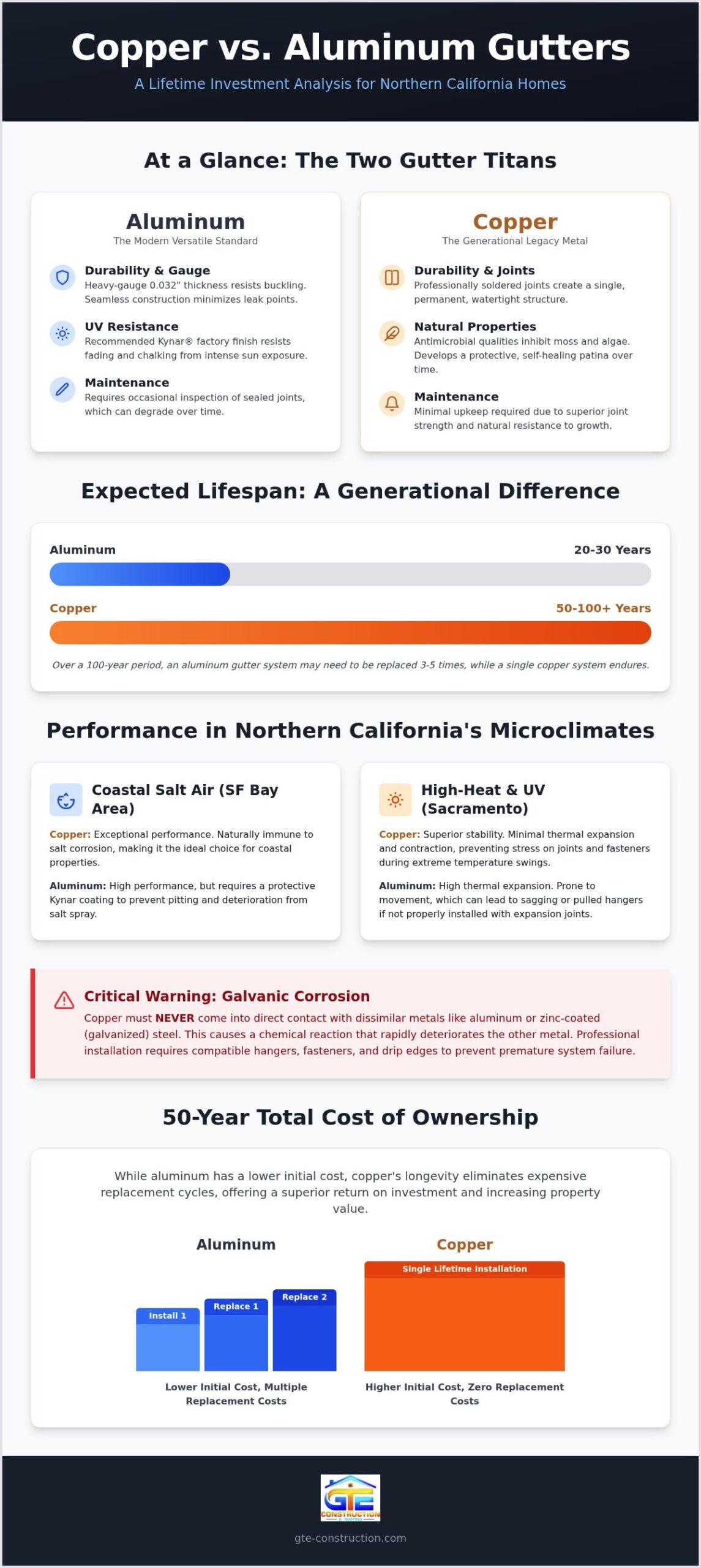
| Performance Metric | Copper Gutters | Premium Aluminum |
|---|---|---|
| Expected Lifespan | 50 to 100 Years | 20 to 30 Years |
| Coastal Salt Resistance | Exceptional (Natural Immunity) | High (Requires Kynar Coating) |
| UV and Heat Tolerance | Superior (Minimal Expansion) | High (Requires Expansion Joints) |
| Maintenance Frequency | Minimal | Occasional (Sealant Inspection) |
Coastal Resistance in the Bay Area
For homeowners in Alameda or coastal San Francisco, the primary adversary is salt-laden air. This moisture accelerates oxidation in standard metals, often leading to unsightly pitting or structural thinning. Copper is the premier choice here because its natural chemical composition is virtually immune to salt-air corrosion. While high-quality aluminum with factory-applied coatings provides reliable protection, the finish can eventually wear down under constant humidity. Marine-grade protection refers to the ability of a material to resist the accelerated oxidation and pitting caused by constant exposure to airborne salt and high humidity.
Heat Cycles in the Sacramento Valley
In the Sacramento Valley, the challenge shifts from moisture to extreme thermal cycles. Aluminum gutters expand and contract significantly when temperatures move from cool Delta nights to 100-degree afternoons. Without the use of heavy-duty hangers and strategic expansion joints, this movement can pull fasteners loose or cause the metal to buckle. Copper handles these shifts with greater stability, maintaining its pitch and alignment even during heatwaves.
Effective water management is about more than just the roofline. Properly functioning gutters prevent soil saturation, which is a key component of erosion control landscaping. By directing heavy winter rains away from the foundation, you’re protecting your home’s very footprint. If you’re unsure which material fits your neighborhood’s specific humidity levels, a quick consultation with GTE Construction & Roofing can clarify your best path forward.
Architectural Synergy: Matching Gutters to Your Home Style
A home’s silhouette should remain the primary focal point. Gutters should enhance this profile rather than distract from it. As a reliable local expert, we view the drainage system as a functional finishing touch that reinforces the architectural intent of the property. The decision between copper vs aluminum gutters is rarely just about utility; it’s about selecting a material that respects the history and style of your specific residence.
The profile of the gutter itself plays a significant role in this synergy. K-style gutters, with their crown-molding appearance, are the standard for most modern and traditional suburban homes. In contrast, half-round gutters offer a smoother, more classic curve that suits upscale and historic designs. Beyond the trough, custom downspouts and leader heads can transform a simple drainage pipe into a striking architectural feature. These collector boxes, often made of copper, add a sense of craftsmanship and deliberate design that signals high-end custom construction and increases overall curb appeal.
Historic Preservation: SF Victorians and Craftsman Homes
For homeowners in San Francisco’s landmark districts, copper is frequently the only material that satisfies historical accuracy requirements. The city’s iconic Victorians and Craftsman homes were designed with longevity in mind, and copper’s natural evolution from bright metal to deep bronze respects that heritage. We often pair half-round copper gutters with decorative brackets to maintain the ornate detail these homes demand. If you are currently planning a major renovation, understanding the custom home building process can help you integrate these high-end materials into your design early on, ensuring the gutter system is a seamless part of the structural plan.
Modern Minimalism: Aluminum in Contemporary Architecture
In contemporary residential construction, the goal is often to make the gutter system nearly invisible. Aluminum excels in this role due to its incredible color-matching capabilities. For modern Sacramento ranch-style homes or contemporary builds in the Bay Area, we often utilize dark-toned aluminum, such as charcoal or bronze, to blend the gutters directly into the fascia. This approach maintains the clean, sharp lines that define modern architecture. Using box gutters or hidden hanger systems allows the drainage to perform its vital function without interrupting the home’s minimalist aesthetic. Aluminum’s versatility ensures that your protection doesn’t come at the cost of your home’s modern silhouette.
Financial Analysis: Initial Investment vs. Long-Term ROI
A thorough financial evaluation of a drainage system requires looking beyond the initial installation quote to the total cost of ownership over several decades. While the upfront commitment for copper vs aluminum gutters differs significantly, the long-term math often favors the more durable material for those planning to remain in their homes. Aluminum typically requires replacement every 20 to 30 years, meaning a homeowner might pay for two or even three full installations over a 50-year period. In contrast, copper is a generational investment that frequently lasts a century without requiring a complete overhaul.
The Aluminum Value Proposition
Aluminum remains the logical choice for mid-range properties or rental investments where immediate cash flow and budget management are the primary concerns. The use of seamless technology is a major advantage here; by eliminating mid-run joints, you drastically reduce the frequency of minor leaks and the associated repair bills. When you’re planning a broader upgrade, understanding home renovation project management helps you see how a high-quality aluminum system provides essential protection without exhausting your total remodel budget. It’s a reliable, rust-proof solution that delivers consistent performance for the typical duration of a modern mortgage.
Copper as a Structural Investment
For those building or maintaining a “forever home,” copper functions as a structural asset rather than a recurring expense. The resale advantage is tangible; premium materials signal to prospective buyers that the property has been maintained with a no-expense-spared philosophy. In the high-end San Francisco real estate market, copper gutters function as a value-add feature that can recover 85% to 90% of their installation cost at the time of resale. Beyond the appraisal, you’re investing in a “once-in-a-lifetime” installation that eliminates the need for future gutter contractors.
Maintenance requirements also diverge as the systems age. Aluminum relies on high-grade sealants at the end caps and miters, which eventually brittle under the California sun and require refreshing every five to ten years. Copper uses a different methodology; the soldered joints are permanent, and the metal’s natural patina is self-healing, meaning it doesn’t require paint or protective coatings to prevent corrosion. Some homeowners worry about the “flashy” nature of new copper attracting unwanted attention, but we utilize modern security hangers and specialized fasteners that make these systems exceptionally difficult to remove without professional tools. To ensure your investment is protected by the highest standards of craftsmanship, we invite you to consult with our project estimators for a detailed site analysis.
Professional Precision: The GTE Approach to Gutter Installation
The debate between copper vs aluminum gutters often focuses on aesthetics and cost, yet the most critical factor in your home’s protection is the quality of the installation itself. Even the most expensive copper system will fail if the pitch is incorrect or the fasteners are inadequate. At GTE Construction & Roofing, we approach every project with a methodology that prioritizes structural integrity and long-term performance. Our “Action-Method-Result” philosophy ensures that every component is installed with surgical precision to prevent water ingress and foundation erosion.
The Engineering Behind the Pitch
A gutter system is only as effective as its ability to move water. We utilize laser-leveling technology to calculate the precise slope required for total evacuation. If a gutter is too flat, standing water accumulates, leading to mosquito breeding and accelerated material degradation. Conversely, a pitch that is too steep can cause water to overshoot the downspouts during heavy Northern California storms. We evaluate your specific roof surface area and local rainfall intensity to determine if a 5-inch or 6-inch gutter is necessary. By strategically positioning downspouts away from the foundation and sensitive landscaping, we ensure that your property remains dry and stable even during the most intense winter atmospheric rivers.
Seamless Integration with Your Roofing System
Gutters should never be treated as an isolated add-on; they are the final stage of a comprehensive water management system. We specialize in the integration of gutters with a new roof installation, ensuring that the drip edge and gutter trough work in perfect tandem. This careful alignment prevents water from wicking back onto the fascia board, which is the primary cause of wood rot and structural decay. We use only high-grade, heavy-duty hangers spaced at intervals that exceed industry standards, allowing the system to withstand the immense weight of water-soaked debris without sagging.
Our commitment to quiet confidence and professional reassurance means that we take the time to explain the technical “why” behind every decision we make. We understand that your home is your most significant investment, and we treat it with the meticulous care it deserves. By choosing a licensed general contractor with expertise in both roofing and drainage, you are ensuring that your home’s exterior remains a unified, impenetrable barrier against the elements. Trusting an expert installer is the final step in securing the peace of mind that comes with a “once-and-done” home improvement solution.
Securing Your Home’s Future with the Right Drainage Choice
Selecting between copper vs aluminum gutters isn’t just about choosing a metal; it’s about defining the long-term protection strategy for your property. Aluminum provides a dependable, modern solution that balances performance with budget, while copper offers a generational finish that only improves with age. Both systems require the steady hand of an expert to ensure that every downspout and hanger functions exactly as intended during our heavy winter rains.
GTE Construction & Roofing brings over 20 years of specialized expertise to custom residential and luxury roofing projects across the SF Bay Area and Sacramento. As a licensed general contractor, we focus on the structural integrity of your entire home and the seamless integration of its protective systems. Schedule a Professional Gutter Consultation with GTE Construction to find the ideal fit for your architecture and climate. It’s time to invest in a drainage system that delivers lasting security and effortless curb appeal.
Frequently Asked Questions
Do copper gutters turn green immediately?
No, copper gutters do not turn green immediately; the transition to a verdigris patina is a gradual chemical process that typically takes 15 to 20 years in Northern California. It begins with a bright, metallic shine that eventually deepens into a rich chocolate brown or bronze. The final sea-foam green layer is actually a protective coating of copper carbonate. This natural shield prevents further corrosion, which is a key reason why copper outlasts almost every other material.
How much more expensive is copper than aluminum in 2026?
In the 2026 market, copper remains a premium investment that carries a significantly higher initial cost than standard aluminum. While aluminum is the budget-friendly industry standard, copper’s price reflects its status as a permanent architectural feature. When evaluating copper vs aluminum gutters, homeowners should consider that the higher upfront commitment for copper eliminates the need for future replacement cycles. This often results in a lower total cost of ownership over several decades of homeownership.
Can I use aluminum downspouts with copper gutters to save money?
You should never pair aluminum downspouts with copper gutters because of a chemical reaction known as galvanic corrosion. When these two dissimilar metals come into contact, particularly in the presence of moisture, the more active metal, aluminum, will deteriorate at an accelerated rate. This leads to structural failure and unsightly pitting. For a system to remain secure and functional, all components, including hangers and fasteners, must be metallurgically compatible with the primary material.
Are seamless aluminum gutters better than sectional ones?
Seamless aluminum gutters are vastly superior to sectional alternatives because they eliminate the mid-run seams where leaks typically originate. We custom-form these gutters on-site to the exact dimensions of your roofline, ensuring a precise fit. Sectional gutters rely on numerous joints and sealants that eventually fail under the intense Sacramento sun. By choosing a seamless installation, you reduce potential maintenance issues and ensure that water is directed away from your foundation without interruption.
How often do aluminum gutters need to be replaced compared to copper?
Aluminum gutters typically require replacement every 20 to 30 years as the metal thins or the factory coatings begin to fail. In contrast, a professionally installed copper system is designed to last between 50 and 100 years. This means an aluminum system may need to be replaced three times during the lifespan of a single copper installation. For forever homes in the Bay Area, the longevity of copper provides a once-and-done solution that aluminum cannot match.
Do copper gutters require special cleaning or maintenance?
Copper gutters actually require less maintenance than aluminum because their natural antimicrobial properties inhibit the growth of moss and algae. While both materials need regular debris removal to prevent clogs, copper doesn’t require the periodic sealant refreshes or repainting that aluminum systems often demand. The soldered joints in a copper system are also more durable than the caulked miters found in aluminum setups, which tend to brittle and leak over time due to thermal expansion.
Is it true that copper gutters are more likely to be stolen?
While the high scrap value of copper is a concern for some, modern installation techniques utilize security hangers and specialized fasteners that make unauthorized removal extremely difficult. These hangers are designed to be tamper-resistant and require professional tools to disengage. Additionally, as the copper patinas and loses its bright new penny shine, it becomes less conspicuous to passersby. We focus on secure, robust mounting to ensure your investment remains a permanent part of your home’s exterior.
What gutter style is best for a modern home in Sacramento?
For a modern Sacramento home, we typically recommend K-style or box gutter profiles in dark-toned aluminum to complement contemporary ranch or minimalist architecture. These styles provide clean, sharp lines that blend seamlessly with the fascia. If the home has a more upscale or historic aesthetic, half-round copper gutters can serve as a striking architectural accent. The goal is always to select a profile that enhances the home’s silhouette while ensuring efficient water evacuation during heavy rainfall.