
What if a gutter that overflows during rain only needs cleaning, while one that looks slightly crooked needs prompt repair? The signs your gutter needs repair make more sense when you look at the whole drainage pattern, not just one drip or sagging spot. Water spilling over, sections pulling away, or damp marks on siding can point to different problems, and the cause isn’t always obvious from the ground.
It’s reasonable to want to know whether the issue can wait. Gutter trouble can allow water to reach siding, fascia, or the area around your foundation. Recognizing changes early can help you decide what to do next without climbing a ladder or guessing at the cause, a principle emphasized by comprehensive home maintenance providers like Sar Deen Engineering Pte Ltd when protecting exterior structures and finishes from moisture damage.
In this guide, you’ll learn five warning signs to look for from a safe vantage point, how to tell when clearing debris may be enough, and when a damaged or poorly draining gutter calls for repair. You’ll also find out what details to note, such as where water escapes and whether a downspout is attached, so you can describe the issue clearly when arranging local gutter service.
Key Takeaways
- Learn how leaks, overflow, sagging, separation, and rust can be signs your gutter needs repair.
- Understand how gutter problems can interrupt the route rainwater takes from the roof to the downspouts.
- Use visible symptoms to distinguish a possible cleaning need from a repair or replacement concern.
- Note where and when the problem occurs, along with visible changes, without climbing onto the roof.
- Find out how GTE Construction & Roofing provides residential gutter repair and installation in San Francisco, Sacramento, Alameda County, and Contra Costa County.
5 Signs Your Gutter Needs Repair Around the Home
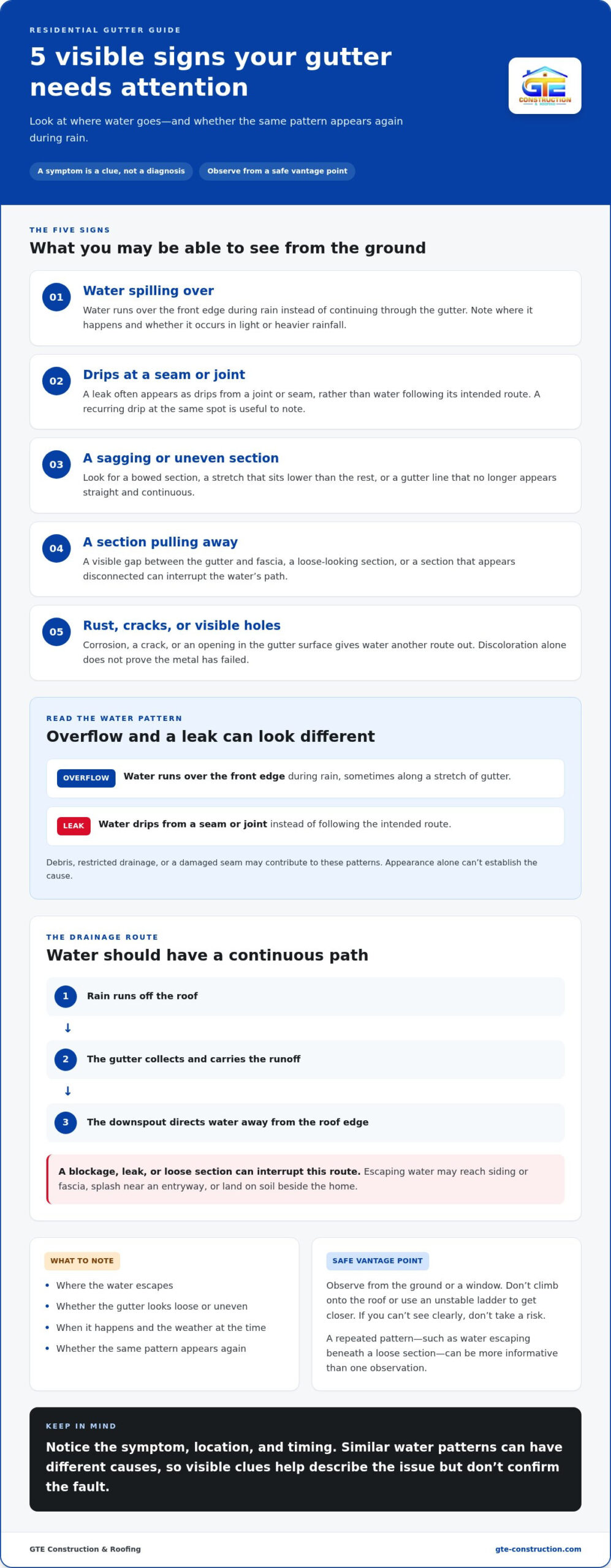
A few visible clues can help you decide what to investigate without getting on a ladder or identifying the exact fault yourself. The signs your gutter needs repair are most useful when you notice where water goes and whether the same pattern appears again during rain. A symptom is a clue, not a diagnosis: debris, restricted drainage, or a damaged component can sometimes create similar effects.
Water spilling over or leaking at seams
Gutter overflow is water escaping over the gutter edge instead of draining through the system. It may look like a sheet of water along one stretch during rain. A leak, by contrast, often appears as drips from a joint or seam. Debris, poor water flow, or a damaged seam may contribute to either pattern, so appearance alone can’t establish the cause.
From the ground, note where water escapes and whether it happens during light or heavier rainfall. The Rain gutter overview explains how gutters collect roof runoff and channel it away from the building. An interruption in that route is worth observing. A recurring drip at the same joint differs from occasional overflow along a clogged stretch, even though both deserve attention.
- Overflow: Water runs over the front edge during rain.
- Leak: Water drips from a seam or joint instead of following the intended route.
- Sagging: A section appears bowed, uneven, or lower than the rest.
- Separation: The gutter has pulled away from the fascia or a section appears disconnected.
- Rust or holes: Corrosion, cracks, or visible openings appear in the gutter surface.
Sagging, loose sections, rust, or visible holes
Look along the roof edge for a straight, continuous line. A gutter pulling away from the fascia may leave a visible gap, hang unevenly, or appear disconnected at a joint. A change in position is different from a small surface mark: it suggests the section may no longer be held in place as intended. Loose or separated sections can interrupt the path rainwater follows, though a ground-level view can’t confirm the underlying cause.
Rust, cracks, and holes also warrant attention, especially if you can see an opening or a stain that appears to spread. Discoloration alone doesn’t prove the metal has failed, but a visible hole or crack gives water another route out of the gutter. Note the location and whether there are nearby drips or overflow. Those details help distinguish an isolated mark from a broader drainage pattern.
Use a safe vantage point, such as a window or the ground, and avoid climbing an unstable ladder to inspect the roof edge. If you can’t see clearly, don’t take a risk to get closer. Record what is visible and observe again only when conditions are safe. A consistent pattern, such as one loose section and repeated water escaping beneath it, is more informative than a single observation.
How Gutter Damage Disrupts Drainage in Bay Area and Sacramento Homes
Gutters form part of a connected drainage route. Rainwater runs off the roof into the gutter, travels along its channel, and exits through downspouts directed away from the roof edge. As drainage and facility management specialists like CH Enviro emphasize, a gutter works only when water can travel continuously through the system to its outlet. A blockage, leak, or loose section can interrupt that route, changing where runoff goes even if the rest of the gutter looks intact.
What happens when rainwater escapes the gutter system?
Water escaping from a gutter may fall against siding or fascia, splash near an entryway, or land on the soil beside the home. The location and pattern matter. A drip beneath one joint differs from water spilling over a longer stretch, while runoff near a downspout may point to another part of the drainage path. These observations help narrow down what to investigate, but they don’t confirm the cause by themselves.
Repeated runoff beside the foundation deserves attention because water is regularly reaching that area instead of being carried away through the downspout. That doesn’t mean damage is inevitable, but it is a reason to observe the pattern and consider whether drainage needs correction. If runoff is also washing soil from beds or slopes, erosion control landscaping offers related guidance on managing water around the home.
Why local weather and debris patterns matter
Inspection timing is most useful when it helps explain the symptom. If water escapes during rain, note whether it happens as the rain starts or after water has been flowing for a while. If the issue appears after a dry stretch, consider whether leaves or other debris may have collected in the channel or near an outlet. These clues can help distinguish a recurring flow problem from one associated with accumulated debris.
GTE Construction & Roofing serves homes in the Bay Area and Sacramento, where individual properties can have different rooflines, nearby trees, and drainage layouts. A home beneath overhanging branches may collect debris differently from one with a more open roof edge. Rather than rely on a universal inspection calendar, pay attention to changes around your home and when you notice them.
Keep a brief record of where water escapes, whether the gutter looks loose, and the weather when you noticed the symptom. Observe from a safe position and don’t climb onto the roof to trace the route. If the pattern suggests a damaged or disconnected component, GTE’s residential gutter repair service can address gutter concerns in San Francisco, Sacramento, Alameda County, and Contra Costa County. Repair can restore the intended path from roof edge to downspout, while observations during rain and after debris accumulates can help clarify the problem.
Gutter Repair, Cleaning, or Replacement: How to Read the Signs
Overflow doesn’t automatically mean the whole gutter system needs replacing. Debris can obstruct water flow, while a loose connection or damaged seam may let water escape even when the channel is clear. Read the signs your gutter needs repair alongside the pattern: where the symptom occurs, whether it persists, and whether it points to an obstruction or a problem with the gutter itself. This comparison helps you decide what to investigate next, though appearance alone can’t confirm the cause.
| Observed sign | Possible category | Sensible next step |
|---|---|---|
| Overflow where visible debris has collected | Possible blockage or restricted flow | Arrange safe cleaning, then observe drainage again |
| Overflow despite a clear-looking channel | Possible flow, outlet, or system issue | Note when and where it occurs; consider an assessment |
| Recurring drip at a seam | Possible leak or damaged joint | Record the location and seek repair assessment |
| Gutter pulling away or sagging | Possible loose connection or support issue | Have the affected section assessed |
| Visible holes, cracks, or deterioration in several areas | Damage that may extend beyond one spot | Request a broader assessment of the system |
When cleaning may resolve the symptom
Leaves or other visible debris in a channel, or material obstructing an outlet, can indicate that cleaning may improve drainage. If cleaning is done safely, reassess how water flows afterward rather than assuming the cause is resolved. Cleaning removes an obstruction; it won’t reattach a loose section or repair a cracked, detached, or perforated gutter. If symptoms persist after debris is cleared, another issue may be involved.
When damage may call for repair or broader assessment
Persistent seam leaks, loose connections, and sagging warrant closer assessment of the affected section. If similar deterioration appears in several areas, a broader review can help establish whether the concern is localized or more extensive. Neither widespread wear nor a single sign automatically means replacement is necessary. The condition and extent of the system shape the appropriate scope.
A useful distinction is whether water flow improves after safe cleaning or whether the same leak, sag, or separation remains. Cleaning may address debris-related overflow, while damaged or loose components may call for gutter repair. Repeated, widespread deterioration is a reason to seek a professional assessment, not to assume the entire installation must be replaced. Age alone doesn’t settle the decision; visible condition and recurring symptoms provide more useful context.
Use the table as a starting point, not a diagnosis. If you can safely see debris, note its location. If you observe a recurring leak or a section out of alignment, record where it appears and when. Avoid climbing to investigate. Clear observations help guide the next step, whether that is cleaning, repair, or a more complete assessment.
What to Check Before Arranging Gutter Repair
A clear description of what you’ve noticed makes it easier to explain a gutter concern and determine what needs assessment. Keep your inspection to a safe vantage point on the ground or indoors. You’re documenting visible symptoms, not diagnosing hidden damage or testing the gutter yourself.
- Choose a safe viewing spot. From the ground or a window, look for sections that appear to sag, pull away, or be missing. Note visible holes, water marks, or debris only if you can see them clearly without climbing.
- Pinpoint the location. Record which side of the home or which section appears affected. Note whether water escapes at a seam, over the edge, or near a downspout.
- Describe when it happens. Write down whether the symptom occurs during rainfall, after rain has been falling for a while, or after debris becomes visible. Note whether you’ve seen it once or on repeated occasions.
- Capture changes safely. If daylight is adequate and conditions are safe, take clear photos from the ground. Images can show a visible gap, stain, or sag, but they can’t reveal every cause or replace an assessment.
- Include nearby details. Mention visible debris, the downspout’s location, and changes you’ve noticed since your last observation. Describe what you see rather than guessing about the cause.
Specific observations are more useful than a broad description such as “the gutter is leaking.” For example, note that water appears beneath a particular joint during rainfall, or that overflow returns in the same area after debris has collected. If you see water escaping more than once, include how often you’ve observed it and the conditions at the time.
Recurring overflow deserves attention, especially if the same area spills during separate rain events. An active leak is also worth documenting while it’s visible, provided you can observe from a safe place. If a section appears to be pulling away from the home, don’t touch it or try to reposition it. Record its location and appearance, then arrange an assessment. These signs may indicate different issues, and a ground-level view can’t confirm the underlying condition.
You don’t need to wait for a perfect photo or a complete explanation before describing the concern. Share what you observed, where it happened, and whether it repeated. That information helps distinguish a one-time symptom from a persistent pattern, while an assessment can determine the appropriate next step.
If your observations point to a recurring leak, overflow, or section pulling away, arrange residential gutter repair with GTE Construction & Roofing. GTE serves San Francisco, Sacramento, Alameda County, and Contra Costa County.
Gutter Repair in GTE Construction & Roofing Service Areas
When a gutter symptom keeps returning or a section appears damaged, an assessment can help clarify what needs attention. GTE Construction & Roofing provides residential gutter repair and installation in San Francisco, Sacramento, Alameda County, and Contra Costa County. An assessment can help identify the affected area and inform a suitable repair scope based on what’s visible and how water moves from the roof edge toward the downspouts.
What a gutter repair assessment can help clarify
A leak near a seam, a loose section, or recurring overflow can each point to a different part of the drainage system. Looking at the affected gutter area in relation to the roof edge and nearby downspout helps put the symptom in context. The goal is to understand the concern and determine an appropriate next step, not to assume every visible issue has the same cause or solution.
Your observations are useful starting information. Note the side of the property, the location of the symptom, and whether it appears during rain or after debris has collected. If you’ve taken photos safely from the ground, share them as additional context. A photo may show a visible gap or stain, while an assessment can consider the gutter section and its connection to the route water follows.
Arrange local help for a gutter concern
To describe the issue clearly, include the property location and the details you’ve observed. For example, you might report that overflow recurs near one corner during rainfall, or that a section looks displaced beside a downspout. Mention whether the symptom is repeated or newly noticed. You don’t need to identify a hidden cause; a precise description of what you can see is enough to start the conversation.
If the signs your gutter needs repair persist, or you can see a damaged or separated component, gutter repair is a practical next step for assessing the drainage concern. GTE Construction & Roofing serves homeowners across San Francisco, Sacramento, Alameda County, and Contra Costa County. Sharing the location, symptom, and safe ground-level photos can help explain what prompted your inquiry and where the concern appears.
For residential gutter repair or installation in these service areas, contact GTE Construction & Roofing to discuss the gutter concern and the observations you’ve gathered.
Take the Next Step With Confidence
You don’t need to identify the exact fault before acting. Keep a brief record of what you observe and update it if the same concern appears again. That gives you a clearer picture over time and helps separate a one-off sign from a recurring pattern. The signs your gutter needs repair are a reason to pay attention, not to guess at hidden damage or attempt a risky inspection.
If a gutter concern persists or a component looks damaged, share what you’ve noticed and arrange an assessment to clarify the appropriate scope. GTE Construction & Roofing provides residential gutter repair and installation. Contact GTE Construction & Roofing about gutter repair in San Francisco, Sacramento, Alameda County, or Contra Costa County.
Frequently Asked Questions
What are the most common signs that a gutter needs repair?
Common warning signs include recurring overflow, leaks at seams, sagging, sections pulling away, and visible holes or corrosion. These signs your gutter needs repair don’t reveal the exact cause on their own. From a safe spot on the ground, note whether a symptom appears near a corner, joint, or downspout, and whether it returns in similar conditions. Persistent problems or loose components warrant a professional assessment.
Can a leaking gutter be repaired, or does it need replacement?
A localized leak or loose connection may be repairable, but not every leak has the same solution. The appropriate scope depends on factors such as the gutter material, the damage’s location and extent, and the condition of connected sections. A leak confined to one joint differs from deterioration visible at multiple points. An assessment can help clarify whether focused repair is suitable or broader work should be considered.
Is gutter overflow always a sign that the gutter is damaged?
No. Leaves or another obstruction at an outlet can restrict water flow and contribute to overflow even if the gutter itself isn’t damaged. Poor flow can also occur alongside a leak or loose section, so one rainy-day observation doesn’t establish the cause. Note where water escapes and whether the symptom returns after safe cleaning. If overflow persists or a component appears damaged, arrange a closer assessment.
How do I know whether my gutters need cleaning or repair?
Visible leaves or debris, especially near an outlet, may suggest cleaning is needed. Holes, separated seams, sagging, or a section pulling away instead point to possible component damage. These clues aren’t a diagnosis, and cleaning won’t mend a damaged gutter. After an obstruction is addressed safely, observe whether water drains differently. If poor drainage returns, the cause may need further assessment rather than repeated cleaning alone.
Can damaged gutters cause water near a home foundation?
Yes. Runoff escaping from a gutter can land beside the home, creating a wet area near the foundation. That doesn’t mean every leak will damage the foundation, but repeated pooling or runoff in the same place is worth addressing. During rain, observe from a safe location where the water lands and whether it appears connected to a gutter or downspout. Share those details when discussing the site’s drainage concerns.
Is it safe to inspect a gutter from a ladder?
A ladder can create a fall risk, particularly on uneven ground or when the gutter is hard to reach. A safer first check is from a stable position on the ground, where you can look for visible changes without touching the system. Take photos only if the light and conditions allow you to do so safely. Don’t climb onto the roof or use an unstable ladder; arrange professional help if the issue can’t be seen safely.
When should I call for gutter repair after noticing a problem?
Arrange an assessment if leaks or overflow recur, a section sags or pulls away, or you can see holes or corrosion. A symptom seen once may have a simple explanation, but repeated trouble deserves attention. Before reaching out, note the affected side of the home, when the issue occurs, and whether it has changed. Safe ground-level photos can help describe the concern without requiring you to investigate at height.