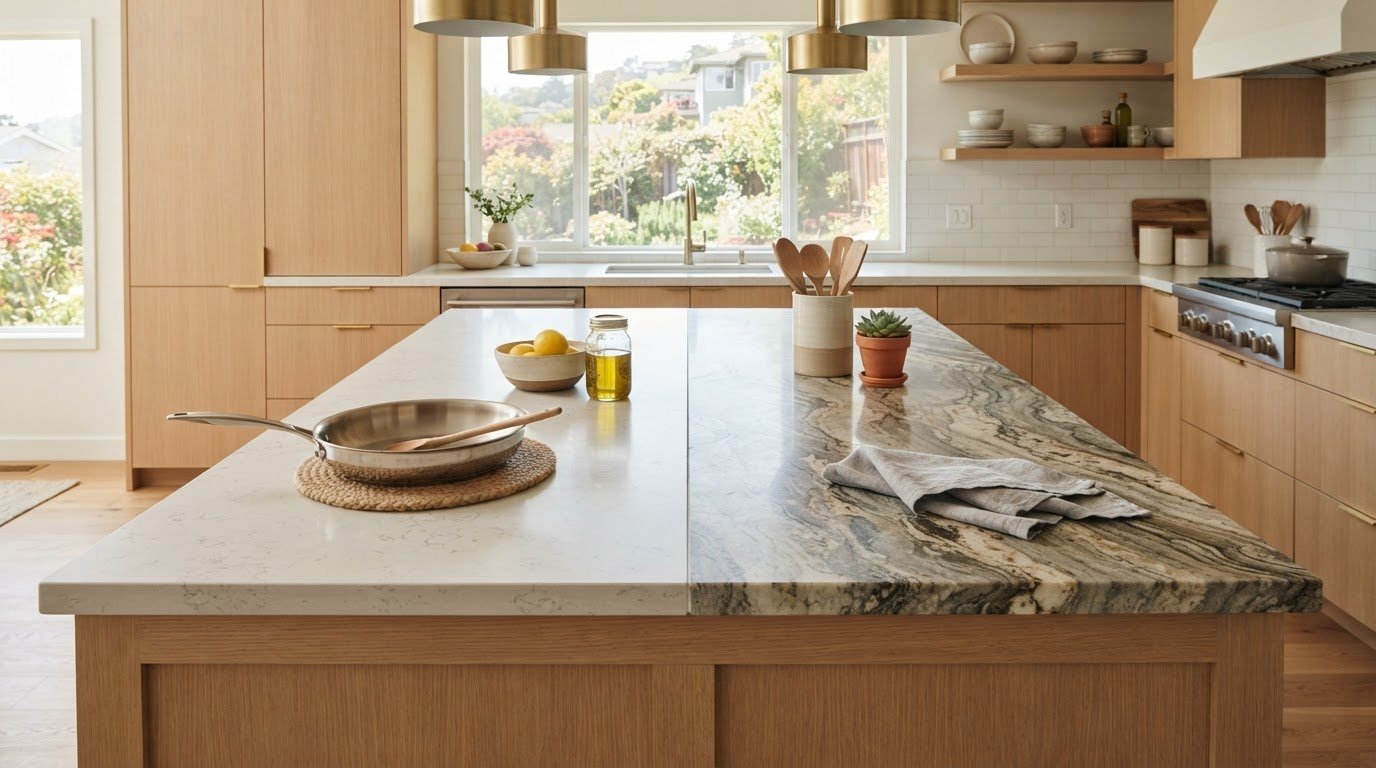
The countertop that needs less routine care isn’t the one that handles the most heat. When comparing quartz vs granite countertops for your kitchen, quartz is engineered from crushed natural quartz, resin, and pigments, while granite is natural stone. Granite can handle heat up to 1,200°F, compared with around 300°F for quartz, but quartz doesn’t need sealing and granite needs periodic sealing to help resist stains.
Both materials offer lasting appeal, so it makes sense to weigh everyday upkeep alongside appearance and budget. Installed cost depends on the slab, layout, edge details, and project scope. The project-specific price is provided after a quote request. This comparison explains how each surface is made and what that means for cost, heat resistance, appearance, and care, helping you choose with confidence.
Key Takeaways
- Granite handles more heat, while quartz can be damaged by hot cookware; use a protective pad with quartz.
- Granite is natural stone that needs periodic sealing, while engineered quartz doesn’t need sealing.
- Compare samples in your kitchen’s lighting to judge how natural granite patterns or quartz’s more consistent designs suit your space.
- Quartz and granite costs are generally comparable; slab selection and project details influence the final countertop cost.
- Understanding how granite is quarried and quartz is manufactured can help you choose a surface that fits your preferences for natural variation and design consistency.
Heat resistance
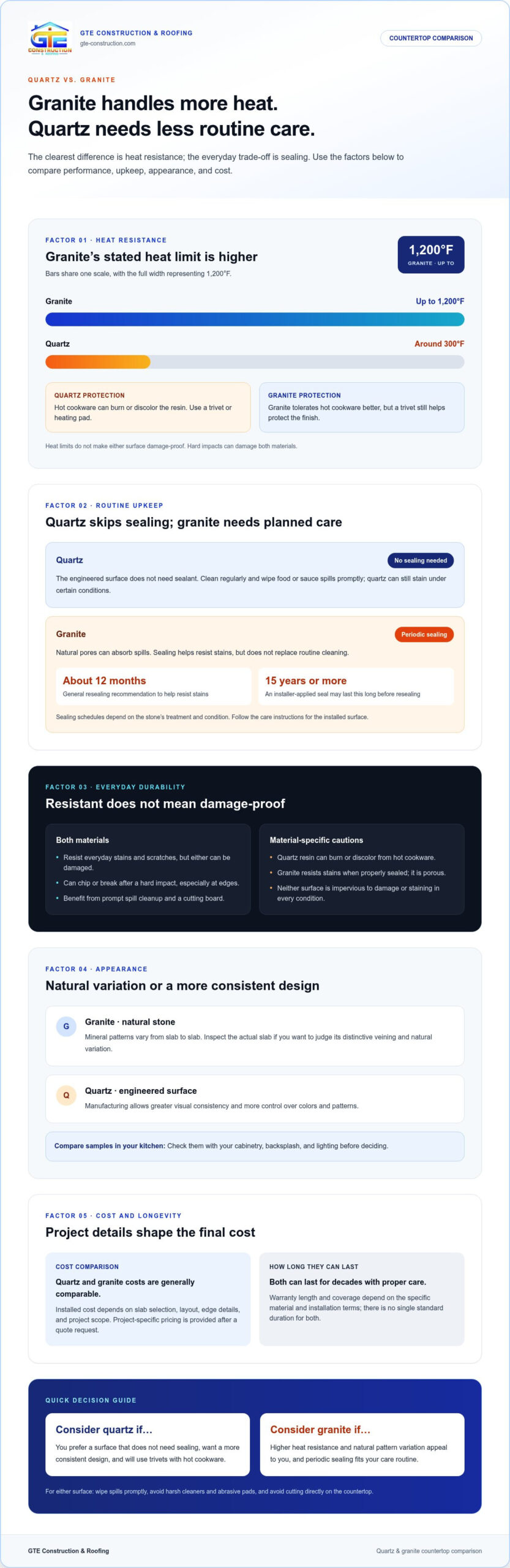
Granite handles more heat, while quartz needs protection from hot cookware. Both resist stains, scratches, and everyday wear, but neither is impervious to damage.
Quartz Durability and Heat Resistance
Quartz countertops top out around 300°F for heat resistance. Hot pots and pans can burn or discolor the resin in this engineered material, so place cookware on a trivet or heating pad. Quartz resists stains and scratches in everyday kitchen use, but spills can still mark it under certain conditions. Sharp tools and impacts can also damage the surface.
Granite Durability and Heat Resistance
Granite can handle heat up to 1,200°F, making it more heat resistant than quartz. Its natural stone surface tolerates hot cookware better, though using a trivet still helps protect the finish. Granite resists stains when properly sealed, but it is porous and needs periodic sealing. Both materials resist chipping and breaking, yet a hard impact can damage either surface.
How resistant are quartz and granite countertops to stains, scratches, and heat? Both resist everyday stains and scratches, but either can be damaged; granite handles up to 1,200°F, compared with around 300°F for quartz. Sealing helps granite resist stains, while trivets protect quartz from hot cookware.
| Material | Heat resistance | Stain resistance | Damage considerations |
|---|---|---|---|
| Quartz | Around 300°F | Resistant, but can stain | Hot cookware can burn or discolor resin |
| Granite | Up to 1,200°F | Resistant when properly sealed | Impacts can chip or break stone |
Choose quartz if you value a surface that doesn’t need sealing and will use trivets consistently. Choose granite if hot cookware is a frequent concern and periodic sealing suits your care routine. Veining and natural variation also affect appearance, but they don’t change either material’s basic heat limits.
For either material, use a cutting board rather than cutting directly on the counter. Wipe spills promptly, especially around seams and edges. With proper care, quartz and granite can last for decades, and either may serve for the lifetime of a home.
How long do quartz and granite countertops last, and what warranties are typical? Both can last for decades with proper care. Warranty length and coverage depend on the specific material and installation terms, so there is no single standard warranty duration for both surfaces.
Durability also depends on how the countertop is used and maintained. For example, sealed granite resists stains, while an unprotected quartz surface can be damaged by a hot pan. Avoid sharp impacts at the edges, where either material can chip or break. These habits help preserve the surface without treating either option as damage-proof.
What Are Granite Countertops?
Granite is 100% natural stone, cut from quarried slabs and finished for kitchen use. Its mineral patterns vary from slab to slab, while engineered quartz is manufactured for greater visual consistency. For maintenance, quartz doesn’t need sealing; granite is porous and needs periodic sealing to help resist stains.
How do quartz and granite countertops compare in maintenance and cleaning? Both can be cleaned by wiping away spills and food residue, but granite needs periodic sealing and quartz does not. Sealing helps limit stains on granite, while quartz requires no sealant.
Do quartz or granite countertops need sealing, and how often? Quartz countertops don’t need sealing. Granite should be resealed about every 12 months to help resist staining, although an installer-sealed granite countertop may not need resealing for 15 years or more.
Granite sealing and care
Granite’s natural pores can absorb spills, so sealing helps prevent stains and bacteria buildup. Properly sealed granite resists staining, but sealing doesn’t replace routine cleaning. Wipe spills promptly, especially oil, coffee, or dark sauces, rather than leaving them on the stone.
Sealing schedules can differ because the stone’s treatment and condition affect how long protection lasts. Granite historically required annual sealing, but an installer-applied seal may last 15 years or more. The general recommendation remains resealing about every 12 months to help resist stains. Follow the care instructions for the installed surface.
- Use a soft cloth and mild soap to clean everyday residue.
- Wipe spills promptly instead of letting them sit on the stone.
- Keep abrasive pads and harsh cleaners away from the finished surface.
- Use the recommended sealing interval for your granite countertop.
Quartz simplifies this part of ownership because it doesn’t need sealing. Its resin-bound surface still benefits from regular cleaning, particularly after cooking or food preparation. Wipe sauce spills from quartz promptly, just as you would from granite. Neither material is immune to staining in every condition.
Appearance can guide the decision, too. Granite offers natural patterns and variation, while quartz can provide a more consistent look. If you prefer stone with distinctive veining, inspect the actual granite slab, since each piece differs. If you want a coordinated pattern across the counter, compare quartz samples with your cabinetry and backsplash.
For granite, treat sealing as planned upkeep rather than a response to a visible stain. Record the installation date and care instructions, then note each resealing. This helps you track the countertop’s maintenance history and distinguish routine cleaning from protective care.
Choosing based on appearance and maintenance
Granite offers natural variation, while engineered quartz provides more control over colors and patterns. Compare actual samples with your cabinetry, lighting, and care preferences before deciding.
Natural Countertop Appearance
Granite is 100% natural stone, so its mineral patterns and color shifts form naturally rather than through a manufacturing recipe. One slab may show dramatic veining; another may have a quieter, speckled appearance. If you prefer distinctive variation, view the specific slab, since a small sample may not show the full pattern across a counter.
Granite’s natural character can make coordination more involved. Hold a slab sample beside cabinet doors, flooring, and backsplash materials, then view them in daytime and evening lighting. For example, granite with strong movement may become the room’s focal point, while a restrained pattern can complement bolder cabinet colors. Granite’s appearance is unique, not uniform.
Engineered Quartz Appearance
Engineered quartz is made with about 90-93% natural quartz crystals mixed with resins and pigments. Manufacturing lets makers control colors and patterns, so slabs can offer a more consistent look than natural stone. Quartz became popular between 2015 and 2016 as technology improved, including designs that mimic veined white marble.
Quartz’s engineered process can help coordinate a precise color with cabinetry or repeat a similar appearance across several work surfaces. Compare samples with the kitchen’s finishes, because a pattern’s scale can look different across a broad countertop. Quartz is engineered stone, not a solid slab of natural stone, and its resin content also affects where it is suitable.
When comparing quartz vs granite countertops for kitchen use, start with the visual effect and care routine you prefer. Quartz doesn’t need sealing, while granite needs periodic sealing to help resist stains. Both materials can stain under certain conditions, so clean spills rather than treating either surface as maintenance-free.
Sun exposure can matter near large windows or in an outdoor kitchen. Quartz resin can fade under ultraviolet light, which generally makes quartz unsuitable outdoors; granite is more UV-resistant than many quartz surfaces. Consider where sunlight falls during the day, not just how a sample looks under showroom lighting.
Use this practical comparison before selecting a slab:
- Prefer natural variation: Examine granite slabs for distinctive veining and mineral patterns.
- Prefer coordinated color: Compare quartz samples with cabinets and backsplash materials.
- Want less sealing upkeep: Quartz doesn’t need sealing; granite needs periodic sealing.
- Planning an outdoor surface: Account for quartz resin’s sensitivity to UV exposure.
A quartz vs granite countertops for kitchen renovation decision becomes clearer when you view samples beside fixed room materials. This comparison helps reveal whether granite’s natural variation or quartz’s engineered consistency better suits your design.
Quartz and granite countertop costs
For a kitchen remodeling quote, price depends on the slab, layout, edge details, cutouts, and installation scope. A project-specific price is provided after a quote request. Production also has environmental impacts: granite is quarried and transported, while engineered quartz combines natural crystals with resin and pigments, each requiring extraction, processing, and transport.
Quartz Countertop Costs
Quartz is an engineered countertop material, and its cost varies with the selected design and fabrication requirements. Premium quartz designs can cost more, particularly when the pattern or finish is specialized. Slab dimensions, sink and cooktop cutouts, edge profiles, and seams also shape the project scope. Compare samples and layouts together before choosing a surface.
Quartz manufacturing uses about 90-93% natural quartz crystals mixed with resins and pigments. That composition helps create consistent colors and patterns, but the design itself affects the material selection. A simple pattern and a premium veined design can occupy different price categories. Installation details, including countertop shape and access for fitting, add further cost factors.
Granite Countertop Costs
Granite is natural stone, and its cost depends on the slab’s rarity, pattern, and availability. Granite is priced in levels, starting at level 1 and extending to level 3 and above. Rare exotic patterns can be especially costly. A small sample may not show the full appearance of the countertop, so review the specific stone before deciding.
Granite and quartz are generally comparable in price, but premium quartz designs and rare granite patterns can raise material costs. The installed total also reflects the countertop’s dimensions, cutouts, edge treatment, seams, and fabrication. For example, a layout with a sink opening and several joined sections requires different fabrication from a straightforward counter.
To compare estimates meaningfully, align the project details first. Use the same countertop dimensions, sink and cooktop locations, edge profile, and backsplash scope. Then compare the selected slab and fabrication requirements. This separates differences in countertop material from differences in the work included.
- Slab selection: Compare the specific quartz design or granite pattern.
- Layout: Note counter dimensions, corners, seams, and cutouts.
- Finish details: Identify the edge profile and backsplash scope.
- Installation: Compare the fabrication and fitting work included.
Maintenance also affects ownership decisions, though it doesn’t set the initial material price. Quartz doesn’t need sealing, while granite needs periodic sealing to help resist stains. Consider this routine when weighing the materials, alongside the slab and installation factors that shape the project total.
For an accurate comparison, prepare the kitchen measurements and list each opening, edge, and finish preference. A quote request can then account for the chosen countertop material and the project’s specific fabrication and installation scope.
How granite and quartz countertops are made
The key difference begins before fabrication: granite is quarried natural stone, while quartz is engineered from crushed crystals. That distinction shapes each material’s pattern, consistency, and production process. Knowing how the slabs are formed helps explain why one surface varies naturally and another can be designed for a more controlled appearance.
Granite begins as large deposits of natural stone. Blocks are extracted from a quarry, then cut into slabs suitable for countertops. Mineral composition creates the colors, speckles, and veining in each slab. Because those patterns form naturally, two pieces of granite rarely match exactly. The slab supplies its character, rather than a recipe of added pigments.
After cutting, granite slabs are finished for kitchen use. Fabrication shapes the edges and creates openings for features such as sinks and cooktops. The chosen slab’s veining can guide how pieces are laid out, especially across seams or corners. Viewing the actual stone is useful: a small sample may not show how the patterns will appear across a broad countertop.
Quartz production follows a different route. Manufacturers combine crushed natural quartz crystals with resin binders and pigments. The resulting engineered stone is formed into slabs, with pigments and production choices influencing its colors and patterns. Quartz countertops contain about 90-93% natural quartz crystals mixed with resins and pigments. The remaining ingredients help bind the material and shape its finished appearance.
That engineered process allows more control over visual consistency. A homeowner seeking repeated colors across a kitchen may prefer quartz, while someone drawn to one-of-a-kind mineral movement may favor granite. Quartz designs can also imitate veined white marble. Manufacturing technology improved to produce these styles, contributing to quartz’s popularity between 2015 and 2016.
Both materials still require skilled fabrication after slab production. A fabricator measures the kitchen, plans cutouts, and shapes edges to suit the layout. For example, a sink opening and corner seam must align with the cabinetry and adjoining slab sections. Granite’s natural pattern may require careful placement; quartz’s engineered pattern may offer more consistent visual flow.
Neither production method makes one material universally superior. Granite preserves the beauty and variation of natural stone, while engineered quartz offers controlled colors and patterns. Rare granite patterns and premium quartz designs can be expensive, so a distinctive look may affect material selection. The practical takeaway: choose based on whether natural variation or engineered consistency better fits your design priorities.
For precise measurements and coordinated countertop planning as part of a kitchen project, plan your kitchen remodel.
GTE Construction & Roofing: New Roofing & Installation
GTE Construction & Roofing offers kitchen remodeling for homeowners planning a broader update alongside a new countertop. Once you’ve weighed quartz and granite, consider how the surface will coordinate with cabinetry, layout, and the rest of the room. A remodeling project can bring those decisions together, so material selection fits the kitchen’s overall design and practical needs.
Kitchen remodeling may be the right next step when replacing a countertop is part of a larger change to the space. GTE Construction & Roofing also offers bathroom remodeling, new roofing installation, and roofing repairs. For help planning a kitchen remodeling project in Alameda or Contra Costa County, contact GTE Construction & Roofing.
Plan a Kitchen That Works as a Whole
Choosing quartz vs. granite countertops for your kitchen is one part of shaping a room you’ll use every day. Before finalizing the surface, consider how the project fits your wider plans: a countertop replacement may stand alone or be part of a kitchen remodel involving cabinetry, layout, and finishes. Seeing those decisions together can help create a more cohesive result.
GTE Construction & Roofing offers Kitchen Remodeling for homeowners planning changes to the kitchen, along with New Roofing & Installation and Roofing Repair for separate home improvement needs. The next step is to discuss the scope of your project and the improvements you want to make. Contact GTE Construction & Roofing to talk through your plans and move forward with confidence.
Frequently Asked Questions
What Is Quartz?
Quartz is a natural mineral, but quartz countertops are engineered surfaces rather than slabs of solid natural stone. They contain about 90-93% natural quartz crystals combined with resin and pigments. That manufacturing process helps create controlled colors and patterns. The distinction matters: choosing a quartz countertop means selecting both a mineral-based material and a manufactured design, not a piece of stone shaped directly from a quarry.
Which One Should You Choose?
Choose based on the qualities you value most in daily use. Quartz suits homeowners who want coordinated designs and no sealing routine; granite suits those drawn to the distinct patterns of natural stone. Think about your cooking habits, care preferences, and cabinetry. A useful next step is comparing full-size or large samples against your kitchen finishes, rather than choosing from a small image alone.
What are the main differences between quartz and granite kitchen countertops?
Quartz is manufactured from natural crystals, resin, and pigments; granite is quarried natural stone. Their most practical differences are heat tolerance, maintenance, and pattern variation. Granite handles greater heat but needs periodic sealing, while quartz avoids sealing but needs protection from hot cookware. Granite patterns form naturally, whereas engineered quartz can provide more consistent colors. Both can stain or sustain damage in certain conditions.
How much do quartz and granite countertops cost per square foot installed in the U.S.?
Installed cost depends on the selected slab, countertop dimensions, cutouts, edge details, seams, and installation scope. Quartz and granite are generally comparable, though premium quartz designs and rare granite patterns can cost more. The project-specific price is provided after a quote request. Compare estimates using the same layout and finish requirements so the material and installation scopes are comparable.
Which is more durable for kitchens, quartz or granite?
Both materials are highly durable for typical kitchen use and can last for decades with proper care. Neither is damage-proof: a hard impact can chip or break either surface, and staining can occur under certain conditions. Their vulnerabilities differ. Quartz needs protection from heat, while granite’s stain resistance depends on sealing. For either countertop, use a cutting board and avoid striking edges with heavy cookware.
What colors, patterns, and edge styles are available for quartz versus granite?
Quartz pigments and manufacturing allow a broad range of coordinated colors and repeatable patterns, including designs that evoke veined marble. Granite’s colors and patterns come from its natural mineral composition, so each slab has its own variation. Both materials can be fabricated with different edge profiles, such as eased, rounded, or beveled edges. The finished look depends on the chosen slab, profile, and how seams meet.
What should homeowners consider when choosing between quartz and granite for a kitchen?
Consider how the surface will look beside cabinets, flooring, and backsplash materials, then weigh care requirements against cooking habits. Sun exposure matters too, since quartz resin can fade under ultraviolet light and is generally unsuitable outdoors. For kitchen planning in San Francisco, Sacramento, Alameda County, or Contra Costa County, compare samples in the room’s actual lighting. This can reveal undertones that look different under showroom lights.
How do countertop installation costs and timelines compare for quartz and granite?
Quartz and granite take the same amount of time to fabricate and install. The lead time before work begins depends on local availability of the chosen color and finish. Costs depend on slab selection, measurements, cutouts, edge details, seams, and installation scope. For a useful comparison, align those specifications across estimates and account for the same countertop area and finishing details in each project plan.