Roof size is the starting point for understanding a replacement estimate, but it is not the whole picture. Breaking down a new roof estimate means considering measured roof area alongside material choices, labor, tear-off and disposal, underlayment, and property protection. The scope of work explains why roofs of similar size can have different estimates.
It is reasonable to want a clear total before committing to a major home project. A useful estimate spells out the included work, specified materials, and circumstances that could affect the scope, such as repairs to the roof deck if damage is found.
This guide explains how roof size shapes an estimate, how materials and their expected lifespans compare, and how debris removal and property protection affect the work. You’ll also see what line items to look for so the estimate is easier to understand and compare.
Key Takeaways
- Compare estimates by the measured roof area and the full scope of work, not just the bottom-line total.
- Look for tear-off, disposal, underlayment, flashing, ventilation, permits, and possible decking repairs in the listed work.
- Roof pitch, complexity, height, and material choice can all affect labor and project cost.
- Consider both material lifespan and upfront cost when weighing roofing options.
- Check how the estimate accounts for debris removal and protection of your home and surrounding property.
How much does a roof replacement cost?
Roof replacement estimates depend on measured area, selected materials, roof design, and the work included. A national average can offer context, but an estimate for your home reflects its specific roof and project scope.
Factors That Influence Replacement Costs
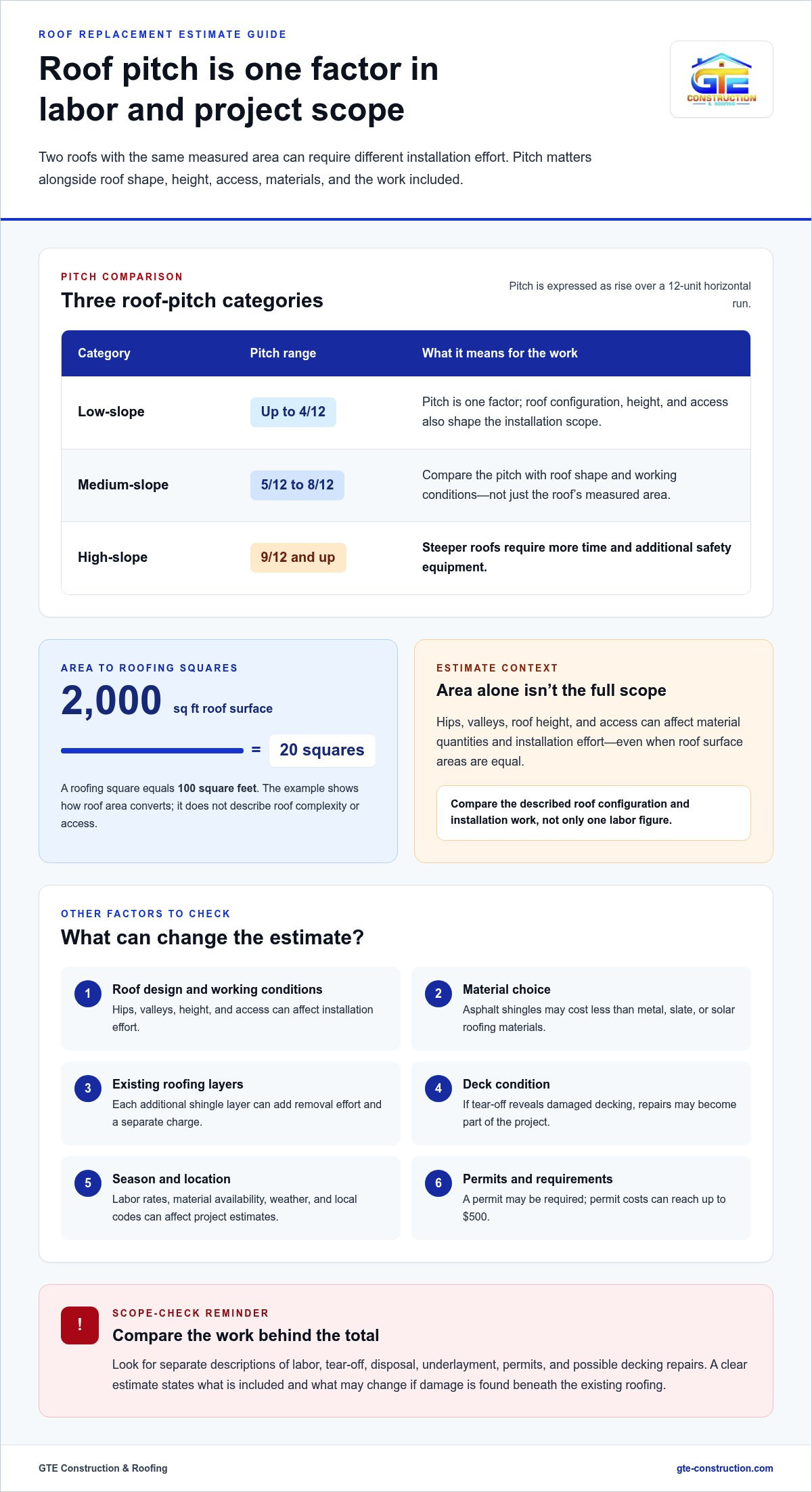
Roof replacement costs are shaped by the roof’s size, pitch, complexity, location, labor, and selected materials. These factors matter because homes with similar floor areas may have different roof surfaces and work requirements. A 2,000-square-foot roof surface contains 20 roofing squares, but size alone doesn’t describe its hips, valleys, height, or access. Those details affect material quantities and installation effort.
Material selection also changes the scope. Asphalt shingles may cost less than metal, slate, or solar roofing materials. This comparison describes material categories, not a project quote. Weather and regional conditions can influence material availability and scheduling, while local labor rates vary. Consider an estimate as a breakdown of your roof’s dimensions, materials, and required work, not a figure determined by home size alone.
Tear-Off and Disposal Costs
Tear-off means removing the existing roofing before installing the replacement system; disposal covers hauling away the debris. These line items matter because existing layers affect removal effort, waste volume, and the preparation needed before new materials are installed. Each additional shingle layer typically adds a separate charge, so the number of layers can change the scope.
Check how the estimate accounts for removal and disposal instead of assuming they are included in installation. A complete scope distinguishes tear-off from new materials and labor. Debris volume, roof access, and the condition beneath the existing roofing can affect the work. If removal exposes damaged decking, repairs may become part of the project. Clear itemization explains what the estimate covers and why the total may change once the roof’s actual condition is visible.
Labor and Roof Complexity
Labor costs cover the work of removing old roofing, preparing the surface, and installing the new system. Roof design and working conditions can affect labor costs and the overall estimate. Roof pitch is one useful indicator: low-slope roofs reach up to 4/12, medium-slope roofs range from 5/12 to 8/12, and high-slope roofs begin at 9/12.
Steeper roofs require more time and additional safety equipment, while complex shapes may require careful fitting around hips and valleys. Roof height and access also affect the work sequence. These details explain why roofs with equal surface area can require different labor. Look for a description of the roof configuration and installation scope, not just a single labor figure.
Seasonal, Location, and Permit Costs
Season and location can affect project estimates through labor rates, material availability, weather, and local building codes. Fall and spring are popular, pricier seasons for roof replacement in the United States. Regional differences matter too: local labor markets and material supply influence pricing, while code requirements may affect the work included.
Permit and building-code requirements depend on your local jurisdiction; local building departments administer applicable rules. Regional code differences can affect project scope, so an estimate should identify permit-related work and relevant requirements. A permit may be required, and permit costs can reach up to $500. Labor, tear-off, disposal, and underlayment should also appear as distinct scope items: labor covers installation, removal and disposal handle existing roofing, and underlayment forms a layer beneath the new covering.
Debris removal and property protection
Roof replacement can involve more than installing new shingles, including removal and debris handling. A well-defined scope explains what will be removed, how waste will leave the property, and how nearby areas will be protected. These details clarify what removal includes and distinguish disposal work from installation.
Estimates may price tear-off and disposal by roof area. A roofing square equals 100 square feet, so the units matter when comparing line items.
Existing shingles influence the removal plan. A roof with multiple shingle layers takes more effort to strip than a single-layer roof, and each additional layer can increase removal and disposal costs. The estimate should describe the layers included in the tear-off scope. That detail shows whether the quoted removal covers the full roof or only its top layer.
Before work begins, homeowners can move vehicles, patio furniture, and planters away from the work area. Crews can then place protective coverings near landscaping and exterior surfaces where shingles or nails may fall. Doors, windows, shrubs, and walkways help determine where protection is most useful. These preparations help limit disruption as debris moves from the roof to collection areas.
Removal can expose the roof deck beneath old shingles. If the decking is damaged, repairs may be needed before new roofing goes on. This work is separate from hauling away debris, so a clear estimate distinguishes removal, disposal, and any deck repair. That distinction explains why the final scope may change after the old material comes off.
Look for the disposal method and cleanup details in the written scope. Check for descriptions of tear-off, hauling, debris collection, and protection for the home and surrounding property. A cleanup plan may include collecting loose debris around the work area and checking accessible ground areas for nails. These practical details make the removal process easier to understand before work starts.
For a replacement project, compare removal and site-preparation details alongside the new roofing scope. Roofing installation options can be a useful next step as you consider the work your home needs.
What roofing materials are included in replacement estimates?
A replacement estimate should identify the roofing materials and related work included, not simply name a shingle type. Roofing contractors commonly measure materials by the square, equal to 100 square feet. That unit helps connect the roof’s measured area with the quantities listed for shingles, underlayment, and other components.
Warning signs include a total price without a defined scope or missing descriptions of tear-off, disposal, underlayment, flashing, ventilation, permits, and possible decking repairs. If these items are unclear, you cannot tell whether the work is included or excluded.
Read the Material Descriptions
Start by identifying the primary roof covering and its specific material category. Asphalt shingles, metal, tile, and slate differ in appearance, weight, and installation requirements. Asphalt shingle roofing may cost less than metal, slate, or solar roofing materials, but price alone does not show whether the complete system is included.
Next, look for the supporting layers and components. Underlayment sits beneath the roof covering, while flashing protects joints and transitions. Ventilation components also affect how the roofing system is completed. A detailed estimate names these items or clearly describes their scope, making it easier to understand what the contractor plans to install.
Check Quantities and Allowances
Roofing estimates may include a 10% to 15% material waste allowance for hips and valleys. These angled intersections require cuts, so the amount ordered can exceed the roof’s measured surface area. Compare the stated roof area, roofing squares, and waste allowance to see how the material quantity was calculated.
For example, a 2,000-square-foot roof surface equals 20 roofing squares before any waste allowance. That calculation gives you a reference point for reviewing listed quantities. It doesn’t establish a universal material order, because roof shape and layout affect cuts. The estimate should make its measurement basis understandable rather than presenting quantities without context.
Compare Contractor Estimates
Compare estimates by scope, not just by total. One contractor may include permits, disposal, and ventilation, while another may list those items separately. A lower-looking total may therefore cover less work. Align the material type, removal scope, and included components before deciding which estimate describes the more complete project.
Check whether each estimate describes tear-off, disposal, underlayment, flashing, ventilation, permits, and potential decking repairs. Also compare shingle type, measured area, and waste allowance. If a material is described only as “asphalt,” look for a clearer written description of the roofing product and scope. Specific line items help distinguish a complete estimate from one that leaves key project costs outside its stated total.
A detailed roofing estimate connects material names, quantities, and installation scope in one document. Reviewing these elements together helps you understand what the estimate covers and where bids differ.
Roofing material prices and lifespans
Roofing materials differ in upfront cost, expected service life, and warranty terms. Comparing these factors helps you understand what a material choice means beyond its appearance. Average material figures across the United States vary, and these are strictly material figures, not a complete roof replacement estimate.
Compare Material Costs
A roofing square equals 100 square feet, so compare estimates using the same unit. When you work with GTE Construction & Roofing, you can expect clear breakdowns per square.
Other materials occupy a different price range. Material prices vary with product type and selection, so the named material matters more than a broad label such as “shingles.” For example, two asphalt estimates may specify different shingle grades, changing the material comparison even when roof areas match.
Weigh Lifespan and Weather
Asphalt roofing has an estimated lifespan of 10 to 20 years, while clay tile is estimated at 50 to 100 years. These ranges help frame a long-term comparison, but they aren’t a promise of service life for an individual roof. Installation quality, maintenance, and exposure to extreme weather influence how roofing materials perform over time.
A longer estimated lifespan may come with a higher initial material cost. Consider the replacement interval alongside the material price, rather than treating the lowest upfront figure as the only measure of value. Roof design and the supporting structure’s condition also matter. Clay tile, for example, may require an assessment of the roof system before selection.
Understand Warranty Terms
Material warranties and workmanship warranties cover different things. Atlas shingle material warranties range from 25 to 50 years, depending on the product line. Most contractors offer workmanship warranties lasting 1 to 10 years. Read the written terms to understand which product or installation issue each warranty addresses.
Underlayment coverage can run from 25 to 50 years, depending on the selected material. Compare its coverage and conditions with the material warranty, rather than assuming the longer stated term covers every component or repair.
Account for Decking
Roof decking supports the roofing materials, so its condition affects the completed system. This is separate from the shingle or tile price. Look at how the estimate describes decking work, especially if removal reveals deterioration that was not visible beforehand.
Use a consistent comparison: note the material grade, price unit, expected lifespan, warranty terms, and decking scope. These details make an estimate easier to assess without treating a product warranty as a guarantee for the entire roofing system.
Cost estimates by roof size
Roof area gives a useful starting point for understanding a replacement estimate, but it doesn’t determine the total by itself. Roofing contractors commonly measure materials in squares, with one roofing square equal to 100 square feet. Use the roof’s measured surface area, not simply the home’s interior square footage, when comparing estimate details. Breaking down a new roof estimate starts with understanding that measurement.
These examples convert roof surface area into roofing squares:
- A 1,000-square-foot roof equals 10 squares.
- A 1,500-square-foot roof equals 15 squares.
- A 2,000-square-foot roof equals 20 squares.
- A 2,500-square-foot roof equals 25 squares.
- A 3,000-square-foot roof equals 30 squares.
The conversion helps you check whether the quantity basis is clear. It isn’t a complete roof replacement cost calculation: each estimate also depends on materials, roof pitch, complexity, labor, removal, and required repairs. A 2,000-square-foot roof with a straightforward layout may require different work from the same area with multiple hips, valleys, or difficult access. A useful way of breaking down a new roof estimate is to separate area from the work that area requires.
Why Surface Area Changes the Estimate
As roof area increases, the project generally requires more covering material and installation work. But square footage does not show how much cutting, fitting, or preparation the roof needs. Roof shape affects material quantities, and a steep or complex design can make installation more difficult. That is why size is a useful comparison point, not a stand-alone price predictor.
Check that estimates use the same roof-area basis. One figure might describe the home’s floor area, while another measures the sloped roof surface. These numbers are not interchangeable. Roof pitch and overhangs affect the actual surface area, so confirm that each estimate describes the roof being replaced rather than relying on the home’s footprint.
Compare Scope Alongside Size
For a meaningful comparison, pair each estimate’s measured area with its listed work. Note the roofing material, tear-off, disposal, underlayment, flashing, ventilation, decking repairs, and permits. If bids use different materials or include different work, their totals do not represent identical projects, even when both cite the same square footage.
Permits and local building requirements can also affect the project scope. Regional labor rates and material availability influence estimates, while roof condition can bring decking repairs into the work. Compare roof dimensions and included components rather than ranking estimates by size or total alone.
Use the square-footage conversion as a practical first check, then review the full scope behind each estimate. For a roof measured at 2,000 square feet, confirming its 20-square basis helps clarify material quantities. Request a roof replacement estimate based on your roof’s dimensions and project requirements.
GTE Construction & Roofing: New Roofing & Installation
GTE Construction & Roofing provides New Roofing & Installation for homeowners planning a roof replacement. If your roof’s age, condition, or repair needs have you weighing replacement, a clear estimate can help you understand the scope, material choices, and work involved.
Use this guide to identify the questions your estimate should answer: how the roof is measured, which materials are included, and whether removal and related work appear in the scope. For localized damage rather than a full replacement, Roofing Repair may be the more relevant service. The right starting point depends on whether your roof needs targeted work or a complete new installation.
For help with your roofing project, contact GTE Construction & Roofing.
Make Your Next Roofing Decision With Clarity
A roof estimate can be a useful planning tool, not just a figure to approve. Use it to clarify the work your home needs, understand which choices matter most, and identify questions to resolve before scheduling a project. Breaking down a new roof estimate carefully can help you move forward with a clearer understanding of the scope and priorities.
When you’re ready to discuss your roof, GTE Construction & Roofing offers New Roofing & Installation for replacement projects and Roofing Repair for targeted problems. The next step is a conversation about your home’s needs and the work you’re considering. Contact GTE Construction & Roofing to discuss your roofing project. With a clear scope and the right support, you can approach your next decision with confidence.
Frequently Asked Questions
Are there extra fees for disposing of old shingles?
Disposal may be itemized separately from installation, so read the estimate’s removal and hauling details. These figures use different units and scopes. Compare the stated measurement and confirm whether cleanup and disposal are included in the quoted work.
What if my roof has more than one layer of shingles?
Additional shingle layers mean more material must be removed before replacement. For example, a roof with two existing layers needs the removal scope to account for both, not just the visible top layer. Check which layers the estimate includes, since the amount of tear-off affects debris handling and preparation for new roofing.
What underlayment comes with new roof installation?
The estimate should name the underlayment type and show how much the project requires, rather than relying on a generic label. Match the unit and product description to the roof area when reviewing quantities and material costs.
What line items should a new roof estimate include?
Look for separate descriptions of roofing materials, labor, tear-off, disposal, underlayment, flashing, ventilation, permits, and potential decking repairs. For example, an estimate might list shingle installation but leave removal or damaged decking outside its scope. The written breakdown should clarify which work is included and how quantities are measured. This makes it easier to spot exclusions before comparing totals or approving a project.
What is the average cost to replace a roof in the United States?
These ranges differ because roof size, pitch, materials, location, and project scope vary. Treat an average as a planning reference, not a substitute for an estimate based on your roof’s actual dimensions and condition.
How much does roof replacement cost per square foot by roofing material?
These are material figures, not total installed replacement costs. Labor, roof design, and related work contribute to the project total, so compare material prices separately from complete estimates.
What roofing materials and quantities are listed in the estimate?
An estimate should name the roof covering and supporting materials, then state their quantities and units. Contractors commonly measure roofing materials by the square, equal to 100 square feet. A roof with hips and valleys may include a 10% to 15% material waste allowance. Check that the estimate identifies the measured roof area, material type, and allowance so you can understand how the order quantity was calculated.
How can I compare roofing estimates from different contractors?
Compare the written scope before judging totals. Check that each contractor measured the same roof area and specified comparable materials, removal, disposal, underlayment, flashing, ventilation, permits, and possible decking repairs. One estimate may include work another lists separately. Aligning these details reveals meaningful differences in scope. Keep material grades and quantity assumptions in view, since matching roof dimensions alone does not make two estimates equivalent.