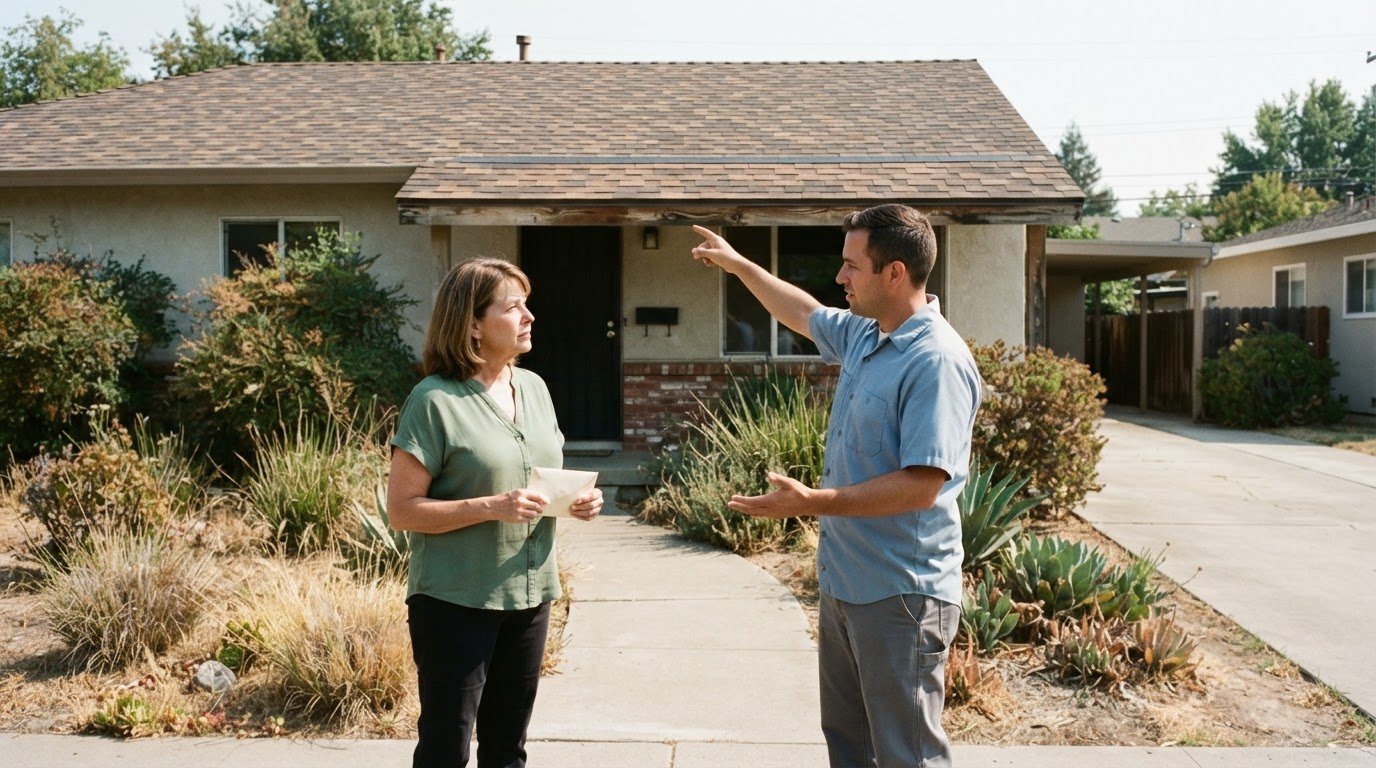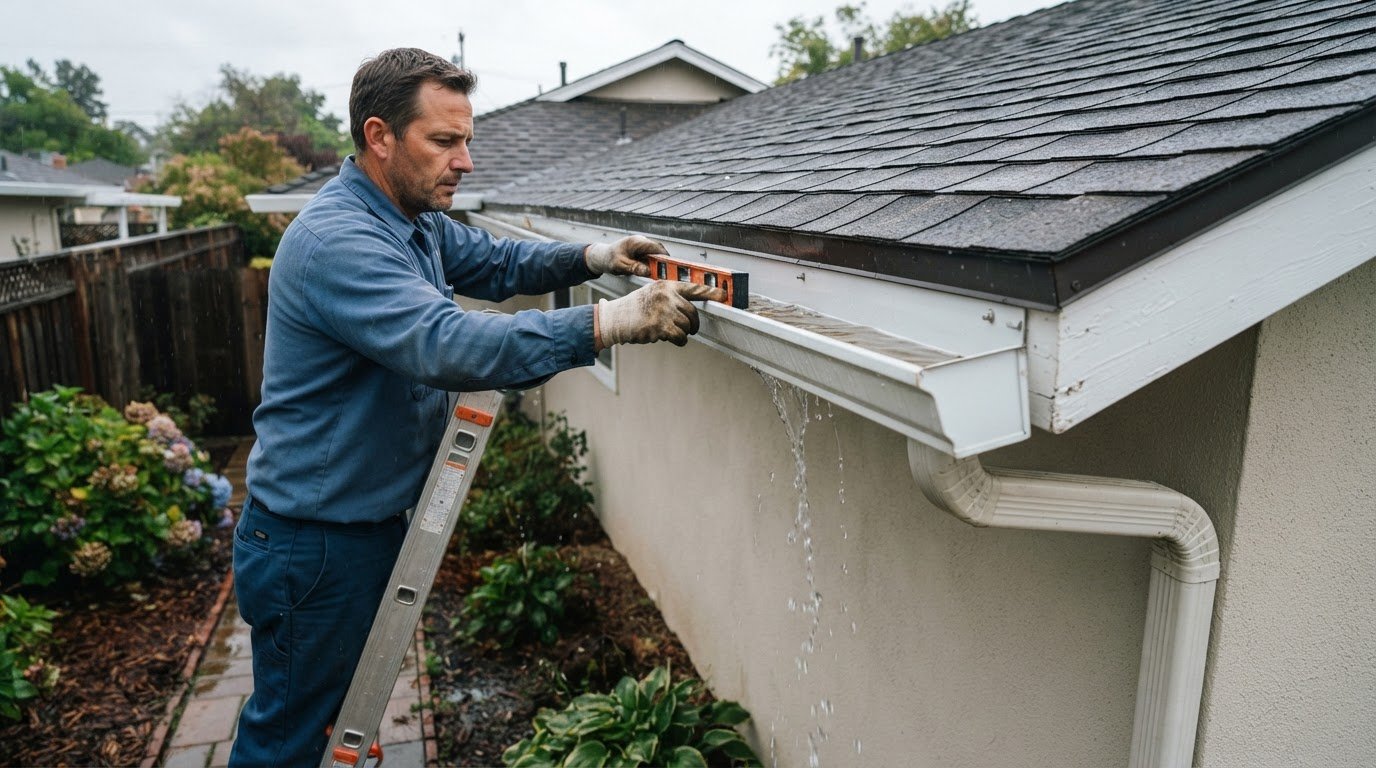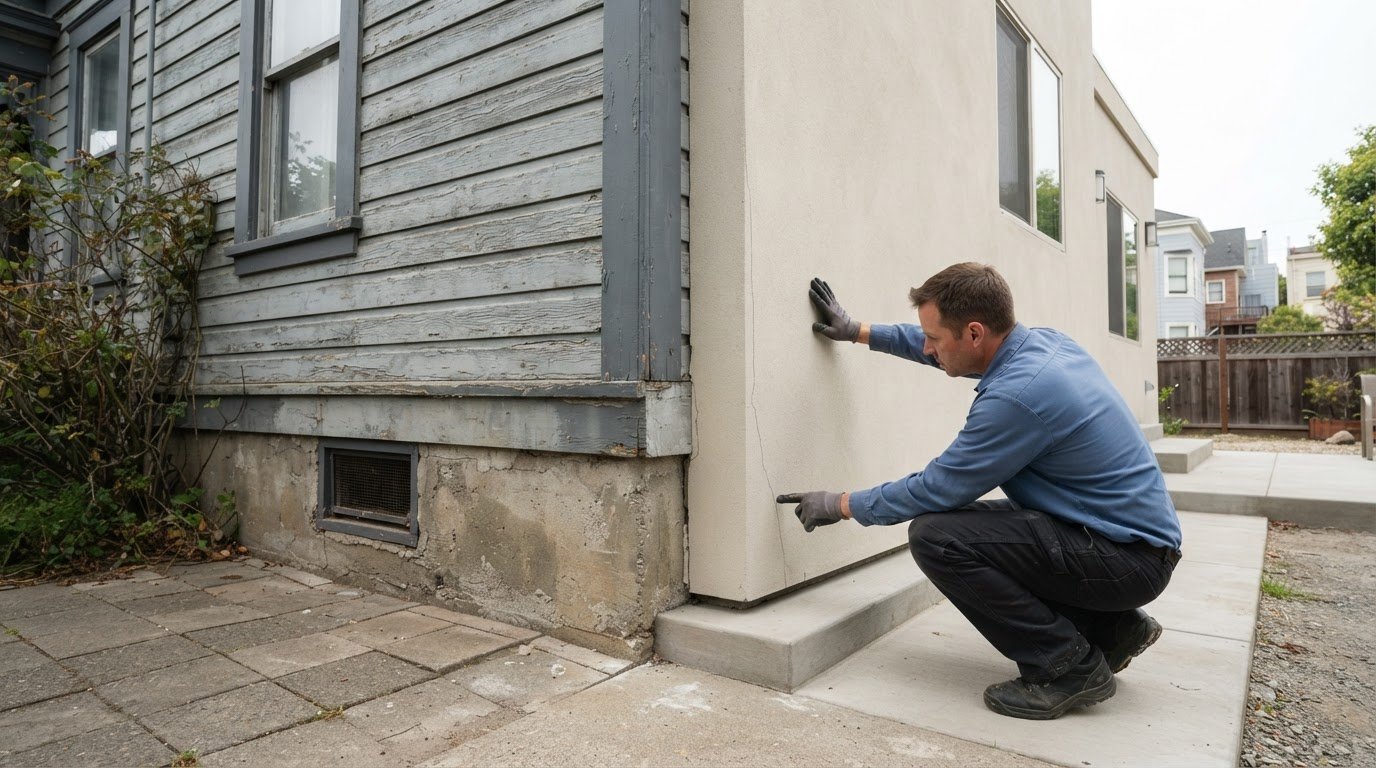
When choosing a contractor, red flags include an unclear estimate, a price that’s far below comparable bids, pressure to sign immediately, or a demand for the full project cost before work begins. Compare at least 3 quotes and look closely at what each includes. A contractor who can’t provide proof of insurance, has troubling review patterns, or avoids clear conversations about the work also warrants closer scrutiny.
It’s reasonable to want confidence before inviting a contractor into your home. Reviewing insurance, references, payment requests, sales tactics, and communication can help you spot warning signs before you commit. The sections ahead explain what to look for in an estimate and payment schedule, and why clear expectations about the work and timeline matter. Use these checks when choosing a contractor and assessing red flags, so you can make an informed decision.
Key Takeaways
- Compare at least 3 quotes and examine the scope, labor, and materials in each to understand what a low bid may leave out.
- Review proof of active liability insurance and workers’ compensation coverage, and consider who will manage the work.
- Look for patterns across reviews and referrals, not just a single rating, and consider whether the contractor can show relevant completed projects.
- Take time to assess payment requests and sales pressure; demanding the full project cost before work begins is a warning sign.
- Discuss who your point of contact will be, how updates will work, and how the project timeline may respond to weather or material delays.
1. So What are the Contractor Red Flags?
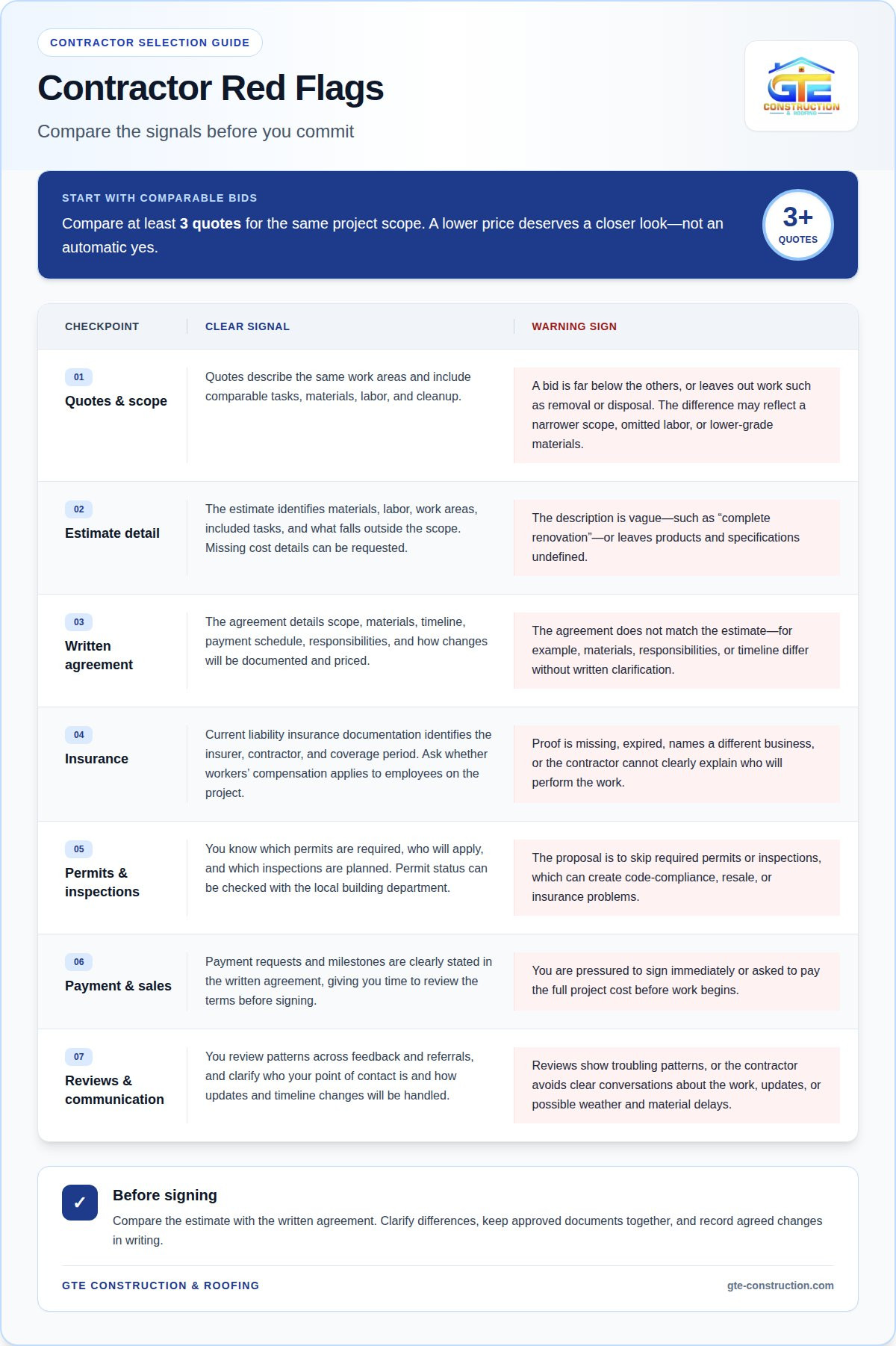
A bid far below two comparable quotes deserves a closer look, not an automatic yes. The difference may reflect a narrower scope, lower-grade materials, omitted labor, or work later added as a change order. Compare at least 3 quotes from reputable contractors, and confirm each describes the same project. For example, a roof proposal that excludes removal or disposal can’t be compared fairly with one that includes both. When choosing a contractor, treat red flags in a bid as reasons to investigate its details.
Read every estimate line by line. Check whether it identifies materials, labor, work areas, cleanup, and included tasks. Ask for a breakdown of labor and material costs if those details are missing. A vague line such as “complete renovation” leaves too much room for different interpretations. A clear estimate explains what the contractor will do, which materials are included, and what falls outside the stated scope.
A written contractor agreement should detail the scope of work, materials, timeline, payment schedule, and responsibilities. It should also explain how changes to the agreed work will be documented and priced. Before signing, compare the agreement with the estimate. A mismatch, such as different materials or an altered timeline, needs clarification in writing.
Look for a pattern of suspicious bids rather than judging one unusually low quote on its own. If several proposals use identical unusual wording, repeat the same calculation error, or contain the same unexplained omissions, ask how each estimate was prepared. Those similarities could suggest the bids weren’t developed independently. They don’t prove coordination, but they are a reason to seek clear explanations for each bid before deciding. When choosing a contractor, investigate red flags by asking specific questions about the proposal.
Use a consistent comparison process so the lowest number doesn’t overshadow missing details:
- Match the scope: confirm every quote covers the same rooms, roof areas, or other work.
- Compare materials: note named products or specifications, and identify proposals that leave them undefined.
- Review labor: check which installation, removal, preparation, and cleanup tasks are included.
- Mark exclusions: record permits, repairs, or other work listed outside the bid, if applicable.
- Align the timeline: compare proposed start and completion expectations, and ask what could affect them.
Then compare the written agreement with the final estimate before committing. Differences in materials, responsibilities, or payment milestones can create confusion once work begins. Keep the approved documents together, and make sure any agreed changes are recorded in writing. That gives both parties a shared reference if the project scope or timeline shifts.
2. Proof of liability and workers’ compensation insurance
Before work begins, request proof of general liability insurance and confirm that the policy is active. Liability coverage may address certain property damage connected with a contractor’s work, but the policy terms determine what it covers. Check the document for the insurer, named contractor, and coverage period. If the policy has expired or names a different business, ask for current documentation identifying the business responsible for your project.
Ask whether workers’ compensation coverage applies to employees who will work at your home. This coverage relates to employee injuries, while general liability insurance addresses different risks. If the contractor says employees aren’t involved, clarify who will perform the work and whether subcontractors are expected. Make sure the insurance information corresponds to the people and business responsible for the project.
To verify a contractor’s license, insurance, and bond, check license information with the relevant California state or local licensing authority. Confirm insurance coverage and its active dates with the insurer or its agent. If the project or contractor involves a surety bond, request its details and verify them with the issuing company. Licensing and bond requirements can depend on the work and jurisdiction, so confirm which rules apply to your project.
Permits and inspections are separate from insurance. Ask which permits the project requires, who will apply, and which inspections are planned. Contact the local building department in the project’s California jurisdiction to learn its process and check permit status as work progresses. A proposal to skip required permits or inspections can create code-compliance, resale, or insurance problems.
Document damage accurately. Take dated photos, save relevant messages, and write down what happened. If a contractor suggests filing a homeowners’ insurance claim for damage the contractor caused, don’t misstate the cause. Ask for the contractor’s position in writing and review your policy before submitting a claim.
If a contractor abandons the job or leaves poor-quality work, preserve the signed agreement, payment records, and photos showing the work’s condition. Send a written description of unfinished or deficient items, and keep any response. Review the agreement’s dispute process. For further guidance, contact the relevant California licensing authority or consumer protection office, where applicable.
Insurance and bonding aren’t interchangeable. A bond may provide protection under its terms, while liability insurance addresses claims covered by a policy. Review each document for the business name, coverage dates, and relevance to the project. Missing proof, unclear explanations, or a request to misrepresent who caused damage are warning signs to resolve before work starts.
3. Reviews, referrals, and contractor ratings
Online ratings offer a starting point, not a complete picture of a contractor’s work. Read several reviews and testimonials, looking for specific details about workmanship, communication, cleanup, and how concerns were handled. A comment describing a completed kitchen remodel gives more useful context than a rating with no explanation. Notice recurring patterns across separate accounts rather than treating one very positive or negative review as decisive.
Check whether the contractor’s examples match your project. A gallery of roof repairs may not demonstrate experience with a new roof installation, just as a bathroom remodel differs from a home addition. Ask to see completed work similar in scope and materials to yours. For a contractor serving Alameda or Contra Costa County, examples of projects in the area, satisfied local customers, or established relationships with local suppliers and subcontractors can help show familiarity with the region.
References add context that a public rating cannot provide. Ask for former clients whose projects resemble yours, then speak with them directly if they’re willing. Keep the conversation focused on observable details: Was the agreed scope followed? Were changes explained? Did the finished work meet expectations? How were concerns handled? A reference who can describe a specific issue and its resolution may offer more insight than a general endorsement.
Compare the contractor’s responses with the details in each review. For example, if several customers mention missed updates, ask how project communication is organized. A thoughtful, professional reply to criticism can show how concerns are addressed, though it doesn’t prove the underlying issue was resolved. Look for clear, consistent explanations rather than personal attacks or repeated claims that every dissatisfied customer is at fault.
Use a short evidence trail to organize what you find:
- Record the project type and approximate timing described in each review.
- Compare online reviews, ratings, testimonials, and industry resources.
- Ask for relevant project examples and references, then note specific answers.
- Compare repeated strengths or concerns across different sources.
A limited online presence isn’t automatically a reason to reject a smaller or newer contractor. It does mean you’ll have fewer public examples to assess, so consider other evidence carefully. If sparse information appears alongside unanswered questions, inconsistent references, or no relevant project examples, pause before deciding. A reputable professional should be able to discuss completed work and relevant experience without relying on ratings alone.
4. High-pressure sales tactics and large upfront payments
A contractor who insists you sign immediately is using pressure instead of giving you room to assess the proposal. Be cautious if a discount supposedly expires before you can review the agreement, or if a salesperson claims materials must be purchased that day. A sound decision requires time to compare the written scope, payment terms, and project schedule. Ask for the offer and its deadline in writing, then review them without pressure.
An upfront deposit may cover initial materials, but a demand for the entire project cost before work begins is a warning sign. Most states limit contractors’ upfront payments to 10-30 % of the project cost. Rules vary, so understand the requirements that apply where the project takes place. Whatever the initial amount, compare it with the agreement’s stated milestones and the work planned at each stage.
Payment terms should make the timing and purpose of each installment clear. For example, an agreement might tie a later payment to a defined stage of work rather than leave the due date vague. Review what each payment covers, when it becomes due, and how changes affect the balance. If a contractor requests more money than the written schedule calls for, pause and get the reason documented before paying.
Cash payments create a weaker record than traceable payment methods, making disputes harder to document. Keep receipts, transaction confirmations, and written messages that identify the project and payment purpose. Avoid handing over cash without a dated receipt. If a contractor insists on cash or refuses to record a payment, treat that request as a serious concern, not a routine preference.
Watch for sales tactics that combine urgency with unclear promises. A contractor might say a price is available only if you sign before a site visit or before receiving a written scope. That leaves you unable to see exactly what you’re agreeing to. Ask for the complete terms in writing, including the work covered, payment schedule, and process for approving changes.
Before making a payment, compare the request with the signed agreement and the project’s actual progress. Keep copies of the contract, receipts, and any written change approvals together. If a deposit is described as necessary for materials, the agreement should explain its purpose and how it fits the overall payment schedule. Don’t rely on a verbal assurance that conflicts with the written terms.
- Pause if signing is presented as urgent or a discount depends on an immediate decision.
- Compare every requested payment with the written schedule and completed milestone.
- Use traceable payment methods and retain dated proof for each transaction.
- Get changes and revised payment terms documented before agreeing to them.
5. Contractor communication and responsiveness
Communication before estimate day can reveal how a contractor may handle project decisions. Notice whether replies address your questions, arrive in a reasonable period, and explain the next step. A brief delay isn’t automatically a warning sign, but repeated missed calls or evasive answers can make coordination harder. For example, if you ask which rooms are included and receive only a generic response, the scope still needs clarification.
A well-run contracting business assigns a clear point of contact. Confirm who will answer questions, share updates, and communicate changes once work begins. If one person prepares the estimate but another runs the job, learn how information will pass between them. Without that clarity, you may need to repeat decisions or discover that the crew hasn’t received an agreed instruction.
Set communication expectations before signing. Discuss how often you’ll receive updates, which channel works for schedule changes, and how quickly urgent project questions should be raised. Put the arrangements in writing, such as in the agreement or a project communication plan. That gives you and the contractor a shared reference when a material delivery changes the work sequence or a decision is needed.
A contractor should provide a reasonably clear timeline while recognizing that weather or material delays can affect it. Ask what the proposed start and completion expectations depend on, and how schedule changes will be communicated. A useful update explains what changed, which work is affected, and what happens next. By contrast, repeated promises of an exact date without context can leave you unable to plan around disruptions.
Listen for consistency between conversations and written records. If a verbal discussion changes the scope, materials, or schedule, request a written summary before treating it as agreed. Keep messages and approvals together so you can trace decisions later. For instance, a note confirming a change to a selected finish can prevent confusion when materials arrive and the crew begins installation.
Communication also includes clear explanations of what the estimate covers and what remains outside the project scope. If the contractor cannot explain an allowance, proposed change, or responsibility in plain language, ask for a written explanation. The goal isn’t constant contact; it’s having the right information at decision points, with a reliable way to get questions answered and receive updates.
- Identify the project contact and clarify their role before work begins.
- Agree on how schedule changes, decisions, and progress updates will be shared.
- Keep written records of approved changes and key instructions.
If you’re planning a home project and want clear coordination from the outset, discuss your project and communication needs.
GTE Construction & Roofing
GTE Construction & Roofing can help when your project calls for a contractor to handle roofing or residential remodeling work. Its services include new roofing and installation, roofing repair, kitchen remodeling, and bathroom remodeling. The checks in this guide can help you approach a project with clearer expectations: compare the written scope, understand payment terms, and agree on how updates will be shared. Bring those priorities into a conversation about the work you have planned, whether it involves a roof repair or an interior renovation. Clear questions at the outset help establish what the project involves and how communication will proceed. Contact GTE Construction & Roofing to discuss your project.
Make Your Next Step Deliberate
Before making a decision, write down what matters most for your home and the finished project. You might prioritize preserving a particular feature, minimizing disruption to daily routines, or having one person coordinate decisions. These priorities give you a practical way to assess whether a proposed approach fits your needs, not just whether the estimate sounds appealing.
Keep the red flags to consider when choosing a contractor in view, but let your project goals guide the final conversation. A clear understanding of what you value helps you explain your expectations and decide whether the proposed work is the right fit. You don’t need to rush a significant home decision; take the time to move forward with clarity.
If you’re ready to discuss a home project, contact GTE Construction & Roofing. A thoughtful next step can make the planning process feel more manageable.
Frequently Asked Questions
So What are the Contractor Red Flags?
Contractor red flags include inconsistent paperwork, evasive answers, and pressure to make decisions before you understand the work. A single concern may have an explanation, but several unrelated warning signs together deserve more caution. For example, if a contractor’s business name differs between the estimate and insurance document, ask for a clear explanation before proceeding. Keep a written record of the answer and compare it with the agreement.
What are the biggest red flags when hiring a contractor?
The most concerning signs are demands for full payment before work starts, refusal to document the agreement, and attempts to rush your decision. When choosing a contractor, consider whether the person’s answers stay consistent across conversations and documents. If a key detail changes, such as who is responsible for the work, ask for a corrected written record. Don’t treat a polished presentation as a substitute for clear, consistent information.
How do I check contractor reviews, references, complaints, and lawsuits?
Search the contractor’s exact business name and any stated alternate name, then compare results across review platforms and public records. Read the details behind complaints, including the contractor’s response and whether the issue appears resolved. Ask references about a project similar to yours, not only whether they liked the contractor. For a lawsuit or complaint, confirm that the names and business details match, since similar names can refer to different parties.
Why are large upfront deposits or cash-only payment requests a contractor red flag?
A large advance can leave you with limited leverage if work stalls, while cash may be harder to trace if a payment is disputed. Keep the signed agreement, receipt, and transaction record together, and make sure each payment has a stated purpose. If someone requests cash, ask for a dated receipt identifying the business and project. A refusal to document payment is more concerning than the payment method alone.
How can I spot an unusually low bid or hidden fees in contractor estimates?
Compare estimates for gaps in scope, not just the final amount. Look for exclusions or undefined items such as disposal, surface preparation, finish materials, or cleanup. Ask the contractor to explain how an omitted task would be handled if needed, and whether it would require written approval as additional work. A bid that becomes comparable only after likely extras are included may not offer the savings it first appears to show.
What are warning signs of contractor scams, pressure tactics, or door-to-door solicitation?
Be cautious if a door-to-door seller claims urgent damage, demands an immediate signature, or discourages you from getting another opinion. Don’t rely on a person’s verbal claim of affiliation; independently confirm the business identity using information you already trust. Avoid sharing payment details or signing paperwork during an unplanned visit. Request the proposal in writing and take time to review it before deciding whether the work is necessary.
What payment schedule and deposit limits are legal in my state?
Deposit rules differ by state and sometimes by project type, so there isn’t one limit that applies everywhere. Many states limit upfront payments to 10-30 % of the project cost, but that range isn’t a substitute for your state’s rule. Check the applicable state contractor licensing board or consumer protection agency for current requirements. Make sure the agreement’s payment milestones comply with local rules before paying.