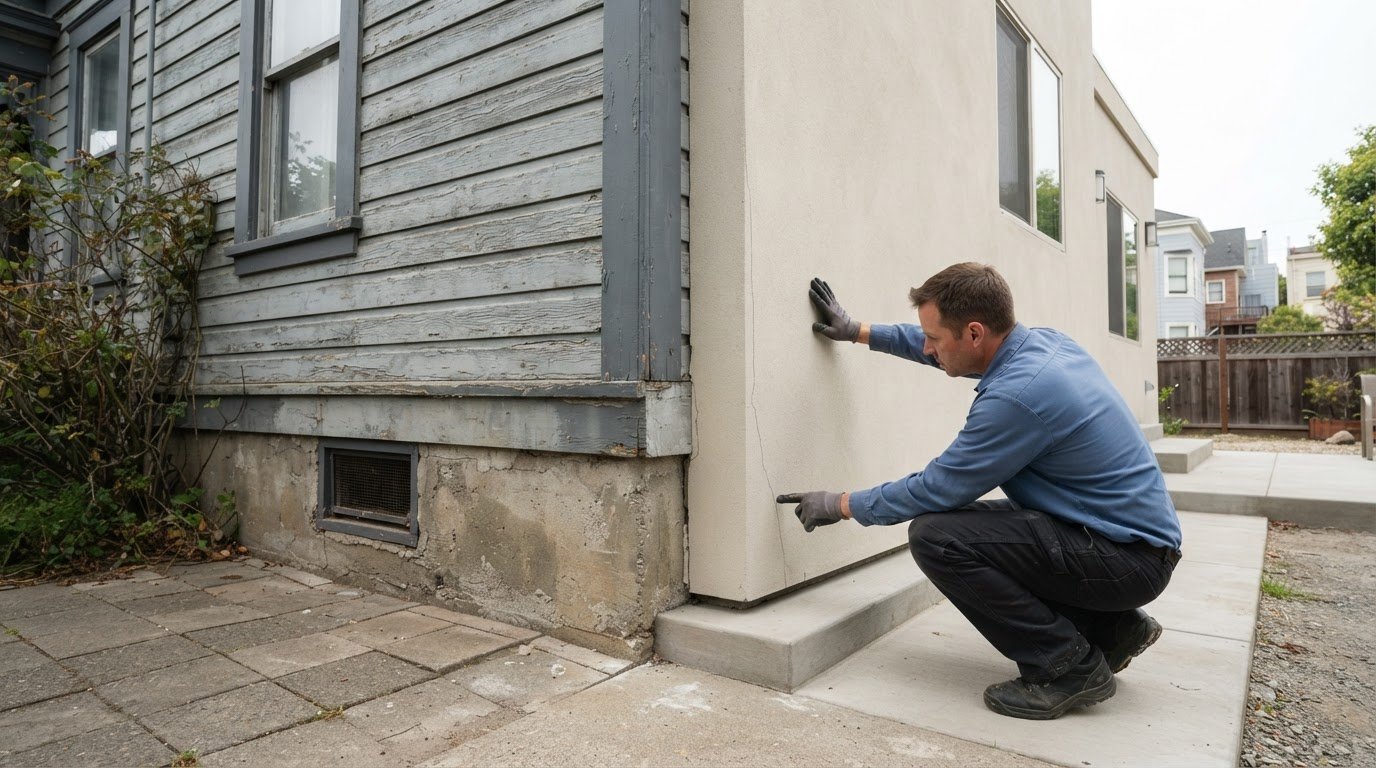
Moving to a larger or more luxurious home isn’t automatically the better choice. Whether you should remodel or move depends on whether your current location still suits you, whether renovations can solve the problems you face at home, and how the total cost compares with buying elsewhere.
It’s understandable to want more space, greater privacy, or a layout that better fits your life. But a remodel’s resale value depends on more than the finished rooms: neighborhood expectations, the home’s value ceiling, and how long you plan to stay all matter.
This guide helps you weigh renovation costs against the full expense of moving, consider how kitchen, bathroom, and space upgrades may affect resale, and decide whether your lot and neighborhood support the changes you want. It also covers privacy, available space, and the disruption of relocating, so you can make a measured choice based on your home and priorities.
Key Takeaways
- Compare the full cost of moving with the renovation scope needed to make your current home work better.
- Decide whether added space can solve your needs, or whether your lot, privacy, or location is the real limitation.
- Assess neighborhood standards before investing in upgrades that may exceed what nearby homes support.
- Prioritize kitchen, bathroom, and space improvements around both daily use and likely resale appeal.
- Plan for hidden conditions and project changes, which can affect a renovation’s budget and timeline.
Renovation return on investment
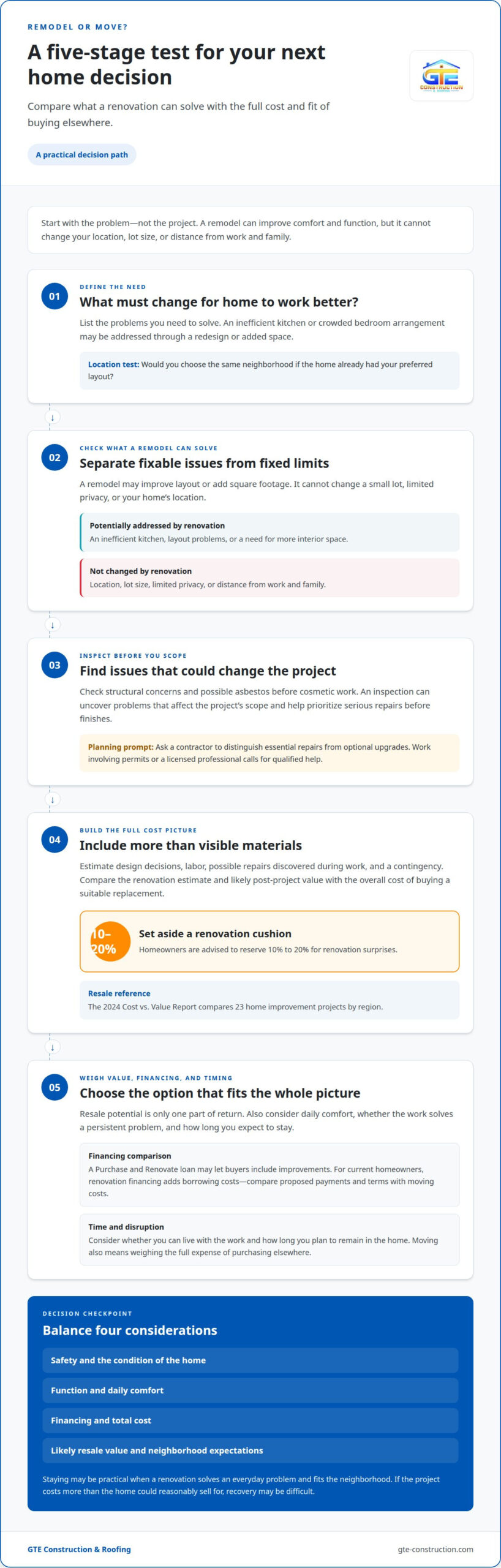
Renovation return on investment is not simply the amount recovered at resale. A project can also improve daily comfort, solve a persistent layout problem, and help you stay in a neighborhood you value. The key question is whether the finished home will meet your needs at a total cost that makes sense compared with buying elsewhere. Compare the estimated renovation cost and likely post-project home value with the cost of purchasing a suitable replacement.
Start by listing the problems you need to solve. A redesigned kitchen may make better use of existing space, while an addition can increase square footage. Neither can change your location, a small lot, limited privacy, or distance from work and family. Address structural concerns and possible asbestos before planning cosmetic work. A home inspection can identify issues that may change the project’s scope and help you avoid investing in finishes before fixing a serious problem.
Build an estimate around the complete project, not just visible materials. Include design decisions, labor, potential repairs discovered during work, and a contingency for unexpected costs. Homeowners are advised to set aside a 10% to 20% cushion for renovation surprises. Ask a contractor to estimate the work and distinguish essential repairs from optional upgrades. Work outside your experience, or work involving permits or a licensed professional, is a reason to use qualified help rather than treating the project as a simple do-it-yourself task.
- Test the location: Would you choose the same neighborhood if the home already had your preferred layout?
- Define the problem: Is the issue fixable through a remodel, such as an inefficient kitchen, or tied to the lot or location?
- Compare the finances: What would the renovated home likely be worth, and what would buying a home that fits cost overall?
- Consider timing: Could you comfortably live with the work, and how long do you expect to stay?
Financing changes the comparison. Buyers may be able to include improvements in a Purchase and Renovate loan. For current homeowners, renovation financing adds borrowing costs to the project, so compare the proposed payment and terms with the cost of moving. Homeowners who purchased before 2022 may face a higher monthly interest payment if moving requires taking on a higher interest rate. A lower renovation bill is not automatically better if it leaves the home unable to meet essential needs.
Use the 2024 Cost vs. Value Report to compare common improvements by region; it covers 23 home improvement projects. Then weigh resale potential alongside personal value. If the renovation costs more than the home could reasonably sell for, the investment may be difficult to recover. If it resolves a daily problem and fits neighborhood expectations, staying may be the more practical choice. The best decision balances safety, function, financing, and likely resale value.
Lot size, privacy, and home square footage
Extra square footage can improve how a home functions, but it cannot change the land beneath it. Before planning an addition, decide whether you mainly need another room, more outdoor space, or greater separation from neighbors. A larger floor plan may solve a crowded bedroom arrangement, for example, while a small lot may still limit outdoor privacy. Compare your home’s layout and yard with what a move could offer in the neighborhoods you’re considering.
Lot conditions also shape what a remodel can accomplish. A narrow side yard, nearby homes, or limited outdoor space may restrict where an addition can go and how private it feels. In metropolitan areas, lots are often smaller and less private than those associated with newer homes. New houses also tend to have more square footage than older homes. These differences matter if you want larger rooms and more outdoor separation, rather than simply a redesigned interior.
Older homes need a careful inspection before you plan a home improvement project. Homes built before 1940 were often not insulated, so an inspection can help identify comfort or energy concerns alongside visible wear. Ask for attention to the structure and major systems, then consider how the findings affect your intended layout. Building-code requirements can also influence whether a proposed change is feasible. Include those constraints in the early planning stage, especially for an addition that changes the home’s footprint or structure.
Home equity and mortgage terms influence the real estate comparison. Equity is the difference between a home’s value and the remaining mortgage balance; selling costs and the mortgage payoff affect the proceeds available for another purchase. About 80% of U.S. homeowners have a mortgage rate below current levels, and rates had stayed above 6% for nearly four years. If moving means replacing a lower-rate loan, compare the new payment with the cost of staying and improving the current home.
Market conditions can change which option is practical. The typical U.S. home value was about $365,880 in April 2025, while the national market had roughly 47% more sellers than buyers. These figures describe broad conditions, not the value or availability of homes in your area. Before deciding, look at local inventory and the types of properties that could meet your needs. A limited choice of suitable homes may make staying more attractive; a well-matched property may make moving worthwhile.
Emotional attachment belongs in the decision too. A home may hold memories tied to family, routines, or a special neighborhood, and a thoughtful remodel can preserve those connections. Write down what you would miss and what your current home cannot provide. If a renovation can address the practical gaps without sacrificing what matters, explore your remodeling possibilities before ruling out a stay.
Neighborhood value ceilings and over-improvement
Compare what a remodel can change inside your home with what moving could change around it. Weigh usable space, commute, school district, and lifestyle together: an addition may improve your floor plan, but it cannot relocate your home or shorten a drive.
Neighborhood Value Ceilings
A neighborhood value ceiling is the point at which extensive upgrades may not add value in proportion to their cost. For example, a premium kitchen in a community of modest homes could exceed what nearby buyers expect. That’s different from a space problem: an addition may meet your household’s needs, yet the local market may not reward its full cost when you sell.
Over-Improvement and Neighborhood Standards
Neighborhood standards can help you judge whether planned upgrades fit nearby homes. Compare your proposed finishes, layout, and added features with the area’s general character, not just your personal preferences. If neighboring properties have functional kitchens and standard bathrooms, highly customized updates may offer more enjoyment than resale value. A measured improvement can address daily needs without making your home stand out too sharply.
Use comparable homes as a practical reference. Look at properties with similar size, age, and location, then note which upgrades are common and which are unusual. A finished basement may suit local buyers if similar homes have usable lower levels. A costly specialty room may appeal to fewer people. The point is not to copy another house, but to understand what buyers are likely to expect.
Over-improvement can create two risks. First, the renovation may cost more than the neighborhood supports at resale. Second, distinctive features can narrow the pool of buyers who appreciate them. You may value elaborate finishes for personal enjoyment, but distinguish that lifestyle benefit from expected resale return. This keeps the investment decision grounded.
Location preferences can outweigh interior upgrades. If you value nearby family, friends, or a particular school district, remodeling may preserve benefits that another home cannot match. A new kitchen can improve daily routines, but it cannot replace the relationships and local connections tied to your current address. List these location advantages alongside your space needs before choosing either option.
Compare the whole lifestyle, not just the room count. A larger home, for example, could add bedrooms but put you farther from work, familiar services, or school routines. Remodeling could preserve those routines while improving the layout, yet leave a small lot or limited privacy unchanged. Mark each priority as essential or flexible, then see which option addresses more of your essential needs.
Finally, ask whether your planned improvement fits both the home and its neighborhood. If a bathroom update or kitchen change corrects a clear functional weakness, it may be more proportionate than a full luxury refit. If your main priority is a different location, yard, or school district, upgrades cannot deliver that change. This comparison helps clarify whether staying protects what matters or simply postpones a move.
Resale value of kitchen, bathroom, and space upgrades
Kitchen, bathroom, and space projects can improve everyday function while supporting future buyer appeal. Their return on investment depends on scope, workmanship, and how well the finished home fits its market.
Kitchen and Bathroom Upgrade Resale Value
A kitchen or bathroom update can address visible wear and improve how essential rooms function. A kitchen with limited preparation space, for example, may benefit more from a practical layout than premium finishes alone. Likewise, a bathroom with poor storage may need better organization rather than a larger footprint. Unlike additions, these projects improve existing rooms without necessarily increasing square footage.
For resale, prioritize durable finishes, useful storage, and a cohesive design. A contractor can help define the scope and identify necessary changes, such as replacing worn surfaces or reworking an inefficient arrangement. Avoid choosing upgrades solely for visual impact. A highly personalized feature may suit your household but matter less to buyers who prefer adaptable spaces.
Space Upgrade Resale Value
Space upgrades can meet needs that kitchen or bathroom improvements cannot, such as adding a bedroom or creating a dedicated work area. Their value depends on whether the new space works naturally with the existing home. A bedroom reached only through another bedroom, for example, may be less useful than one with clear access from a hallway.
Before adding space, identify the specific need and how long it is likely to matter. A growing household may value another bedroom, while a household working remotely may need a quiet office. Compare the project’s full scope with the value buyers place on that function. An addition that disrupts circulation or uses needed outdoor space can create trade-offs rather than a straightforward improvement.
Future Resale and Negative Equity
Negative equity occurs when the amount owed exceeds the home’s market value. Borrowing heavily for a remodel can increase this risk if the completed work does not raise the home’s value enough to offset the added debt. This concern is different from choosing finishes: it involves the total loan balance, likely sale value, and timing of a possible move.
To assess the risk, compare your current mortgage balance with an estimate of the home’s value after renovation. Include the full project cost, and don’t assume every dollar spent will be recovered at resale. Homeowners planning to move within a year or two may find a major renovation harder to justify. In that case, targeted repairs may better prepare the home for sale than a broad redesign.
Resale value is only one measure of return. A kitchen that makes daily cooking easier or a bathroom that better serves your household may be worthwhile even if you don’t recover the full cost. Separate improvements needed for comfortable living from optional upgrades chosen mainly for buyers. This helps align the project with your budget and plans.
What risks can cause a renovation to exceed its budget or timeline?
A renovation estimate is based on visible conditions and an agreed scope. Opening a wall can reveal damaged wiring, moisture, or framing problems that change both. A kitchen plan may also expand if you add storage or alter the layout after work begins. Set priorities before construction, and document which changes require approval before they affect the project’s scope.
Older homes can conceal safety concerns. Homes insulated between 1940 and about 1980 often contained asbestos and urea-formaldehyde. These materials may require careful assessment before renovation work disturbs them. An inspection can also examine the electrical system and main sewer lines. Damaged sewer lines or tree roots can cost thousands of dollars to repair, turning a planned upgrade into necessary work.
Allow for the possibility that the schedule will change. A contractor’s estimate of eight weeks can run longer if issues, changes, or delays arise. Hidden damage may pause work while repairs are planned. Design revisions can also affect the order of tasks, especially when one trade must finish before another can proceed. Agree on the project scope and decision process before work starts, so you can consider changes deliberately.
Budget for surprises separately from planned improvements. Homeowners budgeting for a remodel should include a 15%-20% contingency. This reserve can help absorb concealed repairs or necessary adjustments without immediately forcing a reduction in essential work. Keep a written record of the estimate, agreed scope, selected materials, and approved changes. Review each proposed change for its effect on both the budget and completion schedule.
- Before planning: Inspect structural areas, electrical systems, and main sewer lines.
- Before work begins: Finalize priorities, materials, and the project scope.
- During construction: Review newly discovered conditions and approve changes with their cost and schedule effects.
Permits and specialized work can also affect sequencing. Projects requiring permits or a licensed professional may need additional planning before construction proceeds. Include these requirements in the early scope rather than treating them as last-minute details. Work beyond your comfort level calls for qualified expertise, particularly when structural changes or older materials are involved.
These risks matter when deciding whether remodeling is practical. If inspection findings reveal substantial repairs alongside the desired improvements, compare the revised scope with the cost and disruption of moving. If the project remains focused and the contingency is adequate, a remodel may still fit your plans. Discuss renovation planning before committing to a scope that depends on unresolved structural or system issues.
GTE Construction & Roofing
GTE Construction & Roofing can help you evaluate renovation work that may make staying in your home more practical. If a kitchen or bathroom limits daily use, remodeling can improve those spaces; roofing installation or repair can address a separate concern affecting the home’s condition. These projects can help you assess whether targeted improvements suit your plans, without changing your location, lot size, or commute.
Bring your priorities into the conversation: which rooms need attention, what problems you want to solve, and whether you expect to stay or sell. That context helps shape a project around your household’s needs and the home itself, without assuming renovation is the right answer in every situation.
For a conversation about your home and possible next steps, contact GTE Construction & Roofing.
Make the choice that fits your next chapter
If you’re asking yourself, “Should I remodel or move?”, focus on the life you want your home to support, not just the work it needs. Clarify which needs are essential, which compromises you can accept, and what would make staying a sound choice. Then use those priorities to guide conversations and compare realistic options.
A useful next step is to turn your decision into a clear project brief: describe the problems you want to solve, the changes that matter most, and the features you don’t want to lose. GTE Construction & Roofing can discuss how renovation work may fit those goals, helping you move from broad ideas toward a defined plan.
Contact GTE Construction & Roofing to discuss your home and possible next steps. You can take the decision at a thoughtful pace and choose the direction that feels right for your household.
Frequently Asked Questions
Should you stay or should you go?
Stay if your current location works and targeted changes can make the home suit your needs. Consider moving if the problems involve things a renovation can’t change, such as a long commute, limited privacy, or a location that no longer fits your routine. A new bedroom, for example, may solve a space shortage, but it won’t bring you closer to work or family. Decide which needs are non-negotiable first.
Should You Renovate or Move?
Renovate when the home’s layout or condition is the main problem; move when the location or property itself no longer fits. If you’re deciding whether you should remodel or move, compare each option against the same priorities, such as space, commute, outdoor privacy, and monthly housing costs. A renovation can preserve familiar routines, while a move may provide features that cannot be added to your current property.
What is happening in your local housing market?
Your local market determines the available alternatives and how your home may compete with them. Compare recent sales of similar homes, active listings, and how long suitable properties remain available in your target neighborhoods. A broad national trend may not describe your city or school district. For example, a limited supply of homes with accessible bedrooms could make a well-planned update more practical than waiting for a specific property to appear.
What would moving actually cost?
Moving costs include the move itself, preparing your home for sale, and expenses associated with purchasing another home. In the U.S., the actual total also reflects your belongings, distance, and services required. Add expenses for packing, temporary storage, or staying elsewhere if your move-out and move-in dates don’t align, then compare the full amount with renovation financing.
What would remodeling actually cost?
Remodeling costs depend on the rooms involved, work required, materials, labor, and repairs uncovered during construction. A cosmetic refresh differs from changing plumbing, electrical systems, or structural elements. For a useful project budget, define the desired result, separate essential work from optional finishes, and request an itemized estimate. Replacing worn surfaces, for example, is a different scope from reconfiguring a kitchen layout or expanding the room.
How do I compare the total cost of remodeling versus moving?
Compare the complete cash and financing impact of each option over the period you expect to stay. For remodeling, include the planned work, contingency, and any borrowing costs. For moving, include sale preparation, transaction expenses, moving services, and the new mortgage payment. Then compare what each choice delivers, such as another bedroom, a shorter commute, or a different school district. A side-by-side worksheet helps reveal costs that are easy to overlook.
What is the average cost of a home remodel by project type in the United States?
There isn’t one useful average for every remodel, because project scope and location change the budget. For example, exterior updates, room additions, and whole-home renovations vary widely across regions. These ranges describe different project types, not a prediction for a particular home. Compare equivalent scopes when reviewing estimates from trusted professionals like GTE Construction & Roofing.
What are the costs of selling a home and buying another, including agent fees, closing costs, and moving expenses?
Budget for selling, purchasing, and relocating as separate parts of the transaction. U.S. sellers should budget 6%-10% of the sale price for closing costs, while buyers typically pay around 2%-6% of the new mortgage amount in closing costs. Selling and buying another home can total about 10%-15% of the sale price when transaction costs, moving, and pre-sale repairs are included. Agent fees vary with the transaction and agreement.