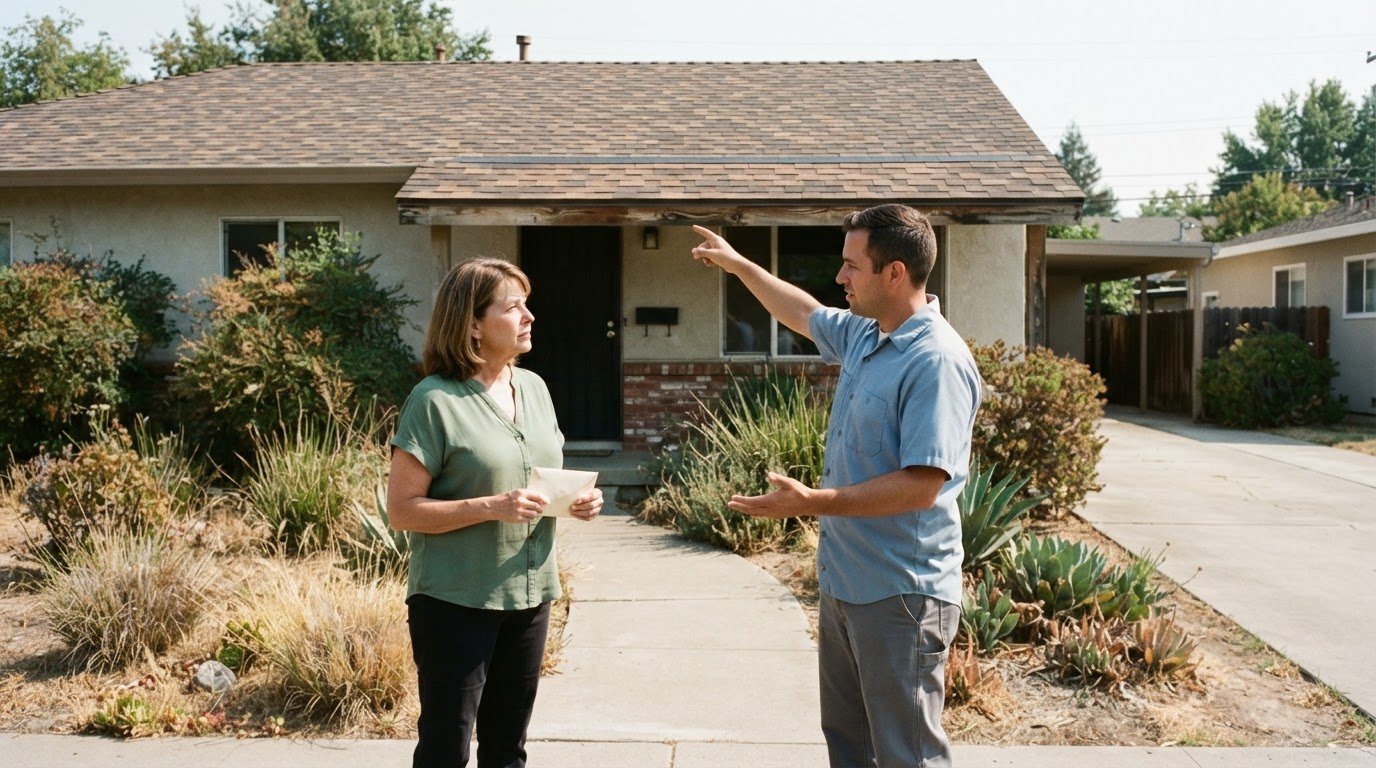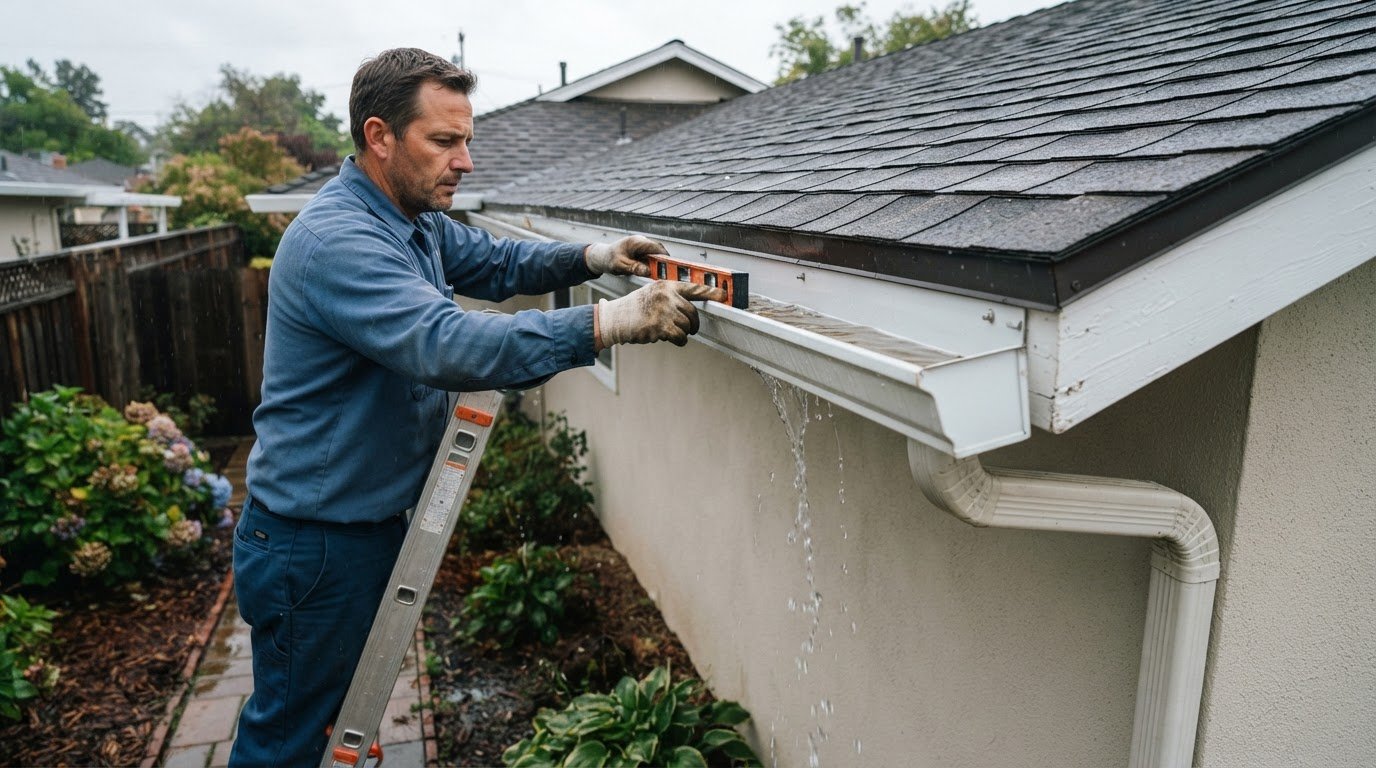
You can repair your own roof, but a mistake can turn a small problem into a larger one. The risks of DIY roof repair include hidden water damage, falls and other injuries, possible warranty issues, and delays that leave your home exposed to the weather.
It’s understandable to consider fixing a visible roof problem yourself, especially when the damage seems limited. But what you can see from the ground may not reveal the condition beneath the shingles. A patch that misses the source can allow water to keep entering.
This article explains when DIY work may be unsuitable and how mistakes can affect your roof, safety, and repair schedule. You’ll also learn what professional roof repair involves, so you can make an informed decision about protecting your home.
Key Takeaways
- A visible leak may point to damage beneath the roof surface, so identify the underlying problem rather than relying on a quick patch.
- DIY work can affect insurance coverage if a repair compromises the roof; understand how your policy treats damage from homeowner repairs.
- Roof height, slope, surface condition, and weather can make a repair hazardous, even when the damaged area seems small.
- Review warranty terms before arranging repairs, since some roof warranties require work by qualified roofing professionals.
- Consider professional repair when the work could leave your home exposed to weather or when the cause of the damage is unclear.
1. Hidden water damage, wood rot, insulation damage, and mold
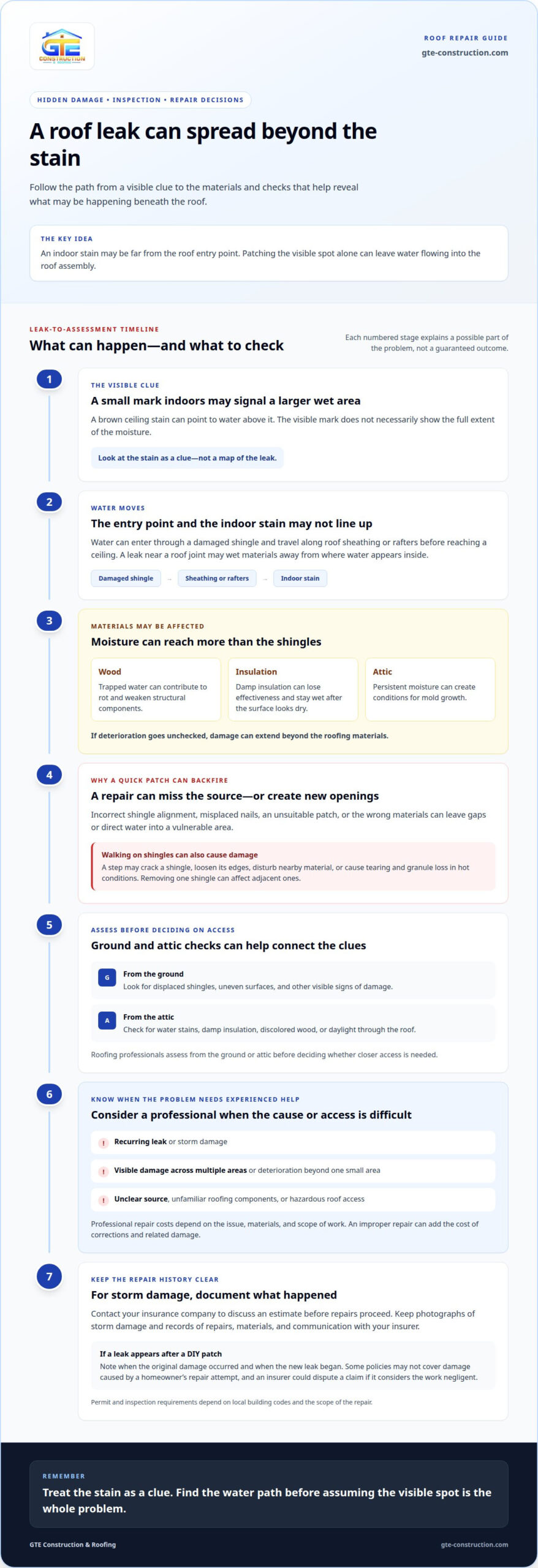
A roof leak can travel beyond the visible stain before reaching a ceiling. Water may enter through a damaged shingle, then move along roof sheathing or rafters. A small brown mark indoors can signal a larger wet area above it. Patching the visible spot without locating the entry point can leave water flowing into the roof assembly.
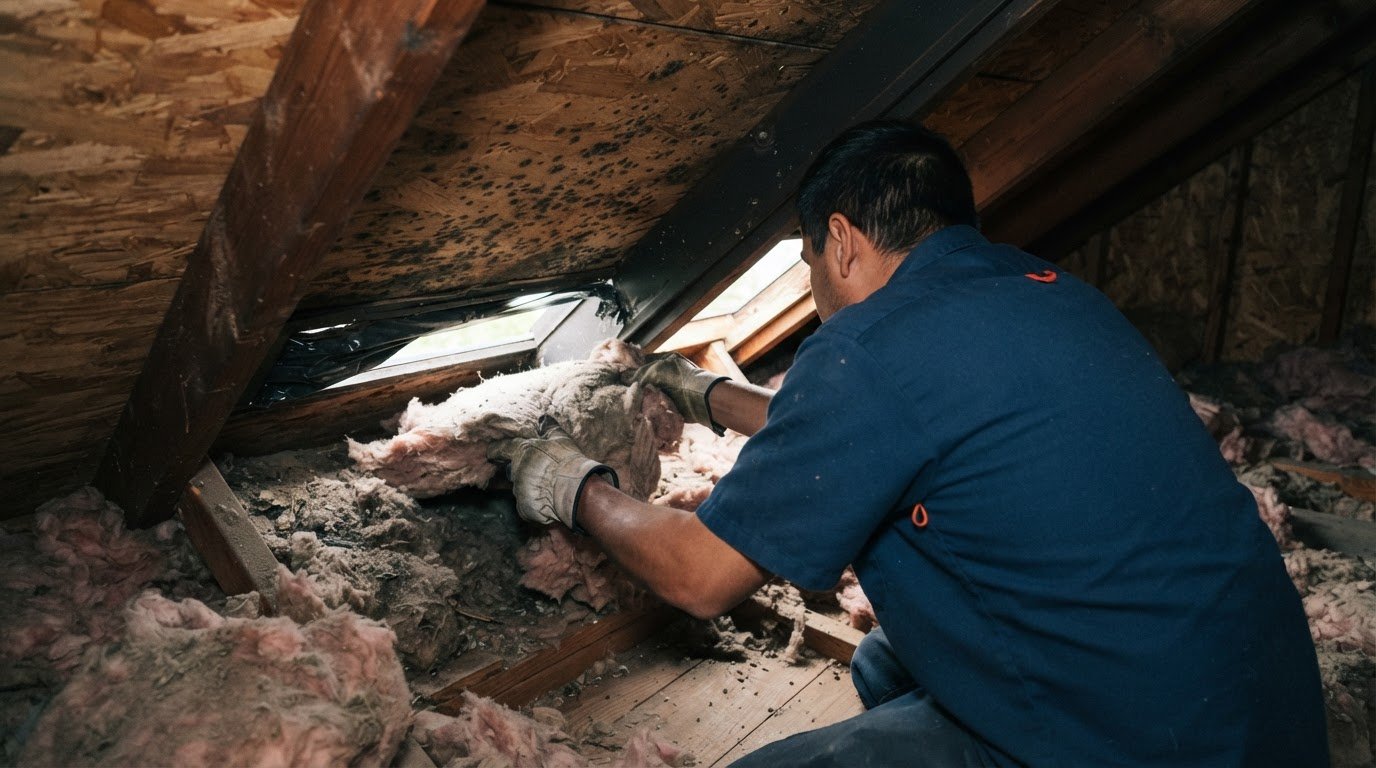
Water trapped in wood can contribute to rot and weaken structural components. Damp insulation can lose effectiveness and remain wet after the surface appears dry. Persistent moisture can also create conditions for mold growth in an attic. For example, a leak near a roof joint may wet sheathing and insulation away from where water appears indoors.
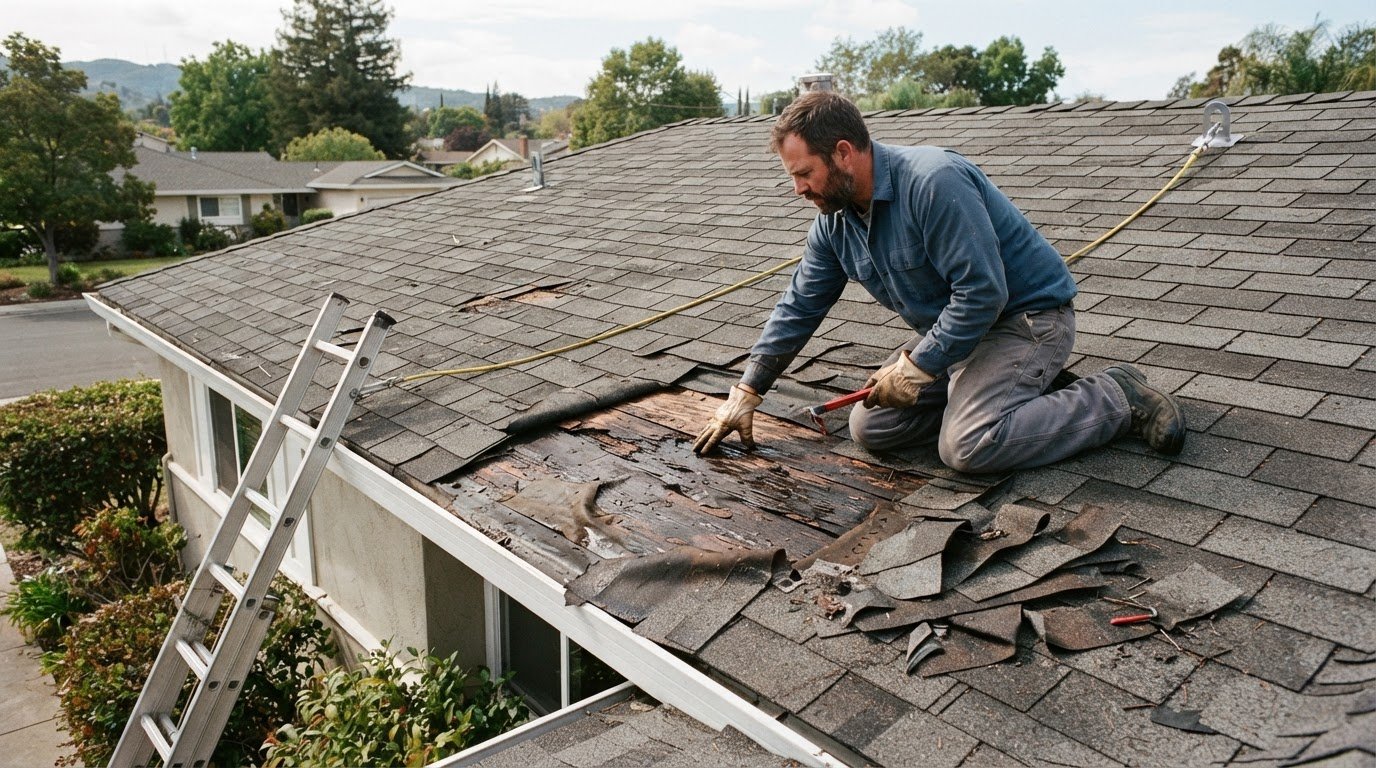
Walking on fragile shingles can cause damage rather than fix it. A misplaced step may crack a shingle, loosen its edges, or disturb nearby roofing material. Shingles can also tear or lose surface granules when walked on in hot conditions. Removing one damaged shingle can affect adjacent ones, leaving new gaps where rain can enter.
Roofing professionals assess damage from the ground or attic before deciding whether closer access is needed. From the ground, they look for displaced shingles, uneven surfaces, and other visible signs of damage. From the attic, they check for water stains, damp insulation, discolored wood, or daylight through the roof. These observations can help connect an indoor leak with a possible entry point.
A quick patch may hide damage beneath the roof surface instead of correcting it. Incorrect shingle alignment, misplaced nails, or an unsuitable patch can create openings or direct water into a vulnerable area. Water may then pool, seep beneath roofing layers, and cause further damage in later rain. Choosing the wrong materials can also lead to repairs that fail to protect the roof.
As moisture spreads, deterioration can affect more than shingles. Wood rot around roof supports or sheathing can compromise structural integrity, while wet insulation and mold create further concerns inside the home. Severe, unchecked deterioration can cause serious structural problems, so a suspected leak deserves attention before more materials are affected. The risks of DIY roof repair include damage that remains hidden until a larger area needs work.
2. Can a professional handle a roof repair instead of DIY?
Yes. A professional roofer can assess the damage, identify what the repair involves, and complete work that may be difficult to diagnose or perform yourself. The National Safety Council advises that roofing projects are best left to professionals. A recurring leak, storm damage, or signs of deterioration beyond one small area are reasons to seek experienced help.
DIY work may seem less costly at first, but an improper repair can increase the final expense. Further work may be needed to correct the original repair and address damage it caused. Professional repair costs depend on the issue, materials, and scope of work; the cost of a failed DIY attempt can grow with each correction.
Homeowners insurance can be affected if DIY work compromises the roof’s safety or integrity. Some policies may not cover damage caused by a homeowner’s repair attempt, and an insurer could dispute a claim if it considers the work negligent. After storm damage, contact your insurance company to discuss an estimate before repairs proceed.
A claim is easier to assess when the sequence of events is clear. Keep photographs of storm damage and records of repairs, materials, and communication with your insurer. If a leak appears after a DIY patch, note when the original damage occurred and when the new leak began. These details can help distinguish storm damage from problems that developed during repair work.
Signs that it’s time to hire a licensed roofing contractor include recurring leaks, visible damage across multiple roof areas, or a problem whose source isn’t clear. Professional help is also appropriate when repairs involve unfamiliar roofing components or the roof is hazardous to access. Trying to diagnose a complicated issue without the necessary knowledge can leave its cause unresolved.
In the United States, permit and inspection requirements depend on local building codes and the scope of the repair. Some roof repairs may require permits or inspections under local rules, so there is no single nationwide requirement for every job. Structural changes or extensive replacement may be treated differently from a small repair in a particular jurisdiction.
For example, a homeowner facing storm damage can first notify the insurer, then arrange a professional assessment of the affected roof. This sequence helps clarify the visible damage and work needed, while reducing the chance that an attempted repair complicates an insurance claim.
3. Fall and injury risks
A roof’s pitch and height can make repairs dangerous before work even begins. Shingles may be slick, uneven, or weakened, and weather can change the surface underfoot. Carrying materials or tools adds another challenge: it can restrict movement and affect balance. A slip can injure the person on the roof or someone below.
The National Safety Council identifies falls as the leading cause of nonfatal injuries in the construction industry. Professional roofers use safety procedures, equipment, and experience to manage hazards that homeowners may not recognize. Someone attempting a repair alone may not realize how a loose shingle, changing roof angle, or tool in hand affects safe movement.
Tool-related injuries are another concern. A person working overhead may need to handle materials while maintaining secure footing, and a dropped tool can strike someone below. Nail guns require particular care: an accidental discharge can cause a serious puncture injury, especially when the operator is unfamiliar with the tool or working in an awkward position. Rushing the repair can compound these hazards.
Roof conditions also affect the risk of falling. Frost, rain, loose granules, and heat can make shingles slippery or unstable. A damaged section may not support weight as expected, and reaching it can expose a homeowner to a fall before repairs even begin. Mistakes while carrying equipment or shifting position can have immediate consequences.
Injuries can affect more than the person doing the work. A fall may require emergency care and leave family members to handle the repair, cleanup, and other responsibilities. If a tool or roofing material falls, anyone near the home could be hurt. Keeping others away from the work area reduces the risk below, but doesn’t remove the hazards faced by the person on the roof.
Professional roofers assess access, roof condition, and weather before starting work, then use safety measures suited to the task. Their assessment also helps shape a repair estimate by identifying the work involved and any access challenges. This approach can offer peace of mind without asking homeowners to risk their safety to diagnose or repair a roof.
For a homeowner considering a small repair, the key question isn’t only whether the task looks manageable from the ground. Consider whether the roof surface, access, weather, and tools create hazards that require experience and preparation to control. Falls remain a serious construction risk, so avoiding an unnecessary climb is a practical way to protect yourself and others.
4. Roof warranties and professional repairs
A roof warranty may set conditions for repairs, so DIY work could affect coverage. Some warranties require qualified roofing professionals to perform repairs to keep coverage valid. The exact effect depends on the written terms and the work involved. A repair that changes roofing materials or installation may raise different questions from work that leaves them untouched.
Manufacturer warranties and contractor warranties serve different purposes. A manufacturer warranty concerns the roofing product and its stated coverage conditions. A contractor warranty, when provided, concerns work completed by that contractor. Neither label alone explains what a particular warranty covers, so read its scope, exclusions, and repair requirements before work begins.
For example, if a shingle warranty requires qualified professionals to perform repairs, a homeowner’s attempt to replace damaged shingles could put that coverage at risk. That doesn’t mean every DIY repair automatically voids every warranty. The terms matter, as do the materials affected and whether the repair meets the warranty’s conditions.
Before arranging work, find the roof’s warranty documents and identify the manufacturer, covered products, and any repair restrictions. Compare the proposed repair with those written requirements. If a contractor installed the roof, review any separate workmanship warranty as well. Keep records of the damage, repair scope, materials, and completed work so the sequence is clear if a warranty issue arises.
Trying to save money with an unqualified repair may create a more costly problem if coverage is affected or the work needs correction. A professional roofer can assess the damaged area and make repairs with the roof system’s requirements in mind. This matters especially when shingles, flashing, or other connected components must be disturbed to fix a leak.
Roof access can be dangerous, and warranty considerations aren’t the only reason to avoid climbing onto a damaged surface. Professional roofers can assess the repair without asking a homeowner to take on the same physical risks. A careful assessment clarifies what needs attention and whether the proposed repair could affect existing warranty protection.
Keep expectations clear: a contractor’s warranty is not the same as a manufacturer’s product warranty, and one doesn’t automatically replace the other. Before work starts, establish what repair is planned and keep the written record. This gives you a reference if a product or workmanship concern arises later, without assuming every issue will be covered.
5. Project delays and weather exposure
A DIY repair can take longer than planned when the homeowner needs to learn the work, gather tools, or correct an installation mistake. Each extra step can leave part of the roof exposed. For example, an unfinished repair around a damaged shingle may let rain reach the underlayment before the area is properly sealed.
Weather can interrupt work at several stages. Rain makes roof surfaces slick and can prevent materials from adhering as intended. Wind can complicate handling shingles, while cold conditions may affect how roofing materials perform during installation. If conditions change after materials are removed, a delay can leave the roof more vulnerable until work resumes.
A roof replacement is especially difficult to manage as a DIY project because more of the roof may be open during the work. If work pauses before the exposed area is protected, rain can enter and damage the roof structure or interior. A professional plan accounts for work sequence and weather exposure, helping limit how long vulnerable sections remain uncovered.
Incorrect installation can cause further delays. Misaligned shingles, misplaced fasteners, or poorly fitted flashing may need correction before the roof can protect the home effectively. The repair then involves both completing the original task and restoring the roof’s integrity. If water enters during that time, additional interior repairs may also be necessary.
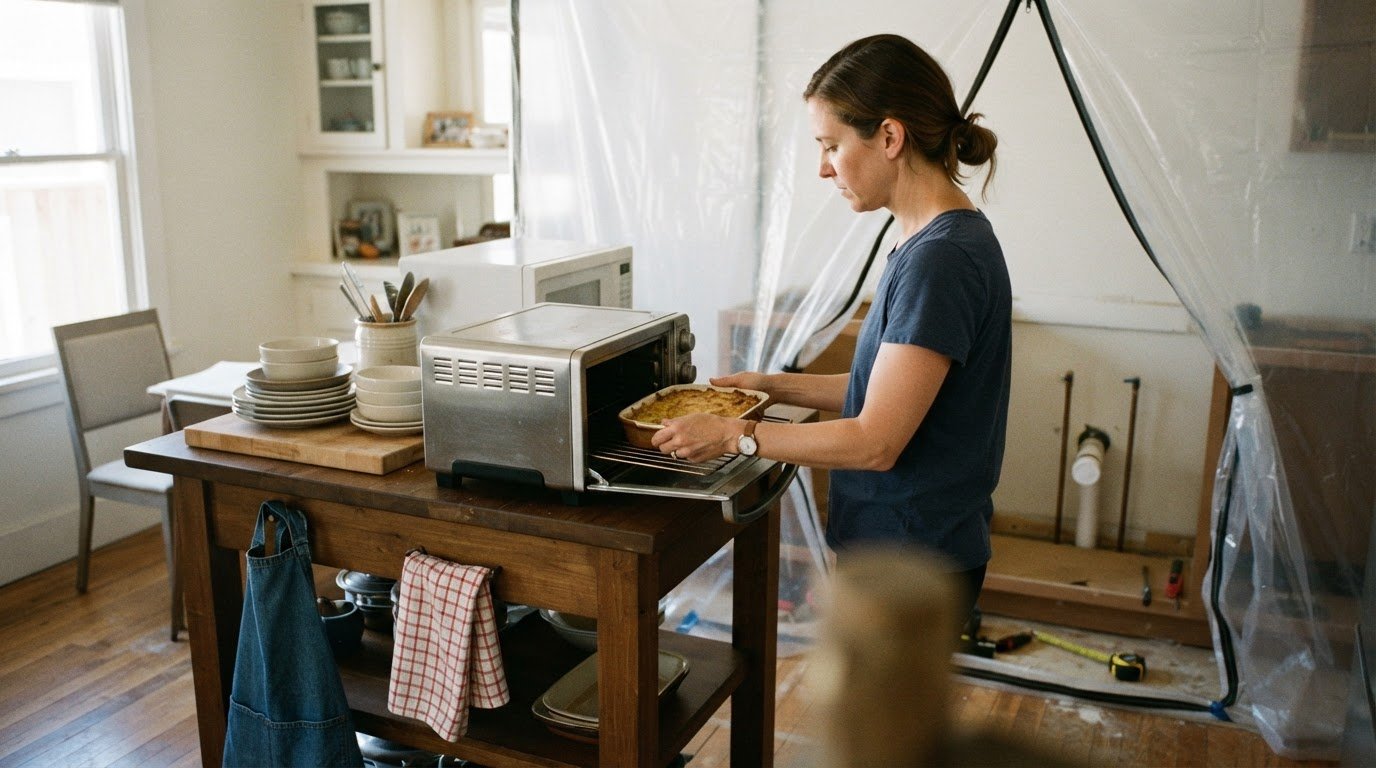
Inspections can also affect timing. Some roof repairs may require local permits or inspections, depending on the work and local requirements. When an inspection is needed, the project schedule must account for it. Starting without understanding the required process can interrupt work or leave a repair incomplete while the homeowner addresses the next steps.
Seasonal timing matters. Consider roof repairs before the coldest part of winter, while a couple of months remain before it arrives. This window allows time to assess the roof, plan the work, and account for weather-related interruptions. Waiting until a leak worsens can make scheduling more urgent and increase the chance that the home remains exposed.
Hiring a professional can reduce delays caused by unfamiliar tasks, missing equipment, and avoidable corrections. A roofer evaluates the damage, determines the repair sequence, and considers how weather and roof condition affect the work. If a damaged area needs attention before conditions deteriorate, arrange professional roof repair to address the problem and protect the roof’s integrity.
GTE Construction & Roofing
GTE Construction & Roofing helps homeowners address roof concerns through professional assessment and repair. If a leak keeps returning, damage appears more extensive than expected, or a DIY attempt leaves you uncertain about your roof’s condition, professional support can clarify the work needed. The company also handles new roofing installation when repair alone isn’t the right solution.
Roof problems can affect more than shingles, so addressing them promptly can help you make informed decisions about your home. Describe what you’ve noticed and whether any repair work has already been attempted. Contact GTE Construction & Roofing to discuss your roof repair needs.
Choose a Clear Next Step for Your Roof
A decision about your roof doesn’t have to begin with a climb or an attempted repair. Start with what you can safely observe: a recurring ceiling stain, visible shingle movement, or water appearing after rain. Sharing these details helps focus a professional assessment on the problem you’ve noticed, rather than an assumption about its cause.
Understanding the risks of DIY roof repair can help you recognize when uncertainty is a reason to pause. If you’re unsure whether the issue needs a targeted repair or broader roofing work, a professional assessment can clarify the next step. GTE Construction & Roofing provides roofing repair and new roofing installation, along with other residential services.
Give yourself room to make a considered decision before the problem worsens or the work expands. Contact GTE Construction & Roofing to discuss your roof concerns and move forward with a clear plan for your home.
Frequently Asked Questions
Can I hire a professional to repair my roof?
Yes, homeowners can hire a professional for roof repairs, and GTE Construction & Roofing offers roofing repair. This can be useful when a leak returns after rain or damage appears in several places. The company serves Alameda County and Contra Costa County, California. Describe where you noticed the problem and whether it changes during wet weather to focus the repair discussion.
Is it safe for a roofing professional to walk on my roof?
A professional may need to access the roof, but whether walking on it is appropriate depends on its condition, slope, and the weather. A fragile, wet, or uneven surface can be hazardous and may sustain damage underfoot. A professional assessment can determine whether roof access is necessary for inspection or repair. For example, visible damage may first be assessed from the ground or attic before closer access is considered.
What are the main safety risks of DIY roof repair?
The main risks of DIY roof repair include falling, slipping while carrying materials, and being struck by dropped tools. Nail guns and other equipment can also cause injuries if used incorrectly or in an awkward position. Roof condition and weather can add hazards that aren’t obvious from below. Even a small repair may require working near an edge or on unstable shingles, increasing the risk of harm.
How common are falls and injuries during roof repair, and what do OSHA statistics show?
Falls are a serious hazard in roofing, but the available figures don’t provide a DIY-specific injury rate. In the United States, 107 professional roofers died on the job in 2017, and 23,816 professional roofers suffered nonfatal injuries that year. These figures describe professional roofers, not homeowners. They should not be presented as OSHA statistics without a direct attribution to OSHA.
Which roof repairs should homeowners leave to a professional?
Leave repairs to a professional when a leak keeps returning, damage covers several areas, or the work involves flashing, underlayment, or structural components. Professional help may also be needed if the problem’s source isn’t visible from the ground or attic. For example, water entering near a roof joint may travel before appearing indoors, making the visible stain an unreliable guide to the repair location.
Can DIY roof repairs void a roof warranty or homeowners insurance coverage?
DIY repairs can affect coverage, depending on the warranty’s terms and the insurance policy. Some roof warranties require qualified professionals to perform repairs, while some homeowners policies may not cover damage caused by DIY work. If a storm damages your roof, contact your insurer before attempting repairs and keep photographs of the affected area. Records can help clarify which damage came from the storm and which followed later work.
What tools, protective equipment, and fall-prevention measures do roofing professionals use?
Roofing professionals use tools and safety equipment suited to the task, following precautions appropriate to the roof and work conditions. The setup can depend on roof pitch, surface condition, access, and weather. Don’t assume that owning a ladder or tool makes roof work safe. For example, carrying materials across an uneven surface can affect balance even before repairs begin.
What are the risks of improper flashing, shingle, or leak repairs?
Improper repairs can leave openings for water, even if the damaged area looks covered. Misaligned shingles, misplaced nails, or poorly fitted flashing can direct water beneath roofing layers. A patch may also fail in later rain or allow water to pool. For example, sealing an indoor stain without finding the roof entry point can leave the original leak active and allow damage to continue.