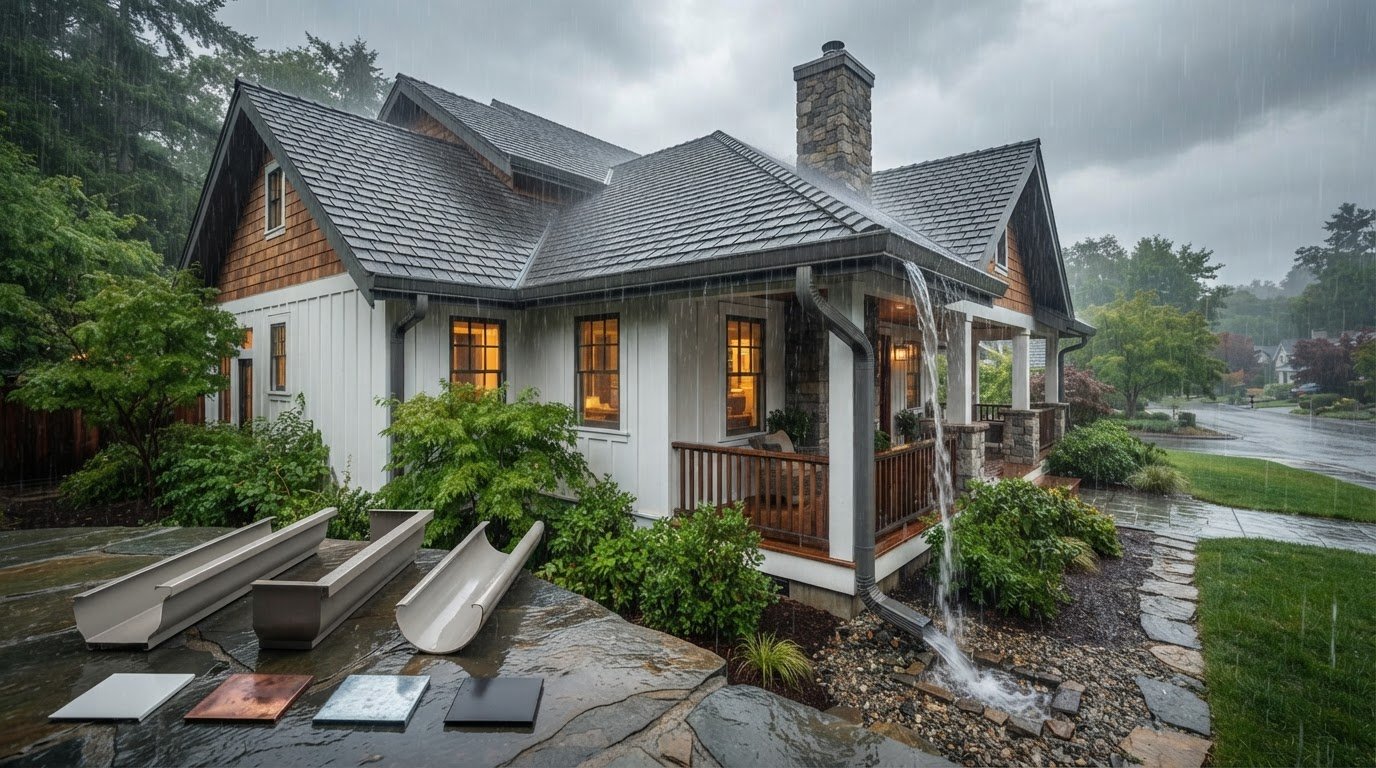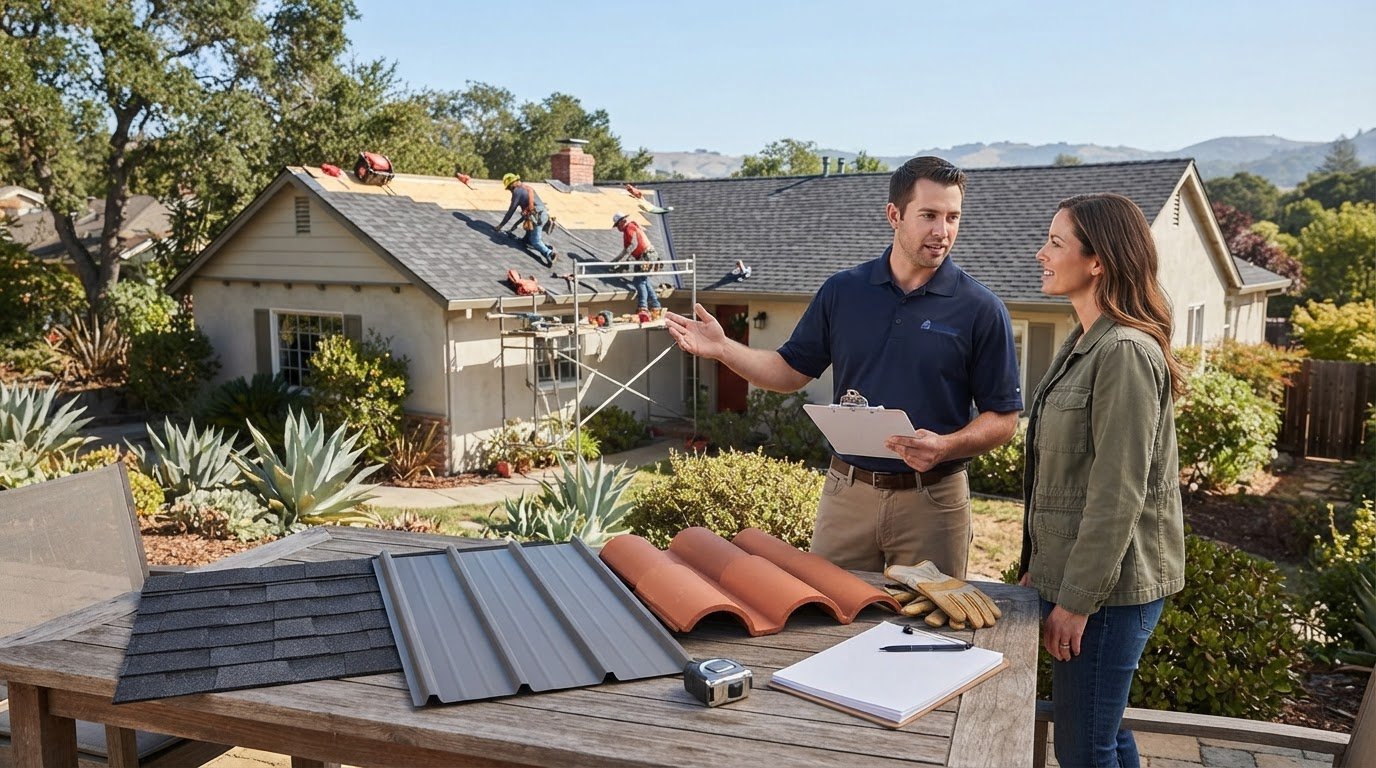
The biggest gutter isn’t automatically the safest choice in a downpour. A 6-inch K-style or box gutter is often the best type of gutter for heavy rain because both profiles can handle substantial water volume. But the right choice also depends on the roof area draining into each run and whether water can move freely through the system.
When rain spills over the edge, it’s easy to focus on gutter size or material. But clogged channels, poor slope, inadequate downspouts, and weak attachment can all cause overflow, even when the gutter is large enough.
This guide compares common gutter styles and materials, including their strengths and trade-offs in heavy rain. You’ll learn what affects drainage, how to spot common causes of overflow, and which details matter when matching a system to your roof. The goal is to help you choose based on how the entire system handles water, not just how the gutter looks.
Key Takeaways
- Compare K-style, box, and half-round profiles to see how gutter shape affects water capacity and flow.
- Match gutter capacity to the roof area, pitch, and rainfall draining into each run.
- Weigh aluminum, copper, steel, and vinyl for durability and suitability in wet conditions.
- Understand how outlets, downspouts, and drainage paths work together to move water away from your home.
- Learn why clogs, poor slope, and inadequate support can cause overflow, even with larger gutters.
Pros and Cons of Gutter Styles: Which Type is Right For You?
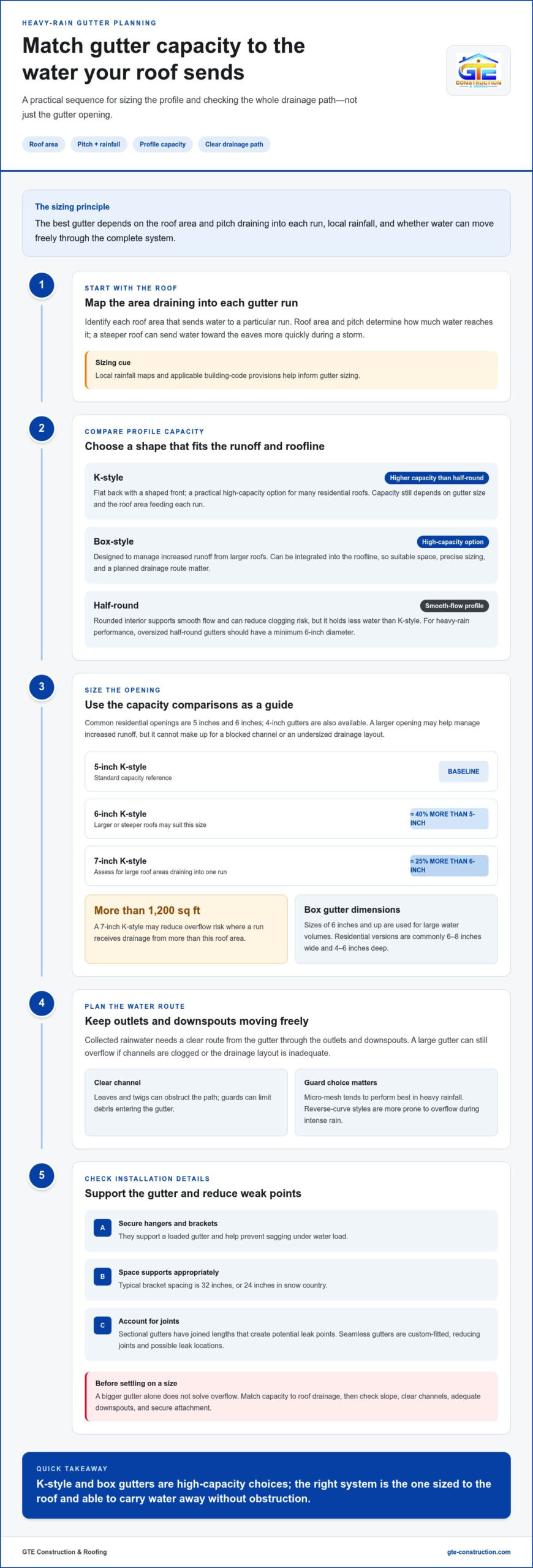
In the United States, local rainfall maps and applicable building-code provisions help inform gutter sizing. Roof area and pitch determine how much water reaches each gutter run. The best type of gutter for heavy rain depends on that drainage load, not just the profile or opening size.
K-Style Gutter Capacity
K-style gutters have a flat back and a shaped front, giving them more water capacity than half-round gutters of comparable size. A 6-inch K-style gutter holds roughly 40% more volume than a standard 5-inch version, while a 7-inch K-style carries roughly 25% more than a 6-inch version. Their larger capacity can suit larger or steeper roofs, but increasing size also affects material and installation costs.
The project scope depends on material, dimensions, and installation complexity; pricing is provided after a quote request.
Capacity, Roof Area, and Rainfall
Start by identifying each roof area that drains into a gutter run. A 7-inch K-style gutter may reduce overflow risk where a run receives drainage from more than 1,200 square feet, while homes in rainy climates may benefit from wider gutters. Roof pitch matters because a steeper surface can send water toward the eaves more quickly during a storm.
Common residential openings are 5 inches and 6 inches, with 4-inch gutters also available. A larger opening may help manage increased runoff, but it cannot compensate for a blocked channel or undersized drainage layout.
| Option | Capacity | Best fit | Trade-off |
|---|---|---|---|
| 5-inch K-style | Standard capacity | Typical roof drainage | Less volume than a 6-inch K-style |
| 6-inch K-style | About 40% more than 5-inch | Larger or steeper roofs | Requires more material than a smaller profile |
| 7-inch K-style | About 25% more than 6-inch | Large roof areas draining into one run | Needs room for a wider profile |
| Box gutter | High-capacity option | Large amounts of runoff | Its dimensions must suit the roof and drainage plan |
| European-style | Wide opening and circumference | Supporting water flow in heavy rain | Profile differs from common K-style gutters |
| Half-round | Less capacity than K-style | Smoother flow and reduced clogging risk | Does not hold as much water as K-style |
For a practical comparison, match the roof area and pitch to the gutter opening, then consider how local rainfall affects runoff. A 7-inch gutter can be worth assessing for a large drainage area, while a 6-inch K-style offers more capacity than the standard 5-inch option without automatically making it right for every home.
What Are The Best Gutters For Heavy Rain?
K-style and box gutters are high-capacity options for heavy rainfall, while half-round gutters support smooth water flow and can reduce clogging. The right profile depends on the roof, available installation space, and how well the complete system moves water.
K-Style Gutters
K-style gutters have a shaped front and flat back, making them a practical, high-capacity option for residential roofs. Compared with half-round gutters, they hold more water, which can help during heavy rain when the channel is clear and outlets drain freely. Their familiar profile suits many homes, but capacity still depends on gutter size and the roof area feeding each run.
Installation details matter as much as gutter shape. Secure hangers support a loaded gutter, while a clear route to the downspouts lets collected rainwater drain promptly.
Half-Round Gutters
Half-round gutters have a curved channel rather than the angular shape of K-style gutters. Their rounded interior allows water to flow smoothly and can reduce the chance of clogs, but they hold less water than K-style profiles. For heavy-rain performance, oversized half-round gutters should have a minimum 6-inch diameter.
Half-round gutters can suit a home when their profile complements the roofline and the drainage design accounts for their lower capacity. Choose them for their flow characteristics, not as an automatic substitute for a higher-capacity K-style or box system.
Box-Style Gutters
Box gutters are oversized channels designed to manage increased runoff from larger roofs, making them a high-capacity option for heavy rainfall. Box sizes of 6 inches and up are typically used for large water volumes; residential versions are commonly 6 to 8 inches wide and 4 to 6 inches deep. Their substantial shape needs suitable roof-edge space and a considered installation.
Unlike exposed K-style or half-round gutters, box gutters can be integrated into the roofline. This makes precise sizing and a well-planned drainage route especially important.
Profile alone doesn’t determine durability. Sectional gutters use lengths joined together, and their joints create potential leak points; seamless gutters are custom-fitted, reducing joints and possible leak locations. Secure brackets help prevent sagging under water load. Typical spacing is 32 inches, or 24 inches in snow country. Guards can limit leaves and twigs entering the channel, but guard choice matters: micro-mesh tends to perform best in heavy rainfall, while reverse-curve styles are more prone to overflow during intense rain.
If your roof needs greater water capacity, compare K-style and box profiles first. Consider half-round gutters when smooth flow and their appearance suit the drainage plan.
Aluminum, copper, steel, and vinyl gutter materials
For heavy rain, aluminum and copper are durable options, while steel needs a protective coating and vinyl is less durable in wet regions. Consider material longevity and weather resistance alongside gutter profile, because material alone doesn’t determine how well a system carries runoff.
Aluminum Gutters
Aluminum gutters are lightweight and rust-resistant, making them a practical choice for wet weather. Their typical lifespan is 20 to 30 years, depending on conditions and care. Seamless gutters have fewer joints, which can mean fewer potential leak locations.
For added structural rigidity in heavy-rain installations, .032-inch aluminum is recommended over common .027-gauge stock. This heavier material can be a consideration where a gutter must withstand substantial water loads; sound installation and maintenance remain important.
Copper Gutters
Copper stands out for longevity and appearance. Properly installed and maintained copper gutters can last up to 100 years, giving them a longer stated lifespan than aluminum, galvanized steel, or vinyl. Copper is highly durable, but it costs more than other common materials, so its appeal depends on both long-term performance and the desired finish.
Heavy rainfall makes correct sizing and drainage essential. Even a durable copper gutter can overflow if leaves and debris block it or water can’t reach the downspouts. Keep material and capacity separate: copper describes what the gutter is made of, not how much runoff its profile can carry.
Steel Gutters
Galvanized steel gutters are strong and typically last 20 to 30 years, depending on maintenance. Their strength can make them suitable where a robust channel is preferred, but steel can rust without proper coating. Inspect the finish and address damage promptly to help preserve the gutter’s weather resistance.
Stainless steel is another option, with a stated lifespan of up to 25 years. It differs from galvanized steel in material type, while both require a suitable installation and clear drainage path. Heavy rain tests the full system, so strength alone won’t resolve clogs from leaves or other debris.
Vinyl Gutters
Vinyl gutters are inexpensive, but they are less durable in regions with heavy rainfall. Their typical lifespan is about 10 to 20 years, depending on care and maintenance. Compared with aluminum or copper, vinyl offers a shorter expected service life, making durability a key consideration for homes exposed to frequent downpours.
Choose vinyl with the roof’s conditions in mind. Heavy rain increases the importance of a clear channel, correctly sized outlets, and regular debris removal, whatever the material. Zinc is another durable alternative: professionally installed zinc gutters can last up to 80 years, placing them between aluminum and copper by stated lifespan.
How Do Gutter Systems Work?
A gutter system collects roof runoff, then channels it through outlets and downspouts away from the home. For effective drainage, slope gutters about 1/4 inch per 10 linear feet toward each downspout, and clean and inspect them at least twice a year.
How Water Moves Through the System
Rain runs from the roof into the gutter, follows its slope to an outlet, and exits through a downspout. Every part affects how much water the system can move. A broad gutter can still overflow if outlets are poorly placed or downspouts can’t carry water away quickly enough.
During gutter installation, plan the roof’s drainage areas and outlet locations together. Water from each roof section should reach an outlet without having to travel an unnecessarily long gutter run. The discharge path matters, too: direct roof water at least 8 feet away from the foundation to help prevent water problems in a basement or crawl space.
Gutter construction affects joints along the fascia. Sectional gutters are made in 10-foot lengths, so connected sections create joints that can become leak points. Seamless gutters are custom-fitted to the home, reducing joints and potential leak locations. Neither design replaces correct slope, adequate outlets, and a clear discharge route.
Downspout Size and Placement
Common residential downspout sizes include 2 × 3 inches and 3 × 4 inches, or approximately 3 or 4 inches in diameter. A larger downspout provides a wider path for runoff, but size must match the volume flowing from its gutter outlet. The roof area draining into each run helps determine the drainage demand.
Position outlets so water can drain efficiently, then direct each downspout away from the foundation. Don’t discharge water toward a basement or crawl space. If leaves or other debris block an outlet, water can back up even when the gutter channel is clear.
Inspection and Maintenance
Inspect gutters and downspouts at least twice a year for leaves, debris, leaks, and visible sagging. Clear the channel and confirm water can pass through each outlet. After heavy rain, look for spill marks, standing water, or wet areas near the foundation, which may signal a drainage problem.
Keep the full route in view, from roof edge to downspout exit. A clean channel, correctly directed slope, clear outlet, and discharge reaching at least 8 feet from the foundation work together to move rainwater away from the home.
Causes of gutter overflow during intense rain
A gutter can overflow even when its channel looks large enough. Trace the water path from the roof edge to the discharge point: clogs, poor slope, weak supports, and undersized drainage can all restrict flow.
Clogs and Debris
Leaves, twigs, and roof grit can block the gutter channel, outlet, or downspout. A partial blockage narrows the route, so heavy rain may send water over the edge before it reaches the ground. Homes near tall trees may collect more leaves and debris, so regular checks can help reduce clogging.
Gutter guards can help keep leaves and twigs out, but they don’t eliminate maintenance. Micro-mesh guards tend to perform best in heavy rain; reverse-curve guards are more likely to overflow during intense rainfall. Check the guard surface and outlets after storms, as debris can collect at either point.
Insufficient Capacity or Poor Slope
A gutter may be too small for the roof area draining into it. Steep roofs can send water toward the eaves quickly, while intense rain adds more volume at once. If water spills over despite a clear channel, assess the roof’s drainage area, gutter dimensions, outlet placement, and downspout capacity as one system.
Incorrect slope can leave water standing instead of moving toward outlets. Gutters should be pitched toward downspouts and securely attached. A sagging section can form a low spot that holds water and debris until the next downpour pushes it over the edge.
Downspouts, Attachment, and Joints
Small, blocked, or poorly positioned downspouts can’t carry water away as quickly as a storm delivers it. Inspect the outlet and the full downspout path: even a clear gutter can overflow if water meets a blockage below. Make sure the discharge point directs runoff away from the foundation rather than letting it pool beside the home.
Loose fasteners can let a loaded gutter pull away from the fascia. After rain, check for visible gaps, tilted sections, and water marks. Sectional gutters have joints that can leak or collect debris; seamless gutters have fewer joints but still need proper slope, secure attachment, and clear outlets.
Use the overflow location to narrow the cause: spilling along the whole edge suggests capacity or flow trouble, while one wet joint points toward a local leak. If clearing debris and inspecting drainage don’t resolve recurring overflow, arrange gutter repair to address damaged sections or installation problems.
GTE Construction & Roofing: New Roofing & Installation
GTE Construction & Roofing helps homeowners address gutter problems with gutter installation and repair. If overflow continues after you clear debris or the gutters are damaged, repair can address the affected areas. When replacement is needed, installation provides a new gutter system. The right next step depends on the cause, such as damaged sections, recurring leaks, or a system that can’t handle roof runoff effectively.
If you’re planning roof work, consider new roofing and installation alongside the gutter plan so the roof edge and drainage system are addressed together. Contact GTE Construction & Roofing to discuss your gutter or roofing project in Alameda or Contra Costa County.
Take the Next Step Toward Better Drainage
Use the next rainfall as a practical test. Note where water spills, whether it comes from one section or several, and whether runoff collects near the foundation. These observations can help identify whether the priority is clearing a blockage, repairing damage, or reconsidering the drainage layout. The best type of gutter for heavy rain is the one that suits your roof and works as part of a complete system.
When the cause points to damaged gutters or roof concerns, GTE Construction & Roofing offers gutter repair, roofing repair, and new roofing installation. The company also provides kitchen remodeling for homeowners planning broader property work. Share what you’ve observed to discuss a suitable next step for your home.
Contact GTE Construction & Roofing to talk through your project and move forward with a clearer plan.
Frequently Asked Questions
Are Gutters Worth It?
Yes. Gutters direct roof runoff away from your home, helping reduce water pooling around the foundation. Without a controlled path, heavy rain can erode soil, damage landscaping, affect siding, or contribute to basement water problems. If runoff repeatedly collects beside a basement wall, inspect the gutter’s discharge route as well as the channel. Gutters work best as part of a system that carries water safely away from the building.
Are seamless gutters really better?
Seamless gutters can be a good fit when reducing potential leak points is a priority. They’re custom-fitted to the home and have fewer joints than sectional systems, leaving fewer places for leaks or debris buildup. They still need suitable sizing, proper slope, secure attachment, and clear outlets. A seamless gutter won’t solve overflow caused by blocked downspouts or a drainage layout that can’t handle roof runoff.
How long do gutters last on a house?
Material and maintenance make a substantial difference. Vinyl gutters typically last about 10 to 20 years, while aluminum and galvanized steel commonly last 20 to 30 years. Professionally installed zinc gutters can last up to 80 years, and copper gutters up to 100 years with proper installation and maintenance. These are material-specific expectations, not a guarantee for every home. Promptly addressing leaks, corrosion, or loose sections helps protect the system.
Should You Consider Gutter Guards?
Consider guards if leaves and twigs repeatedly clog your gutters, especially when tall trees surround your home. Guards help keep debris out, reduce maintenance needs, and lower overflow risk, but they don’t make a system maintenance-free. Micro-mesh guards tend to perform best in heavy rain; reverse-curve guards are more prone to overflow during intense rainfall. Clear debris from guards and inspect outlets to keep runoff moving freely.
What Are the Best Gutter Materials?
Aluminum is lightweight and rust-resistant, making it a practical option for many homes. Copper offers notable longevity and a distinctive appearance, while steel is strong but can rust if its coating is inadequate or damaged. Vinyl is inexpensive but less durable in regions with heavy rainfall. Consider local weather exposure, expected maintenance, appearance, and how long you want the system to serve your home.
What Is the Best Gutter Design?
K-style is a strong general choice when capacity matters because it holds more water than a comparable half-round gutter. Box gutters can also suit situations with large water volumes, particularly on larger roofs. Half-round profiles support smooth flow and can reduce clogging risk. Choose a design based on roof shape, drainage area, fascia space, and outlet placement, rather than appearance alone. The profile must work with the complete drainage layout.
What gutter size and capacity are recommended for heavy rain and large roof areas?
Six-inch gutters are a common larger-capacity choice for heavy rain, while rainy climates may call for systems 7 inches or wider. A 7-inch K-style gutter may help where more than 1,000 square feet of roof drains into one run; roof areas exceeding 1,200 square feet per run are another situation where it can reduce overflow risk compared with a 6-inch system. Pitch, outlets, and downspouts also affect performance.
Are seamless gutters better than sectional gutters for preventing leaks during heavy rain?
Seamless gutters reduce potential leak points because their custom fit means they have fewer joints than sectional gutters. Sectional systems use shorter lengths, and each connection can become a leak point. Seamless construction doesn’t increase gutter capacity by itself. If overflow occurs during a storm, check for clogs, poor slope, insufficient outlets, or undersized downspouts. Even a well-fitted gutter needs clear, properly functioning drainage.