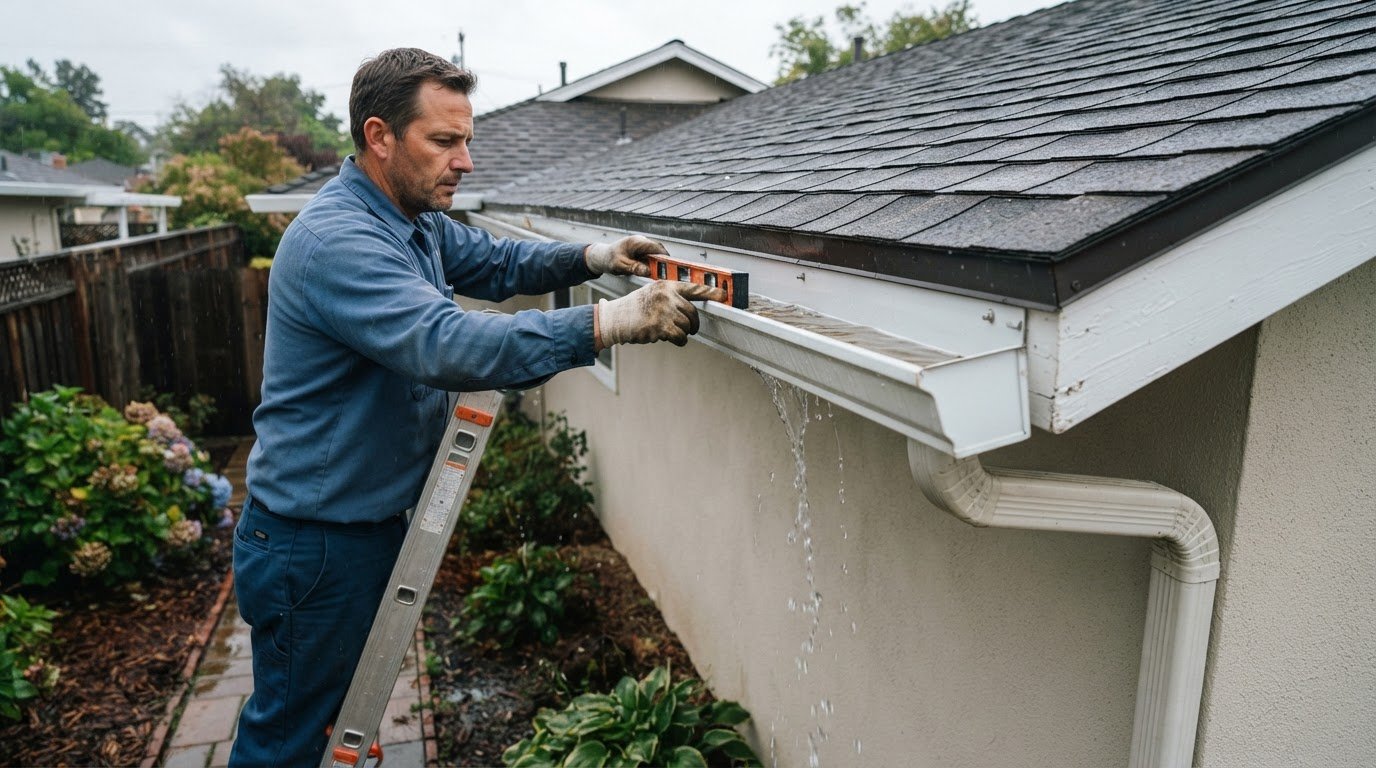
A puddle may point to a soil problem, not just a slope. Solving poor drainage in your backyard starts with finding where the water comes from and why it is not draining away. The right fix might be clearing or extending downspouts, reshaping the yard, or installing a French drain.
Persistent soggy spots are frustrating, especially when the rain keeps coming and the ground stays wet. Clay-heavy soil absorbs water slowly, so adding a drain without considering the soil and the route water takes may not solve the underlying problem.
This guide explains the signs and common causes of poor drainage, then compares practical fixes and when each may be appropriate. You’ll learn how gutter maintenance, drainage systems, and grading can direct water away from your home, and why understanding the soil matters when choosing a lasting solution.
Key Takeaways
- Trace where runoff enters and pools before choosing a fix; clogged gutters and poorly directed downspouts can concentrate water in problem areas.
- Match the solution to the flow: extensions redirect roof runoff, French drains carry water through a buried pipe, and grading reshapes its path across the yard.
- Persistent puddles can point to more than a low spot. Soil composition, compaction, and conditions below the surface may all affect how quickly water drains.
- Clay-heavy soil absorbs water slowly, so improving the soil and planning a suitable drainage route may be important alongside surface changes.
- Recognizing the cause helps narrow the options and determine when professional assessment can guide a more durable repair.
1. Downspout extensions and gutter maintenance
Begin at the roof edge when tracing runoff into a wet yard. A 1,000-square-foot roof sheds over 600 gallons from one inch of rain. Clogged gutters or poorly aimed downspouts can concentrate that flow beside the house. Look for overflow marks, soil erosion, and puddles directly below an outlet.
Clear leaves and other debris from gutters so water can reach the downspouts. Then inspect each outlet for blockages, loose joints, or water spilling behind the gutter. Gutters must also suit the roof area: 5-inch gutters are recommended for most homes, while 6-inch gutters suit large roof sections or steep pitches.
Direct each downspout outlet away from the foundation. Surface extensions should carry water at least 5 feet from the home. If an extension ends beside a low spot, the runoff may simply create a new puddle. Extending it farther into the yard or connecting it to a drainage system can move concentrated flow toward a more suitable area.
A catch basin collects runoff at a low point and connects it to a drainage route. Its grate or strainer needs periodic cleaning because leaves and other debris can block the flow. Include the basin, connecting pipes, and outlet in the drainage plan. A collection point without a clear route for water may leave the area just as saturated.
Consider hiring a drainage contractor when water still pools after gutter cleaning, repeatedly reaches the foundation, or requires buried pipes. Compare estimates by checking that they cover the same work, including gutter repairs, extensions, catch basins, pipe routing, and the runoff outlet. A clear scope makes differences easier to understand.
Permit, utility-check, and drainage requirements depend on your location and project. Before digging or changing where runoff flows, identify the local rules through your city or county and follow the relevant utility-locating process. Requirements may differ for a surface extension and a buried drainage system.
Plan the outlet so water does not create a new problem beyond your property. A downspout extension should direct flow to an appropriate area on your lot, not toward a neighbor’s yard or public land. A contractor can assess the route and revise the plan if the proposed outlet would send runoff across a property line.
Backyard drainage repair costs vary by scope, access, materials, and the required drainage route; pricing depends on the case and is given after a quote request. Gutter Repair or Gutter Installation can address damaged or inadequate roof drainage, while broader yard pooling may call for a different landscape solution.
2. French drains
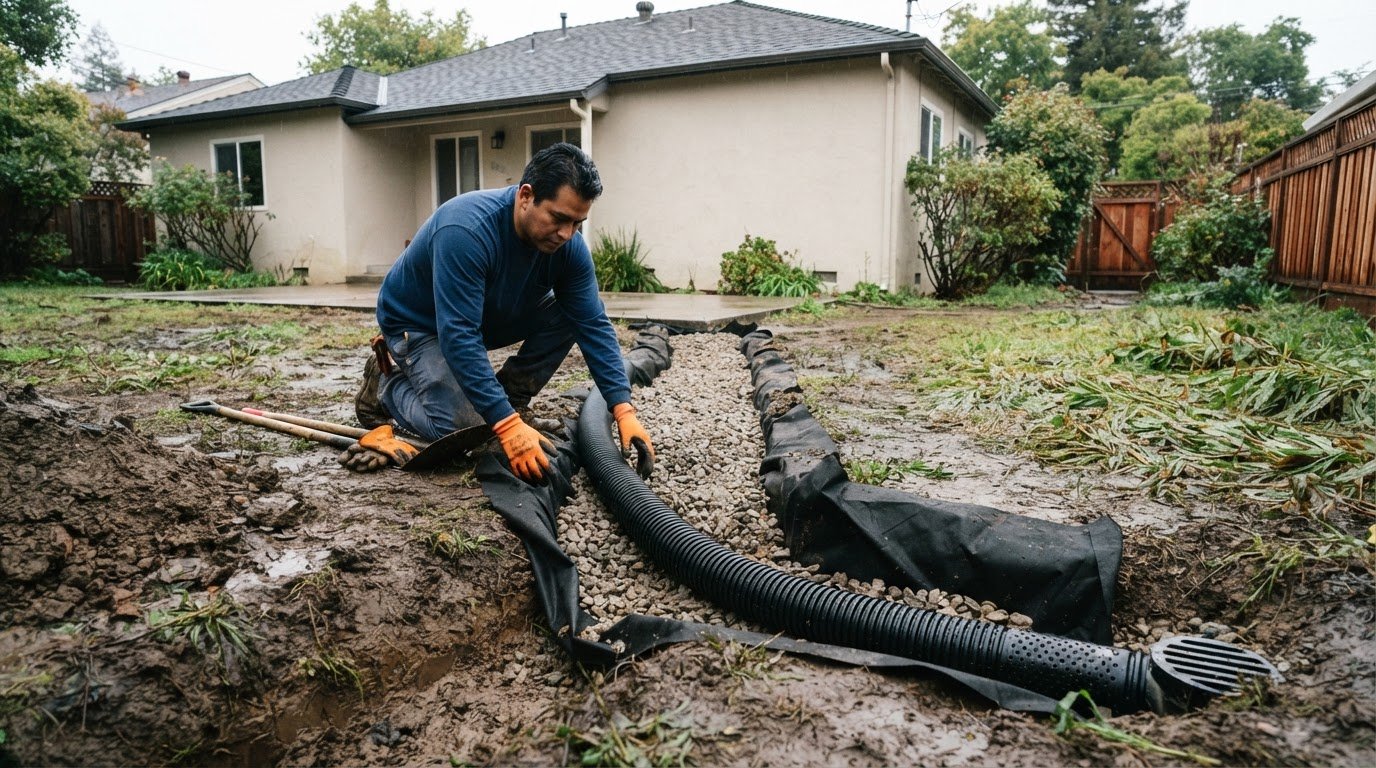
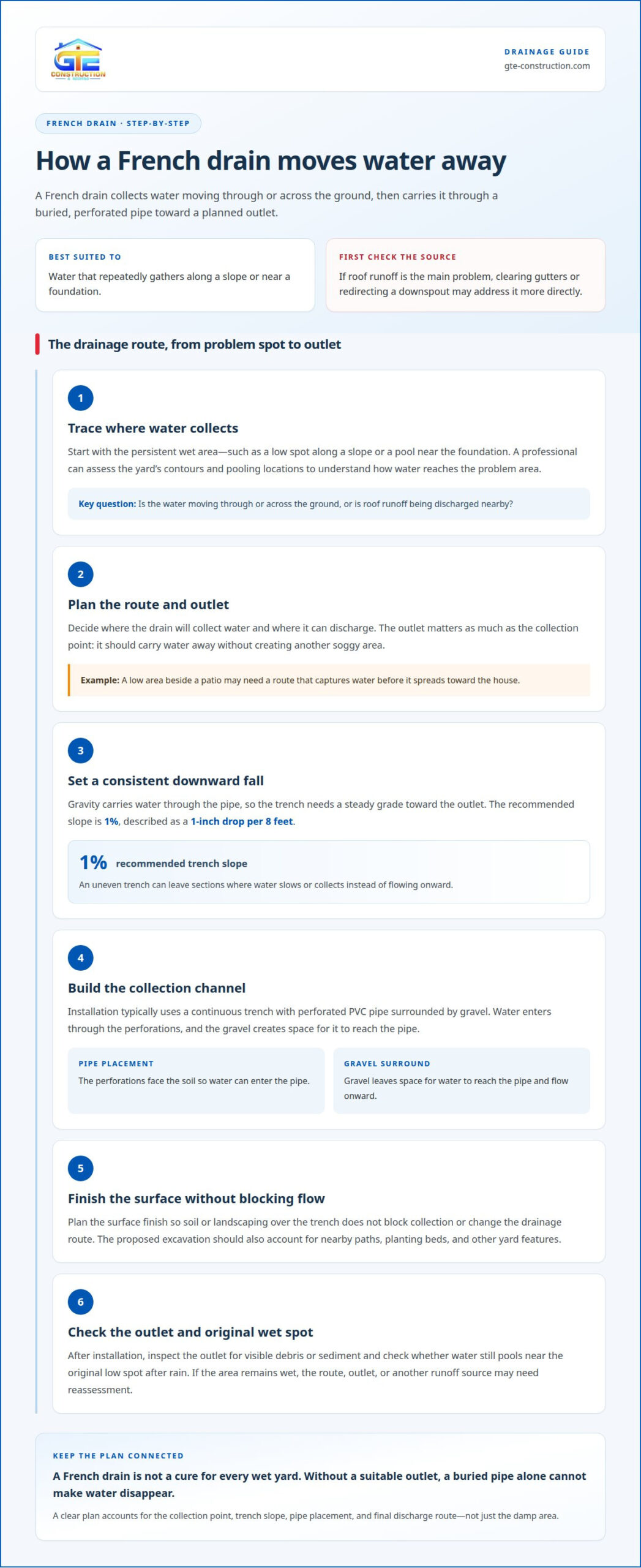
A French drain may help when water repeatedly gathers along a slope or near a foundation. It uses a perforated PVC pipe in a gravel-filled trench to collect and carry water away. Unlike a downspout extension, which redirects roof runoff at the surface, a French drain intercepts water moving through or across the ground. A professional can trace where water collects and identify a practical drainage route.
Placement determines whether the drain addresses the wet area or merely shifts the problem. A contractor assesses the yard’s contours, pooling locations, and intended outlet before planning the trench. For example, a low area beside a patio may need a route that captures water before it spreads toward the house. The outlet matters as much as the collection point: discharged water should not create another soggy area.
Proper fall allows gravity to carry water through the pipe. The recommended trench slope is 1%, described as a 1-inch drop per 8 feet. A professional establishes that grade along the route and checks it during installation. An uneven trench can leave sections where water slows or collects instead of flowing toward the outlet.
Installation typically involves digging a continuous trench, placing the perforated pipe, and surrounding it with gravel. The perforations face the soil so water can enter the pipe and flow onward. Gravel creates space for water to reach the pipe. A professional also considers the surface finish, since soil or landscaping over the trench should not block collection or change the drainage route.
French drains can suit persistent groundwater or surface-water problems, but they are not a cure for every wet yard. If roof runoff is the main source, clearing a blocked gutter or redirecting a downspout may address the cause more directly. If there is no suitable outlet, a buried pipe alone cannot make the water disappear. The plan must connect the problem area to a workable discharge point.
Ask the contractor to explain the proposed route, trench slope, pipe placement, and outlet in the estimate. These details show how the system will collect and move water, rather than simply cover a damp area with gravel. A clear plan should also account for nearby paths, planting beds, and other features that excavation could affect.
Periodic inspection after installation helps keep the drainage route working. Check the outlet for visible debris or sediment, and see whether water still pools near the original low spot after rain. If the area remains wet, the issue may involve the route, outlet, or another source of runoff. A professional can reassess these factors before adding another drainage feature.
3. Grading the yard to slope away from the house
Professional grading reshapes the ground so rainwater moves away from the house instead of collecting beside it. The recommended yard slope is 1 inch per foot of horizontal run. Another benchmark calls for the ground to fall at least 6 inches within the first 10 feet. A grading plan considers the existing elevations, low spots, soil, and where redirected water can drain safely.
To assess the slope, a professional surveys the ground from the foundation toward the yard and identifies dips or reverse grades. Even a small depression can hold runoff when nearby ground slopes correctly. The planned grade should provide a continuous route away from the house without creating another pool at the end. For example, a low lawn section may need reshaping to let water flow toward an area where it can be absorbed.
Soil infiltration is another part of the assessment. A soil test hole that drains within 4 hours indicates sandy soil. That observation helps explain whether water is likely to soak into the ground or remain near the surface. Soil conditions matter because grading changes water’s direction, but it doesn’t make poorly absorbing ground absorb water more quickly.
For drainage pipes, the recommended French drain trench slope is 1%, described as a 1-inch drop per 8 feet. A professional coordinates the pipe route with the yard’s planned grade, so the underground flow and surface runoff have workable paths. This matters where a pipe outlet and a regraded lawn meet: either route can fail to move water away if it ends in another low spot.
Sloped yards also need protection from erosion. Heavy rain can wash away soil, mulch, and plants, leaving bare patches and uneven ground. These changes can redirect runoff or create new depressions. A grading plan should account for exposed areas and maintain a stable surface, with landscaping suited to the slope and water’s route.
After grading, a professional can assess the surface during rain or inspect it afterward for new channels, displaced soil, and standing water. A puddle in the same place may mean the final grade still directs runoff into a depression. If soil has washed away, the surface may also need repair before it can guide water consistently.
Yard grading works best when poor surface slope is the cause. If water persists because the soil absorbs it slowly, the plan may also need to address soil conditions. Combining a corrected grade with a suitable drainage route helps direct runoff away from the house instead of simply shifting the wet area.
4. Signs and causes of poor yard drainage
Start with how long water remains after rain. Puddles that last two days or more indicate a drainage problem. A properly functioning system should remove standing water within 24 to 48 hours after rainfall stops. A professional considers where the water collects, how long it stays, and whether the pattern repeats after storms.
Water near a foundation deserves attention because persistent pooling can contribute to cracks, mold growth, and long-term structural concerns. Standing water in the yard can also leave grass and planting beds saturated, wash away mulch, or expose bare soil. Location offers clues: a puddle below a downspout points to roof runoff, while a low lawn area may indicate a grading or soil issue. Solving poor drainage in a backyard starts by tracing these signs to their source.
To diagnose the cause, a drainage professional observes the yard’s slopes and pooling patterns, then traces likely runoff paths from roof outlets and surrounding ground. They identify where water enters, where it stalls, and whether a yard drain or another route can carry it to a suitable discharge area. This connects the visible puddle to its cause instead of treating only the surface.
Several conditions can produce similar symptoms. A depression can hold rainwater, while compacted ground or slow-absorbing soil can prevent it from soaking in. Roof runoff concentrated in one spot may overwhelm the surrounding ground. A professional distinguishes these patterns by comparing the wet area with nearby slopes, outlets, and soil conditions. This diagnosis helps solve poor drainage in a backyard without shifting the problem elsewhere.
Yard drains collect surface water at low points and carry it through connected drainage routes. A dry well is an underground, rock-filled basin that collects runoff and works with yard drains. It can give collected water a place to disperse below ground, but its location and connection need to suit the source and direction of runoff.
Regrading can correct a surface that directs water into a low spot or toward a house. A professional reshapes the ground to guide runoff away from the problem area and toward places where it can be absorbed. For example, a shallow depression between a patio and lawn may need a revised slope so water does not stay trapped beside the hard surface.
Choosing between a yard drain, dry well, and regrading depends on where water starts and how it moves. If a drain collects water but ends in another low area, the pooling may simply shift. If regrading changes the surface but poor absorption remains the main issue, water may still linger. The diagnosis should match the fix to the cause.
After the repair, observe the same areas following rain. A professional can assess whether standing water clears within 24 to 48 hours and whether the original pooling location stays drier. New puddles, erosion, or water near the foundation can reveal that runoff needs a different route or that another drainage cause remains.
5. Clay-heavy soil and poor absorption
Clay-heavy soil can leave a backyard soggy because water infiltrates it at less than 0.05 inches per hour. After rain, water may linger in low spots instead of soaking into the ground. This helps explain why a yard can stay wet even after runoff has been directed away from the house. The key is determining whether slow absorption, surface slope, or both are keeping water in place.
A soil test hole offers a useful clue about absorption. If it takes over 24 hours to drain, the soil is classified as clay soil (Group D). By contrast, a hole that drains within 4 hours indicates sandy soil. These results help distinguish slow-draining ground from a yard where water mainly collects because the grade directs runoff into a depression. Soil can also vary across one property, so a test in one area may not describe every wet patch.
Soil texture is not the only possible cause. According to the Florida Department of Natural Resources, compacted soil, clay hardpan, bedrock only 1 to 2 feet below the surface, and a seasonally high water table can cause poor drainage and standing water. These conditions affect water movement in different ways. Compaction restricts infiltration near the surface, while shallow bedrock or a high water table can limit how much water the ground can take in.
When clay is the main issue, adding organic material can improve water absorption and reduce persistent sogginess. A professional assesses the affected area and soil before choosing an amendment and deciding where to incorporate it. Treating only a small patch may leave surrounding ground saturated, so the assessment should account for water movement across the wider yard.
Regrading can direct surface water away from a low area, but it cannot make clay absorb water quickly. A French drain or yard drain may carry collected runoff elsewhere, but the outlet still needs a suitable destination. For example, a drain may collect water effectively in a clay-heavy lawn, but a poorly planned outlet can shift the wet spot instead of addressing the overall drainage pattern.
Persistent water after rain calls for an assessment of soil, grade, and conditions below the surface together. A professional can consider test results, the locations of standing water, and visible runoff paths to identify the likely cause. That helps determine whether organic material, regrading, or a drainage route best fits the site. Request a landscape drainage assessment to discuss a solution suited to your yard.
GTE Construction & Roofing
GTE Construction & Roofing is a practical next step when yard drainage concerns may be connected to your roof’s condition. If runoff accompanies roof damage or you’re planning a roof replacement, the company provides Roofing Repair and New Roofing & Installation. Addressing a roofing issue can help resolve one source of runoff, while the wider yard may still need a drainage solution suited to its slope and soil.
For persistent pooling, note where water collects and whether it appears during roof runoff. These details help clarify the problem and whether roofing work is relevant to the wider issue. Contact GTE Construction & Roofing to discuss your home project.
Plan the Next Step for a Drier Yard
A sound plan for solving poor drainage in your backyard starts with understanding how water moves across the property, not just where it becomes visible. Notice whether the problem appears after ordinary rain or heavier storms, and whether it affects one area or several. This pattern can help focus the next conversation and keep the proposed work aligned with the underlying cause.
If you’re considering a broader home project alongside the drainage concern, GTE Construction & Roofing offers New Roofing & Installation, Roofing Repair, and Kitchen Remodeling. The right next step depends on the work your home needs. Explain what you’ve observed and the outcome you’re looking for.
Contact GTE Construction & Roofing to discuss your home project. With a clear understanding of the issue and your priorities, you can move forward with greater confidence.
Frequently Asked Questions
What causes poor drainage in a backyard?
Poor drainage usually occurs when water reaches an area faster than the ground can absorb or move it. Common causes include clay-heavy or compacted soil, a low spot, shallow bedrock, a seasonally high water table, or concentrated roof runoff. For example, a downspout may saturate one patch even if the rest of the lawn drains well. Comparing wet areas with nearby dry ground can help reveal what is different.
What professional solutions improve backyard drainage, such as regrading, swales, and rain gardens?
Professionals choose a solution based on whether water needs redirecting, conveying, or holding. Regrading changes the surface route; a grass-lined swale carries runoff across the yard. A rain garden can hold water in the landscape and reduce stormwater runoff, according to the U.S. Environmental Protection Agency. Rain gardens are typically 4 to 8 inches deep and sized at 10 to 30% of the drainage area feeding them.
How do French drains and dry wells work, and when should each be used?
A French drain collects water along a trench and carries it through a perforated pipe toward an outlet. A dry well is a rock-filled underground basin that collects runoff and works with yard drains. A French drain may suit a narrow, recurring flow path; a dry well may suit runoff gathered at a low point. The choice depends on where water collects and whether the planned route has a suitable destination.
How do professionals test soil drainage and determine whether a dry well is suitable?
Professionals examine the soil at the planned drainage location and assess how quickly water moves through it. They also consider whether wet areas align with low spots, compacted ground, or runoff paths. A dry well needs a location where collected water can disperse rather than remain trapped. Nearby bedrock or a seasonally high water table can affect the assessment, so a test in one part of the yard may not represent another.
How much does backyard drainage repair cost in the United States?
Costs vary by scope, access, materials, and drainage route.