If you could see through your ceiling right now, would you truly trust the structural integrity of the barrier protecting your family from the next Northern California atmospheric river? Most homeowners only begin to wonder how long do roofs typically last when they notice a mysterious water stain or hear the unsettling rhythm of a leak during a midnight storm. It is a stressful position to be in, particularly when you are navigating the high costs of Bay Area property maintenance and the uncertainty of contractor honesty.
We understand that peace of mind comes from reliable data rather than guesswork. You deserve a clear, professional assessment of your home’s most critical defense system. This guide provides the precise lifespans of various roofing materials and explains how the 2026 California building codes, including new fire safety and “cool roof” requirements, impact your specific situation. We will explore a realistic timeline for replacement, provide the knowledge you need to vet local professionals, and share proven methods to extend your roof’s life for years to come.
Key Takeaways
- Understanding how long do roofs typically last starts with the material, ranging from 15 years for standard shingles to over 50 years for high-quality tile or metal systems.
- Northern California’s microclimates, including Sacramento’s intense thermal expansion and the Bay Area’s corrosive salt air, can significantly accelerate the aging process of even the best materials.
- New 2026 California building codes now mandate Class A fire ratings and “cool roof” standards for most reroofing projects to enhance regional safety and energy efficiency.
- Strategic maintenance, particularly professional gutter care and debris removal, prevents water back-flow and protects the critical underlayment from premature failure.
- The “50% rule” serves as a reliable financial guide to help you decide when a precision repair is a wise investment or when a full replacement is necessary for structural integrity.
The Baseline: How Long Do Roofs Typically Last by Material?
Determining how long do roofs typically last requires looking beyond the glossy marketing brochures to the structural reality of your specific home. While every manufacturer provides a theoretical lifespan, the actual service life is a product of material quality, installation precision, and environmental exposure. Understanding these baselines allows you to plan for future investments rather than reacting to sudden failures. There is a wide variety of commercially available roofing materials, each with a distinct timeline for replacement.
Asphalt Shingles: The Most Common Choice
Asphalt shingles remain the standard for many California homes, but not all shingles are engineered equally. You will generally encounter two main categories:
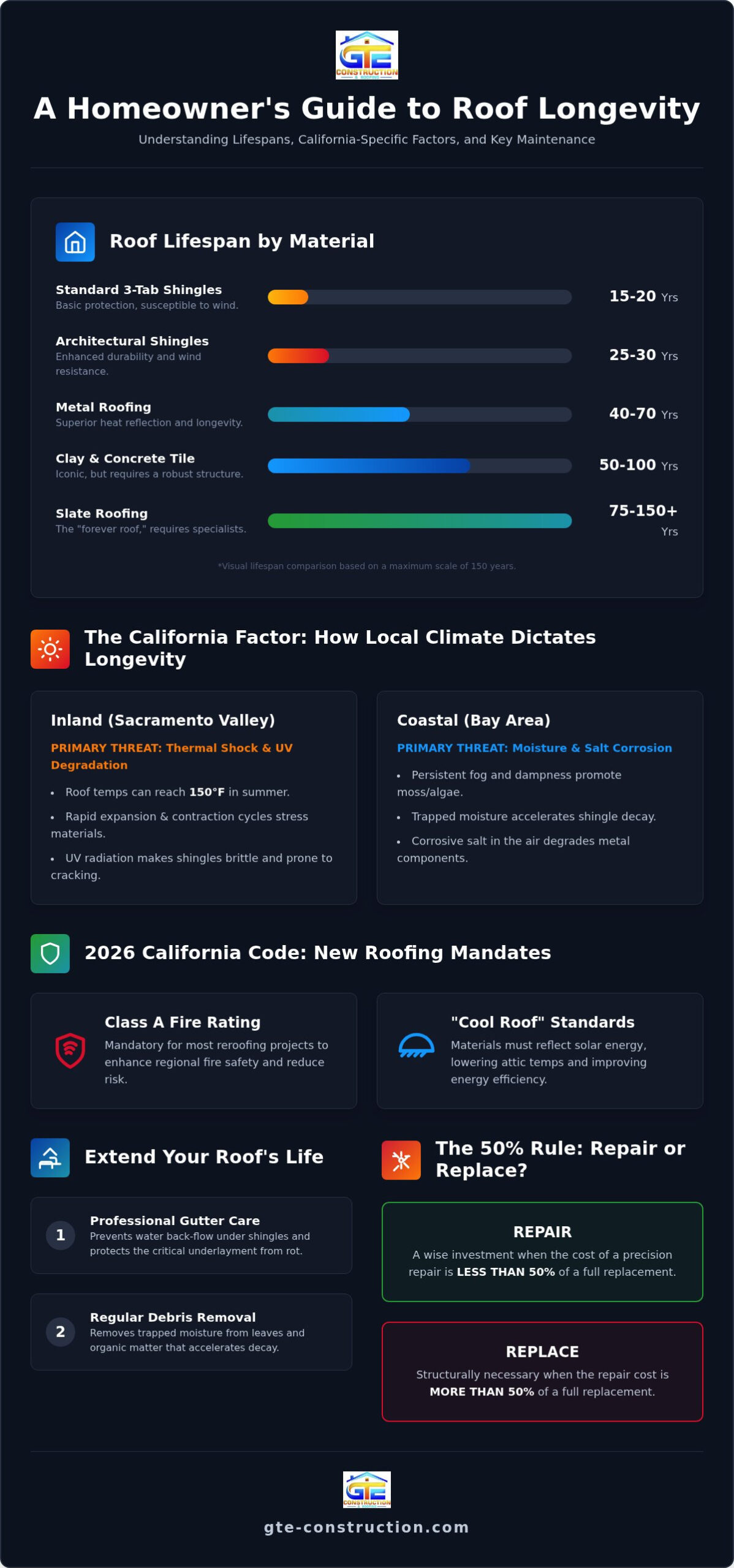
- Standard 3-Tab Shingles: These offer a basic level of protection with a 15 to 20-year reality. They are thinner and more susceptible to wind uplift.
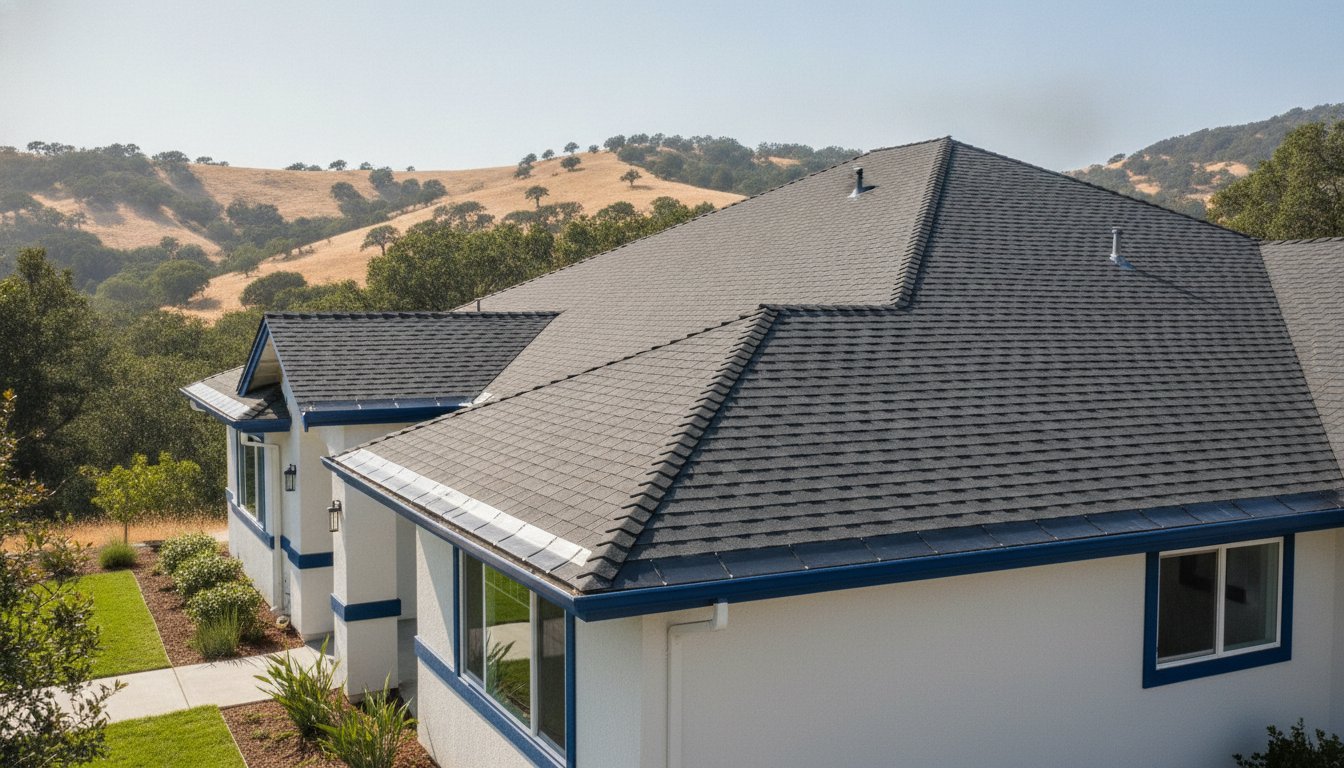
- Architectural Shingles: These provide enhanced durability with a 25 to 30-year window. Their multi-layered construction adds weight and significantly better wind resistance.
You can often spot the beginning of the end when you notice heavy granule loss in your gutters. These granules protect the underlying fiberglass and asphalt from UV degradation. When they wash away, the sun’s rays cause the shingles to become brittle and crack, leading to inevitable leaks.
Premium Materials: Metal, Tile, and Slate
For homeowners seeking a long-term structural solution, premium materials offer a much longer horizon. Metal roofing has become a favorite in Sacramento and the Central Valley because of its superior heat reflection and a lifespan that now averages 40 to 70 years. It’s a disciplined choice for those prioritizing energy efficiency and longevity. Clay and concrete tiles are iconic in California architecture, often lasting 50 to 100 years. However, they require a robust roof deck to support their substantial weight. Slate remains the “forever roof” with a lifespan of 75 to 150 years, though repairs require a specialized skill set to ensure the new stone integrates with the old.
It’s vital to distinguish between a manufacturer’s warranty and the actual service life of the system. A “50-year warranty” often covers specific material defects but doesn’t guarantee the roof will remain leak-free for five decades without professional intervention. When assessing how long do roofs typically last, remember that the warranty is a legal document, while the service life is a structural one determined by maintenance and climate.
The California Factor: How Local Climate Dictates Longevity
In Northern California, the answer to how long do roofs typically last depends heavily on your specific microclimate. A shingle that survives thirty years in a temperate pocket of the Bay Area might fail in fifteen years under the relentless Sacramento sun. We see this variation daily. While material quality provides the baseline, the environmental stressors of our region dictate the actual rate of decay. Understanding these local factors allows you to choose materials engineered for your specific neighborhood’s demands.
Thermal Shock and UV Degradation
Sacramento homeowners face a unique challenge known as thermal shock. On a typical 100-degree summer day, roof temperatures can soar to 150 degrees, causing materials to expand significantly. As the sun sets and the Delta breeze arrives, the rapid cooling causes the materials to contract. This constant cycle of expansion and contraction eventually stresses shingle adhesives and causes fasteners to back out. Ultraviolet radiation relentlessly severs the molecular bonds within roofing felt, eventually turning a flexible waterproof barrier into a brittle, paper-like sheet.
To combat this, the 2026 update to California Title 24 mandates “cool roof” standards for most reroofing projects. These materials use specialized granules to reflect solar energy, keeping the attic cooler and preserving the chemical integrity of the asphalt for a longer period.
Coastal Air and Salt Corrosion
If your property is in San Francisco or coastal Alameda, moisture and salt air are your primary adversaries. Persistent fog keeps roofs damp for extended periods, creating an ideal environment for moss and algae growth in shaded areas. This organic matter traps moisture against the shingles, leading to accelerated decay. Furthermore, the salt content in the air is highly corrosive. Standard galvanized gutters and flashing often fail prematurely in these zones. We recommend utilizing stainless steel fasteners and high-quality coatings to ensure the structural components last as long as the roofing material itself. A professional roofing repair assessment can identify these invisible climate-driven vulnerabilities before they become structural failures.
Wind is another critical factor, particularly in the canyons of Contra Costa County. High-velocity gusts can lead to shingle uplift, where the wind catches the edge of a shingle and breaks the sealant bond. Once this bond is broken, the roof is vulnerable to leaks during the next driving rain. Finally, wildfire resilience is no longer optional. As of January 1, 2026, the California Wildland-Urban Interface Code (CWUIC) requires all new and reroofing projects in designated Fire Hazard Severity Zones to use Class A fire-rated assemblies. This regulation ensures that your investment not only lasts through the seasons but also provides a critical layer of safety for your family.
Structural Integrity: What’s Happening Under the Shingles?
When homeowners ask how long do roofs typically last, they often focus exclusively on the visible shingles. However, a roof is a complex system of integrated components, and the failure of a single hidden layer can compromise the entire structure. The shingles act as the primary shield, but the underlayment, decking, and flashing provide the essential secondary defenses that keep your home dry. In many older California properties, these internal components reach the end of their service life long before the shingles show obvious signs of wear.
The underlayment is a silent waterproof barrier installed directly onto the roof deck. In our region, traditional organic felt underlayment often becomes brittle and cracks due to decades of heat exposure. Once this layer fails, even a minor shingle defect allows water to reach the wooden roof decking. We frequently identify dry rot or sagging in the plywood of homes in humid coastal pockets or older Sacramento neighborhoods. Identifying these structural issues early through a professional assessment is the only way to prevent a localized leak from becoming a total system failure.
The Role of Proper Attic Ventilation
Ventilation is the lungs of your home. A balanced system requires a precise ratio of intake vents at the eaves and exhaust vents at the ridge to facilitate constant airflow. Without this balance, heat builds up in the attic during a typical California summer, effectively cooking the shingles from the inside out. This extreme internal temperature accelerates the loss of volatile oils in the asphalt, leading to curled shingles and shortened longevity. You might notice rusted nails in your attic or a sudden spike in cooling costs, both of which are clear indicators of poor ventilation. We utilize detailed airflow analysis to ensure your roof remains at a stable temperature, protecting the structural stability of the decking for decades.
Flashing and Water Management
Statistics show that 90% of roof leaks originate at the joints, specifically around chimneys, skylights, and valleys. These areas rely on flashing-thin strips of metal designed to divert water away from intersections. Because these are the weakest links in any roofing system, they require a high degree of craftsmanship to install correctly. Our team follows a disciplined methodology for flashing: we remove the old, compromised material, inspect the underlying wood for moisture damage, and install custom-fitted metal barriers sealed with high-grade adhesives. This meticulous approach ensures that the most vulnerable points of your home remain watertight. If you are considering a full replacement, our Professional New Roof Installation: A Peace of Mind Guide for 2026 provides a deeper look at how we integrate these components for maximum durability.
Extending the Life of Your Roof: Maintenance and Gutter Health
While material choice is the foundation of longevity, the way you manage water runoff determines whether you actually reach that 25 or 30-year milestone. Many people ask how long do roofs typically last without realizing that the health of their gutters is the single most influential factor in preventing premature failure. If water cannot exit the roof surface efficiently, it will eventually find a path into your home. This is why we view the roof and gutter system as a single, cohesive unit of protection.
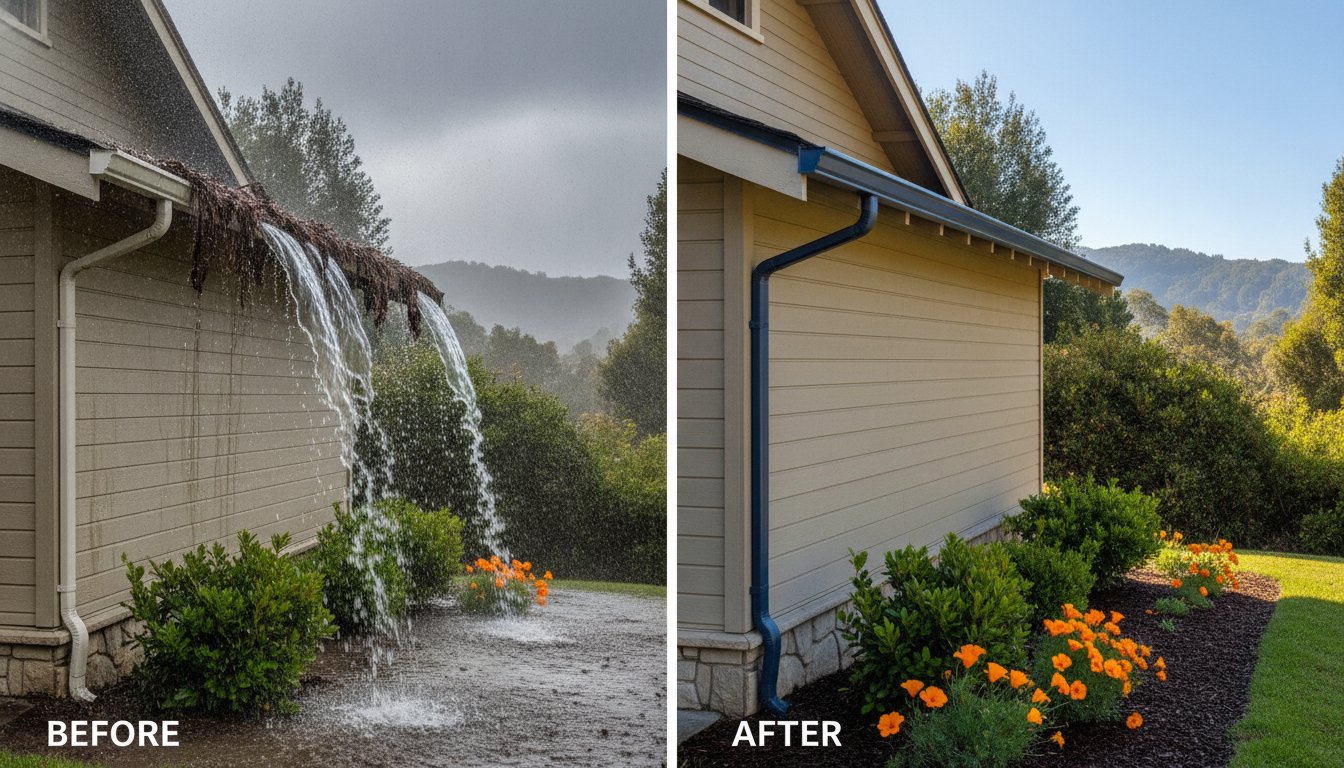
Clogged gutters create a phenomenon we call water damming. Unlike the ice dams seen in colder climates, water damming occurs when debris forces rainwater to pool at the roof’s edge. This standing water seeps under the first course of shingles, saturating the starter strip and eventually rotting the fascia boards and rafter tails. Professional gutter repair and the installation of seamless systems eliminate these leak points, ensuring that water is moved safely away from both your roofline and your foundation. Proper water management also plays a vital role in Erosion Control Landscaping: Protecting Your Home from Water Damage, as it prevents soil saturation around your home’s perimeter.
Why Gutters are Your Roof’s Best Friend
Debris removal is equally critical for structural health. When leaves and pine needles collect in roof valleys or behind chimneys, they act as a sponge, holding moisture against the shingles for days or weeks after a storm. This persistent dampness invites fungal growth and accelerates the breakdown of the asphalt granules. By committing to a disciplined maintenance schedule, you can often add five to ten years to the service life of your roofing system. Seamless gutters are particularly effective here, as they lack the joints where debris typically snags and accumulates.
The GTE Maintenance Framework
We recommend a three-step approach to safeguard your investment and maintain structural integrity:
- Step 1: Semi-annual visual inspection. Use a ladder to safely check for loose shingles or sagging gutter sections after the first major fall of leaves.
- Step 2: Clearing valleys and ‘dead spots.’ Pay special attention to areas where roof planes intersect, as these are natural traps for debris that can cause shingle decay.
- Step 3: Verifying gutter pitch and downspout clearance. Ensure that gutters are angled correctly so that water flows toward downspouts without pooling in the middle of a run.
Annual inspections by a licensed professional catch minor issues, such as a backed-out nail or a cracked seal, before they evolve into expensive structural replacements. This proactive care is the most cost-effective way to maximize how long do roofs typically last in the diverse climates of the Bay Area and Sacramento. For readers in other regions like Oklahoma who want this level of care, you can click here to see the services Rescue Roofing Tulsa offers. Taking the time to explain the “why” behind the “how” ensures you understand the value of these routine tasks in protecting your home’s safety.
The Verdict: When to Repair vs. Fully Replace
Deciding between a targeted patch and a full system overhaul is often the most significant financial choice a homeowner faces. While we have explored how long do roofs typically last based on materials and maintenance, the “50% Rule” serves as a professional compass for this decision. If the cost of precision repairs exceeds half the value of a new installation, or if you are replacing more than 50% of the roof area, California building codes generally trigger a requirement for full compliance with modern Title 24 and fire safety standards. In these instances, a total replacement is the more disciplined investment.
We distinguish between active leaks and systemic structural failure. An active leak is often a localized symptom of a failed seal or a broken shingle, which we can resolve through meticulous repair. Structural failure, however, is a deeper issue where the materials have reached the end of their chemical service life. Our team provides quiet confidence through honest, transparent assessments that prioritize the long-term safety of your property over a quick fix. We perform a comprehensive integrity inspection to evaluate both the surface condition and the health of the underlying deck before recommending a path forward.
When an inspection reveals that a full residential roof replacement is the only safe option, read more about the comprehensive structural overhauls provided by Kodiak Shield Roofing.
Signs You Only Need a Precision Repair
Precision repairs are ideal for addressing isolated incidents that haven’t yet compromised the entire system. You might only need a targeted intervention if you notice:
- Isolated wind damage, such as a few shingles lifted by a storm.
- Minor flashing leaks around a chimney or skylight where the surrounding shingles remain flexible and intact.
- Gutter-related overflows that have caused localized dampness but haven’t yet led to widespread fascia rot.
These issues are manageable. We remove the compromised components, inspect the wood beneath, and integrate new materials to restore the original waterproof barrier.
Red Flags for Immediate Replacement
When the protective layers of your home have fundamentally broken down, repairs only delay the inevitable and can lead to higher costs later. Red flags that suggest your roof has reached the end of its timeline include widespread “balding,” where heavy granule loss has exposed the black asphalt matting to the sun. Visible sagging along the ridge line or between the rafters indicates that the roof decking has been compromised by moisture. Furthermore, if your home has multiple layers of old roofing, it likely violates current California building codes and requires a full tear-down to ensure structural safety. Schedule a professional roof integrity inspection with GTE Construction today to gain a clear understanding of your home’s current health and the most cost-effective solution for your future.
Protecting Your Investment with Expert Precision
Understanding how long do roofs typically last is the first step toward maintaining the structural integrity of your property. We have seen how Northern California’s diverse microclimates, from the intense UV exposure in Sacramento to the corrosive salt air of the Bay Area, demand more than just standard materials. Longevity is found in the synergy between high-quality craftsmanship, robust gutter protection, and consistent professional oversight. By focusing on the entire system rather than just the visible shingles, you can avoid the stress of hidden water damage and unexpected costs.
As a Licensed General Contractor, GTE Construction & Roofing brings specialized local knowledge to every project, ensuring your home meets the rigorous 2026 California building codes for fire safety and energy efficiency. We prioritize long-term structural solutions that provide you with lasting peace of mind. Whether you are addressing a minor repair or planning a full installation, an honest assessment is your most valuable tool in protecting your home’s aesthetic and structural value. Request a Professional Roof Integrity Inspection from GTE Construction & Roofing to ensure your home remains a safe, resilient sanctuary for years to come.
Frequently Asked Questions
How long does a typical asphalt shingle roof last in the Bay Area?
A typical asphalt shingle roof in the Bay Area lasts between 15 and 30 years, depending on the specific grade of the material and your proximity to the coast. While standard 3-tab shingles lean toward the shorter end of that window, architectural shingles offer enhanced durability. Persistent fog and salt air in coastal Alameda or San Francisco can accelerate the degradation of adhesives and fasteners compared to more temperate inland pockets.
Can I just install new shingles over my old roof to save money?
While homeowners often consider installing new shingles over an existing layer to reduce immediate expenses, this practice is generally discouraged and often violates modern California building codes. Adding a second layer traps heat, which can prematurely age the new shingles, and it prevents a thorough inspection of the underlying roof deck for dry rot. A clean tear-off ensures your new system is built on a stable, code-compliant foundation.
Does a metal roof last longer than tile in California climates?
Both metal and tile systems offer exceptional longevity in California climates, often exceeding 50 years with proper maintenance. Metal roofing is particularly effective in Sacramento for its superior heat reflection, while clay and concrete tiles are prized for their fire resistance and aesthetic value. When determining how long do roofs typically last, consider that tile requires a much stronger support structure due to its significant weight.
What are the first signs that my roof is starting to fail?
The earliest indicators of failure are often found in your gutters or attic rather than on the roof surface itself. Look for significant granule loss, which appears as coarse sand in your gutter troughs, or shingles that have begun to curl at the edges. Inside your home, rusted nails in the attic or subtle brown water stains on the ceiling suggest that the waterproof underlayment has been compromised.
How much does a new roof installation typically cost in Sacramento?
The investment required for a new roof in Sacramento depends on several variables, including the total square footage, material selection, and current Title 24 energy efficiency requirements. Because the 2026 building codes mandate specific fire ratings and solar reflectance, costs are influenced by these safety standards. We recommend a professional integrity inspection to receive an accurate assessment tailored to your home’s specific architectural needs and regional regulations.
Will cleaning my gutters really make my roof last longer?
Regular gutter maintenance is essential for maximizing how long do roofs typically last by preventing water from backing up under the eaves. When gutters are clear, rainwater flows efficiently away from the roofline. If they are clogged, pooled water can saturate the starter shingles and rot the wooden fascia boards, leading to structural damage that a simple cleaning could have easily prevented.
What happens if I ignore a small leak for one season?
Ignoring a minor leak for even one season can lead to extensive dry rot and mold growth within your home’s structural framing. What begins as a small drip often indicates a failure in the flashing or underlayment that will only expand during the next atmospheric river. Addressing these issues immediately through a precision repair is far more cost-effective than waiting for the water to compromise the entire roof deck.
Does my homeowners insurance cover a roof that has reached its age limit?
Most homeowners insurance policies don’t cover roof replacement once the materials have reached their natural age limit. Insurance is designed to provide protection against sudden, accidental damage from storms or falling debris rather than predictable wear and tear. If your roof is nearing the end of its service life, many providers may even require a replacement or a certified inspection to maintain your coverage.