What if the safest first step during a roof leak is to stay off the roof? When water is coming inside and the entry point isn’t clear, it’s natural to want to patch the problem immediately. But climbing onto a wet roof or applying a quick fix can put you at risk and make the damage harder to assess. Knowing what to do about a leaky roof in an emergency starts with protecting people, then limiting water damage from indoors.
This guide covers how to avoid immediate hazards, contain water safely, and record useful details for a roof assessment. A ceiling stain doesn’t always reveal where water entered, so an inspection should focus on the roof source rather than only the interior symptom. If drainage may be contributing, the roof and gutters can be assessed together. Take the steps in order to reduce immediate risks and prepare for a lasting repair.
Key Takeaways
- Knowing what to do about a leaky roof in an emergency means prioritizing safety before trying to locate or patch the leak.
- Contain manageable drips indoors, and move belongings only when the floor and route are safe.
- A bucket can catch water, but it can’t stop water from entering the roof assembly. A lasting repair addresses the entry point.
- Record when and where the leak appeared, note visible conditions and weather, and take photos only from safe locations.
- Professional roof repair can address the underlying leak source, with gutters considered if drainage may be involved.
Emergency Leaky Roof: Start With Safety
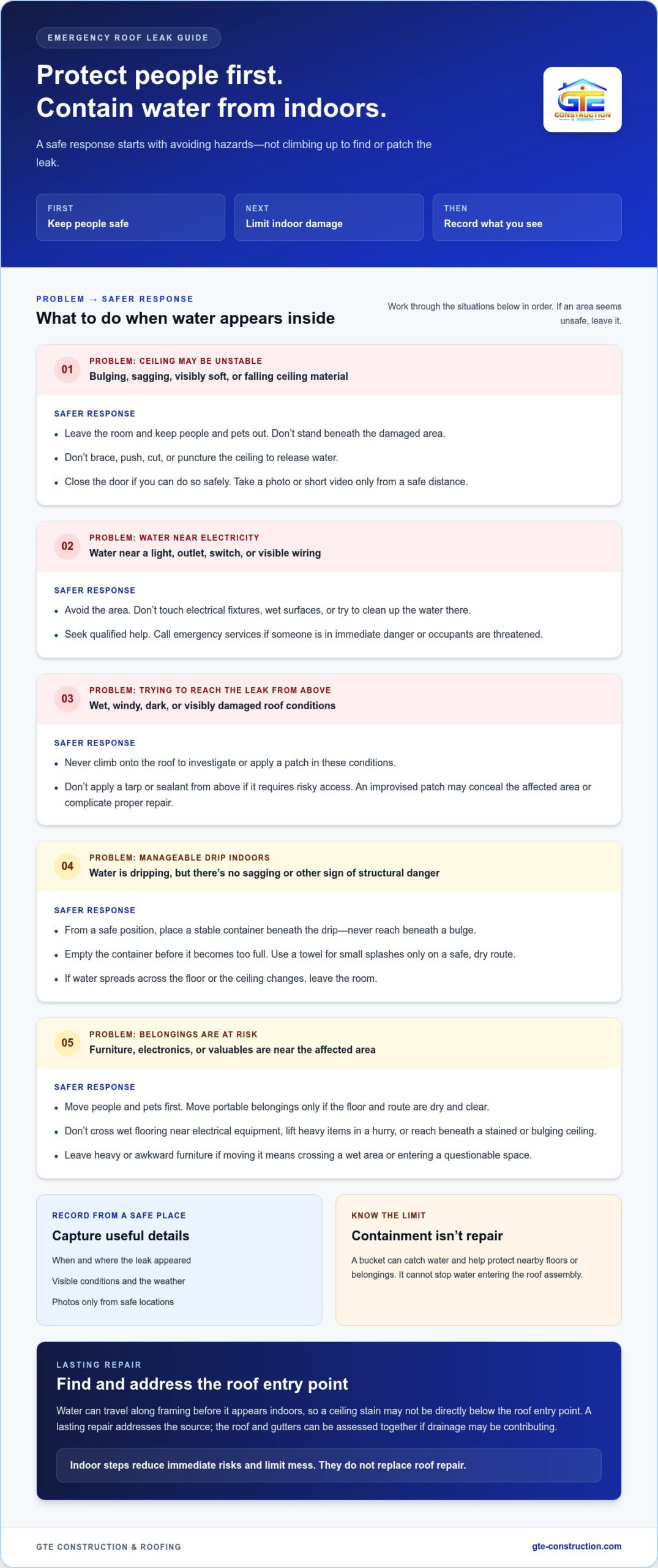
If water is entering your home, pause before trying to find the roof opening. Start with this safety checklist:
- Keep people and pets out of rooms with wet ceilings, sagging drywall, or falling material.
- Stay away from water near lights, outlets, switches, or visible wiring. Don’t touch electrical fixtures or wet surfaces in the area.
- Never climb onto a wet, windy, or visibly damaged roof to investigate or apply a patch.
- Move belongings or place a container beneath a drip only if you can do so without entering an unsafe area.
Water can travel along framing before appearing indoors, so a ceiling stain may not be directly below the roof entry point. The leaky condo crisis illustrates how moisture-related building problems can become widespread. Treat an active leak seriously, but don’t take unnecessary risks to locate its source.
Which immediate signs mean you should leave the affected area?
Leave the room if a ceiling is bulging, sagging, or visibly soft, or if cracks are spreading and pieces of drywall or plaster are falling. Don’t stand beneath the damaged area, try to brace it, or puncture it to release trapped water. A weakened ceiling may give way without warning. Keep others out and close the door if you can do so safely.
Water near a light fixture, outlet, switch, or exposed wiring creates an electrical hazard. Avoid the area rather than touching a fixture or cleaning up the water. Seek qualified help, and call emergency services if anyone is in immediate danger or the situation threatens occupants.
What can you safely do from inside the home?
Once everyone is clear of the affected area, focus on steps that don’t bring you near an unstable ceiling. If there’s no sagging or other sign of structural danger, place a container beneath a manageable drip from a safe position. Don’t reach beneath a bulge to set it down. A towel can absorb splashes or protect a safe section of flooring.
Move people and pets first. Then consider moving portable valuables or furniture if the floor and route are dry and clear. Don’t cross wet flooring near electrical equipment, lift heavy items in a hurry, or stand beneath a water-stained ceiling to cover belongings. If reaching an item means entering a questionable area, leave it. Protecting occupants takes priority over possessions.
In the first moments, what to do about a leaky roof in an emergency comes down to one principle: don’t trade a manageable leak for a preventable injury. Once the area is safe, indoor containment can help limit water damage while you prepare for repair.
How to Limit Interior Water Damage Without Climbing Onto the Roof
Once everyone is clear of immediate hazards, you can reduce mess and protect belongings from a safe position. These measures manage water inside the home; they don’t stop it from entering through the roof. In California, wind-driven rain can reach roof openings from an angle, so the indoor drip location may not reveal the actual entry point. Don’t try to trace the leak from above.
How should you handle a ceiling leak or bulge?
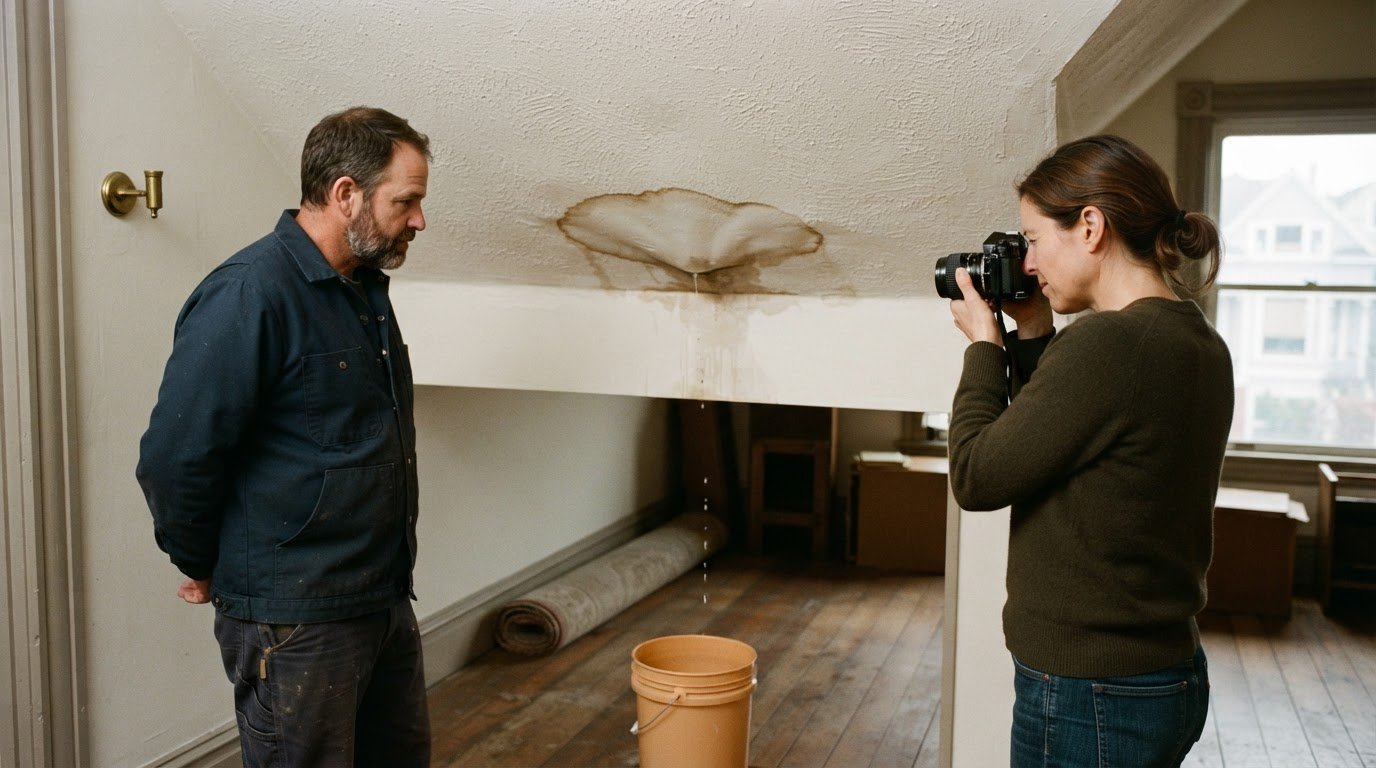
Treat a bulging, saturated, or sagging ceiling as a possible collapse hazard. Keep people and pets out of the room, and don’t push, cut, or puncture the ceiling to release water. If you can do so without approaching the damaged area, take a photo or short video from a safe distance. This record can help with a later assessment.
Should you use a tarp or sealant during a roof emergency?
Don’t climb onto the roof in rain, wind, darkness, or when it appears damaged. Applying a tarp or sealant from above can require risky access, and an improvised patch may conceal the affected area or complicate a proper repair. Keep temporary protection at ground level and away from electrical hazards. Don’t stretch a tarp over a ceiling bulge or handle wet materials near wiring.
For indoor containment, use a stable container beneath a manageable drip only if the ceiling isn’t sagging and you can place it without standing under a damaged area. Empty it before it becomes too full, and don’t step onto wet flooring to reach it. If water spreads across the floor or the ceiling’s condition changes, leave the room rather than trying to keep up with the drip.
- Use towels to absorb small splashes on a safe, dry route, but don’t walk through water near electrical fixtures.
- Move electronics, furniture, and other portable belongings only if the path is clear and dry.
- Keep items out from beneath a stained or bulging ceiling instead of reaching into the hazard zone.
- Leave heavy or awkward furniture in place if moving it would require lifting near the leak or crossing a wet area.
These steps can limit damage to floors and possessions, but they aren’t a roof repair. Knowing what to do about a leaky roof in an emergency also means knowing where temporary measures end: buckets catch drips, while a lasting solution addresses the source of water entry. GTE Construction & Roofing provides residential roof repair to address roof leaks. Its roofing repair service is a practical next step once immediate safety and indoor protection are handled.
Temporary Roof Fixes Versus Professional Repair: What Actually Resolves the Leak?
A temporary measure can limit exposure, but it isn’t the same as repairing the roof. Water may enter at one point, travel along framing or other building materials, then appear as a stain or drip elsewhere. An interior mark alone can’t reliably identify the roof defect. The right next step depends on the affected roof system, not just the room where water appears.
| Approach | What it can do | What it cannot do |
|---|---|---|
| Indoor containment | Catch manageable drips and help protect nearby floors or belongings. | A bucket controls dripping but cannot stop water entering the roof assembly. |
| Temporary exterior measure | May limit exposure while the underlying issue remains unresolved. | It doesn’t establish the leak source or ensure the roof is repaired. |
| Professional roof repair | Assess likely entry points and repair the roof source as appropriate. | It doesn’t automatically restore stained ceilings, paint, or other interior finishes. |
Think of containment as a bridge, not a conclusion. It can reduce immediate effects indoors while the roof condition is assessed. Knowing what to do about a leaky roof in an emergency includes recognizing when that short-term step has reached its limit.
When is a temporary measure only a short-term safeguard?
If dripping returns, a stain grows, or nearby materials remain damp, water may still be entering or may have affected a wider area than first appeared. Record the changes and arrange an assessment of the roof system. Don’t assume a patch will hold through additional weather, or apply more material simply because the first attempt seemed to slow the drip. A temporary measure can reduce exposure, but the underlying condition still needs attention.
What can a professional roof repair assess?
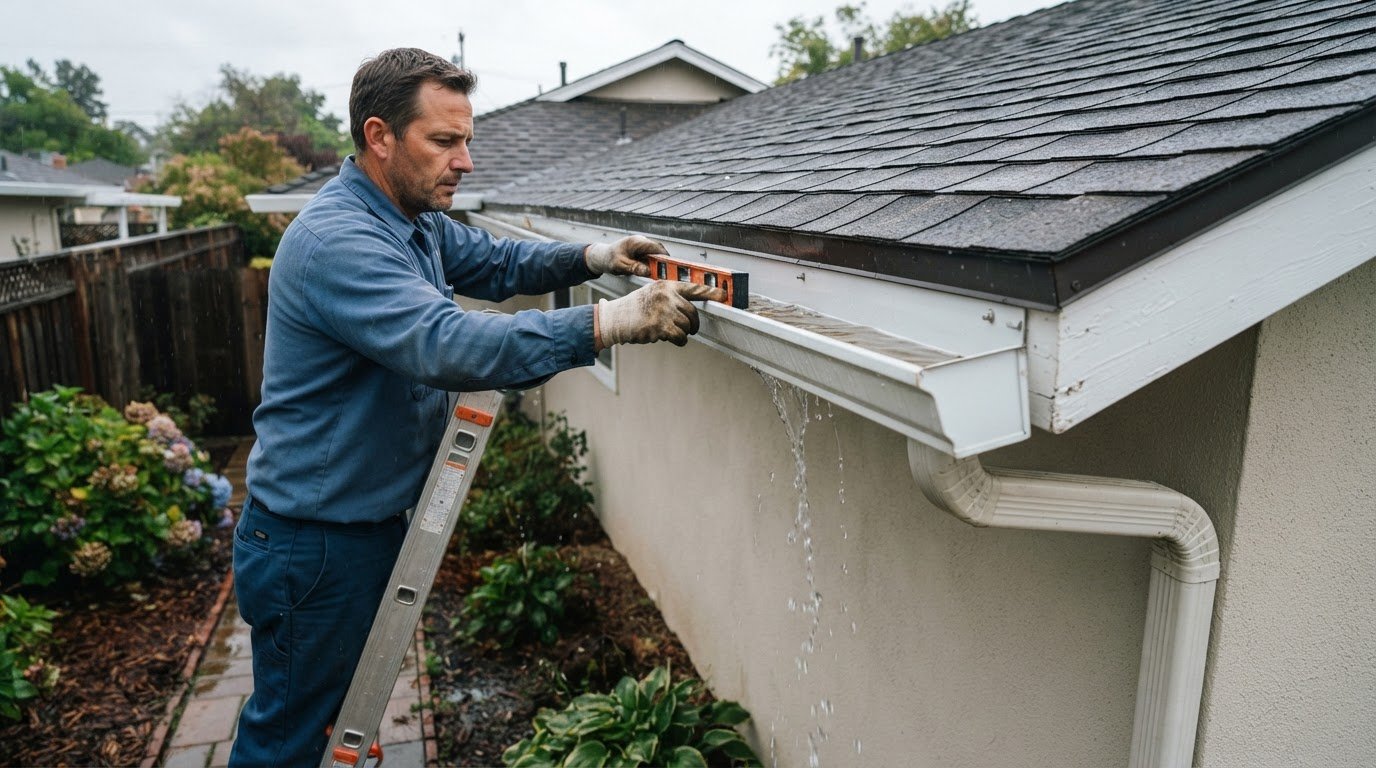
A roof inspection can examine likely entry points alongside surrounding materials and conditions, including shingles or other roof covering, flashing, and nearby transitions. Because water can travel before appearing indoors, the visible stain is useful context, not a diagnosis. If drainage or overflow may be contributing, gutters can also be considered as part of the assessment.
Professional roof repair focuses on addressing the source at the roof, rather than treating the ceiling mark as the problem itself. Interior drying or restoration of paint and finishes is separate and may be needed after the roof issue is resolved. Keeping these tasks distinct clarifies what has been repaired and what still needs attention inside the home.
GTE Construction & Roofing provides residential roof repair and gutter solutions. The affected roof and drainage conditions can be assessed together when relevant, with the repair focused on the underlying entry point. That’s the transition from temporary protection to a more lasting resolution.
What to Document and Do Before Roof Repair
Clear, timely notes help you explain what happened without putting yourself at risk or guessing at the cause. Once the affected area is safe, record what you can observe from stable, dry locations. The goal is to preserve useful details for a roof assessment and track steps taken to limit further damage, not to diagnose the roof yourself.
How can you record leak evidence safely?
Photograph or video visible conditions only from a safe position. Capture the ceiling stain, active dripping, affected belongings, and any containers used to catch water. Don’t enter an unstable room or approach a sagging ceiling for a closer shot. Keep the original files, including their dates and timestamps, and avoid editing images you’re retaining as a record.
Make a brief timeline while the details are fresh. Note when you first noticed the leak and whether dripping or staining changed during rainfall. For homeowners in the Bay Area and Sacramento, record storm timing or wind-driven rain only if you observed it directly. Separate what you saw from what you suspect.
- Write down the date and approximate time the leak began or was discovered.
- List each affected room and the approximate location of visible water or staining.
- Describe changes over time, such as a stain spreading or dripping stopping and restarting.
- Keep receipts and notes for reasonable steps taken to limit damage, without assuming what an insurer will cover.
What information helps the repair assessment?
Note the room, where moisture appeared, and whether nearby surfaces or belongings show visible changes. If you observed earlier roof or gutter concerns, include them and note when they occurred. This context can help guide an assessment, but an indoor stain alone can’t establish where water entered. Share your records with the roofing professional so the affected roof system can be examined.
Keep roof documentation separate from your insurance process. Follow your insurer’s instructions for reporting and submitting information, and retain copies of correspondence and records you send. Don’t assume that taking a photo, making a temporary protective move, or arranging an inspection determines whether a claim is covered or how it will be resolved.
Good records also help you describe what to do about a leaky roof in an emergency after the immediate disruption has passed: what you observed, what changed, and what you did to protect the home. They give the repair assessment a clearer starting point without encouraging a risky DIY inspection.
With your observations organized, take the next step toward addressing the source. Arrange a residential roof repair assessment with GTE Construction & Roofing so the roof and, where relevant, gutter conditions can be evaluated in context.
How GTE Construction & Roofing Helps Move From Emergency to Lasting Repair
Once immediate safety and damage-control steps are complete, the next priority is finding where water is entering and addressing the roof condition behind the indoor symptoms. A ceiling stain offers useful context, but it doesn’t necessarily show the location of the roof opening. GTE Construction & Roofing provides residential roof repair and roofing services to help homeowners move from temporary protection toward a repair focused on the source.
GTE serves homeowners in San Francisco, Sacramento, Alameda County, and Contra Costa County. Sharing your observations, photos taken from safe locations, and notes about when the leak appeared can give the repair assessment a clearer starting point. You don’t need to diagnose the roof yourself. Explain what you noticed so the affected system can be assessed appropriately.
What should homeowners expect from a roof repair process?
A repair assessment considers visible damage and likely water-entry points, along with the condition of roof materials and nearby components. Since water can travel before it appears indoors, the location of a stain is one clue, not a definitive diagnosis. The appropriate repair depends on the roof’s condition and the details of the project, so the work is guided by the affected area rather than a one-size-fits-all patch.
Roof repair and interior restoration are related but distinct. Addressing the roof source helps stop the intrusion at its origin, while stained drywall, paint, insulation, or other interior materials may need separate evaluation after the leak is resolved. Keeping those steps clear helps you understand which issue the roof work addresses and what may remain inside.
When should you address gutters alongside a roof leak?
A roof leak doesn’t automatically mean the gutters are responsible. However, damaged or overflowing gutters can contribute to water-management concerns, so they may be relevant when observed conditions point to drainage or runoff. GTE provides gutter repair and installation as part of its roofing and gutter solutions, allowing gutter conditions to be considered where they relate to the problem.
Roof runoff can also affect how water moves around the home and yard. For a broader look at managing water on a property, erosion control landscaping is another related topic, though landscaping isn’t a substitute for repairing a roof leak.
If you’re unsure what to do about a leaky roof in an emergency after making the area safe, a professional assessment can clarify the path from temporary protection to repair. GTE Construction & Roofing provides residential roof repair and can assess relevant roof and gutter conditions. A careful evaluation helps identify the likely entry point and determine whether the roof, gutters, or both need attention.
Take the Next Step Toward a Dry, Secure Home
An active leak can make the next decision feel urgent, but a careful repair plan gives you a way forward. Once the immediate risk is under control, focus on resolving the roof condition that allowed water inside, rather than treating a visible interior mark as the whole problem. Knowing what to do about a leaky roof in an emergency can help you move from uncertainty to a clear next step.
GTE Construction & Roofing provides residential roofing repair and installation, along with gutter repair and installation, for homeowners in San Francisco, Sacramento, Alameda County, and Contra Costa County. An assessment can help determine the appropriate path for your roof and its surrounding drainage conditions.
Arrange professional roof repair with GTE Construction & Roofing to take a considered step toward lasting protection for your home. With the source addressed, you can move ahead with greater confidence.
Frequently Asked Questions
Is a leaking roof an emergency if the water is only dripping slowly?
A slow drip still needs attention, especially if it continues, reaches electrical fixtures, or appears with a soft or sagging ceiling. Water can spread through building materials before becoming visible, so the drip rate alone doesn’t show the full extent of the issue. Track changes and arrange a roof assessment. Treat any immediate hazard as urgent, even if the leak seems minor.
Can I put a tarp on my roof during a storm?
No. Don’t climb onto a roof during a storm to spread or secure a tarp. Rain, wind, poor visibility, and slippery surfaces make roof access dangerous, and a tarp can shift if it isn’t secured properly. Keep temporary protection indoors and at ground level, such as moving belongings from a safe area. Once conditions are safe, a professional can assess whether temporary exterior protection is appropriate for the roof.
What should I do if water is leaking through a light fixture?
Leave the room and keep everyone away from the fixture, nearby switches, and wet surfaces. Don’t touch the light, attempt to remove it, or place a container beneath it. Water and electrical components create a serious hazard, even if the light appears off. If you can reach the breaker panel without entering a wet or unsafe area, have a qualified person advise you on safely isolating the circuit. Seek emergency help if anyone is in immediate danger.
How do I stop a roof leak from damaging the ceiling?
You can’t reliably stop water from entering the ceiling from below. If the ceiling is flat and firm and the area is safe, a container may catch a drip and reduce water reaching the floor. Move furniture only if you can do so without standing beneath damaged material. Don’t push, cut, or puncture a wet ceiling. For homes in San Francisco or Sacramento, note whether dripping changes with observed rainfall, then arrange an assessment of the roof source.
What happens if a roof leak stops dripping after the rain ends?
The leak may pause because the weather has changed, not because the roof has healed. Water can remain in ceiling materials or concealed spaces, and the next rainfall may reveal the problem again. From a safe location, check for new discoloration, peeling paint, musty odors, or dampness. Record any changes and have the roof assessed even if the visible dripping has stopped. The indoor symptom may not show where water entered.
Should I call my insurance company before arranging roof repairs?
Review your policy and follow your insurer’s instructions for reporting damage and documenting it. Contact the insurer about its process, but don’t delay reasonable steps to protect people and limit further damage while waiting for a claim decision. Keep records of what you observed and any mitigation expenses. Coverage and claim outcomes depend on the policy and circumstances, so don’t assume a repair or temporary measure will be reimbursed.