The wood-look option isn’t always the most practical: in a kitchen where spills and splashes are part of daily life, luxury vinyl plank is generally better suited to moisture, while hardwood offers natural wood character and the potential to be refinished. When comparing luxury vinyl plank vs hardwood in the kitchen, consider how you balance water exposure, upkeep, longevity, and the full cost of materials and installation.
It’s reasonable to want a warm, lasting floor without worrying about every spill. The material makes an important difference: solid hardwood is made from one piece of wood, engineered hardwood has a real-wood surface over layered plywood, and luxury vinyl plank combines a photographic layer with a vinyl core and protective wear layer. Engineered wood is still wood, so prolonged moisture can damage it.
This comparison explains how each option handles kitchen spills, what routine cleaning involves, and what affects installation costs. You’ll also see when each material makes sense, so you can choose flooring that suits your home and how you use your kitchen.
Key Takeaways
- Choose based on how your kitchen is used: frequent spills and splashes favor moisture-resistant flooring, while hardwood offers natural wood character and refinishing potential.
- Understand the material before you decide: solid hardwood, engineered hardwood, and luxury vinyl plank have different constructions and different responses to moisture.
- Match upkeep to your routine. Vinyl plank is generally simple to sweep and mop, while hardwood needs prompt spill cleanup and more involved care over time.
- Compare the full installed cost, not just the material price; flooring type, installation needs, and project conditions all affect the total.
- Use the decision guide to weigh durability, moisture exposure, maintenance, and appearance against the way you want your kitchen floor to perform.
Luxury Vinyl Flooring vs Hardwood – Which to Choose?
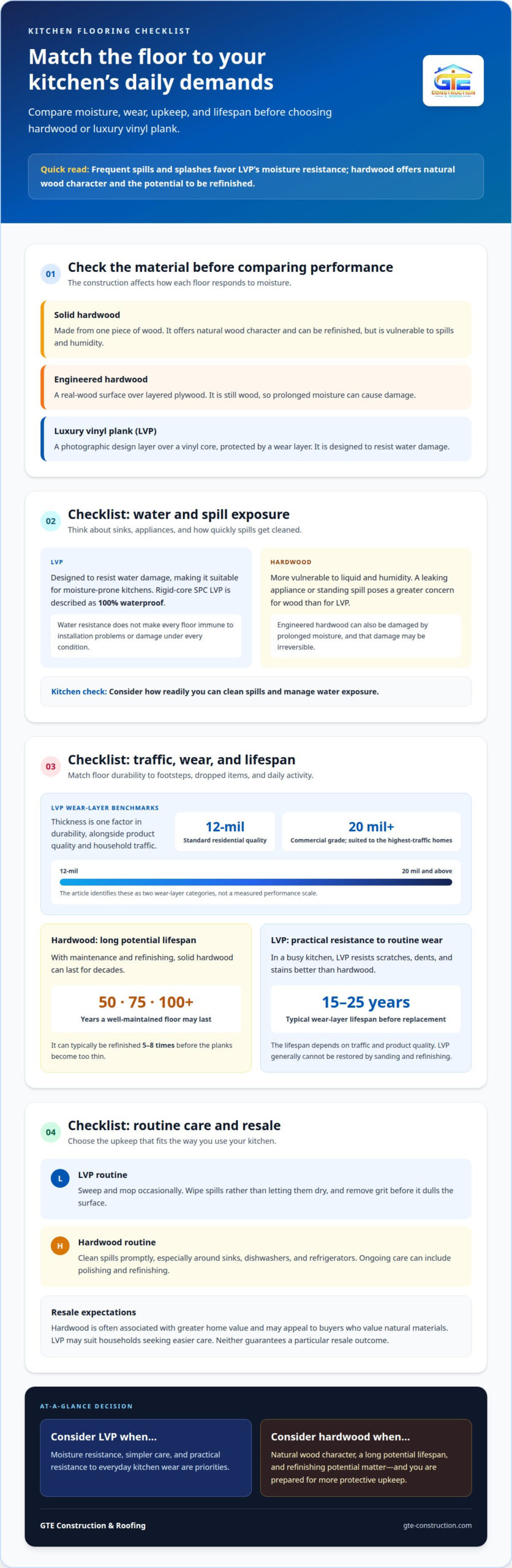
For a busy kitchen, compare more than appearance: traffic, spills, maintenance, and expected lifespan all matter. Solid hardwood can be refinished, while luxury vinyl plank prioritizes resistance to everyday moisture.
Hardwood Durability and Longevity
Solid hardwood is made from real wood and can last for decades with maintenance and refinishing. A well-maintained floor may last 50, 75, or even 100+ years. It can typically be refinished 5-8 times before its planks become too thin. That renewability distinguishes hardwood from vinyl flooring, which generally can’t be restored by sanding and refinishing.
Hardwood’s long potential lifespan comes with care requirements. Spills and humidity can damage the wood, so wipe up liquid promptly. Refinishing can restore worn surfaces, but it won’t prevent damage from careless cleanup. Hardwood may suit homeowners who value natural character and are prepared for ongoing upkeep.
Luxury Vinyl Plank Durability
Luxury vinyl plank uses a protective wear layer over a photographic design and vinyl core. Its durability depends partly on wear-layer thickness, product quality, and household traffic. A 12-mil wear layer is described as standard residential quality, while 20 mil and above is described as commercial grade and suited to the highest-traffic homes.
For a kitchen with frequent footsteps, dropped items, and daily activity, LVP resists scratches, dents, and stains better than hardwood. Wear layers typically last 15-25 years, depending on traffic and product quality, before replacement is needed. So, how durable are LVP and hardwood in a busy kitchen? LVP offers practical resistance to routine wear; hardwood can last longer, but needs more protection from spills.
Water and Moisture Resistance
Moisture is a key difference between these flooring options. LVP is designed to resist water damage, making it suitable for moisture-prone kitchens. Rigid-core SPC LVP is described as 100% waterproof, but water resistance does not make every floor immune to installation problems or damage under every condition.
Hardwood is more vulnerable to liquid and humidity. Engineered hardwood can also be damaged by prolonged moisture exposure, and that damage may be irreversible. In a kitchen, a leaking appliance or standing spill poses a greater concern for wood than for LVP. Choose based on how readily you can clean spills and manage water exposure.
Maintenance and Resale Value
Vinyl plank flooring can be maintained by sweeping and occasional mopping. Hardwood needs more attention, including prompt spill cleanup and regular upkeep such as polishing and refinishing. Dried water around a sink, for example, can stain or damage hardwood, while sweeping either surface helps remove grit before it causes wear.
Hardwood is often associated with greater home value than vinyl plank, which may add less value. How do LVP and hardwood affect resale? Hardwood may appeal to buyers who value natural materials, while LVP can suit households seeking easier care. Neither guarantees a particular resale outcome.
| Flooring option | Kitchen durability | Moisture response | Long-term upkeep |
|---|---|---|---|
| Solid hardwood | Can be refinished | Vulnerable to spills and humidity | Regular care and refinishing |
| Luxury vinyl plank | Wear layer resists daily wear | Designed to resist water damage | Sweeping and occasional mopping |
What are the health and indoor-air-quality concerns with vinyl plank flooring? LVP is made with synthetic materials, but that alone doesn’t establish a health risk or its indoor-air-quality performance. Product formulation and installation materials matter.
What should homeowners know about LVP and hardwood warranties for kitchen use? Many LVP products carry 25-year or lifetime warranties, but the warranty’s terms determine what kitchen use and damage it covers. Read the coverage and exclusions for the specific flooring.
Choose hardwood for natural character and refinishing potential, or LVP for simpler care and moisture resistance.
Cleaning and maintenance
Daily care affects both the appearance and long-term upkeep of kitchen flooring. Luxury vinyl plank generally needs sweeping and occasional mopping, while real wood requires more attention to its finish and surface condition. The best routine is one you can follow consistently, especially around cooking and cleanup areas.
A practical routine for vinyl flooring
Start by removing dry debris. Sweep crumbs near the island, table, and pantry before they collect underfoot, then mop occasionally to clear everyday residue. Clean around the stove after meal preparation and wipe visible marks near the sink as they appear. This simple routine keeps cleaning manageable without turning every small mark into a major project.
Spills still need prompt attention, even on a floor designed to resist water damage. Wipe up sauce, oil, or drinks rather than letting them dry into a sticky patch. Sand and grit tracked in from outdoors can also dull a surface over time, so a mat at an exterior entrance helps catch debris before it reaches the kitchen.
Care for hardwood and engineered hardwood
Hardwood needs a more protective routine because real wood can be affected by moisture. Wipe spills promptly, especially around a dishwasher, sink, or refrigerator. Regular upkeep may include polishing and refinishing, depending on the floor’s condition. Engineered hardwood has a real-wood top layer, so care for it as a wood surface, not a synthetic wear layer.
Keep the finish in mind when cleaning. A worn or damaged finish can leave wood more exposed to daily use, while refinishing can restore its appearance. In a high-traffic kitchen, for instance, wear may show first along the route between the sink and cooking area. Inspect these paths to spot changes before they spread.
How maintenance affects long-term cost
The cost of maintaining hardwood depends on its surface condition, the care it receives, and whether polishing or refinishing is needed. Consistent cleaning may help avoid preventable damage, while neglected spills or visible wear can add to later work. Vinyl plank typically requires simpler upkeep, but damaged planks may need replacement rather than wood-style refinishing.
Build a routine your household can sustain: remove grit, clean spills promptly, and mop vinyl occasionally. For hardwood, pay regular attention to the finish and plan for refinishing as wear develops. These habits help preserve appearance without assuming both materials respond to the same cleaning methods.
Flooring performance in kitchens and other moisture-prone areas
Kitchen flooring must handle water, changing indoor conditions, and concentrated foot traffic around work areas. Compare each material’s construction with the room’s exposure before choosing.
Moisture-Prone Areas
Luxury vinyl plank is designed to resist water damage, making it a practical option for kitchens and bathrooms. Rigid-core SPC LVP is described as 100% waterproof. That specification applies to the flooring core, so spills still deserve prompt cleanup, and installation details remain important around edges and transitions.
Wood flooring responds differently. Solid and engineered hardwood can be damaged by prolonged moisture, so a dishwasher leak or standing water poses a greater concern. In a laundry area or bathroom, where splashes may recur, LVP’s water resistance may be more suitable than natural wood. Excessive heat can also warp or bubble LVP, so it isn’t impervious to every condition.
Room-Based Flooring Recommendations
In kitchens and bathrooms, prioritize moisture resistance and a surface suited to daily cleanup. In a kitchen used by children or pets, LVP can be practical because it resists scratches, dents, and stains. A textured finish can improve traction for dogs. Entryways also benefit from flooring chosen for tracked-in moisture and frequent traffic.
In drier rooms, hardwood may suit homeowners who prefer natural wood and value its potential longevity. A connected kitchen and living area calls for a consistent decision: matching materials can create visual flow, while separate flooring can respond to each room’s use. Choose room by room, considering water exposure, foot traffic, pets, and desired appearance.
Climate and Subfloor Conditions
How do climate and subfloor conditions affect the choice between LVP and hardwood in a kitchen? Humidity and moisture around or beneath the floor raise concerns for wood, while temperature changes can affect vinyl plank. The subfloor matters too: an uneven or damaged base can affect how flooring sits, so its condition and preparation should guide the installation plan.
Before installing over an existing hard surface, assess whether the base is stable, clean, and level. Loose tiles or uneven transitions, for example, may need attention before new planks are laid. Existing flooring can also affect floor height at doorways and adjoining rooms. These factors matter to installation suitability, not just appearance.
For pets and high-traffic kitchens, compare wear-layer durability with your household’s activity, then weigh it against hardwood’s refinishing potential. A home with frequent spills may favor LVP, while a drier kitchen may suit someone seeking natural wood character and a floor that can last decades. Consider the route from the entry to the sink, not just the area under the table.
Hardwood and LVP material and installation costs
Compare material and installation costs separately, then consider what the finished surface will require. In a kitchen, the existing floor, room layout, and chosen material can all affect project scope.
Material Costs
Hardwood material costs vary with the wood and whether you choose solid or engineered flooring. Solid hardwood is one piece of wood; engineered hardwood has a real-wood veneer over plywood layers. These different constructions affect which product suits the kitchen.
LVP material costs depend on product quality and wear-layer thickness. A 12-mil wear layer is described as standard residential quality, while 20 mil and above is described as commercial grade. Compare options by construction and expected traffic, rather than appearance alone.
For either material, include the area being covered and any transitions between rooms in your planning. A kitchen that opens into a dining area, for example, may call for flooring that works across both spaces. Material selection can also affect maintenance and resale considerations.
Installation Costs
Installation costs differ between hardwood and LVP because their installation requirements differ. The existing surface, room shape, and preparation needed all affect the work involved. A clear, open kitchen layout presents different considerations from one with many cabinets, doorways, or adjoining surfaces.
Before comparing estimates, identify what installation includes. Surface preparation, removal of existing flooring, and transitions can change the project scope. An uneven area or a height difference at a doorway, for example, may need attention alongside the new floor. These details matter when comparing the full project, not just the flooring itself.
Hardwood’s refinishing potential is a separate long-term consideration, while vinyl planks may eventually need replacement. These differences affect ownership decisions, but don’t determine the initial installation scope.
Installation and DIY Options
High-quality LVP can be a DIY project, potentially avoiding labor costs. The work still requires careful measuring, a suitable surface, and precise cuts around cabinets and doorframes. Account for these steps before deciding whether DIY is the right fit.
Professional installation can help when the existing surface needs preparation or the layout has complex transitions. Hardwood installation also requires attention to the specific material and room conditions. The right method depends on the floor, the substrate, and the finished result you want.
To compare options, list material, preparation, removal, installation, and finishing needs separately. Then consider how the choice may affect care and future resale value. This clarifies project scope without treating a material-only figure as the full cost.
Solid, engineered, and luxury vinyl plank definitions
Flooring labels describe how a product is built, not just how it looks. Solid hardwood, engineered hardwood, and luxury vinyl plank use different materials, so their construction affects refinishing potential, moisture response, and the surface underfoot.
Solid hardwood is one piece of real wood, commonly cut from trees such as oak, maple, or walnut. Its grain and natural variation give each floor an individual character, and the boards can typically be refinished 5-8 times before becoming too thin. That construction makes solid wood distinct from engineered hardwood, which layers wood over a manufactured base.
Engineered hardwood has a real-wood veneer on top of multiple plywood layers. The surface is 100% natural wood, while the core is built from five or more layers of pressed plywood. This structure still provides visible wood grain, but its layered construction differs from a solid board. Prolonged moisture can damage engineered hardwood, so its real-wood surface doesn’t make it waterproof.
Luxury vinyl plank is synthetic flooring made with a photographic layer and PVC core beneath a protective wear layer. It is built from six or more layers of material. The printed image can reproduce wood-like grain without natural wood, while the wear layer is designed for everyday use. Vinyl plank therefore differs from both hardwood types in material and construction.
These distinctions clarify what “wood look” means. A plank with an oak image isn’t oak flooring: solid oak is real wood throughout, and engineered oak has a real-wood top layer. Luxury vinyl flooring uses a printed design. The appearance may overlap, but refinishing potential and moisture response don’t. For a kitchen, match construction to your priorities: real-wood character and refinishing, or a synthetic surface designed to resist water damage.
Room conditions matter too. Hardwood is vulnerable to moisture in damp spaces such as bathrooms or basements, while LVP is designed for moisture-prone areas. If you’re choosing one floor for a kitchen beside a bathroom, compare the materials’ construction and water exposure in both rooms rather than relying on a wood-style image alone.
For help planning a kitchen update around the flooring material and room conditions, explore kitchen remodeling options.
GTE Construction & Roofing: New Roofing & Installation
GTE Construction & Roofing helps homeowners plan kitchen remodeling projects around how they use their homes. After comparing solid hardwood, engineered hardwood, and luxury vinyl plank, consider how your choice fits the wider kitchen design. Moisture exposure, existing surfaces, and connections to adjoining spaces can all influence the remodeling plan.
Discuss your flooring preference early, especially if the project also involves updating cabinets, appliances, or the kitchen layout. A coordinated plan can keep material choices aligned with the room’s practical needs. For a broader home project, GTE Construction & Roofing also offers roofing installation and repair, alongside bathroom remodeling.
Contact GTE Construction & Roofing to discuss your kitchen remodeling plans.
Make the Flooring Choice Part of a Better Kitchen Plan
Before settling on luxury vinyl plank vs. hardwood in the kitchen, picture how you want the room to work during ordinary routines: cooking, cleaning, family gatherings, and moving between adjoining spaces. A sample beside your cabinets and countertops can help you judge whether its color, texture, and character feel right in the room.
Turn that preference into a practical project plan. Note where water is most likely to reach the floor, how the kitchen connects to nearby rooms, and whether the existing surface needs attention. These details give your remodeling decisions a clear starting point and bring appearance, function, and installation considerations together.
If you’re ready to plan a kitchen update, contact GTE Construction & Roofing to discuss your project. A thoughtful next step can bring your preferred flooring and the rest of the kitchen design into alignment.
Frequently Asked Questions
Aesthetics: Can You Really Tell the Difference?
Sometimes, particularly in a kitchen with strong natural light. Luxury vinyl plank uses a printed wood image, while hardwood has real grain and natural variation. Look at samples beside your cabinets and countertops, then move them between daylight and evening lighting. Repeating patterns and surface texture can affect how convincing a plank looks. A sample viewed in your own room gives a more useful impression than one seen under store lighting.
Are High-End Homes Using LVP Flooring?
Luxury vinyl plank can suit a high-end home if its appearance works with the overall design. A refined kitchen depends on how materials, colors, and transitions come together, not on flooring category alone. A carefully coordinated plank, for example, can complement cabinetry and adjoining rooms. Homeowners who value the distinctive grain of real wood may prefer hardwood, while LVP may better suit priorities around moisture and everyday practicality.
Durability: How Do They Hold Up Over Time?
The materials age differently, so the better fit depends on the wear you expect. LVP’s protective wear layer is designed for everyday use, but damaged planks may need replacement. Solid hardwood can be refinished to refresh a worn surface. When deciding what matters most, inspect the route between the kitchen entrance and refrigerator: resistance to routine wear or the ability to renew real wood.
Which Flooring Is Best for Your Home?
The best option matches the room’s conditions and your household’s priorities. Consider where water may reach the floor, how the kitchen connects to adjoining rooms, and how much upkeep you want. If you’re planning a kitchen remodel in San Francisco, Sacramento, Alameda County, or Contra Costa County, account for the layout and existing surfaces as well as appearance. These practical details help shape a choice suited to your home.
Which One Is Right for You?
Choose based on what you want most from the finished floor. If easy routine care and moisture resistance top your list, LVP may be the stronger fit. If natural wood character and refinishing potential matter more, hardwood may suit you better. Write down your main concerns, then compare samples and room conditions. The luxury vinyl plank vs hardwood in kitchen decision becomes clearer when you rank your priorities.
How Does Luxury Vinyl Plank Compare With Hardwood Flooring in a Kitchen?
LVP offers a synthetic surface designed for kitchen moisture, while hardwood brings real wood grain and the potential to be refinished. The difference matters especially near sinks, dishwashers, and exterior doors. When comparing luxury vinyl plank vs hardwood in the kitchen, consider how spills, room transitions, and appearance preferences affect daily use. The choice isn’t just about a wood-like look: construction also shapes care and performance.
Which Kitchen Flooring Is More Water-Resistant: LVP or Hardwood?
LVP is more water-resistant than hardwood and is designed for moisture-prone rooms. Rigid-core SPC LVP is described as 100% waterproof, while prolonged moisture can damage solid or engineered hardwood. Water can still reach edges and transitions, so wipe spills promptly and consider how the floor meets adjoining surfaces. A kitchen beside a bathroom or laundry area may call for particular attention to those connections.
What Is the Average Installed Cost per Square Foot for Kitchen LVP vs Hardwood in the US?
There isn’t one installed rate that applies across the United States. Total cost depends on the flooring selected, local installation labor, the condition of the existing surface, and any preparation or removal work. An uneven kitchen floor or complex transitions, for example, can change the installation scope. Compare material and labor separately, then account for project-specific preparation to understand the total for your location.