A contractor dispute doesn’t have to begin with a courtroom filing. To learn how to deal with a bad contractor, document the poor work and communications, review your agreement, and give the contractor a clear chance to address the problem. If the issue continues, you can consider filing a complaint with your state contractor licensing board.
It’s understandable to feel frustrated when work falls short of what you agreed on, especially when your home and schedule are affected. A calm, written record can help you explain the problem clearly and decide what to do next.
This guide explains how to recognize poor workmanship, set expectations in writing, document project progress, and review your contract before escalating a dispute. You’ll also learn what to include in a licensing board complaint and when another resolution step may be more appropriate.
Key Takeaways
- Keep a clear record of the project with dated photos, written communications, contract documents, and payment records.
- Compare completed work with the agreed scope, quality expectations, and applicable building requirements to identify specific concerns.
- Put project changes, correction requests, and revised timelines in writing so both sides have a consistent record.
- Review payment, dispute-resolution, and termination terms before deciding how to proceed or end the contractor relationship.
- If the problem continues, learn how your state’s contractor licensing board accepts complaints and what supporting records it needs.
1. Using licensed or bonded contractors and documenting project progress
Start by checking whether the contractor holds the license and insurance required for the work in your state. Licensing rules differ across the United States, so consult your state’s official licensing department to understand what applies. A bond may offer a way to pursue a claim, but the process varies by state. Keep the contractor’s license and bond details with your project paperwork instead of relying on a verbal assurance.
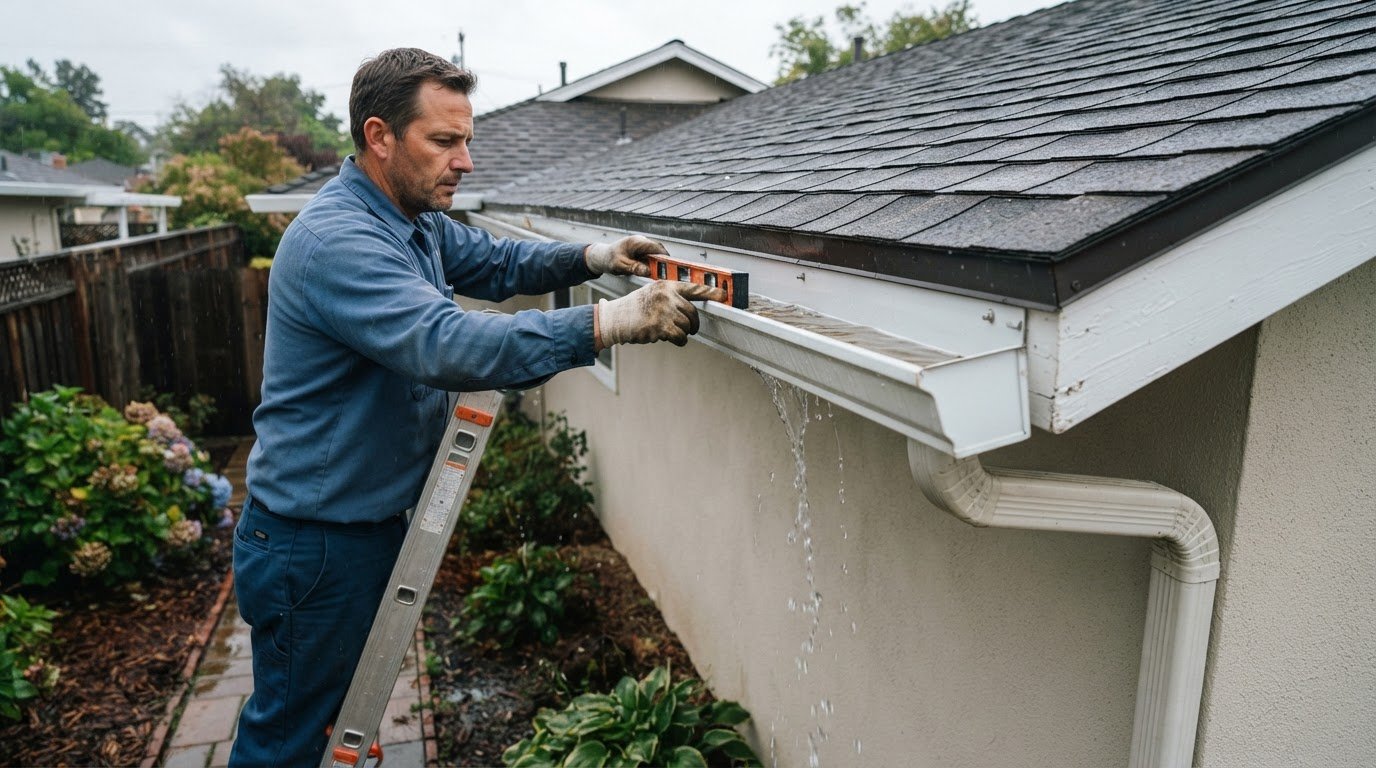
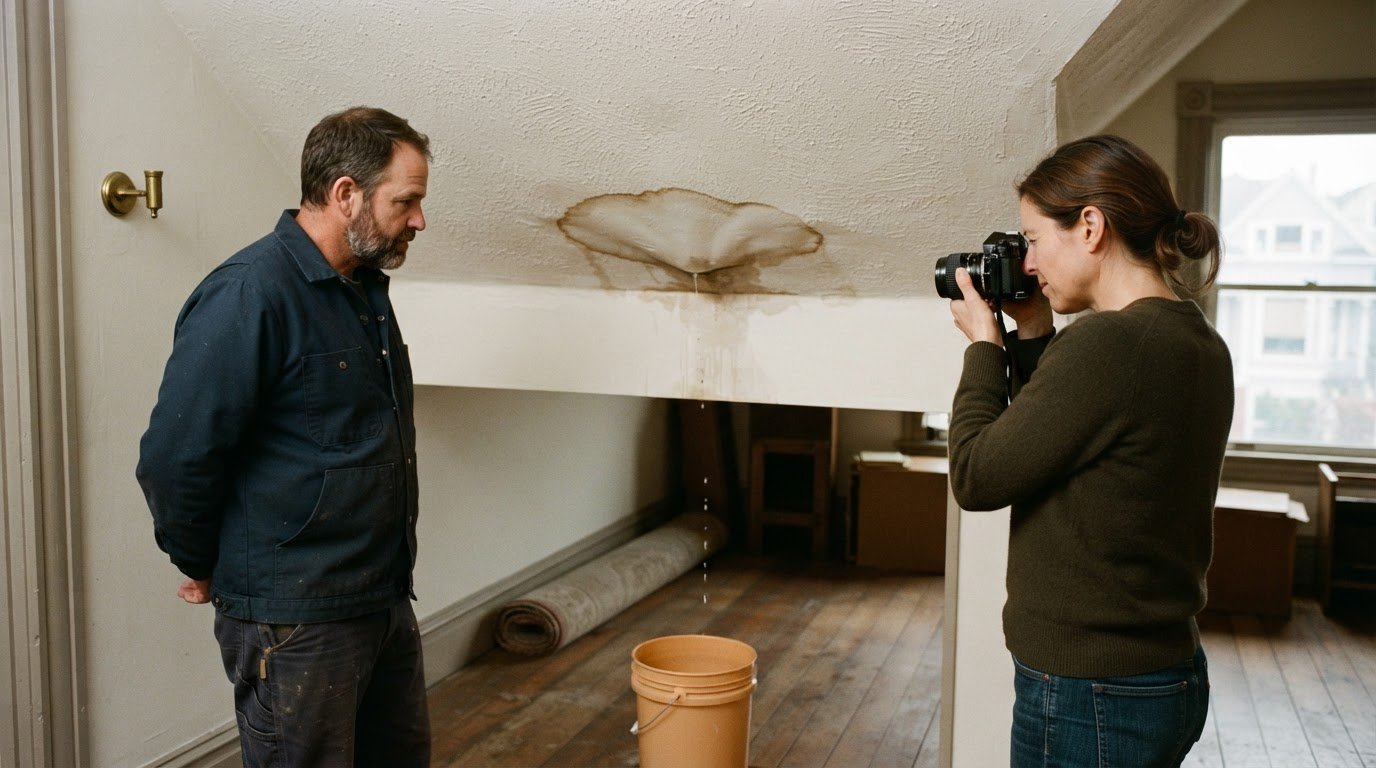
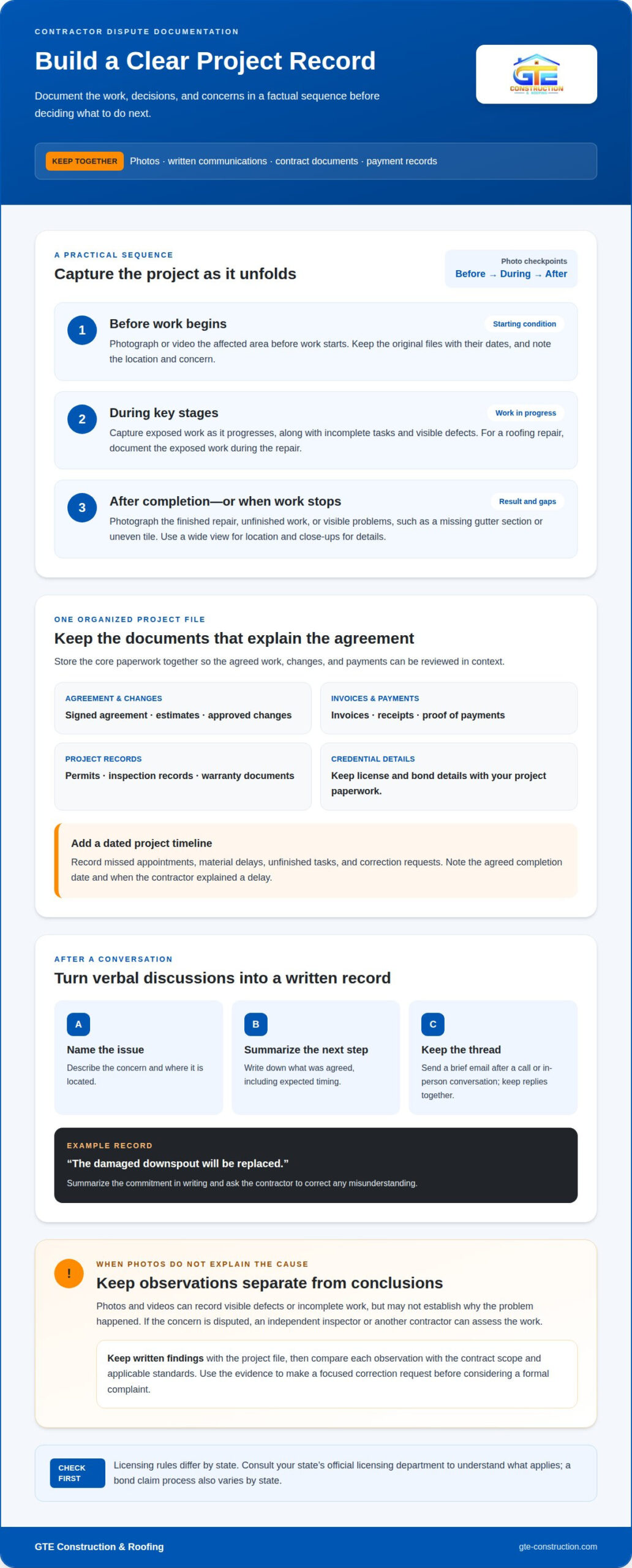
Good documentation makes a disagreement more specific and can help you resolve it. Take clear photos or videos before work begins, during key stages, and after completion. For a roofing repair, capture the affected area before work starts, the exposed work as it progresses, and the finished repair. Save the original files with their dates, and add a short note about the location and concern. Photograph incomplete work as well as visible defects, such as a missing section of gutter or uneven tile.
Create one project file with the signed agreement, estimates, approved changes, invoices, receipts, proof of payments, permits, inspection records, and warranty documents. Add a dated timeline of missed appointments, material delays, unfinished tasks, and correction requests. For example, record the agreed completion date and when the contractor explained a delay. This gives you a factual sequence to refer to if the dispute escalates.
After a phone call or in-person conversation, send a brief email summarizing what you discussed. Name the issue and its location, the agreed next step, and any expected timing. If the contractor says a damaged downspout will be replaced, summarize that in writing and ask them to correct any misunderstanding. Keep replies in the same thread. This record can show what each person understood and whether the proposed correction happened.
How much does an independent inspection cost? The price depends on the project’s scope, the work to be assessed, site access, and whether you need a written report. Request a quote based on those details.
What are the risks of hiring an unlicensed contractor or paying cash upfront? Missing credentials can leave you uncertain about a contractor’s qualifications and applicable protections, while cash without a receipt weakens your payment record. Avoid paying before agreed milestones, and document each payment with a dated receipt or written confirmation.
If photos show a concern but don’t establish its cause, an independent inspector or another contractor can assess the disputed work. Keep the written findings with your project file, and compare each observation with the contract scope and applicable standards. Use the evidence to make a focused correction request before considering a formal complaint.
2. What Qualifies as Poor Work by a Contractor?
If a contractor’s work seems poor, identify the specific defect before asking for action. Compare it with your agreement, applicable local building codes, and accepted industry standards. An unfinished installation, a leak after a roof repair, or materials that differ from the agreed specification may indicate a problem. A preference about appearance alone may not show defective work, so connect each concern to an observable result or documented requirement.
Poor workmanship can mean work that fails to meet agreed standards, code requirements, or industry norms. It can also mean incomplete work or substandard materials. In a bathroom renovation, examples might include a fixture installed in the wrong location, uneven tile, or a surface left unfinished despite being included in the scope. The key question is whether the result meets the written agreement and relevant standards, not an expectation that was never recorded.
Consider delays and budget overruns separately. A missed deadline deserves attention, but circumstances can affect a schedule: two weeks of rain can make an exterior painting delay unavoidable. A missing item can also hold up completion; a contractor may wait a week to install a third light fixture if a supplier ships only two. Ask for the reason, remaining tasks, and revised timeline. Compare added charges with approved changes.
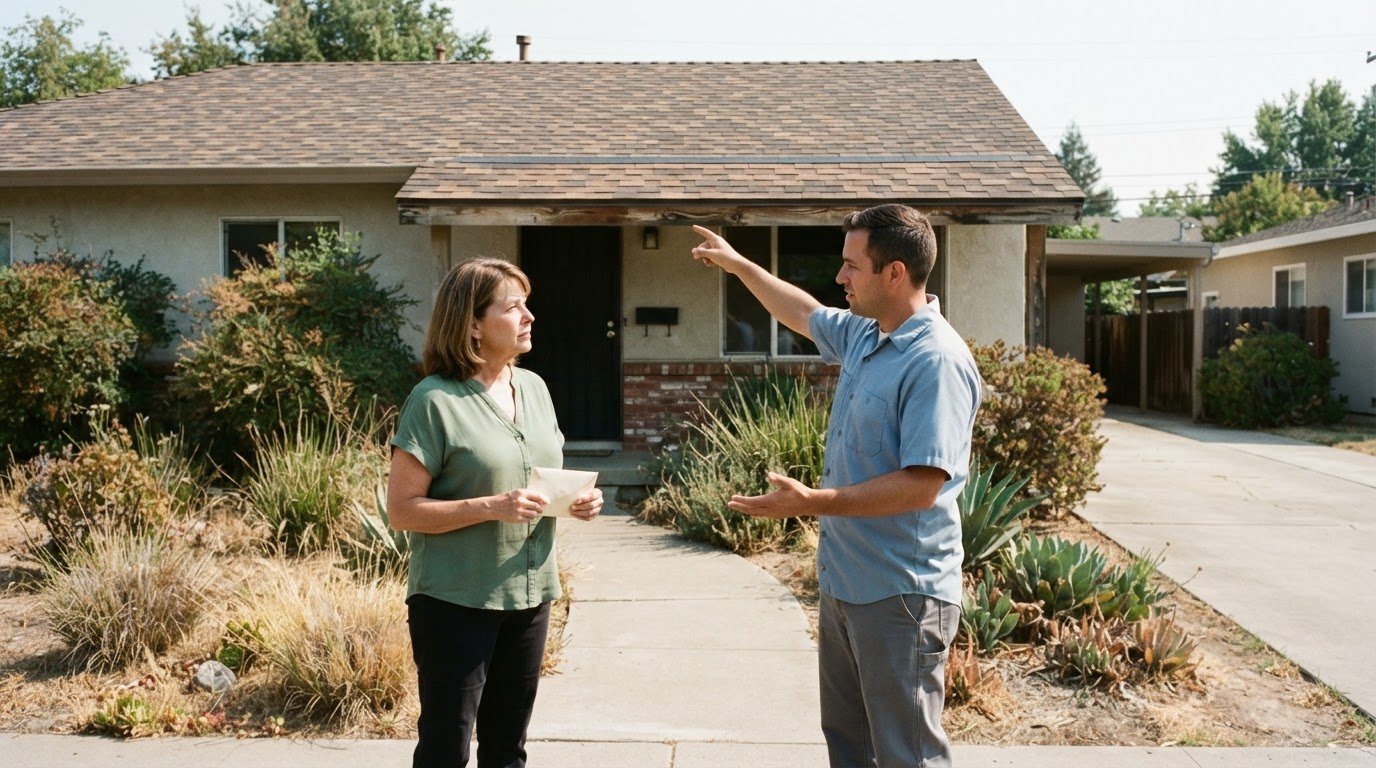
Knowing how to deal with a bad contractor starts with a focused request, not an accusation. Identify the location, describe what you observed, and explain which agreed requirement appears unmet. For example: “The cabinet door doesn’t close flush with the frame, contrary to the approved installation plan.” Ask the contractor to inspect the issue and propose a correction. This gives them a chance to respond and keeps the conversation focused on an actionable concern.
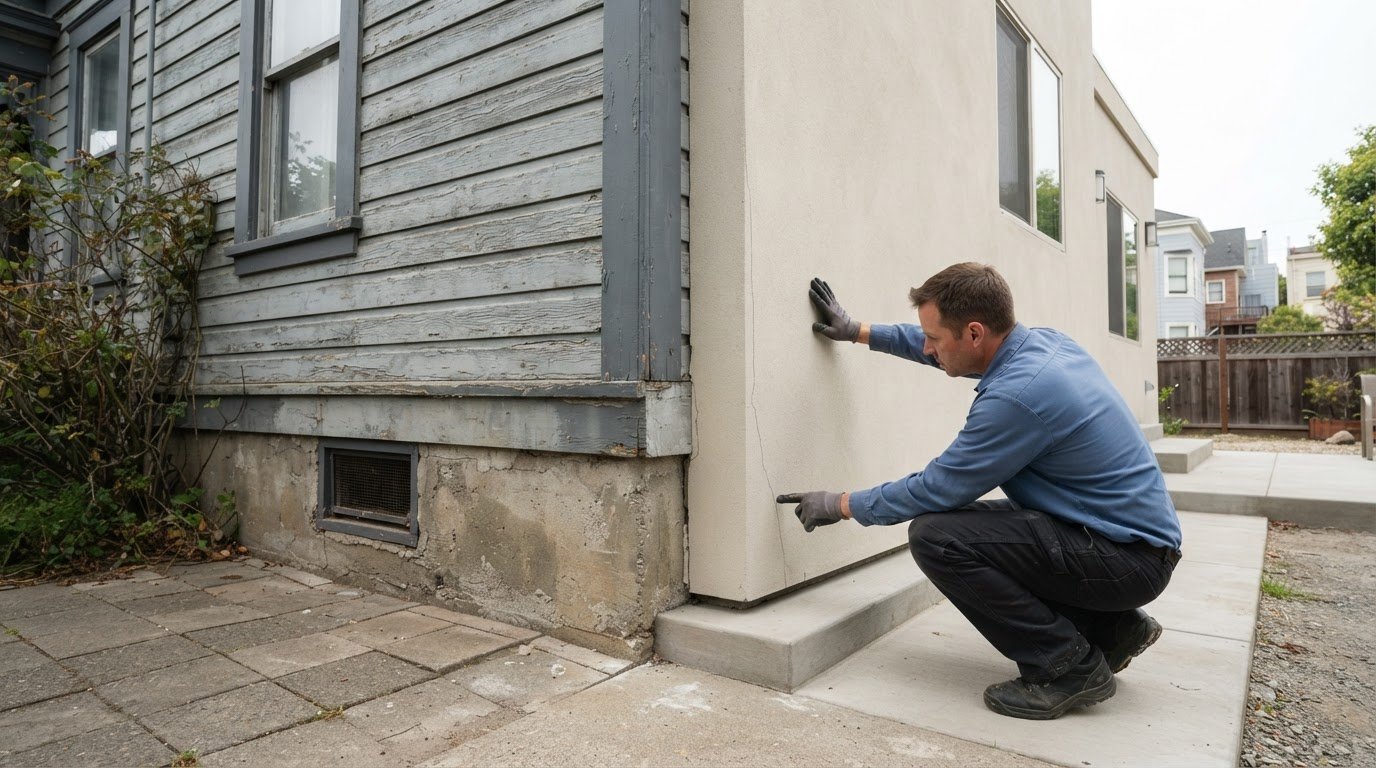
Use photos or videos to support claims about visible defects or incomplete work. Take a wide view showing the location, then close-ups that capture details such as a cracked tile or exposed edge. Preserve the original files and note when and where you took them. A video might show a sticking door or water escaping during a fixture test. Images record what you observed, but may not establish why it happened.
If the contractor disputes your assessment, a building inspector or another contractor can evaluate the work. Request written findings describing the condition and whether it falls below relevant standards or building codes. Keep the assessment with your agreement and approved changes. If you’re deciding how to deal with a bad contractor, an independent evaluation can clarify whether the concern calls for correction, relates to an approved change, or needs further review.
For a separate roofing or gutter concern, an independent repair assessment can help clarify the work needed. You can also review repair options for your home for a distinct project, rather than as a substitute for resolving the existing dispute.
3. Clear project expectations and written contracts
Before hiring, make the expected result specific enough to assess. A written contractor agreement should describe the project scope, timeline, payment schedule, and quality expectations. For a kitchen remodel, record which cabinets, surfaces, and installation tasks are included, rather than simply writing “update kitchen.” Clear details give both parties a shared reference if questions arise during the work.
Set out how progress and payments will be handled. A milestone-based schedule ties each payment to a defined stage, such as completing demolition or installing agreed fixtures. This avoids paying everything upfront or waiting until the entire project ends. Specify what counts as a completed milestone and how you and the contractor will record approval, so payment doesn’t depend on an unclear verbal understanding.
Use a written change order whenever the scope changes. It should identify the new work and explain its effect on the budget and timeline before the contractor proceeds. For example, upgrading bathroom countertops from laminate to granite can affect both cost and scheduling. Record the revised terms in a signed document or clear email exchange, then update the project file so the original agreement and approved changes are easy to distinguish.
Even without a formal contract, emails and text messages can establish project expectations. Confirm the agreed tasks, materials, payment arrangement, and target dates in writing before work begins. If you discuss a repair by phone, follow up with a message summarizing the decision and inviting correction if you misunderstood. This creates a practical record of the reason for a change and helps address concerns without relying on memory.
Put correction agreements in writing too. If a contractor agrees to repair a damaged cabinet door, describe the defect, requested correction, and repair timeline in a message. Don’t treat a verbal promise as the final plan. A written record helps distinguish an agreed remedy from a new request, especially if the same issue returns or the repair remains incomplete.
For a new contractor, consider starting with a smaller project before assigning a major renovation. A contained job lets you observe communication, workmanship, scheduling, and how the contractor handles questions. The research advises against making a new contractor’s first project a $75,000 renovation. A smaller initial assignment can reveal how well expectations are understood before you commit to a broader scope.
Review the agreement whenever the schedule, payment, or tasks change. Keep the latest version accessible to everyone involved, and make sure each approved revision identifies what changed. This reduces confusion between the original scope and later decisions, giving you a clearer basis for discussing progress or resolving a disagreement.
4. Reviewing the contract and scope of work
Read the signed agreement alongside the completed work, rather than from memory. Mark each task as completed, incomplete, or different from its description. For a bathroom renovation, compare the listed fixtures and installation tasks with what’s actually in place. Check attached estimates, drawings, specifications, and approved change orders too. This helps distinguish an unfinished obligation from work that was never included.
Pay close attention to exclusions and responsibilities. The agreement may assign cleanup, material selection, or disposal to one party, so identify who agreed to each task. Compare the timeline with written updates and approved changes before calling a delay a breach. A supplier delay or a homeowner’s scope change may explain a revised schedule, while unexplained missed milestones still deserve a written response.
Review the payment terms before making another payment. Check which completed milestones trigger payment, what remains unfinished, and how the contract describes final payment. Before making a final payment, review the contract and document any outstanding work. That doesn’t give you permission to disregard the agreement; document the specific outstanding work and raise it with the contractor in writing.
Look for the dispute-resolution and termination clauses. An agreement may specify mediation or arbitration for workmanship disputes, so understand the stated process before escalating. If you’re considering ending the relationship, read the termination terms first. If the contract is verbal or says nothing about termination, communicate your decision in writing and keep a copy with the project records.
Public reviews can add context, but assess the details rather than relying on a single rating. Search the contractor’s company name alongside terms such as “scam,” “bad,” or “rip off.” Look for specific, repeated accounts of unfinished work, missed appointments, or unresolved repair requests. Compare those claims with dates, responses, and your own contract. A review is another person’s account, not proof of what happened on your project.
To check a contractor’s license, insurance, and complaint history, use your state licensing department’s lookup process and match the record to the contractor’s name and business. Request current insurance documentation and review any available complaint-history information alongside public reviews. Licensing and complaint-record systems differ by state, so follow the relevant state department’s process.
Keep your findings factual. For each disputed term, note the contract page, the observed condition, and supporting evidence, such as dated photos or an inspection report. Then send the contractor a concise message identifying the clause, the work still outstanding, and the remedy you’re requesting. This gives the next conversation a clear focus and helps you judge whether the response addresses the actual scope.
5. Filing a complaint with a state contractor licensing board
A state contractor licensing board complaint can create a formal record when communication and correction requests haven’t resolved a dispute. Consider this step if the contractor’s conduct continues or the work remains incomplete or defective. Depending on the monetary value of the work, you may also be able to file in Small Claims Court. These options serve different purposes, so identify whether your priority is reporting contractor conduct, seeking a remedy, or both.
Start with the licensing board or state department responsible for contractor records. Find its complaint process and follow the submission instructions. The process, forms, and information requested can differ by state. If you’re considering a claim against the contractor’s bond, ask the relevant state department about its procedure, since bond-claim steps vary across states.
Prepare a concise account before submitting a complaint. State what work the contractor agreed to perform, what happened, and what you did to resolve the problem. Include dates, project locations, and specific examples, such as an unfinished installation or a correction the contractor agreed to make but didn’t complete. Distinguish what you personally observed from what someone else reported.
Organize supporting records so the board can follow the sequence. Include the contract and approved changes, relevant invoices and payment records, dated photos, written messages, and any inspection findings. Match each document to a point in your account. For example, connect a photo of incomplete work to the contract clause describing that task. Keep copies of everything you submit and note how and when you sent the complaint.
A complaint isn’t the same as a court claim. A licensing board handles complaints through its state process, while Small Claims Court may be an option depending on the value of the work. A complaint alone doesn’t establish that you’ll recover money or that repairs will be ordered. If your main goal is compensation or a court remedy, learn which process addresses that goal and consider legal advice for serious disputes.
Before filing, review the contract’s mediation or arbitration terms and keep any related notices. If the contractor is still willing to correct the work, record the proposed repair and timing in writing. If the relationship has broken down, keep communications factual and avoid threats or unsupported public claims. Clear records help distinguish your correction request from a formal complaint.
After filing, follow the board’s instructions for any additional documents or responses. Keep new messages, repair proposals, and inspection reports with your original file. If the contractor’s conduct continues, update the record with specific events, not assumptions. A calm, complete account gives the board a clearer basis for reviewing your complaint and helps you choose the next appropriate step.
GTE Construction & Roofing: New Roofing & Installation
GTE Construction & Roofing provides New Roofing & Installation and Roofing Repair for new roofing needs, rather than resolving an existing contractor complaint. If a documented roof defect needs repair or you’re planning a new installation, define the work you need and keep your project records ready for clear discussions about scope. For other home projects, GTE Construction & Roofing also provides Kitchen Remodeling and Bathroom Remodeling.
A new contractor’s work won’t replace a licensing board complaint or settle a dispute with the previous contractor. Keep those matters separate while planning any new work, and use your written scope and records to explain the property’s current condition. Contact GTE Construction & Roofing or visit gte-construction.com to discuss your roofing project.
Choose a Clear Next Step for Your Home
After a contractor dispute, decide how to move forward without letting unresolved work define the rest of your project. Keep your next steps focused: separate the dispute from any new work, identify what your home needs now, and make sure the new scope is understood before work begins. If you’re still deciding how to deal with a bad contractor, use your records to explain the property’s condition and what remains outstanding.
For a separate roofing or kitchen project, GTE Construction & Roofing provides New Roofing & Installation, Roofing Repair, and Kitchen Remodeling. These services can address new project needs, but they don’t replace a licensing board complaint or resolve a dispute with a previous contractor. Keep those matters on separate tracks.
When you’re ready to discuss a project for your home, contact GTE Construction & Roofing. A considered next step can help you move ahead with greater clarity and confidence.
Frequently Asked Questions
How do you deal with an unreliable contractor?
Address the pattern directly, using specific examples rather than general accusations. Identify the missed site visit, unfinished task, and schedule update you need. Give the contractor a chance to respond and propose a correction. If a supervisor manages the job site, raise the concern with that person too. Keep the exchange focused on a practical next step, such as completing a specific task or clarifying who will oversee it.
How do you end a relationship with a contractor?
Review the agreement’s termination terms before ending the arrangement, then communicate your decision in writing. Identify the project, your decision, and any work still outstanding without making unsupported accusations. Keep a copy of your notice and the contractor’s response. If the agreement was verbal or has no termination process, a clear written notice helps document your decision. For a serious dispute about obligations or losses, speak with a legal professional before taking further action.
What Qualifies as Poor Work by a Contractor?
Poor work fails the agreed scope, applicable building codes, or industry standards, or remains unfinished. Ask whether the result conflicts with a documented requirement: a door installed in a different location from the approved plan is more specific than saying the room “looks wrong.” A qualified inspector’s findings can help assess disputed work. Distinguish a measurable defect from a design preference that wasn’t part of the agreement.
What is poor workmanship?
Poor workmanship means construction or repair work completed below the quality required by the agreement or relevant standards. A roof repair that leaves an opening exposed, or tile installed unevenly against the specified finish, can raise a workmanship concern. By contrast, a color preference may not establish poor workmanship if the color matched the approved selection. Focus on the task, promised result, and visible condition rather than judging the contractor personally.
How do I document contractor problems and preserve evidence?
Keep original photos and videos with their dates and context, without editing away details. Save emails, texts, invoices, receipts, signed agreements, and inspection findings in a project folder, with a separate backup copy. A short log can connect each record to an event; for example, note which message documents a request to repair a damaged surface. Organized evidence makes it easier to explain the sequence if a board, mediator, or attorney reviews the dispute.
How can I resolve a dispute with a contractor before filing a complaint?
Send a focused written request describing the specific issue and the correction you want, then give the contractor a chance to respond. If you disagree about whether the work meets standards, an independent inspector or another contractor can assess it. A mediator may also help both sides discuss a resolution. Put any agreed repair and its timing in writing. If the contract specifies mediation or arbitration, review that clause before choosing another dispute-resolution route.
Can I withhold payment or terminate a contractor for unfinished or defective work?
Check the contract’s payment milestones, final-payment terms, and termination provisions before withholding money or ending the arrangement. Wait until the work is completed satisfactorily before making final payment, but don’t assume that automatically permits withholding any amount or ignoring other agreed terms. Document unfinished or defective work and explain the issue in writing. If substantial money or a possible contract breach is involved, get legal advice before changing payment or termination arrangements.
What does a contractor’s contract need to say about changes, deadlines, and payment?
A clear agreement should define the project scope, timeline, payment schedule, and expected quality. It should also explain how the parties approve changes, record their effects on budget and timing, and identify what work triggers each milestone payment. For example, specify whether a selected material can be substituted and how approval will be documented. Written terms make it easier to distinguish an agreed revision from an unexpected charge or a task outside the original scope.