The highest-rated roofing material isn’t automatically the best fit for every home. By listed wind rating, composite tile leads the comparison at 188 to 211 mph; metal roofing is another strong option, with resistance to hurricane-force winds up to 160 mph. The roof’s pitch, design, and fastening also affect how well it holds up in high winds.
It makes sense to focus on the roofing material, but durability depends on how the whole roof is designed and installed. This comparison explains how composite tile, metal, shingles, wood shakes, and clay or concrete tiles differ, and what their wind ratings can tell you.
You’ll also learn how roof shape, pitch, underlayment, and fastening affect wind resistance. These factors can help you compare options and choose a roofing system suited to your home and its exposure to severe weather.
Key Takeaways
- Compare roofing materials by their wind ratings, but weigh durability alongside your home’s structural needs and storm exposure.
- Roof pitch and shape influence how wind moves across the roof, so material choice is only part of the decision.
- Strong fastening, secure roof-to-wall connections, and suitable underlayment help reduce the risk of wind damage.
- Clay and concrete tiles need secure installation, and the home’s structure must be able to support their weight.
- Use the decision guide to narrow your options, then consider professional roofing installation or repair when your roof needs a durable, storm-conscious solution.
Why Is Wind-Resistant Roofing Important?
Roofing materials differ in wind ratings, lifespan, and maintenance needs, so a sound comparison considers more than one figure. Slate stands out for longevity: it can last up to 100 years with proper maintenance, and slate roofs often come with a 50-year warranty. Those figures describe different things, so consider each separately.
Asphalt Shingle Wind Resistance and Lifespan
Standard asphalt shingles are typically rated for winds from 110 to 130 mph, while older, recycled, or reclaimed asphalt shingles have a stated resistance of 50 mph. That difference shows why the material category alone doesn’t establish performance. Asphalt shingles vary in wind resistance, so compare the specific product rating and installation details. Their lifespan also depends on the conditions the roof faces and its maintenance over time.
Slate Tile Wind Resistance and Longevity
Slate tiles have an average wind-speed resistance of around 110 mph, below the upper listed ratings for standard asphalt shingles and clay or concrete tiles. Their longevity is a notable advantage: properly maintained slate can last up to 100 years, and slate roofs often come with 50-year warranties. That makes slate a long-lasting option, though its listed wind rating remains important when comparing materials for exposed roofs.
High-Wind Lifespans and Warranties
A wind rating measures resistance, while lifespan and warranty information address different aspects of a roof’s service life. Slate can last up to 100 years with proper maintenance and often comes with a 50-year warranty. These figures shouldn’t be treated as equivalent: a warranty period doesn’t establish the roof’s total lifespan, and neither figure substitutes for checking wind performance.
Wood shakes have listed wind resistance up to 90 mph, lower than slate’s average 110 mph and clay or concrete tile’s approximately 130 mph. They’re described as more wind-resistant than clay, concrete, or slate tiles, but less wind-resistant than metal roofing. Maintenance matters too: loose shakes should be checked before and after storms, and regular roof inspections can help identify movement or damage.
Clay and concrete tiles combine interlocking designs with wind resistance of around 130 mph. Their weight is an important consideration because a home’s foundation and structure must support these heavier materials. Proper fastening also affects performance: tiles can come loose in high winds if installation is incorrect. Compare the rating with the roof’s structural capacity and fastening approach, rather than treating the rating as a stand-alone measure.
| Material | Wind resistance | Longevity or maintenance consideration |
|---|---|---|
| Standard asphalt shingles | Typically 110 to 130 mph | Compare the product rating and installation details |
| Slate tile | Average around 110 mph | Up to 100 years with proper maintenance; often a 50-year warranty |
| Wood shake | Up to 90 mph | Inspect for loose shakes before and after storms |
| Clay or concrete tile | Around 130 mph | Requires a structure capable of supporting its heavier weight |
Balance wind rating with lifespan, maintenance needs, and the home’s ability to support the material.
Does roof pitch affect wind resistance?
Yes. Roof pitch changes how wind meets the roof, while the material and fastening help determine how securely the covering stays in place. A pitch between 4:12 and 6:12 is identified as a generally wind-resistant range, but the whole roof assembly matters. Choosing the most durable roofing material for high winds therefore means weighing its rating alongside the roof’s pitch and design.
There is no single per-square-foot price for a high-wind-resistant roof in the United States. Project costs depend on factors such as roof area, material, pitch, design, and installation requirements.
How Pitch Affects Wind Pressure
A 30-degree roof pitch can deflect wind and reduce uplift pressure. That helps explain why pitch matters, but it doesn’t make a roof resistant by itself. Wind can still act on edges, ridges, and connections. A roof’s shape, fastening, and material work together, so evaluating pitch alone won’t show how the assembly performs during a storm.
Hip roofs can perform better in high winds because their pyramid-like shape is aerodynamic. By contrast, roof forms with broad exposed faces may experience different wind pressures. The pitch range of 4:12 to 6:12 offers a useful reference, not a universal design prescription. Existing framing and the roof’s overall geometry also affect how wind moves over the structure.
Metal Roofing in High-Wind Areas
Metal roofing can have wind ratings up to 140 mph. Its panels are tightly secured, making them less likely to detach in high winds when installed correctly. This rating is higher than the figures listed for asphalt shingles, wood shakes, and clay or concrete tiles. Still, a rating describes a material system under specified conditions, not every roof’s performance in every storm.
Standing-seam metal roofing uses interlocking seams and has no exposed fasteners across the panel surface. This design reduces exposed points where wind can catch, while long, interlocking panels can create a continuous covering. The connections between panels, roof deck, and supporting structure remain essential to wind resistance.
Metal, Asphalt, Tile, and Wood Compared
Metal roofing leads this comparison for wind rating, while architectural shingles generally resist wind better than standard asphalt shingles. Clay and concrete tiles have interlocking designs, but their weight and fastening affect suitability. Wood shakes have a lower listed wind rating than metal. When choosing the most durable roofing material for high winds, consider installation and structural support alongside the material rating.
Stone-coated metal roofing is another option for homeowners considering impact resistance. Its coating gives metal a different appearance, combining wind performance with a finish that can complement a home’s beauty. The coating doesn’t replace the need for secure installation. Panel attachment and roof shape remain important details in high-wind areas.
For a roof with an unsuitable pitch, damaged panels, or loose connections, a careful assessment can identify which components affect performance. A roofing installation assessment can help connect material selection with the roof’s pitch, layout, and fastening plan.
What roof design is best for hurricane zones?
Hurricane-ready design depends on the roof’s connections, covering, and water protection, not material alone. For high-velocity hurricane zones, TAS-125 approval identifies roofing products tested for use in those conditions.
A wind rating alone does not establish eligibility for an insurance discount. The rating measures product performance, while discounts depend on the insurer’s criteria and documented wind-mitigation features.
Approvals and Ratings Measure Different Things
TAS-125 approval is relevant when choosing products for high-velocity hurricane zones. It indicates testing for use in those zones, but it doesn’t replace a complete roof design. Compare approvals with the roof’s fastening, underlayment, and structure to understand how the pieces work together.
UL 2218 measures impact resistance, not wind resistance. Class 4 is the highest impact-resistance rating described for roofing products tested against hail or debris; the test drops a steel ball from 20 feet. A wind rating addresses a different performance measure, so ASTM and UL labels shouldn’t be treated as interchangeable. Compare what each standard tests before using ratings to guide a roofing choice.
Connections, Fasteners, and Water Protection
Hurricane straps and clips connect the roof to the walls and help resist wind uplift. Ring-shank nails grip better than smooth nails, making fastening details important in high-wind areas. Even a securely fastened covering depends on strong connections throughout the roof structure.
Heavy-duty underlayment suited to storm-prone coastal areas adds a protective layer between the roof deck and covering. Keeping roof overhangs below 20 inches can reduce uplift. In Florida, hurricane ties were mandated for all new builds after Hurricane Andrew in 1992, underscoring the importance of roof-to-wall connections in hurricane design.
Florida and Miami-Dade Considerations
Miami-Dade County’s hurricane code requires secondary waterproofing for site-built family homes with sloped, hipped, or gable roofs. The requirement also applies to homes with asphalt shingles, wood shingles, and architectural metal roof panels. This illustrates why roof design involves both the visible covering and the protection beneath it.
Roof shape can also support wind performance. Hip roofs can perform better because their pyramid shape is aerodynamic, while secure fastening and water barriers address separate risks. Aesthetics still matter, but in hurricane zones, balance appearance with the roof’s connections, approved products, and weather protection.
Clay and concrete tile fastening and weight
Clay and concrete tiles are heavy and interlocking, but neither feature alone prevents wind damage. Performance also depends on the roof structure, deck condition, and fastening method. Secure attachment helps prevent uplift from loosening tiles or exposing the roof beneath them.
Start with the structure. Homes with clay or concrete roofing need a foundation and framing capable of supporting these heavier materials. The roof deck matters too: plywood or oriented strand board (OSB) provides support for roofing fasteners. During a retrofit, damp or damaged roof decking should be assessed and addressed before new roofing is installed.
Next, match the fastening approach to the tile and roof assembly. Clay and concrete tiles require proper fastening techniques in high winds, and nailing patterns should follow local building codes and the manufacturer’s guidelines. These requirements help ensure that fasteners suit the roofing material and installation. A pattern intended for one tile or roof condition shouldn’t be assumed to work for another.
Clay tiles can also be installed with foam adhesive to help prevent them from coming loose in high winds. Adhesive is one part of the installation, not a substitute for checking the deck, tile layout, and other fastening details. A loosened tile can expose the roof to wind-driven rain or debris, so secure attachment across the roof matters.
Concrete and clay tiles, synthetic slate, and cedar shake are distinct roofing materials, each with its own installation requirements. Don’t assume synthetic slate performs like natural slate or that cedar shake shares every characteristic of other wood shakes. Compare the specific product’s wind rating and installation guidance, then consider whether your home can support the covering.
For a tile-roof retrofit, first assess the structure and deck, then replace damaged wood before installing tiles with the applicable fastening pattern. Addressing support before the new covering goes on helps avoid a common failure: a roof that is suitable for high-wind areas but performs poorly because it was installed incorrectly.
Tile weight can help resist movement, but high winds can still dislodge pieces that are not secured properly. Choose a tile system whose structural demands and fastening details suit the home. Treat the manufacturer’s instructions, local code requirements, deck condition, and attachment method as connected parts of the decision.
Comparing roofing materials for high winds
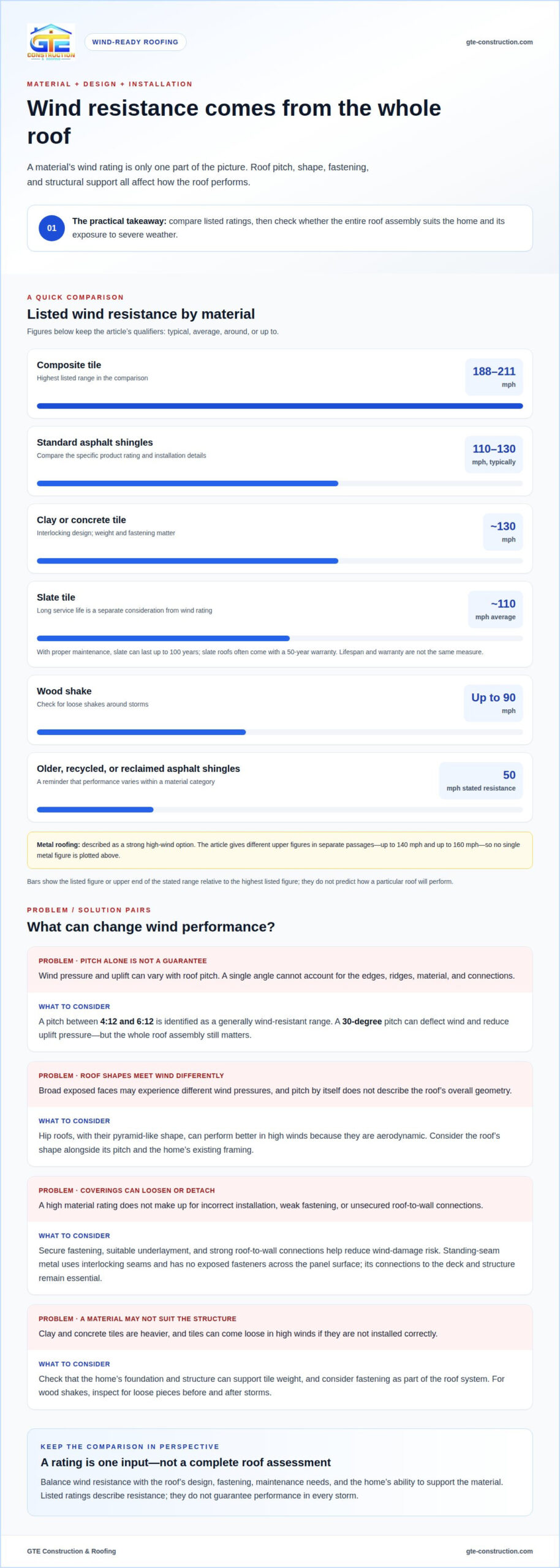
Composite tile has the highest listed wind-rating range, at 188 to 211 mph. Metal roofing, clay or concrete tile, asphalt shingles, wood shake, and slate have different listed ratings and installation considerations. The most durable roofing material for high winds depends on how those ratings fit the roof’s design and the home’s structural needs.
For a useful comparison, distinguish a product’s wind rating from the performance of the complete roofing system. Fastening, installation, and applicable building codes all influence how well a roof withstands extreme weather.
Wind Resistance Ratings by Material
Composite tile leads the listed ratings, while metal roofing is another high-wind option. Metal roofing has ratings up to 140 mph and is also described as resisting hurricane-force winds up to 160 mph. Those figures describe different measures, so they shouldn’t be treated as interchangeable guarantees for every roofing system.
Clay and concrete tiles are listed at around 130 mph, while standard asphalt shingles are typically rated from 110 to 130 mph. Slate averages around 110 mph, and wood shake reaches up to 90 mph. Architectural shingles improve on standard asphalt shingles. These distinctions help homeowners assess which options merit closer consideration.
| Material | Listed wind resistance | Comparison point |
|---|---|---|
| Composite tile | 188 to 211 mph | Highest range listed |
| Metal roofing | Up to 140 mph rating; up to 160 mph hurricane-force winds | Figures describe different measures |
| Clay or concrete tile | Around 130 mph | Fastening and structure are relevant |
| Standard asphalt shingles | 110 to 130 mph | Architectural shingles improve resistance |
| Slate tile | Average around 110 mph | Wind rating differs from longevity |
| Wood shake | Up to 90 mph | Lowest listed figure here |
Wind Speeds Different Roofing Materials Withstand
The listed recommendation is to choose a high-wind roofing material rated for at least 150 mph. Composite tile exceeds that benchmark in its listed range. Metal’s ratings vary by measure, while the listed figures for other materials are lower. This comparison makes composite tile the highest-rated option listed, but not automatically the right match for every home.
For homeowners choosing the most durable roofing material for high winds, compare the product rating with the installation system and roof structure. A wind rating doesn’t measure impact resistance: UL 2218 Class 4 concerns hail or debris, not wind speed. Product approval, attachment, and installation all affect how the assembled roof performs.
Use the rating as a starting point, then consider structural support, fastening requirements, and applicable building codes. The most durable roofing material for high winds is one whose rating and installation requirements suit the home’s design and local conditions. A tile’s listed resistance, for example, does not remove the need for suitable fastening.
GTE Construction & Roofing: New Roofing & Installation
GTE Construction & Roofing provides New Roofing & Installation for homeowners planning a roof replacement or new build. If you’re weighing wind ratings, roof pitch, tile weight, or fastening details, bring these choices together in a roofing plan suited to your home. For loose, damaged, or missing roofing after a storm, Roofing Repairs can address the existing roof’s needs.
A material rating is only one part of the decision. The roof’s design and installation also affect how the finished system performs, so consider them together before choosing a covering.
Contact GTE Construction & Roofing to discuss your roofing project.
Choose a Roofing Plan That Fits Your Home
Turn your priorities into a project plan by considering the roof’s condition, the home’s structure, and the weather it faces. The most durable roofing material for high winds is one that suits those conditions as part of a complete roofing system, rather than a rating chosen in isolation.
GTE Construction & Roofing offers New Roofing & Installation for planned projects and Roofing Repairs when an existing roof needs attention. For indoor improvements, the company also offers Kitchen Remodeling. Each service addresses a different need, so you can focus your project on the work your home requires.
Share what you’re planning and the roofing concerns you want addressed. Contact GTE Construction & Roofing to discuss your project and take a considered next step toward a roof that suits your home.
Frequently Asked Questions
What is the Best Type of Roof for High Winds?
A well-secured hip roof is a strong design choice for high-wind areas. Its sloped sides create an aerodynamic shape, while the material, roof-to-wall connections, and installation determine how the complete assembly performs. When replacing a roof, consider its shape alongside the covering and fastening plan. A high material rating alone cannot compensate for weak connections or unsuitable installation.
What is the Best Roofing Material for High Winds?
Composite tile has the highest listed wind-rating range among these options, at 188 to 211 mph. Metal roofing is another strong candidate, but compare the specific product’s rating and installation system rather than relying on a material label alone. The right selection also depends on whether the home’s structure can support the roofing and whether its design suits the local weather exposure.
What Else Do You Need to Consider?
Consider the full roof assembly: deck condition, roof shape, pitch, fastening, underlayment, and roof-to-wall connections. A tile’s wind rating, for example, does not show whether an older structure can support its weight. Product approvals and local building codes also inform material and installation choices. Together, these factors help identify a suitable roofing system rather than a material chosen by rating alone.
What shingles withstand 150 mph winds?
The listed wind ratings for standard asphalt shingles are typically 110 to 130 mph, so they don’t reach 150 mph in that range. Architectural shingles offer improved wind resistance compared with standard asphalt shingles, but no specific 150 mph rating is provided for them here. Compare the rating for the exact shingle system and its installation requirements, rather than assuming every shingle performs alike.
What’s the best roof for windy areas?
A hip roof paired with a suitable, securely installed covering is a strong option for windy areas. Its pyramid-like form can perform better in high winds, while the covering and connections address other potential failure points. Metal panels need secure attachment, for example, and tiles need appropriate fastening. The complete roof design matters more than appearance or rating alone.
How wind-resistant are standing seam metal, asphalt shingles, tile, and slate roofs?
Standing seam metal has an interlocking design that minimizes wind uplift, and metal roofing ratings reach up to 140 mph. Standard asphalt shingles are typically rated from 110 to 130 mph; clay or concrete tile is around 130 mph, while slate averages around 110 mph. These figures describe different materials, so compare product-specific ratings and installation details before deciding.
What roofing material is most durable in hurricanes and severe storms?
Composite tile has the highest listed wind rating, at 188 to 211 mph, making it a leading option by that measure. Metal roofing is also designed for high-wind performance, with listed hurricane-force resistance up to 160 mph. Durability through severe weather also depends on secure fastening, the roof’s structure, and protection beneath the outer covering. Evaluate those factors with the product rating.
What roof installation methods improve wind resistance and durability?
Follow the manufacturer’s fastening guidance and applicable building codes to determine the attachment pattern for the selected roofing system. Secure roof-to-wall connections with hurricane straps or clips, and use ring-shank nails where appropriate for a stronger grip. Before installation, address damp or rotted roof-deck wood. For tile roofs, ensure the structure can support the covering and follow the specified fastening method, including foam adhesive where appropriate for clay tile.