Choosing paint finishes for a bathroom means balancing easy cleaning with the look of the walls. Benjamin Moore says satin paint offers better stain resistance and durability than lower-sheen finishes, including eggshell. Mildew-resistant paint can help in a humid room, but it won’t fix an underlying moisture problem.
Matte can be appealing when you want a soft appearance or need to disguise small imperfections. The trade-off is that lower-sheen finishes can be harder to clean and less durable in humid conditions. This guide compares matte and satin for cleanability, durability, appearance, and hiding flaws, and explains when mildew-resistant paint makes sense. Bathroom use, ventilation, and wall condition all help determine the right finish.
Key Takeaways
- Match the finish to the surface: reserve more washable, higher-sheen paint for trim, doors, and other areas that need frequent cleaning.
- Consider how often the room is used and where moisture lands when choosing a finish for the walls.
- Remember that higher sheen can make wall blemishes more noticeable, so surface preparation matters as much as the paint choice.
- Use bathroom-appropriate, mildew-resistant paint to help protect surfaces, while addressing the room’s moisture and ventilation conditions.
- When a bathroom update involves more than paint selection, remodeling can help bring the finishes and the rest of the room together.
Durability and cleanability of different finishes
Bathroom paint sheen affects how well walls withstand moisture, routine cleaning, and repeated rubbing. The right balance depends on how the room is used and which surfaces need regular wiping.
Durability Across Paint Finishes
Durability describes how well a painted surface holds up to moisture, contact, and cleaning over time. In a bathroom, those demands vary across walls, trim, and areas near sinks or showers. Matte and eggshell finishes are generally less durable in humid conditions than glossier finishes. Satin and semi-gloss are more washable options for surfaces that need regular care.
Finish alone doesn’t determine paint price; the specific product and formula matter too. A premium flat paint may clean differently from builder-grade flat paint, so product quality affects performance. Glossier coatings are often more practical where scrubbing is frequent, while matte may suit areas with less contact and moisture.
Consider how the room functions. A frequently used family bathroom may need walls that tolerate regular wiping, while a lightly used powder room faces fewer cleaning demands. Trim, doors, cabinets, and moulding are touched often, so high-gloss paint is commonly chosen for its durability and ease of cleaning. The best finish may differ from one surface to another.
Washability and Surface Cleaning
Washability is a finish’s ability to withstand cleaning without losing its appearance. Glossy finishes are among the easiest bathroom paints to clean, while low-sheen flat paint can be harder to wash. Frequent rubbing may burnish flat paint, leaving shiny patches that stand out from the surrounding surface. This matters on walls near sinks, where splashes and fingerprints can require regular cleaning.
Let bathroom paint cure according to the manufacturer’s instructions before showering. Paint that feels dry to the touch may not yet be fully cured, and shower moisture can affect a newly painted surface. Follow the label’s directions for drying between coats and after application. The timing depends on the paint and room conditions, including temperature and humidity.
Cleaning needs also depend on the painted surface’s location. Trim and doors may need occasional scrubbing, while walls farther from water may need less attention. Choose a finish suited to the expected cleaning instead of assuming every bathroom surface needs gloss. In a kitchen, too, frequent wiping makes washability an important practical consideration.
Low-sheen finishes can still work where hiding visible imperfections matters more than frequent scrubbing. If a wall needs repeated cleaning, a more durable sheen can make maintenance easier. Match the finish to the surface, moisture exposure, and how often it needs cleaning.
What Type Of Paint For Bathroom?
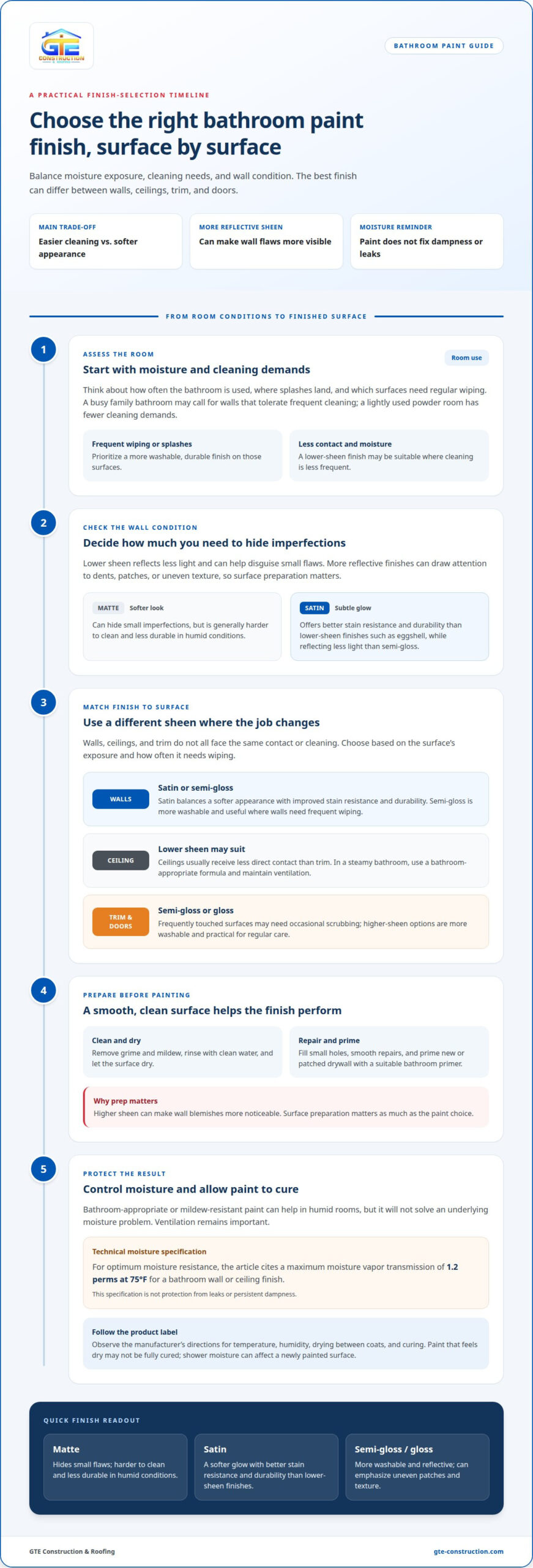
For walls, satin or semi-gloss balances moisture resistance and cleanability. Ceilings can use a lower sheen, while trim suits semi-gloss or gloss. Before painting, clean and dry the surface, repair imperfections, and prime new or patched drywall with a bathroom-appropriate primer.
Semi-Gloss Moisture Resistance
Semi-gloss has a harder, more washable surface than flat paint, making it useful where bathroom walls face moisture and regular cleaning. Its sheen also reflects more light, so uneven patches may become more visible. For optimum moisture resistance, a bathroom wall or ceiling finish should have a maximum moisture vapor transmission of 1.2 perms at 75°F, according to the National Institute of Standards and Technology.
That specification describes moisture vapor transmission, not protection from leaks or persistent dampness. Semi-gloss can suit walls exposed to splashes, but paint should not replace suitable materials in areas directly exposed to water. Bathroom-specific or mildew-resistant paint can help in humid rooms, while ventilation remains important.
Sheen and Light Reflection
Sheen describes how much light a painted surface reflects. Matte reflects less light, while semi-gloss and gloss create more visible highlights. This changes how a wall looks under a ceiling fixture or beside a mirror. Brighter reflections can make a bathroom feel livelier, but may also draw attention to surface irregularities.
Before choosing a sheen, consider the room’s lighting and the condition of its walls. A smooth, carefully prepared surface can support a more reflective finish. On a wall with visible flaws, satin offers a subtler glow than semi-gloss.
Bathroom Paint for Walls, Ceilings, and Trim
Bathroom surfaces have different exposure and cleaning needs. Satin offers greater stain resistance and durability than lower-sheen finishes such as eggshell, while semi-gloss is more scrubbable for walls that need frequent wiping. For trim, doors, and moulding, semi-gloss or high-gloss can make cleaning easier.
Ceilings usually receive less direct contact than trim, so a lower-luster finish may be suitable. In a steamy bathroom, choose a bathroom-appropriate formula and maintain ventilation. For any finish, follow the paint manufacturer’s instructions for temperature, humidity, and drying between coats.
Semi-Gloss in Guest Bathrooms
Semi-gloss can work in a guest bathroom because its durable surface tolerates cleaning between visits. It may need less frequent wiping than walls in a busy family bathroom, but splashes around the sink still make washability useful. The trade-off is appearance: reflected light can emphasize dents, patches, or uneven texture.
For a guest bathroom with imperfect walls, satin offers a softer sheen and hides flaws better than semi-gloss. Prepare the surface first: remove grime and mildew, rinse with clean water, and let it dry. Fill small holes, smooth repairs, and prime new or patched drywall with a suitable primer before applying the finish.
How sheen affects appearance and performance
Satin is a useful compromise when you want bathroom walls that clean more easily than matte but show fewer flaws than semi-gloss. For ceilings, a low-luster, mildew-resistant finish can soften reflections. In a steamy bathroom, ventilation matters too.
Sheen and Perceived Paint Color
Sheen changes how light reflects from a painted surface, which can make the same color look different across finishes. A satin wall may appear brighter or more dimensional than a matte wall in the same shade, especially near a mirror or ceiling light.
Compare paint samples under the bathroom’s actual lighting before choosing a color. View each sample on the wall, then check it beside the mirror and under the ceiling fixture. A glossy sample can reflect concentrated highlights, while eggshell or satin tends to have a subtler effect. The color name alone won’t show how those reflections will look.
Bathroom Wall and Ceiling Sheen Choices
Bathroom wall and ceiling sheen choices balance cleaning needs with reflected light and surface condition. Satin suits walls where you want some washability without semi-gloss’s stronger shine. A lower-luster, mildew-resistant finish can suit a ceiling, where frequent scrubbing is less likely.
For easier cleaning without emphasizing every wall imperfection, satin is often a practical middle ground. Semi-gloss is more durable and scrubbable, but its stronger reflections can highlight uneven patches. A low-luster ceiling finish reduces glare overhead. In a very steamy room, consider how moisture and ventilation affect the ceiling.
Higher-sheen paint calls for careful application. Benjamin Moore advises that pearl-sheen paint can show lap marks and other painting flaws, so maintain a consistent wet edge and avoid stopping mid-wall. High-gloss requires particularly careful preparation and application. A smooth, clean surface helps prevent reflected light from drawing attention to ridges, repairs, or uneven coverage.
Tools and technique also shape the finished appearance. Rollers and brushes can leave different textures, so use consistent methods across adjoining areas. If the paint label allows, a quality roller or sprayer can help create a smoother coat. Follow the manufacturer’s instructions for drying between coats, and don’t rush the next application.
Uneven sheen may result from inconsistent coverage, surface absorption, or different application patterns. First, see whether the variation follows a repair, roller edge, or section painted at another time. Remove dust and residue before correcting the area. Spot-touching can leave a visible patch, especially with a reflective finish, so repainting the full wall may create a more uniform appearance.
Sheen can also affect how a bathroom’s colors work together. For example, satin walls beside semi-gloss trim may make the trim stand out through stronger reflections, even when both surfaces use the same color. Choose finishes with the room’s lighting, wall condition, and cleaning needs in mind.
Matte and flat finishes for hiding imperfections
Matte and flat finishes reflect less light, so small wall flaws can appear less prominent. In a poorly ventilated bathroom, choose bathroom-appropriate, mildew-resistant satin or semi-gloss instead. Persistent humidity can make lower-sheen paint less durable.
Matte Paint in Humid Bathrooms
Matte paint has little sheen, helping disguise shallow dents, patched areas, and uneven drywall. It can work well on an older wall where glossy reflections would reveal surface changes. The trade-off is performance: bathrooms tend to hold moisture, and matte is less durable than glossier finishes in humid conditions.
Before selecting matte, consider where steam and splashes collect. A wall beside a shower or sink faces more moisture than one across the room. Flat or matte paint is not recommended for high-moisture areas, so prioritize a bathroom-appropriate formula and ventilation when moisture lingers. Matte may suit a less exposed wall, but it won’t solve dampness.
Flat or Matte Paint with Good Ventilation
Flat or matte paint can work on bathroom walls when ventilation is good and water rarely reaches them. Using an exhaust fan during and after showers helps manage humid air, while keeping paint away from repeated splashes reduces cleaning demands. This finish may suit a powder room without a shower, especially when the walls have visible repairs.
Good ventilation still doesn’t make every wall equally suitable. A section beside the vanity may collect fingerprints, soap residue, or water spots, while a higher, sheltered wall sees less contact. Choose matte where hiding imperfections matters most, rather than using it automatically on every surface. A bathroom ceiling may also suit a flat or low-luster mildew-resistant finish.
Preparation determines how well matte conceals flaws. Fill small holes and smooth patched areas first, since paint won’t hide raised edges or rough compound. Clean away mildew, soap scum, and grime, then rinse with clean water and let the wall dry. Existing mildew can interfere with adhesion and may show through the fresh coat.
After preparing the surface, prime new or patched drywall with a bathroom-suitable primer. This helps create an even base across bare compound and existing paint. Without priming, differences in absorption can leave visible patches, even under low-sheen paint. Follow the paint maker’s directions for drying between coats.
Matte is also less forgiving during cleaning. Frequent rubbing can burnish low-sheen paint, leaving shiny marks that contrast with the surrounding wall. For a high-traffic bathroom with stains or regular wipe-downs, satin may be a more practical balance. Reserve matte for lower-contact areas where its softer appearance and ability to minimize minor flaws matter more.
Choosing satin paint for bathrooms
Satin offers a subtle sheen between matte and gloss, making it a balanced option for bathroom walls. It’s easier to clean and more stain-resistant than lower-sheen finishes, while reflecting less light than semi-gloss. When choosing paint finishes for a bathroom, consider how often the walls need wiping as well as the look you want.
Start by considering the room’s moisture exposure. A wall beside a vanity may need more regular cleaning than a sheltered wall, while the area near a shower faces greater humidity. Satin can suit walls that need occasional cleaning, but paint won’t correct persistent dampness. Ventilation and the underlying surface’s condition also matter.
Choose an interior paint formulated for humid spaces. Mildew-resistant paint can make it harder for mildew to take hold on painted walls, but it won’t solve the source of moisture. If mildew is present, clean the surface and let it dry before painting. Painting over existing mildew can interfere with adhesion and allow stains to show through.
Preparation helps satin look consistent. Fill small holes, smooth patched drywall, and remove soap scum, grime, or mildew before painting. New or patched bathroom drywall needs a suitable primer, especially where bare compound meets existing paint. Without an even base, satin’s gentle reflections can reveal uneven texture or coverage.
Consider each surface separately. A lower-luster, mildew-resistant finish may suit a ceiling, while semi-gloss or high-gloss is often practical for trim and doors that receive frequent contact. Matching wall and trim colors can reduce contrast, while different sheens still distinguish the surfaces. This can help coordinate the finishes with the room’s fixtures.
Before committing to a full wall, compare a satin sample with the bathroom’s lighting and existing finishes. View it near the vanity, under the ceiling light, and beside the trim; reflected light can change how a color appears. The decision involved in choosing paint finishes for a bathroom should account for surface condition, moisture, and cleaning needs. Follow the manufacturer’s instructions for application and drying between coats. To plan finishes as part of a wider update, plan your bathroom refresh around the room’s surfaces and use.
GTE Construction & Roofing: Bathroom Remodeling
GTE Construction & Roofing offers bathroom remodeling for homeowners planning a broader update alongside paint and finish decisions. Remodeling makes sense when wall condition, ventilation, or several room surfaces need attention together, rather than simply changing the sheen on otherwise sound walls. Treating paint choices as part of the overall design helps match appearance to how the bathroom is used and maintained. Matte, satin, and semi-gloss each have different strengths, so the right choice depends on the surface, moisture exposure, and cleaning needs. If you’re planning a bathroom update, contact GTE Construction & Roofing to discuss your remodeling project.
Make the Finish Part of Your Bathroom Plan
The final choice should suit how you want the room to feel over time, not just how the walls look on painting day. Consider the finish alongside the bathroom’s lighting, fixtures, and overall design. A consistent plan can make painted surfaces feel intentional while leaving room to address other remodeling needs as they arise.
If updating the bathroom involves more than selecting paint, GTE Construction & Roofing’s bathroom remodeling service can help bring the broader project together. The same care you bring to choosing paint finishes for a bathroom can guide decisions about the room’s layout and finished appearance. You can contact GTE Construction & Roofing to discuss your bathroom project and decide on a practical next step. A thoughtful plan can make it easier to move forward with confidence.
Frequently Asked Questions
Should I use mildew-resistant paint?
Yes, mildew-resistant interior paint is a sensible option for a bathroom that regularly holds humid air. It can make it harder for mildew to take hold on painted surfaces, but it won’t correct a leak, persistent condensation, or inadequate ventilation. For example, if mildew keeps returning near the ceiling, address the moisture conditions as well as repainting. Clean and dry the wall before applying a fresh coat.
What is Paint Sheen?
Paint sheen is the amount of light a painted surface reflects. Matte reflects little light, while satin and semi-gloss reflect progressively more. This affects how a finish looks under different fixtures: a wall beside a bright vanity light may appear more reflective than the same paint in a dim corner. Compare a sample on the actual wall, since room lighting and nearby surfaces affect how its color appears.
Is satin or semi-gloss paint better for bathroom walls?
Satin is often a good choice when you want washable walls without strong reflections. Semi-gloss is more durable and scrubbable, which can suit walls that need frequent wiping, such as those near a sink. Its higher reflection can also emphasize rough patches and repairs. Semi-gloss may suit a smooth wall that needs regular cleaning; satin may be preferable for a softer look or a less even surface.
Are matte or eggshell bathroom paints moisture- and mildew-resistant?
Matte and eggshell describe sheen, not whether paint resists mildew. Lower-sheen finishes are generally less durable in humid bathroom conditions than glossier ones, and frequent rubbing can affect some flat paints. A mildew-resistant formula may come in a lower sheen, but the finish itself doesn’t resolve moisture. For example, a guest powder room without a shower has different humidity demands from a bathroom used for daily showers.
What paint finish should I use on bathroom cabinets, doors, and trim?
Semi-gloss or high-gloss is commonly used on bathroom cabinets, doors, and trim because these surfaces benefit from durability and easier cleaning. Cabinet doors and drawer fronts are handled often, so a finish that tolerates wiping can be practical. Higher sheen can reveal dents or uneven preparation, however. Clean, repair, and prime the surface as needed before painting, then follow the paint maker’s directions for application and drying.
Does bathroom paint need to be labeled mold- or mildew-resistant?
For a humid bathroom, choosing paint labeled for bathroom use or mildew resistance can help, though the label isn’t the only factor in performance. Look for a formula intended for interior spaces with extra moisture, and follow its application and drying instructions. Paint cannot replace ventilation or correct ongoing dampness. If mildew is already present, clean the surface and let it dry before painting instead of covering it with a new coat.