Imagine waking up after a heavy Sacramento rainstorm and noticing a faint, circular stain on your ceiling. It’s a moment of quiet anxiety that many homeowners face, signaling that a minor oversight has likely progressed into a structural concern. Maintaining your home’s primary defense shouldn’t feel like a guessing game or a source of constant stress. By following essential roof maintenance tips for homeowners, you can transition from reactive repairs to proactive preservation. We recognize that the high cost of unexpected replacements is a significant burden. Our focus is helping you avoid that financial strain through disciplined, professional care.
You likely agree that a sturdy roof is the foundation of your family’s safety, yet the distinction between a DIY task and a professional requirement is often confusing. This guide delivers professional-grade strategies to extend your roof’s lifespan while protecting your property against Northern California’s specific climate challenges. We’ll provide a manageable maintenance schedule designed to build your confidence and lower long-term repair costs. You’ll discover how to identify hidden water damage early and why adhering to modern safety standards is vital for any project. We’ll also explore how emerging technology like infrared inspections can reveal saturated insulation that the naked eye simply cannot see.
Key Takeaways
- Learn why systematic preservation of the building envelope is a vital strategy to prevent minor issues from evolving into significant structural failures.
- Identify early warning signs of aging by monitoring granule loss in your gutters and checking shingles for cracking or cupping caused by UV exposure.
- Master essential roof maintenance tips for homeowners, including how to use your attic as a diagnostic center to detect light pinholes and hidden moisture.
- Protect your home’s foundation and prevent fascia rot by maintaining a clear drainage system that effectively directs water away from the structure.
- Understand the value of a professional integrity assessment performed by a licensed contractor who evaluates the health of your entire roofing system.
Why Proactive Roof Maintenance is Essential for Home Longevity
Proactive roof maintenance is far more than a seasonal chore; it’s the systematic inspection and preservation of your home’s building envelope. By understanding the fundamentals of roofing materials and construction, you can better appreciate how each component works to shield your interior from the elements. We advocate for a disciplined Action-Method-Result approach to care. For instance, clearing organic debris from roof valleys (Action) using a soft-bristle blower (Method) prevents water damming and subsequent substrate rot (Result). These small, deliberate adjustments today are what prevent catastrophic structural failures tomorrow.
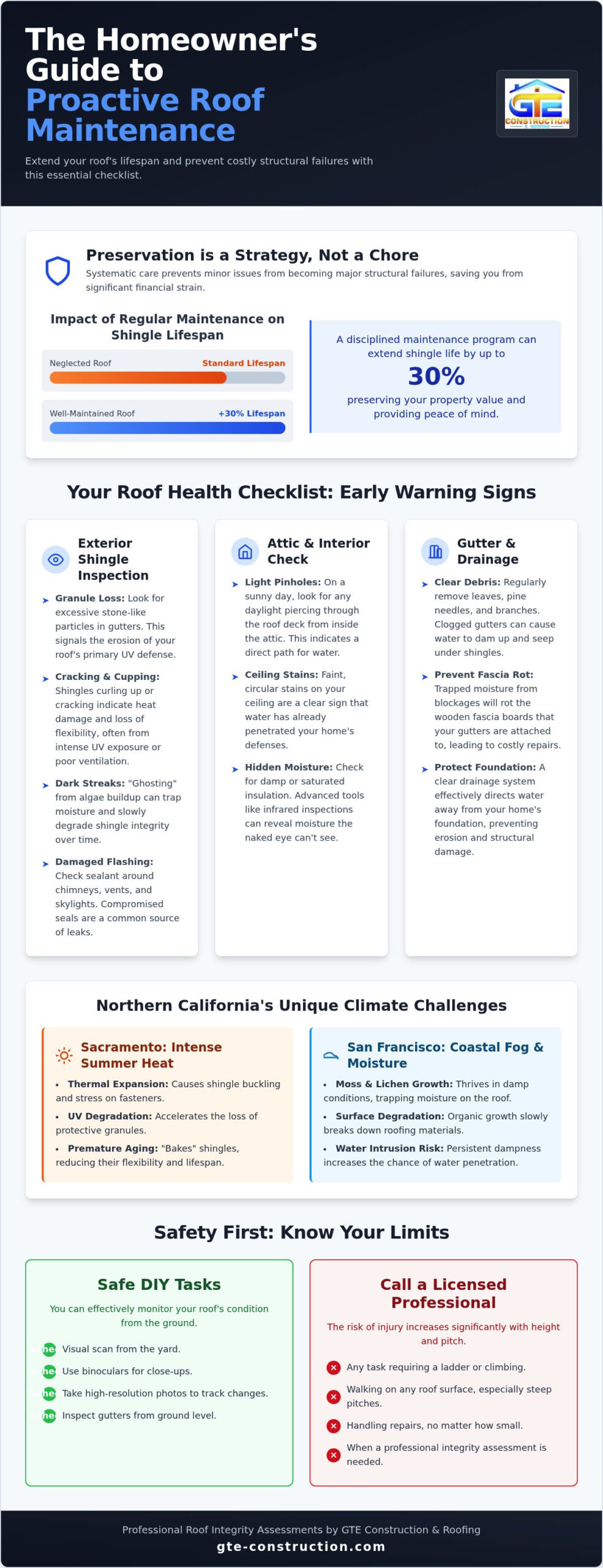
Adopting these roof maintenance tips for homeowners offers a significant financial return on your investment. Industry professionals frequently observe that a well-executed maintenance program can extend shingle life by up to 30% compared to neglected systems. In the competitive California real estate market, a documented history of professional care preserves property value and provides tangible peace of mind to potential buyers. It’s a strategy rooted in craftsmanship and long-term reliability rather than quick fixes.
The Northern California Climate Factor
Our region presents unique environmental challenges that demand localized expertise. In Sacramento, intense summer heat leads to significant thermal expansion, which often results in shingle buckling or the premature loss of protective granules. Conversely, San Francisco’s persistent coastal fog creates a damp environment where moss and lichen thrive, trapping moisture directly against the roofing surface. Seasonal transitions, particularly the window between the dry summer heat and the first autumn rains, are the most critical times for a thorough assessment to ensure your home remains watertight.
Safety First: A Homeowner’s Responsibility
Safety remains our primary concern for every resident we serve. While we encourage you to stay informed about your home’s condition, it’s vital to recognize the limits of DIY tasks. You can effectively monitor your roof’s health from the safety of the ground by using high-resolution photography or binoculars to spot displaced shingles or sagging gutters. However, once a task requires climbing or involves steep pitches, the risk of personal injury increases significantly. Knowing when to stop and call a licensed professional ensures your personal safety and guarantees that the inspection meets rigorous industry standards. These roof maintenance tips for homeowners are meant to empower you, but professional intervention is the key to maintaining structural integrity without compromise.
Exterior Inspection: Identifying Early Warning Signs on Your Shingles
Visual assessments from the ground are a cornerstone of effective roof maintenance tips for homeowners. One of the most telling signs of shingle exhaustion is the presence of excessive granules in your gutter system. These small, stone-like particles provide the primary UV defense for your roofing material. When they wash away, the underlying asphalt becomes vulnerable to the elements, which accelerates the aging process. It’s a clear indicator that the protective barrier is thinning and requires closer attention.
Physical deformations such as curling, cracking, or ‘cupping’ often signal a deeper issue with thermal management. In the Sacramento Valley, intense UV exposure can bake shingles until they lose their natural flexibility. If you notice shingles lifting or cupping uniformly, it may also indicate inadequate attic ventilation that’s essentially cooking the roof from the inside out. Dark streaks, often referred to as ‘ghosting,’ are typically caused by algae buildup. While primarily an aesthetic concern initially, this organic growth can trap moisture and slowly degrade shingle integrity. Always inspect the flashing around chimneys and skylights; compromised sealant in these high-traffic areas is a frequent culprit for localized leaks.
Debris Management and Surface Health
Maintaining a clean roof surface is essential for preventing structural decay. You should clear leaves, pine needles, and fallen branches regularly to prevent organic matter from trapping moisture against the shingles. This accumulation often leads to rot and mold that can eventually penetrate the underlying roof decking. While it’s tempting to use a power washer for a quick clean, we strongly advise against it. The high-pressure stream can strip away protective granules and compromise the shingle’s lifespan. If the buildup seems beyond a simple clearing, a professional roofing repair assessment can identify if the moisture has already impacted the substrate.
Tree Trimming for Structural Safety
Vegetation management is a critical yet overlooked component of property preservation. We recommend maintaining a minimum 6-foot clearance between overhanging branches and your roofline. This gap serves multiple protective functions. It eliminates the ‘bridge’ that rodents and other pests use to gain access to your attic space. It also prevents branches from acting as abrasives. During seasonal windstorms, even small limbs can scrape against roofing materials, effectively sanding away the protective surface. Keeping trees trimmed ensures that your home’s primary shield remains undisturbed by the surrounding landscape.
The Attic and Interior Check: Finding Hidden Structural Threats
While exterior visual checks are essential, the attic serves as the primary diagnostic center for your home’s structural health. Incorporating an internal review into your regular roof maintenance tips for homeowners allows you to identify vulnerabilities before they manifest as costly ceiling stains. During peak daylight hours, we recommend turning off all interior lights and observing the underside of the roof deck. If you notice small pinholes of light, it indicates gaps in the roofing system that require immediate attention to prevent seasonal water intrusion. It’s a simple check that provides profound clarity on the state of your home’s defense.
A meticulous inspection of the rafters is equally vital. Look for dark, circular stains or areas of persistent dampness that suggest slow, long-term leaks. These often occur around penetrations like vent pipes or chimneys where sealants may have failed. Additionally, examine your insulation for areas that appear matted or compressed. When fiberglass or cellulose insulation is exposed to moisture, it loses its thermal efficiency and can trap water against the ceiling joists. This trapped moisture leads to structural wood rot and significantly decreased energy performance for your entire property.
Ventilation and Airflow Dynamics
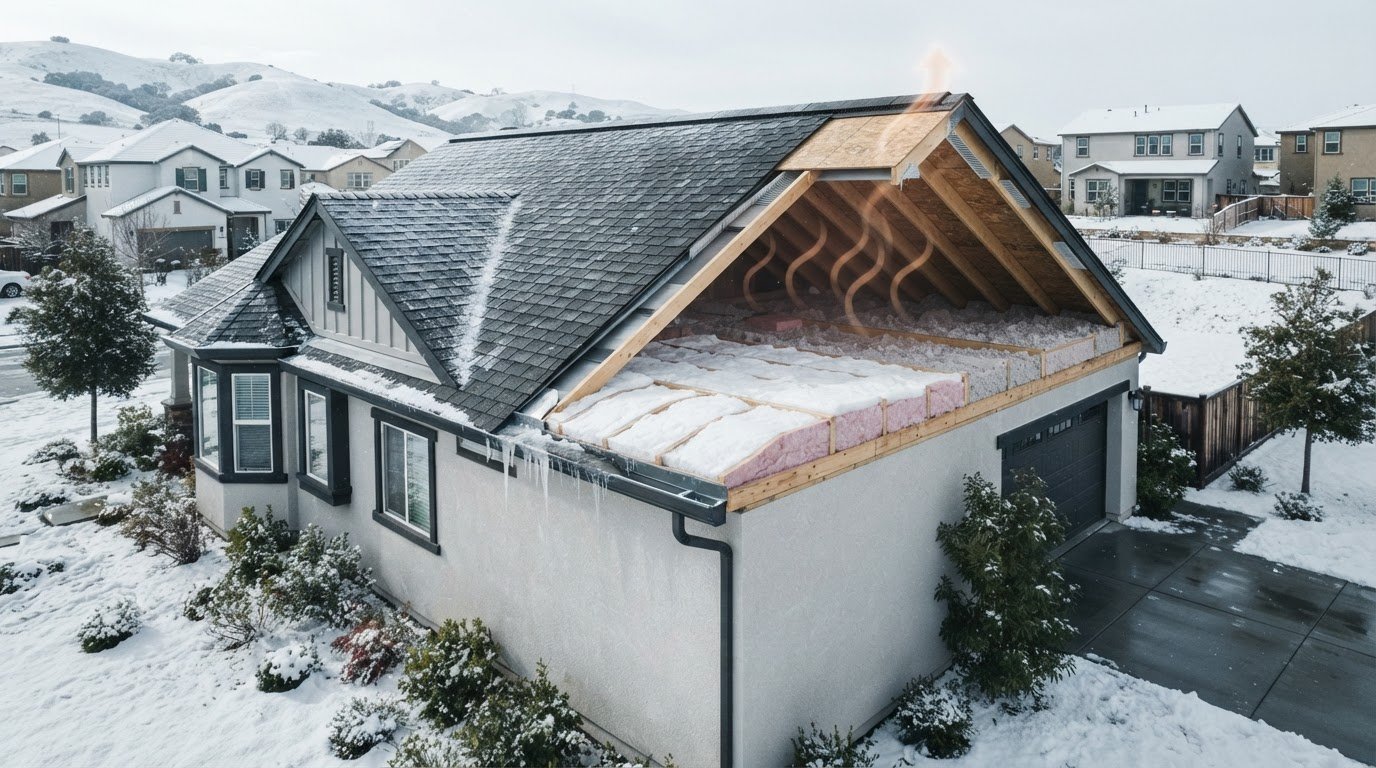
Proper ventilation is a fundamental component of a durable roofing system. Without adequate airflow, trapped heat in the attic can effectively ‘cook’ shingles from the underside, causing them to become brittle and fail prematurely. In the Sacramento Valley, where summer temperatures frequently exceed 100 degrees, this airflow is the only thing protecting your substrate from extreme thermal stress. We often find that blocked soffit vents are a primary cause of this accelerated degradation. Maintaining a consistent attic temperature also helps prevent ice dams in higher elevations, ensuring that snow melts evenly and drains away rather than refreezing at the eaves.
Detecting Mold and Mildew Early
Early detection of organic growth is crucial for preserving both your property and your family’s health. You should monitor the attic for musty odors or black spots on the underside of the roof deck, which are clear indicators of excessive humidity. To mitigate this risk, ensure that all bathroom and kitchen exhaust fans vent directly to the outside rather than into the attic space. This methodical approach prevents moist air from accumulating in the rafters. The result is a healthier building envelope that resists structural decay while maintaining superior indoor air quality throughout the changing seasons.
Gutter and Drainage Management: Protecting Your Foundation
Gutters function as a critical shield that directs hydraulic pressure away from your home’s structural base. While they are often viewed as a secondary concern, a failing drainage system is frequently the root cause of significant roofing and foundation damage. When debris accumulates, water overflows and saturates the fascia boards, eventually backing up under the lower shingle courses. This persistent moisture leads to ‘fascia rot’ and compromises the integrity of the roof’s edge. Integrating drainage checks into your regular roof maintenance tips for homeowners is essential for total water protection.
Effective management requires looking beyond the roofline to the ground below. We recommend checking that all downspout extensions exit at least 5 feet from the foundation. This distance ensures that water doesn’t pool near the footings, which can lead to soil instability and structural settling. For properties with complex topography, we often suggest integrating erosion control landscaping to prevent soil saturation and manage runoff effectively. It’s a comprehensive approach that treats the home as a unified system rather than isolated components.
The Gutter Maintenance Checklist
Maintaining a functional drainage system requires a disciplined schedule tailored to our local environment. Professionals like Roof Plumbing Expert emphasize that proactive gutter maintenance is the first line of defense against water ingress, regardless of your specific geography. You should flush your gutters at least twice yearly, specifically after the heavy leaf-fall periods in Alameda and Contra Costa counties. During this process, inspect for ‘sagging’ sections that indicate loose fasteners or the excessive weight of trapped debris. By identifying these issues early (Action) and tightening or replacing hangers (Method), you ensure the system remains capable of handling heavy California winter downpours (Result). This methodical care prevents the sudden failure of the building envelope during peak storm events.
For many homeowners, upgrading to a seamless gutter system offers a superior long-term solution by significantly reducing potential leak points. These custom-fit systems eliminate the joints where traditional gutters often fail. If your property is located near the wooded areas of the Sacramento valley, installing gutter guards can further reduce the frequency of manual cleanings and prevent clogs. If you notice water entering the home or suspect hidden damage, it’s wise to consult a professional for precision roof repair services. If you’re ready to secure your home’s exterior with a more reliable system, contact us for a professional gutter installation assessment today.
Partnering with a Licensed Contractor for Annual Integrity Assessments
While the previous roof maintenance tips for homeowners empower you to monitor your property’s condition, an annual Professional Integrity Assessment provides the definitive baseline for your home’s safety. This isn’t a mere visual scan; it’s a comprehensive structural review that evaluates every component of the building envelope. A licensed general contractor understands the ‘whole home’ impact, recognizing how a minor roofing deficiency might eventually compromise a kitchen remodel or a structural addition. We advise homeowners to request a detailed written report that documents the current state of materials and provides a projected lifespan. This documentation serves as the final step in a peace of mind guide, ensuring your long-term investment remains secure.
A professional assessment often utilizes advanced technology that goes beyond what a homeowner can safely see from a ladder. For example, infrared technology can identify saturated insulation or hidden leaks that haven’t yet reached your ceiling. By identifying these thermal anomalies (Action) through specialized imaging (Method), a contractor can pinpoint precise repair locations before they require a full system replacement (Result). This level of precision is what separates basic upkeep from professional preservation.
Vetting Your Roofing Partner
Verification is the foundation of trust in any construction partnership. You should always confirm that your contractor maintains active California licensing and comprehensive insurance coverage, as this protects you from liability during the inspection process. It’s beneficial to partner with professionals who possess a deep understanding of both new roof installation and complex residential remodeling. In the SF and Sacramento regions, avoid ‘storm chasers’ who appear only after major weather events. Instead, choose established local experts who understand our specific architectural nuances and environmental challenges.
Planning for the Future
Methodical planning removes the financial shock often associated with home ownership. By using data from your annual assessments (Action), you can accurately budget for a full replacement years in advance (Method). This foresight allows you to consult with a home renovation project management expert to coordinate roofing updates with other major property improvements. The result is a seamless transition from reactive stress to proactive property management, preserving both the aesthetic and structural integrity of your home for decades to come.
Securing Your Home’s Future with Disciplined Care
A resilient building envelope is the result of consistent, methodical attention to detail. By treating your attic as a diagnostic center and maintaining a clear drainage system, you effectively shield your property from the structural decay that often follows seasonal storm cycles. Implementing these roof maintenance tips for homeowners transforms your approach from reactive repair to long-term preservation. This proactive mindset ensures that small adjustments today prevent the financial burden of a premature replacement tomorrow; it doesn’t just save money, it builds lasting peace of mind.
Expertise matters when the integrity of your entire home is at stake. As a Licensed California General Contractor serving SF, Sacramento, and the East Bay, we provide comprehensive structural expertise that extends from the foundation to the roofline. We invite you to schedule your professional roof integrity assessment with GTE Construction & Roofing today. Taking this final step provides the documented clarity and professional reassurance you need to protect your family’s most significant investment. Your home deserves the precision and craftsmanship that only a dedicated local expert can provide.
Frequently Asked Questions
How often should I realistically inspect my roof in Northern California?
Realistically, you should perform a visual inspection twice annually to account for our distinct seasonal shifts. We recommend a check in late spring after the winter rains have subsided and again in early autumn before the next storm cycle begins. In Sacramento, the intense summer sun can cause shingles to become brittle, while San Francisco’s coastal humidity encourages organic growth. Staying ahead of these environmental stressors ensures that minor issues don’t evolve into structural failures.
Can I perform roof maintenance myself or is it too dangerous?
You can safely perform basic visual monitoring from the ground, but any task involving a ladder or walking on the surface should be left to a licensed professional. Falls remain a leading cause of residential injury, and OSHA regulations require specific safety equipment for work performed six feet or more above a lower level. Utilizing binoculars or high-resolution photography allows you to identify displaced materials without risking personal safety or inadvertently damaging the shingles during a DIY attempt.
What are the most common signs that my roof needs a professional repair?
Professional intervention is necessary if you observe missing shingles, persistent interior leaks, or significant sagging along the roofline. These are often the final indicators of a compromised system. You should also watch for daylight visible through the attic rafters or dark, moisture-laden stains on your ceiling. These roof maintenance tips for homeowners are designed to help you catch these warning signs early, allowing a contractor to perform a precision repair before the underlying decking suffers from rot.
Does cleaning my gutters really help extend the life of my roof shingles?
Maintaining clean gutters is a fundamental component of building envelope preservation because it prevents water from backing up under the lower shingle courses. When gutters are clogged with debris, trapped moisture saturates the fascia boards and can lead to substrate rot that eventually penetrates your home’s interior. A functional drainage system ensures that heavy California downpours are directed safely away from both your roofline and your foundation, significantly extending the lifespan of your entire roofing system.
What should I do if I find granules from my shingles in my gutters?
Finding a small amount of granules is normal as shingles age, but excessive accumulation in your gutters suggests that your roof’s UV protection is failing. These granules are the primary defense against the sun’s rays; without them, the asphalt becomes brittle and cracks. If you notice large piles of these stone-like particles, it’s time to schedule a professional integrity assessment. This proactive step helps determine if the material is reaching the end of its projected lifespan and requires replacement.
Is it worth it to repair a small leak, or should I just replace the whole roof?
Repairing a small leak is almost always the more cost-effective choice if the rest of the roofing system remains structurally sound. Addressing a minor vulnerability immediately prevents water from reaching the rafters and insulation, where it can cause mold or wood rot. However, if the leak is one of several recurring issues or if the roof is nearing the end of its functional life, a full replacement may be the more reliable long-term investment for your property. To see how an expert team evaluates these options, check out Mike and Mike Roofing.
You can evaluate your attic ventilation by monitoring the temperature and humidity levels in the space throughout the year. If the attic feels excessively hot during a Sacramento summer or shows signs of frost or condensation in the winter, the airflow is likely insufficient. Properly positioned soffit and ridge vents should create a continuous flow of air that prevents heat from ‘cooking’ your shingles from below. These roof maintenance tips for homeowners help ensure your building envelope remains stable.
What is the difference between a roof inspection and a roof maintenance service?
A roof inspection is a comprehensive assessment that results in a documented report on the system’s current condition and projected lifespan. In contrast, a roof maintenance service involves the active execution of preservation tasks, such as clearing debris from valleys or resealing flashing around chimneys. While an inspection identifies what needs to be done, maintenance is the methodical action taken to prevent damage. Both services are essential for maintaining the long-term health and safety of your residential property.