Could the roof currently protecting your family be considered a liability under California’s newest safety standards? Many homeowners in the East Bay and Sacramento feel a sense of urgency as 2026 regulations redefine what makes a structure truly resilient. It’s common to feel overwhelmed by conflicting cost estimates or the fear that a durable material might be too heavy for your home’s existing frame. You deserve a solution that balances aesthetic appeal with the rigorous demands of the local climate.
Selecting from the various types of roofing materials requires a clear understanding of how each option performs against wildfire risks and energy efficiency mandates. This guide provides a detailed comparison of material lifespans and cost-efficiency to help you make an informed decision. We will examine the specific parameters of Title 24 “cool roof” standards and Class A fire ratings, ensuring your next installation offers both sophisticated design and long-term protection. By aligning your choice with regional requirements, you can move forward with the confidence that your investment is built to last.
Key Takeaways
- Understand the necessity of Class A fire ratings and Title 24 energy standards to ensure your home meets 2026 Northern California safety mandates.
- Compare the durability and cost efficiency of various types of roofing materials, from versatile asphalt shingles to precision engineered metal systems.
- Assess your property’s structural capacity to determine if your current framing can safely support premium materials like natural slate or concrete tile.
- Discover how professional installation techniques, including meticulous flashing and gutter integration, protect your foundation and enhance the longevity of your investment.
Evaluating Roofing Performance: The Northern California Framework
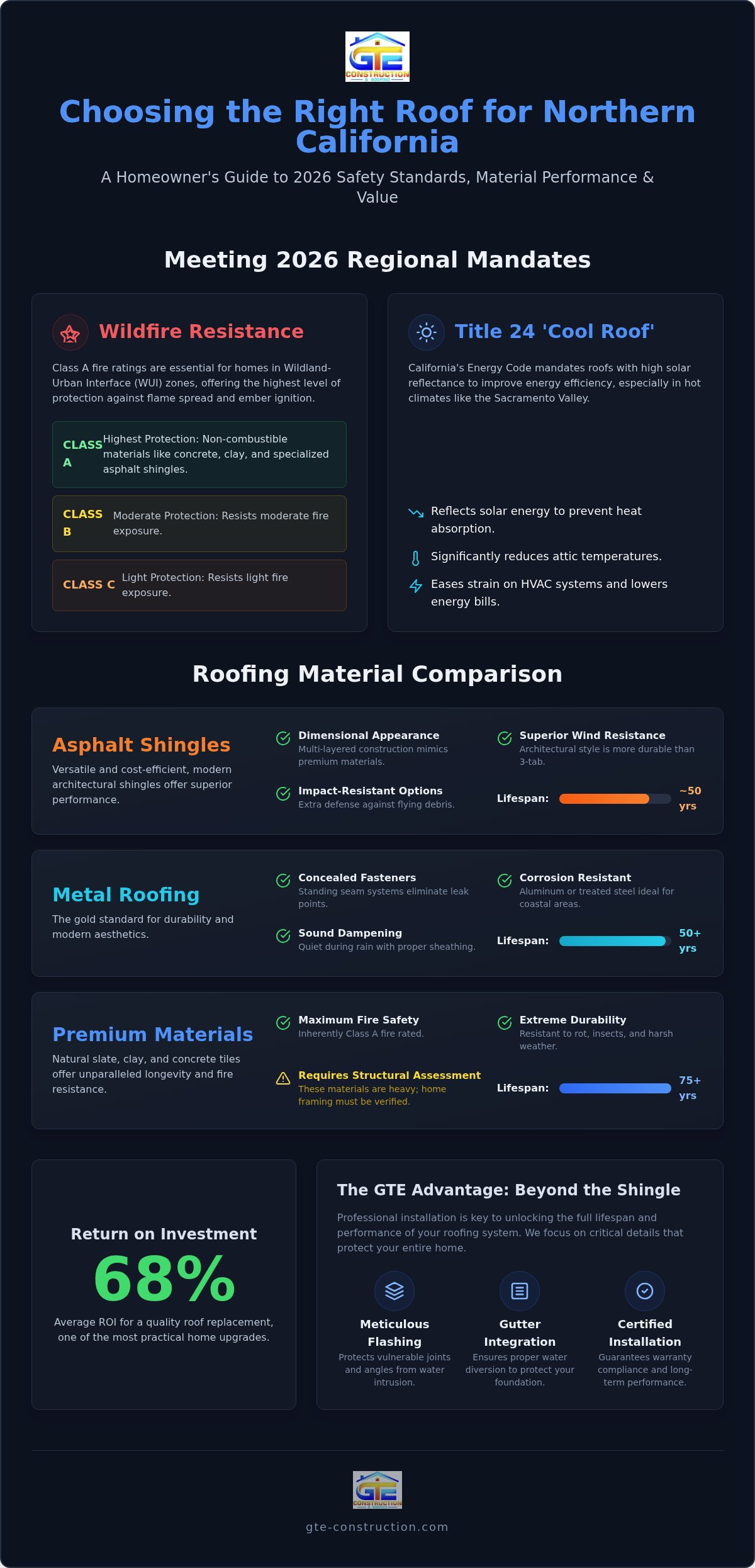
In Northern California, your roof does more than provide shelter; it serves as a sophisticated barrier against a unique set of environmental pressures. Choosing between the various types of roofing materials is a decision that impacts both your home’s structural integrity and its long term market value. We provide comprehensive roofing replacements by conducting a thorough structural assessment and using materials suited for the local climate, ensuring your home remains safe and compliant for years to come. A quality roof replacement in 2026 offers an average return on investment of 68%, making it one of the most practical upgrades for homeowners in the East Bay and Sacramento.
Wildfire Resistance and WUI Compliance
Fire resistance is a non-negotiable factor for properties in Alameda and Contra Costa counties. Roofing materials are categorized into three primary fire ratings: Class A, B, and C. Class A represents the highest level of protection, utilizing non-combustible components like concrete, clay, or specialized asphalt shingles to prevent flame spread. The Wildland-Urban Interface (WUI) zones are specific geographic areas where residential developments meet undeveloped wildlands, necessitating the use of strictly regulated fire-resistant materials to mitigate the risk of ember ignition during a wildfire event in 2026. Our team cross-references your property’s location with current WUI maps to verify that your selected material provides the maximum protection required by law.
Title 24 and the ‘Cool Roof’ Requirement
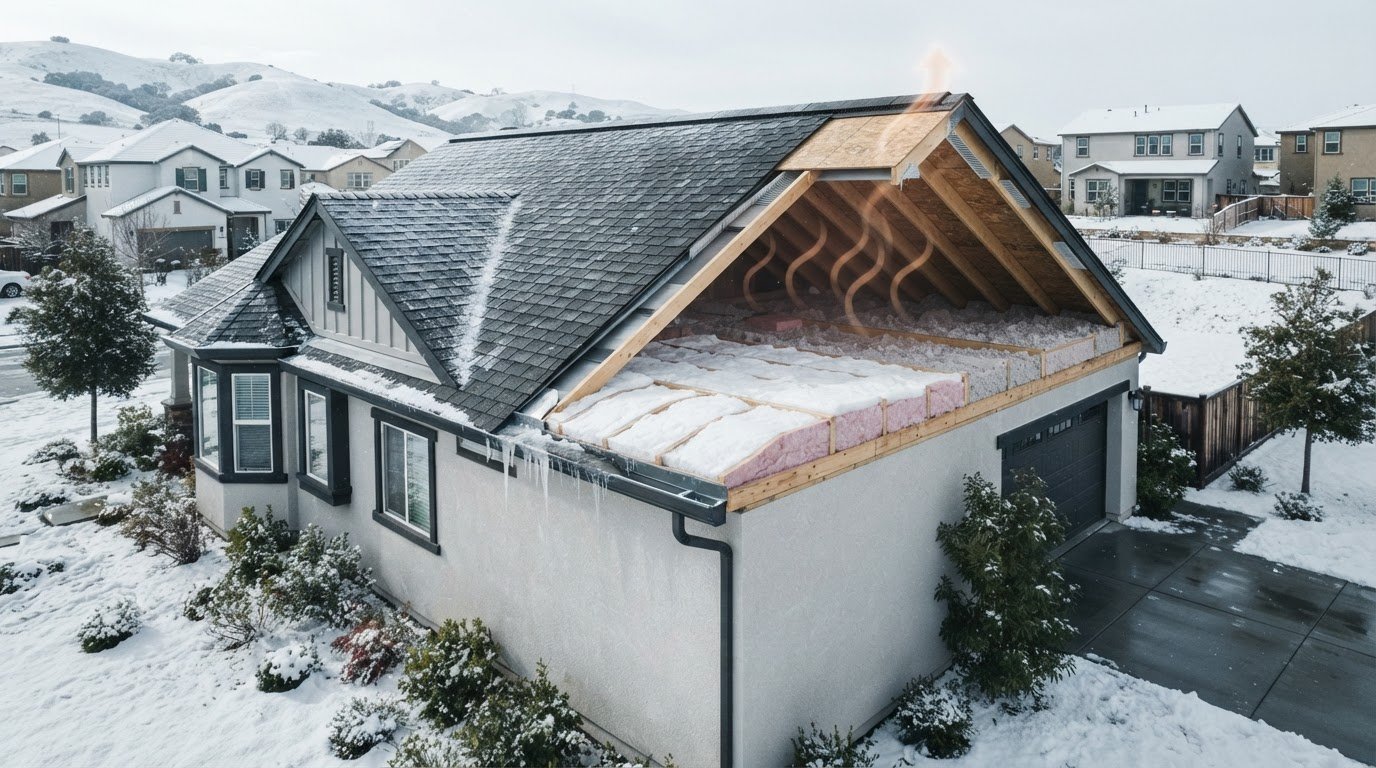
Managing the intense heat of the Sacramento Valley requires a focus on thermal performance and solar reflectance. The California Energy Code, known as Title 24, mandates specific reflectivity standards for new and replacement roofs to improve state-wide energy efficiency. We optimize indoor comfort by installing “cool roofs” that utilize advanced granules or specialized coatings designed to reflect solar energy back into the atmosphere. This method prevents the roof from absorbing excessive heat, which significantly reduces attic temperatures and eases the strain on your HVAC system. By consulting a comprehensive list of roofing materials, you can find types of roofing materials that contribute to a reduction in the urban heat island effect while lowering your individual energy bills. This methodical approach to material selection ensures your home remains efficient and compliant throughout the hottest summer months.
Standard Residential Roofing Materials: Pros, Cons, and Lifespans
Selecting the right types of roofing materials involves balancing immediate budgetary needs with the long term preservation of your home. While the Northern California climate presents specific challenges, modern engineering has significantly improved the durability and safety profiles of standard options. We help homeowners navigate these choices by evaluating the specific architectural style and environmental exposure of each property, ensuring the selected system provides lasting peace of mind.
The Evolution of Asphalt Shingles
Asphalt composite shingles remain the most versatile standard for San Francisco residences due to their adaptability and cost-efficiency. We generally recommend architectural (laminate) shingles over traditional 3-tab versions. This is because their multi-layered construction offers superior wind resistance and a more dimensional appearance that mimics premium materials. For homes in areas prone to unpredictable weather or high winds, impact-resistant shingles provide an essential extra layer of defense against flying debris. You can explore the details of this process in our Professional New Roof Installation: A Peace of Mind Guide for 2026. These modern systems often carry 50 year “lifetime” warranties when installed by a certified professional.
Metal Roofing Systems: Standing Seam and Shingles
Metal has transitioned from a niche industrial material to the gold standard for contemporary residential construction. Standing seam systems feature concealed fasteners, which eliminate potential leak points and provide a sleek, modern aesthetic that complements diverse home styles. A common myth suggests that metal roofs are noisy during rainstorms. We debunk this by using high quality solid sheathing and specialized underlayment that dampens sound more effectively than traditional asphalt. In coastal regions throughout the San Francisco Bay Area, we prioritize corrosion-resistant aluminum or treated steel to prevent salt-air degradation. This meticulous approach to material selection ensures a lifespan that easily exceeds five decades.
Traditional wood shingles and shakes offer a classic aesthetic but often conflict with modern fire safety standards. To meet 2026 safety requirements, we utilize fire-treated wood alternatives or synthetic shakes. These products maintain the rustic charm of cedar while achieving the necessary Class A fire ratings required in many local zones. Comparing the lifespans of these various types of roofing materials is essential for long term planning. While a budget-friendly 3-tab shingle may last 20 years, investing in a standing seam metal or architectural system can protect your home for 50 years or more. If you’re ready to upgrade your home’s protection, a professional roofing repair or replacement assessment can clarify the best path forward for your specific structure.
Premium Roofing Options: Clay, Concrete, and Slate
Investing in premium types of roofing materials often marks the transition from simple home maintenance to the preservation of architectural heritage. For homeowners in the East Bay and Sacramento, these materials offer a level of durability and aesthetic sophistication that standard asphalt cannot achieve. Because these systems involve significant weight and specialized handling, they require the oversight of a seasoned professional who understands the structural demands of Northern California properties. We ensure the longevity of these high end installations by performing rigorous structural checks before a single tile is laid.
Tile Roofing: Thermal Performance and Aesthetics
Clay and concrete tiles are essential for maintaining the integrity of Mediterranean and Spanish Colonial home styles. Beyond their visual appeal, clay tiles provide exceptional thermal performance during intense Sacramento summers. Their curved shape creates natural ventilation channels that allow air to circulate, which prevents heat from being trapped against the roof deck. While clay offers a timeless look, concrete tiles serve as a cost-effective alternative that allows for high levels of color and texture customization.
The true secret to tile longevity isn’t the material itself, but the meticulous installation of the underlayment. We protect your home’s interior by installing multi-layered, high-performance waterproof membranes beneath the tiles, resulting in a secondary barrier that remains intact even if a tile shifts or cracks. This methodical approach ensures your “forever roof” actually lasts for the generations promised. If you’re considering a heavy material for a new build, our expertise in new home construction allows us to integrate these systems seamlessly into your structural plans.
The Enduring Value of Natural Slate
Natural slate is widely considered the pinnacle of roofing longevity, with authentic slate shingles often lasting between 75 and 100 years. The material’s unique color variations, ranging from deep charcoal to muted greens and purples, define the character of high end residential architecture. For those who desire this luxury aesthetic without the extreme weight, synthetic and composite slate options provide a lighter alternative that still offers impressive fire resistance and durability.
However, authentic slate is exceptionally heavy and requires a precise structural assessment. We prioritize your home’s safety by requiring a structural engineer’s sign-off to verify that your current frame can support the load. This prevents the sagging or structural failure that occurs when heavy types of roofing materials are installed on inadequate supports. By combining technical precision with disciplined craftsmanship, we transform a significant upfront investment into a century of reliable protection and unmatched curb appeal.
Matching Materials to Your Home’s Structural Needs
For homeowners looking to push the boundaries of modern design with features like walk-on floors or glass links, structural-glass.com provides examples of how load-bearing glass can be safely integrated into a home’s structure.
Choosing between various types of roofing materials is not merely an aesthetic exercise. It’s a structural necessity that dictates the longevity and safety of your entire property. We ensure your home’s skeleton can support your desired finish by conducting a comprehensive load analysis before any installation begins. This methodical approach prevents structural fatigue and preserves the integrity of your investment over the long term.
Structural Integrity for Heavy Materials
Heavy materials like clay tile or natural slate exert significant downward pressure on your rafters and load-bearing walls. Signs that your home might require reinforcement include visible sagging in the roofline, interior drywall cracks, or doors that no longer sit squarely in their frames. During the remodeling or home addition phase, we evaluate the existing structural load capacity to determine if additional bracing or sistered rafters are required. The added mass of heavy roofing materials significantly increases lateral loads during seismic events, requiring a robust structural frame to maintain safety in California’s active fault zones. By addressing these needs early, we provide a secure foundation for even the most substantial premium systems.
Roof Slope and Material Compatibility
The pitch of your roof fundamentally limits which types of roofing materials you can safely install. For modern, low-slope designs commonly found in the East Bay, we utilize high-performance membrane or built-up roofing systems that provide a seamless waterproof barrier. These systems are engineered to prevent standing water from penetrating the substrate, which is a common failure point in flatter designs. Conversely, steep-slope roofs are ideal for shedding heavy rainfall and debris in wooded areas, allowing for a wider range of materials like architectural shingles or metal panels. This selection process is a key component of the custom home building process, where we align the architectural vision with practical drainage requirements.
Proper roof design prevents long-term water damage by directing runoff away from vulnerable joints and the foundation. When you are planning a whole house renovation, we coordinate the roofing profile with your drainage plan to eliminate the risk of pooling or foundation erosion. This methodical integration of structural engineering and material science ensures your home remains a dry, stable sanctuary regardless of the weather. If you are uncertain about your home’s load-bearing capacity or need an expert opinion on material compatibility, contact GTE Construction & Roofing for a professional structural assessment today.
Similarly, for homeowners in Southern California, Higher Levels Roofing provides expert roofing services and structural assessments tailored to the San Diego area.
The GTE Advantage: Beyond the Shingle
While selecting from high performance types of roofing materials is a critical first step, the ultimate success of your project rests on the precision of the hidden components. We believe that a roof is a complex system where the underlayment and flashing are just as vital as the shingles or tiles visible from the street. Our methodology prioritizes meticulous craftsmanship at every joint and valley, ensuring that even the most vulnerable areas of your home remain impenetrable to moisture. By focusing on these technical details, we provide a level of durability that protects your interior and structural frame for decades.
As a seasoned professional serving San Francisco, Sacramento, and the East Bay, we understand that navigating local building permits can be a source of stress for many homeowners. We act as your reliable local expert by managing the entire permitting process, ensuring every aspect of your installation complies with 2026 California building codes. This disciplined approach eliminates the risk of future compliance issues and guarantees that your project meets the highest standards of safety and professional integrity. Our status as a licensed, bonded, and insured general contractor provides the reassurance that your property is in the hands of dedicated professionals.
Seamless Gutter and Drainage Integration
A new roof replacement is only truly effective when it’s integrated with a high performance drainage system. We prevent foundation erosion by installing seamless gutters that are specifically calibrated to handle the runoff volume of your new roof profile. When water isn’t managed correctly, it can saturate the soil around your home, leading to costly settlement issues and foundation instability. By coordinating your gutter installation with the roofing phase, we ensure that water is efficiently channeled away from your property. This comprehensive strategy is essential for protecting your erosion control landscaping, creating a cohesive exterior system that manages moisture from the highest peak to the perimeter of your lot.
Professional Project Management for Roofing
We recognize that a significant construction project can disrupt your daily routine, which is why our project management is defined by punctuality and cleanliness. From the initial delivery of your chosen types of roofing materials to the final site sweep, our team maintains a disciplined environment that respects your property and your neighbors. We provide long term support and maintenance to ensure your structural investment continues to perform as expected, giving you the peace of mind that comes from craftsmanship built to last. If you’re ready to secure your home’s future with a system built on technical excellence, contact GTE Construction for a professional roof assessment today. We take pride in delivering results that exceed standard expectations, ensuring your home remains a safe and elegant sanctuary.
Securing Your Home’s Future with Technical Precision
Your choice of roofing is a defining factor in your property’s longevity and safety within the Northern California landscape. By understanding how different types of roofing materials align with 2026 California building codes and your home’s unique structural capacity, you can transform a necessary maintenance task into a high value investment. We believe that true peace of mind comes from a combination of premium materials and the meticulous craftsmanship of a partner who understands the nuances of regional construction. As a licensed California General Contractor serving San Francisco, Sacramento, and the East Bay, we bring specialized expertise in both structural home additions and advanced roofing systems to every project.
Protecting your home requires a methodical approach that considers everything from fire resistance to foundation health. We invite you to schedule your professional roof integrity inspection with GTE Construction today to ensure your property remains a secure sanctuary for years to come. Your home represents a significant milestone; it’s our privilege to help you preserve its integrity with disciplined care and professional excellence.
Frequently Asked Questions
What is the most durable roofing material for the California climate?
Metal roofing and concrete tiles are among the most durable options for the Northern California climate. These materials offer exceptional resistance to the intense UV exposure found in Sacramento and the damp, salty air of the San Francisco coast. While traditional asphalt shingles are versatile, premium systems like natural slate can last up to a century. Choosing the right types of roofing materials depends on your specific microclimate and long term goals for property preservation.
How much does a typical roof replacement cost in the San Francisco Bay Area?
Roofing costs in the San Francisco Bay Area vary significantly based on the complexity of your roof’s pitch, the total square footage, and the specific material selected. While we don’t provide fixed price ranges due to the unique nature of every home, premium materials like slate or metal generally require a higher upfront investment than standard asphalt. We recommend requesting a professional assessment to receive a precise estimate tailored to your home’s structural needs and local building requirements.
Can I change my roofing material from asphalt to tile without reinforcing the house?
Transitioning from asphalt shingles to heavy materials like clay or concrete tile almost always requires structural reinforcement. Asphalt is relatively lightweight, whereas tile can add thousands of pounds of additional stress to your home’s frame. As a licensed general contractor, we evaluate your rafters and load-bearing walls during the planning phase. This ensures your structure can safely support the increased mass without sagging or compromising your home’s seismic safety in active California fault zones.
What are ‘cool roofs’ and are they required in Sacramento?
Cool roofs are designed to reflect more sunlight and absorb less heat than standard roofing systems. In 2026, California’s Title 24 standards mandate these high-reflectance materials for many residential projects in Sacramento to reduce urban heat and lower energy consumption. These systems utilize specialized granules or coatings to keep attic temperatures significantly lower. This methodical approach to energy efficiency helps reduce the strain on your HVAC system during the peak of summer.
How long does a metal roof actually last compared to asphalt shingles?
A professionally installed metal roof can last between 50 and 70 years, while standard asphalt shingles typically require replacement every 20 to 30 years. This means a metal system can effectively last two to three times longer than traditional types of roofing materials. While the initial cost is higher, the extended lifespan and minimal maintenance requirements often make metal a more cost-effective solution for homeowners planning to remain in their properties for several decades.
What roofing material is best for preventing fire damage in WUI zones?
Materials with a Class A fire rating are the gold standard for homes located in Wildland-Urban Interface (WUI) zones. Concrete tiles, clay tiles, and metal roofing systems are naturally non-combustible and provide the highest level of protection against wind-blown embers. Even certain fiberglass-reinforced asphalt shingles can achieve this rating. We prioritize these fire-resistant installations in Alameda and Contra Costa counties to ensure your home meets the rigorous safety standards required in wildfire-prone regions.
What happens if I don’t replace my gutters when I get a new roof?
Failing to replace aging gutters during a new roof installation can lead to foundation erosion and landscape damage. An old gutter system may not align perfectly with the new drip edge, causing water to seep behind the fascia board or pool near your home’s perimeter. We integrate professional gutter installation with our roofing projects to create a cohesive drainage system. This protects your structural integrity and prevents the water-related issues that often follow a mismatched exterior renovation.
Do you offer financing for premium roofing materials like slate or clay tile?
While we focus on delivering high-quality craftsmanship and professional project management, you should contact our office directly to discuss current payment structures for premium projects. Whether you are investing in clay tile, natural slate, or a complex home addition, we prioritize transparency in our contracting process. We work closely with homeowners in the East Bay and Sacramento to ensure that every structural investment is managed with the discipline and care that a significant renovation deserves.