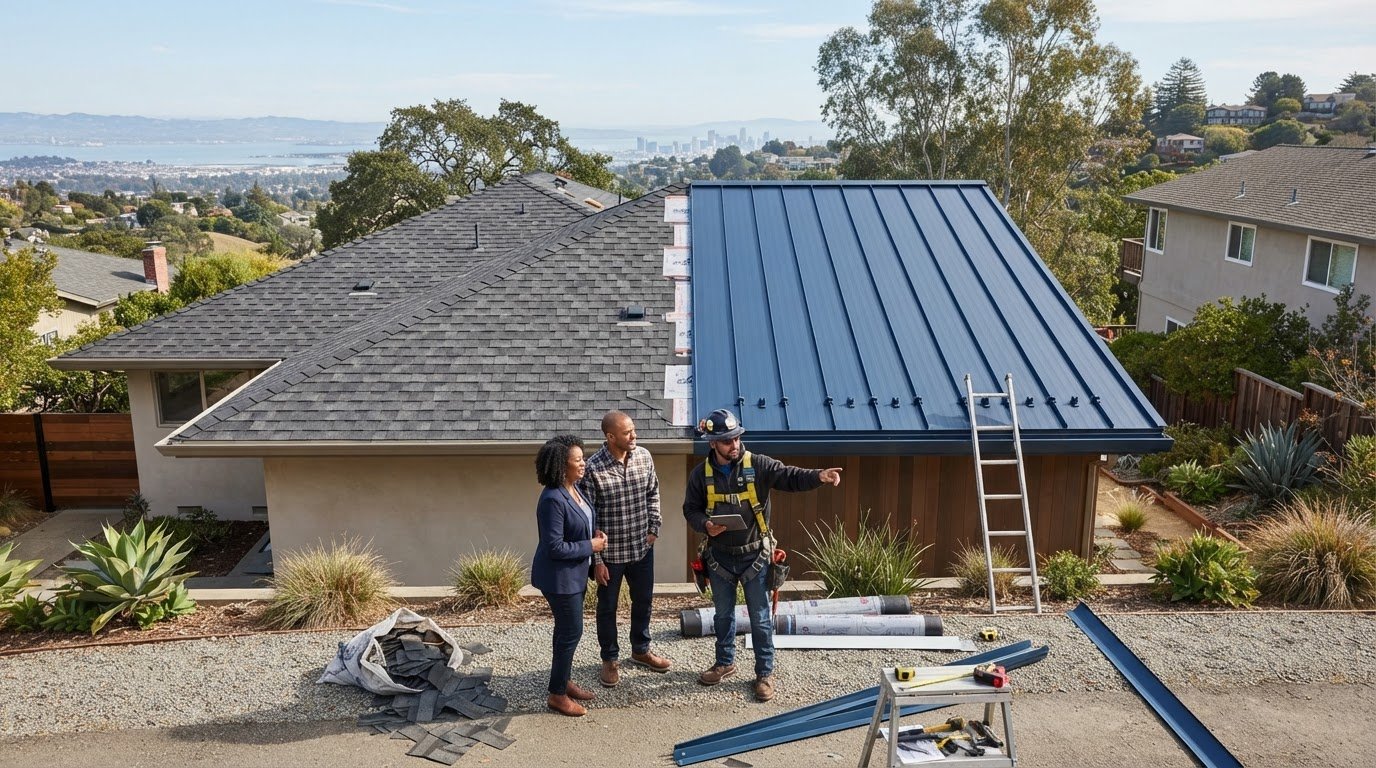
What happens to the rain that runs off your roof? Without gutters and downspouts to guide it away from the house, runoff can contribute to water damage, soil erosion, and problems around the foundation. Choosing the right gutter installation services means more than attaching a channel to the roof. The system needs to fit your roofline and property, with a clear route for water to leave the roof and drain away from the home.
Before starting, you may want to know which configuration suits your home, what installation involves, and how the work fits with other projects. This guide explains how gutters and downspouts manage roof runoff, which property details shape an installation plan, and what to expect during the project. It also covers practical ways to compare gutter configurations and prepare for the work.
GTE Construction & Roofing provides residential gutter installation and repair as part of its roofing and construction services. Serving San Francisco, Sacramento, Alameda County, and Contra Costa County, the company plans gutter projects around each home’s roofline, access, and drainage needs.
Key Takeaways
- Gutters and downspouts guide roof runoff away from your home, helping limit water exposure around exterior walls and foundations.
- A professional installation involves assessing the roof edge and fascia, planning downspout routes, and reviewing how the completed system directs water.
- Sectional and seamless gutters differ in how their channels are formed and joined. Roofline, access, and maintenance preferences help guide the choice.
- Before discussing a project, note existing gutter problems, access constraints, and where water overflows or collects.
- GTE Construction & Roofing provides gutter installation and repair for homes in San Francisco, Sacramento, Alameda County, and Contra Costa County.
Why Gutter Installation Services Matter for Your Home
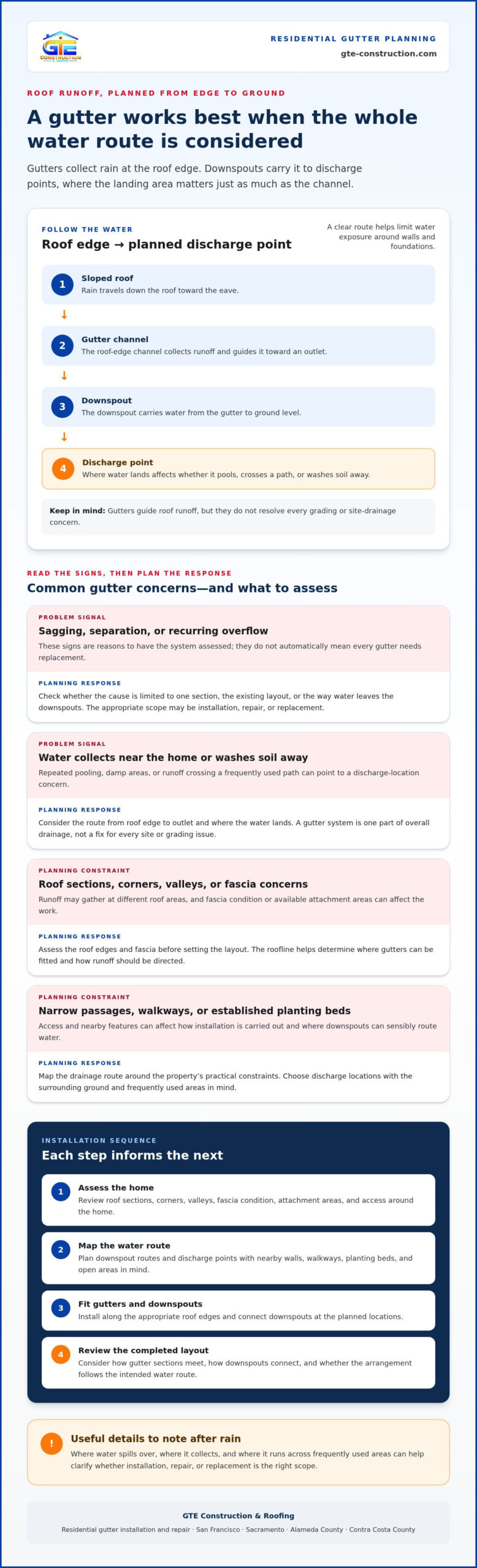
Rainwater moves off a roof quickly, but where it lands affects how much moisture reaches the home’s walls, foundation, and surrounding ground. A gutter system collects runoff at the roof edge and carries it through downspouts to planned discharge points. A gutter system is a network of roof-edge channels and downspouts designed to collect rainwater and direct it away from the home. This route can help reduce water exposure around exterior walls and foundations. Gutters are one part of a property’s overall drainage, however, and cannot address every issue with grading or site drainage.
Understanding the basic function of rain gutter systems shows why planning involves more than appearance. Where channels sit on the roof edge matters, but so does where downspouts release the water.
How gutters and downspouts manage roof runoff
Rain travels down a sloped roof to the eave, where it enters the gutter. The channel guides water toward an outlet, and a downspout carries it to ground level. The discharge point then determines whether water lands near a walkway, a planted area, or the home’s perimeter. A considered route avoids concentrating runoff in places where it could create persistent dampness or wash soil away.
For example, runoff from a roof section might enter a gutter, travel to a downspout at a corner, and exit near a garden bed. That moves water away from the roof edge, but the landing area still matters. If water repeatedly pools beside the house or crosses a path, the discharge plan may need attention. Gutters guide roof runoff; they do not resolve every grading or drainage concern on their own.
When installation or replacement may be worth considering
Sagging, separation from the roof edge, recurring overflow, or ongoing drainage concerns are reasons to have a gutter system assessed. These signs do not automatically mean every gutter needs replacement. The cause may be limited to one section, the existing layout, or the way water leaves the downspouts. An assessment helps clarify what work is appropriate.
Installation adds a gutter system where one is needed. Repair addresses a problem with an existing system, while replacement involves removing the current system and installing a new one. Replacement may make sense when the existing setup no longer suits the roof or property. Gutter installation services should consider the roof edge and the intended water route together, rather than treating the gutter channel as an isolated component.
After rain, note where water spills over, collects, or runs across frequently used areas. If runoff also affects soil or planting beds, erosion control landscaping offers broader context for managing water around the property. Looking at roof drainage alongside ground conditions helps clarify whether installation, repair, or replacement is the right scope.
What Professional Gutter Installation Involves
A well-planned installation follows a clear sequence: assess the home, map where water should go, fit the gutters and downspouts, and review the completed layout. Each step informs the next. Roof shape and condition affect where channels can be placed, while the surrounding space helps determine practical downspout routes and discharge locations.
A roofline assessment guides the installation plan by identifying where runoff gathers, how gutters can be attached, and where water should be directed. This planning makes the system fit the home’s actual roof edges and surroundings, rather than relying on the home’s overall size alone.
Assessing roof edges and drainage routes
An assessment considers roof sections, corners, valleys, and other areas where runoff may converge. It also includes the fascia, the board along the roof edge where gutters are commonly attached. The fascia’s condition and available attachment areas can affect preparation and installation scope. Access around the home matters as well, because it affects how the work can be carried out.
Next, the drainage route is considered from roof edge to discharge point. A clear path beside an exterior wall may allow a downspout to direct water toward an open area. A narrow side passage, nearby walkway, or established planting bed may call for a different route. The aim is to plan water movement around the property’s practical constraints, rather than placing downspouts wherever they are easiest to install.
Installing and reviewing the gutter system
Once the layout is set, gutters are fitted along the appropriate roof edges and connected to downspouts at planned locations. Proper alignment and secure attachment help guide water toward the outlets. The scope can vary with roofline complexity, fascia condition, access, and suitable discharge areas. The installation plan should reflect those conditions instead of relying on a one-size-fits-all layout.
After installation, a visual review can consider how gutter sections meet, how downspouts connect, and whether the arrangement follows the intended water route. This provides an opportunity to review connections and drainage direction without assuming that every site needs the same test or procedure. For general information on professional practices and industry resources, the Rain Gutter Association standards offer a useful point of reference.
Sharing details about recurring overflow, roof areas that collect runoff, and preferred discharge locations helps shape a plan for the property. GTE Construction & Roofing provides residential gutter installation and repair as part of its broader construction work. Homeowners planning a new system or addressing an existing one can discuss gutter installation or repair with GTE.
Choosing Gutter Installation Options for Your Property
Choose a gutter configuration to suit the home, not because one option is a universal upgrade. Roofline shape, corners, access around the house, and planned downspout routes all affect what may be practical. Maintenance preferences matter, too: a layout with several joints has different inspection considerations from one with longer continuous runs.
Sectional and seamless gutters describe how the channel is formed and joined. The distinction can help frame a discussion about fit, but seams alone do not determine whether a system will perform well in a particular home. The design and installation plan need to suit the roof edges and property conditions.
Sectional and seamless gutters: what homeowners should understand
Sectional gutters are made from separate lengths joined along the roof edge. Seamless gutters are formed as continuous runs for a particular roofline, though joints are still needed at corners and connections. The main difference is how the channel is configured. Roofline complexity, the number and placement of corners, access, and maintenance needs can all inform the decision.
| Configuration | Potential fit | Project considerations |
|---|---|---|
| Sectional | May suit roof edges planned in separate, manageable lengths. | Consider where sections meet, how corners connect, and how those joints fit the roof layout. |
| Seamless | May suit roof edges where longer continuous runs can be planned. | Consider the roofline, corners, access for installation, and the locations where sections must connect. |
Neither option is a recommendation on its own. Use the comparison to identify questions about your roof and maintenance priorities, then consider the full drainage plan. Material, color, dimensions, and product availability are details for the specific project, not conclusions to draw from a general comparison.
Matching gutter planning to Northern California homes
Homes in San Francisco, Sacramento, Alameda County, and Contra Costa County vary in roof shape, building layout, access, and space for downspout discharge. These property details are more useful than broad assumptions about a whole region. A home with several roof intersections, for example, may need a different layout discussion from one with long, straightforward roof edges.
Consider how a system will fit the home as a whole. Are there narrow side passages, walkways, planted areas, or few places for downspouts to release water? Does the roof have several corners or intersecting sections? These observations help focus a project discussion on configuration and maintenance. Professional gutter installation services should account for these practical conditions rather than treat one setup as right for every property.
How to Prepare for a Gutter Installation Project
A little preparation makes a project discussion more focused. Before reviewing gutter installation services, note where water causes concern and how the roof and surroundings affect access. These observations help describe the work without requiring you to diagnose the cause.
Details to gather before discussing the project
Start with a few practical details. Your notes do not need to be technical. Clear observations are enough to describe the home and what you have noticed.
- Location: Note the home’s city or county and which sides or roof areas are involved.
- Roofline: Identify visible roof sections, corners, or areas where water appears to gather or spill over.
- Existing gutters: Describe sections that sag, separate, or overflow, and whether the concern is isolated or recurring.
- Water routes: Note where downspouts currently release water and where runoff pools, crosses a path, or affects nearby planting areas.
- Related work: Mention whether roof work is planned, so the gutter scope can be discussed alongside the broader exterior project.
If you are planning a roof replacement or other major roof work, discussing the sequence of projects can help keep the scope clear. GTE’s guide to professional new roof installation provides related context for homeowners considering that work. Share any relevant plans early, along with recurring overflow concerns or preferred areas for water discharge.
Planning access and household logistics
Exterior work requires access around the parts of the home involved. Before the project, look at driveways, side passages, gates, and outdoor areas near the roof edges and downspouts. Clear access helps keep work areas organized. Noting tight spaces or obstacles gives the project team a clearer picture of the property.
Where practical, move vehicles away from active work areas and relocate vulnerable outdoor items, such as potted plants or lightweight furniture. Move or secure items that could be affected by activity near the home. Identify areas household members or visitors use often, such as an entrance, walkway, or garden, so those needs can be included in the project discussion.
Focus your preparation on what you can observe. You do not need to estimate dimensions or specify a gutter design. A clear account of where water goes now, where you would like it directed, and whether roofing work is planned gives the project a useful starting point. The work plan and household arrangements can then be discussed in relation to the home’s conditions.
Ready to put your observations into a project plan? Discuss your gutter installation project with GTE.
Gutter Installation Services from GTE Construction & Roofing
GTE Construction & Roofing provides residential gutter installation and repair as part of its roofing and construction work. As a licensed general contractor, the company brings a construction-wide perspective to projects involving the roof edge and water management around the home. GTE serves San Francisco, Sacramento, Alameda County, and Contra Costa County.
Residential gutter installation and repair
Every home has its own roofline, access conditions, and drainage concerns. GTE plans residential gutter work around these property-specific factors and the project scope, whether you need a new installation or work on an existing system. Sharing where overflow occurs, which roof areas are involved, and where downspouts currently release water helps clarify what needs attention.
A useful project discussion connects the visible gutter issue to the home’s overall layout. A concern at one roof edge, for example, may involve the gutter itself, the route to a downspout, or the discharge area below. Describing what happens during rain and identifying the affected part of the property establishes a practical starting point. The plan should reflect your home rather than assumptions based on a generic layout.
GTE provides both installation and repair, so the work can be considered in light of the existing system and your project goals. A homeowner planning gutters for a home without a system has different needs from someone addressing recurring overflow or a damaged section. Clear observations help keep that distinction in view as the scope is discussed.
A local construction partner for exterior projects
Gutter work often connects with broader questions about a home’s roof and exterior. GTE Construction & Roofing also provides new roofing and installation and roofing repair, giving homeowners a way to discuss related exterior work with a company focused on residential construction. Not every roof and gutter project needs to be combined. Considering the work together can help clarify planned tasks and how their scopes relate.
If roofing work is already planned, mentioning it during a gutter project discussion helps clarify the overall sequence and the areas of the home involved. If the gutter concern is separate, the discussion can focus on installation or repair. GTE serves homeowners in San Francisco, Sacramento, Alameda County, and Contra Costa County, with project planning based on the specific property.
Whether you are planning a new gutter system or need to discuss repairs, a clear description of your roofline and drainage concerns is a helpful first step. Contact GTE Construction & Roofing to discuss your gutter project and your home’s needs.
Make Your Next Step a Clear One
A dependable drainage plan starts with noticing how water behaves around your home. During or after rain, observe where runoff gathers, whether it spills over a roof edge, and where downspouts release it. These simple details can turn a general concern into a focused discussion about the right scope for your property.
With gutter installation services, planning matters as much as choosing a configuration. Consider how the system should work with your roof and outdoor spaces, and keep your priorities in view as you discuss the project. A clear starting point makes the decisions easier to organize.
GTE Construction & Roofing provides residential gutter installation and repair as a licensed general contractor, serving San Francisco, Sacramento, Alameda County, and Contra Costa County. Start a conversation about your gutter project with GTE Construction & Roofing. Share what you have observed and take the next step toward a plan suited to your home.
Frequently Asked Questions
How long does gutter installation take?
Installation time depends on the home and project scope, so one schedule will not fit every property. A straightforward roofline with clear access may involve less work than a home with multiple roof sections, difficult access, or existing conditions that need attention. Planning and installation are separate parts of the project. An assessment helps establish a realistic schedule and identify factors that could affect it.
Do gutters need to be replaced when a roof is replaced?
No. A roof replacement does not automatically mean the gutters need replacing. Their condition, attachment, and fit with the roof work all matter. A gutter system in sound condition may not need replacement, while damaged or poorly fitting sections could call for repair or replacement. Discussing both scopes together helps clarify how the roof and gutter work relate.
What happens if gutters are installed incorrectly?
Incorrect installation can interfere with water flow and lead to overflow, pooling, or discharge in unintended areas. Water that repeatedly spills near the home may contribute to damp exterior surfaces, soil erosion, or moisture concerns around the foundation. Poor attachment can also leave sections loose or out of alignment. If you notice these issues after installation, note where and when they happen so the cause can be assessed.
Are seamless gutters better than sectional gutters?
Neither configuration is automatically better for every home. Sectional gutters are assembled from separate lengths, while seamless gutters are formed in longer runs to fit a roofline. The number of corners, roof shape, access, and maintenance preferences help determine which arrangement may suit the property. A home with several roof intersections, for instance, has different planning considerations from one with long, simple roof edges.
Can new gutters be installed on an older home?
Yes, older homes can receive new gutters if the roof edge and attachment areas suit the planned work. The fascia’s condition and the roofline are important considerations. For homes in San Francisco, Sacramento, Alameda County, and Contra Costa County, age alone does not determine the right approach. An assessment can identify preparation needs and help shape a system plan around the property.
How often should gutters be cleaned?
Cleaning frequency depends on how quickly debris collects around your home. Trees close to the roof, for example, can add leaves and twigs that build up in channels or downspout openings. Look for visible debris and pay attention to overflow during rain instead of relying on a fixed interval that may not suit your property. If safe access is difficult, do not climb to inspect or clean the gutters yourself.