We understand that you’re looking for peace of mind rather than a temporary fix. This guide provides a professional perspective on gutter systems, moving beyond basic aesthetics to focus on material longevity and precision installation. By the end of this article, you’ll have a clear understanding of how different materials like aluminum and copper perform under pressure. We’ll also compare the reliability of seamless versus sectional profiles, giving you the confidence to select a system that offers both architectural beauty and lasting protection. From expert contractor insights to durability standards, we’ll help you find a solution that safeguards your property for the long term.
Key Takeaways
- Learn the functional differences between K-style and half-round profiles to ensure your system matches your home’s architecture while managing water volume effectively.
- Evaluate various types of gutters for homes by comparing the long-term durability of galvanized steel with the rust-resistant versatility of modern aluminum.
- Understand why seamless technology has become the professional standard for eliminating leak-prone joints and protecting your foundation from erosion.
- Discover how to size your drainage system based on regional rainfall intensity, ensuring your gutters can handle the specific demands of Northern California storms.
- Gain insight into the professional installation process, where precision anchoring and integration with your roofline create a unified defense for your property.
Popular Gutter Profiles: K-Style vs. Half-Round Designs
Selecting the right profile is as much about engineering as it is about curb appeal. When homeowners evaluate the various types of gutters for homes, they often choose between the modern efficiency of K-style and the classic elegance of half-round designs. A comprehensive Rain gutter overview reveals that while the primary goal is water diversion, the shape of the channel determines how effectively a home survives a Northern California downpour. The profile you choose influences everything from the volume of water the system can manage to the frequency of required maintenance.
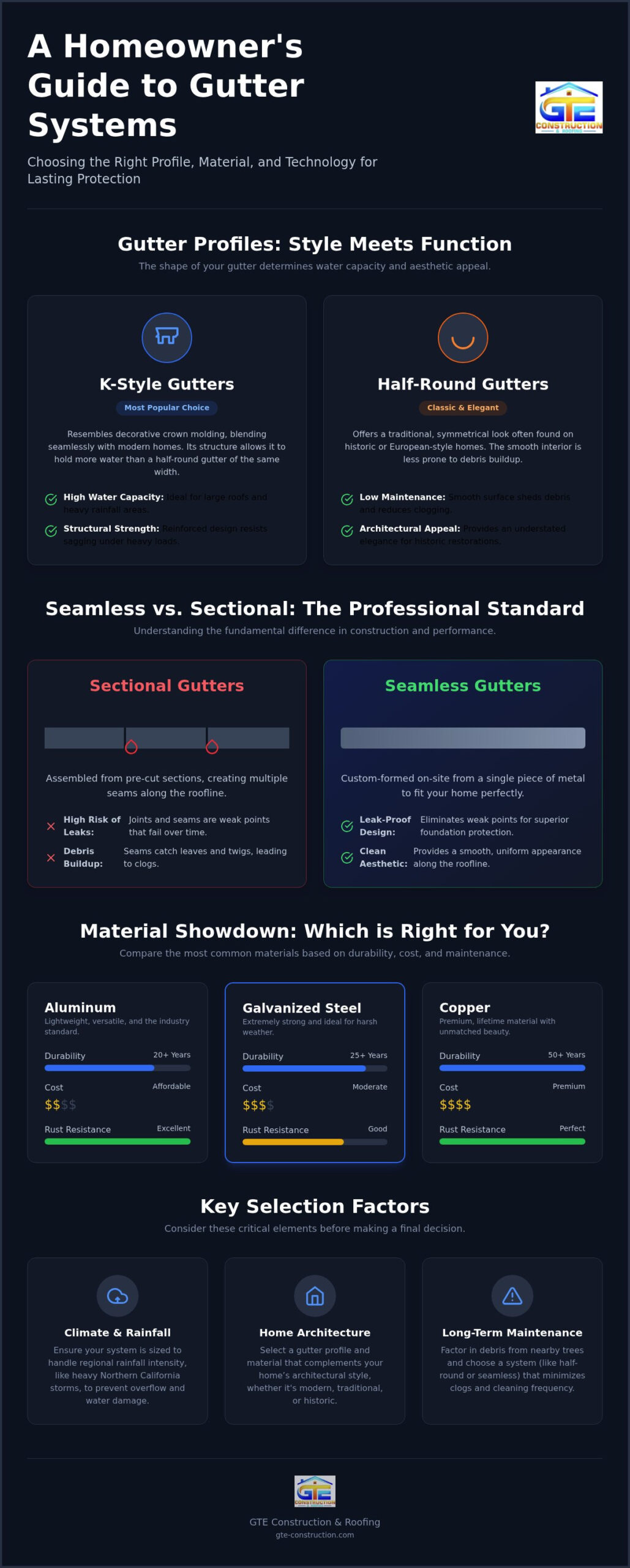
K-style gutters are the most prevalent choice in contemporary construction, named for the profile they create when viewed from the side. The outer face resembles interior crown molding, providing a decorative finish that blends seamlessly with the roofline. This design isn’t merely aesthetic; the unique folds in the metal provide structural reinforcement. This allows a K-style trough to hold significantly more water than a round gutter of the same width, making it highly effective for homes with large roof surface areas.
In contrast, half-round gutters offer a symmetrical, tube-like shape that is often found on historic properties or custom European-style builds. While they generally hold less water than their K-style counterparts, their smooth interior is a functional advantage. The lack of sharp corners or flat bottoms reduces the places where debris can snag and accumulate. For homeowners comparing different types of gutters for homes, the choice often hinges on whether they prioritize the high-capacity performance of K-style or the debris-shedding properties of a rounded system.
For specific architectural requirements where gutters are integrated directly into the roof or building structure, box gutters provide a specialized, industrial-grade solution. While less common in standard residential projects, they are essential for certain modern home designs or large-scale additions that require maximum water management without visible external troughs.
The Functional Benefits of K-Style Gutters
Modern residential construction favors K-style profiles because of their superior strength-to-weight ratio. The flat back of the gutter sits flush against the fascia board, which simplifies the anchoring process and ensures a secure fit that resists sagging under heavy loads. These systems are highly compatible with standard gutter guards and accessories, making them the preferred standard for suburban homes across the San Francisco Bay Area. This reliability is why we often integrate them into a new roof installation to ensure the entire roofing system works in harmony to protect the foundation.
Half-Round Gutters and Architectural Sophistication
Specialists recommend half-round profiles for luxury additions and historical restorations because the symmetrical shape provides an understated elegance that doesn’t distract from intricate rooflines. The rounded bottom facilitates faster water flow and reduces the risk of standing water, which can lead to corrosion in metal systems over time. It’s vital to remember that these systems require specialized external hangers and brackets. This necessitates a higher degree of precision during the installation process to maintain the correct pitch and structural stability, ensuring the system remains both beautiful and functional for decades.
Evaluating Gutter Materials: From Aluminum to Copper
Material selection is the foundation of a gutter system’s longevity. While the profile determines the volume of water diverted, the substance itself determines if the system will succumb to rust or sagging within a few years. When exploring the different types of gutters for homes, homeowners must prioritize a balance of initial cost, aesthetic flexibility, and structural endurance. Choosing a material that suits your local environment ensures that your drainage system remains a protective asset rather than a maintenance liability.
Aluminum currently serves as the industry standard, accounting for the vast majority of residential installations. It’s prized for being lightweight and naturally resistant to rust, which is a critical factor for homes in coastal Alameda County or the humid East Bay. For a detailed breakdown of how these materials compare across different climates, this guide to gutter types provides an excellent technical foundation. While aluminum is versatile, premium metals like copper or steel offer specialized benefits for specific architectural or environmental needs.
Why Aluminum Remains the Top Choice for Homeowners
Aluminum’s popularity stems from its incredible versatility and resilience. Unlike steel, it won’t corrode when the protective coating is scratched. This makes it ideal for the variable weather patterns seen from San Francisco to Sacramento. Manufacturers offer aluminum in a vast array of factory-finished colors, allowing us to match your gutters perfectly to your home’s existing exterior or trim. Because it’s a lighter material, it puts less strain on the fascia boards over time. This ensures the structural attachment remains secure even during heavy winter rains, preventing the sagging often seen in heavier, poorly maintained systems.
Premium Materials: The Case for Copper and Steel
For those seeking a “lifetime” solution, copper is the ultimate investment. It’s a material that evolves with your home, developing a distinctive green patina over time that adds significant architectural value. Copper systems can easily last 50 years or more with minimal maintenance; they don’t require painting and are naturally biocstatic, which helps inhibit the growth of moss and algae. If your property is located in an area with high debris or potential snow loads, galvanized steel or Galvalume offers maximum rigidity. These materials are much harder than aluminum, meaning they won’t dent easily from ladders or falling branches. While they require professional oversight to prevent rust at the cut edges, their strength is unmatched for demanding environments. If you’re unsure which material fits your budget, a consultation for integrated roofing and gutter services can clarify the best long-term ROI for your specific property.
Vinyl gutters exist as an entry-level, budget-friendly option, but they often fall short in professional applications. They are prone to becoming brittle and cracking under the intense California sun, and their sectional nature leads to inevitable leaks at the joints. For a reliable, high-standard result, we recommend sticking with metal-based systems that offer true structural integrity and peace of mind.
Seamless vs. Sectional Gutters: Which Offers Better Protection?
While many homeowners view gutters as a simple commodity, the choice between sectional and seamless systems is a choice between temporary convenience and permanent protection. When weighing various types of gutters for homes, the primary differentiator isn’t just the material, but how that material is assembled. Sectional gutters, while readily available at retail outlets, introduce a series of inherent vulnerabilities that professional-grade seamless systems simply eliminate. We prioritize seamless technology because it removes the most common failure point in residential drainage: the joint.
The “seam problem” is a fundamental engineering flaw in sectional systems. Every place where two pieces of gutter meet is a potential leak site. Even with high-quality sealants, the relentless cycle of thermal expansion and contraction causes these joints to shift. As the metal grows and shrinks with Northern California temperature swings, the sealant eventually degrades and pulls away. This creates a path for water to weep through the joints, often saturating the fascia board or dripping directly onto the foundation, which leads to the very erosion you’re trying to prevent.
The Inevitability of Leaks in Sectional Systems
The standard for high-quality seamless gutter replacement for long-term safety involves custom fabrication directly at your property. Using a specialized roll-forming machine, we extrude a single, continuous run of metal that matches the exact dimensions of your roofline. This process removes the need for intermediate joints, leaving only the corners and downspouts as areas requiring sealants. Gutter guidance for rainy climates emphasizes that a continuous run is the most effective way to manage heavy water volume without the risk of mid-span failure.
We secure these custom runs using heavy-duty internal hangers rather than traditional external spikes. This methodology provides a cleaner look and a much stronger attachment to the rafter tails. It ensures your gutters remain perfectly pitched and functional regardless of the weather. While the initial precision required for seamless installation is higher, the long-term cost analysis is clear. By eliminating the frequent repairs and potential water damage associated with joint failure, seamless gutters provide a superior return on investment and the quiet confidence that your home is truly protected; for those in the Pacific Northwest, seamlessgutters4less.com offers this standard of specialized care throughout the Puget Sound region.
Key Selection Factors: Climate, Architecture, and Maintenance
Choosing between the various types of gutters for homes involves more than selecting a color that matches your siding. It requires a technical assessment of your property’s specific environment, from the pitch of your roof to the density of the surrounding tree canopy. In Northern California, our weather patterns demand systems that can remain dormant during long dry spells and then perform flawlessly during intense atmospheric river events. A system that works in a desert climate will likely fail when faced with the concentrated runoff of a Sacramento winter storm.
Architecture also plays a defining role in your selection. A modern home in the East Bay might benefit from the clean lines of a dark bronze K-style system, while a historic restoration in San Francisco requires the traditional silhouette of half-round copper. Matching the gutter profile to your home’s era ensures that this functional component enhances your curb appeal rather than detracting from it. We treat gutters as an architectural trim, ensuring the color palette and material choice reflect the quality of the rest of your home’s exterior.
Regional Climate Considerations in Northern California
The choice between standard 5-inch and oversized 6-inch gutters often depends on your roof’s square footage and the presence of nearby foliage. If your home features a steep roof or is surrounded by large oaks or redwoods, the increased capacity of a 6-inch system prevents the overflow issues that plague smaller troughs. Pitch refers to the precise downward slope of the gutter run toward the downspout, which utilizes gravity to maintain water velocity and prevent stagnant pooling.
The downspout diameter is the most frequent bottleneck in residential drainage. Even the largest gutter cannot function if the downspout is too narrow to evacuate the water. We often recommend 3×4-inch downspouts for larger homes to ensure the system can handle debris without clogging. For those seeking low-maintenance living, high-quality micro-mesh guards are an essential add-on. These filters keep out needles and fine silt, ensuring your investment remains clear and functional year-round. If you’re ready to upgrade your home’s protection, we invite you to contact GTE Construction & Roofing for a professional assessment of your drainage needs.
Professional Gutter Installation: Ensuring Structural Integrity
Professional installation represents the final, vital step in securing your home’s exterior. While understanding the different types of gutters for homes is essential, the effectiveness of any material depends entirely on the precision of its attachment. A poorly installed system doesn’t just fail to drain water; it can actively cause damage by pulling away from the building or allowing moisture to seep into the roof deck. GTE Construction & Roofing approaches every project with the understanding that a gutter is only as reliable as the structure supporting it.
Our methodical process begins with a comprehensive structural audit of your home’s perimeter. We don’t simply swap out old hardware; we evaluate the health of your fascia boards to identify signs of wood rot that a standard handyman might overlook. As a licensed general contractor, we have the specialized expertise to repair these underlying issues before the new system is anchored. This ensures a stable foundation for your drainage system that will remain secure through decades of Northern California weather cycles.
We view these systems as part of a holistic water management strategy. This often involves coordinating your drainage with erosion control landscaping to ensure that once water leaves the downspout, it is managed safely away from your foundation. By integrating the gutter system with the rest of your property’s design, we provide a seamless defense against the long-term threat of soil erosion and moisture intrusion from the East Bay to Sacramento.
The Connection Between Roof and Gutter Health
Gutters are a critical component of a new roof installation. If they are hung at an incorrect height, they can interfere with the starter shingles or cause water to back up into the eaves. We utilize professional drip edges to bridge the gap between the roofline and the gutter channel. This metal flashing ensures that water cannot “wick” back under the shingles, which is the leading cause of roof deck rot. By identifying and repairing hidden decay during the installation process, we prevent small maintenance issues from evolving into major structural failures.
Investing in Long-Term Peace of Mind
Selecting the right types of gutters for homes is an investment in your property’s longevity. Our commitment to craftsmanship means we use only durable materials and high-standard anchoring techniques that exceed standard building codes. This level of professional installation serves as your best insurance against foundation erosion and interior water damage. When you partner with a seasoned expert, you gain more than just new hardware; you gain the security of knowing your home is fully shielded against the elements. If you’re ready to secure your home’s perimeter, please Contact GTE Construction & Roofing for a professional gutter assessment today.
Investing in Your Home’s Long-Term Resilience
Selecting a high-quality drainage system is a definitive step toward preserving your home’s value and structural health. We have explored how material choices like aluminum and copper impact longevity, and why professional seamless profiles remain the gold standard for leak prevention. Navigating the various types of gutters for homes requires balancing architectural aesthetics with regional climate data to ensure your foundation stays dry during heavy Northern California storms. For homeowners in the Central Valley looking for similar high-quality roofing standards, you can learn more about Infinite Roofing Solutions to protect your property’s integrity.
As a licensed general contractor serving San Francisco, Sacramento, and the East Bay, GTE Construction & Roofing brings specialized expertise to both roofing and structural drainage. We understand that your gutters serve as the first line of defense for your property, requiring precision anchoring and a deep understanding of water velocity. Whether you are planning a complete renovation or a targeted upgrade, our team provides the meticulous craftsmanship and reliable service your property deserves.
Secure your home’s foundation with professional gutter installation from GTE Construction & Roofing. Protecting your investment starts with a system you can trust; we look forward to helping you safeguard your home for years to come.
Frequently Asked Questions
What is the most durable type of gutter for a home?
Copper is widely considered the most durable material available for residential systems, often lasting fifty years or more with proper maintenance. While aluminum is the industry standard for its rust resistance, copper and galvanized steel offer superior structural strength. Steel is particularly effective for homes in Sacramento or the East Bay that face heavy debris or high-volume runoff. Choosing these premium materials ensures your home remains protected through decades of variable California weather.
How often should I replace my residential gutters?
Most aluminum gutter systems require replacement every twenty years, though this timeline depends heavily on maintenance and environmental exposure. If you notice persistent leaks at the seams, visible sagging, or water stains on your fascia boards, it’s likely time for an upgrade. High-end materials like copper can last significantly longer. Regular inspections by a licensed professional help identify when the structural integrity of your system has been compromised by age or storm damage.
Are seamless gutters really worth the extra cost?
Seamless gutters are a superior investment because they eliminate the joints that serve as the primary failure points in traditional drainage. By using a continuous run of metal custom-extruded at your property, we remove the risk of leaks and clogs caused by thermal expansion. This technology provides a cleaner aesthetic and significantly reduces long-term repair costs. For homeowners evaluating different types of gutters for homes, the peace of mind provided by a seamless system justifies the initial cost.
What size gutters do I need for a standard two-story home?
A standard two-story home typically utilizes 5-inch gutters, but 6-inch oversized systems are becoming the preferred choice for modern residential construction in Northern California. The larger capacity is essential for managing the high-velocity runoff from steep roof pitches or during intense atmospheric river events. We also recommend pairing larger troughs with 3×4-inch downspouts. This combination ensures that water moves quickly away from your roofline and foundation without the risk of overflowing during peak rainfall.
Can new gutters help prevent foundation issues or basement leaks?
Properly installed gutters are your home’s most effective defense against foundation erosion and basement moisture. By collecting runoff at the roofline and discharging it several feet away from the structure, you prevent soil saturation around your footings. This process is vital for maintaining the structural integrity of homes in areas like Contra Costa County where soil expansion can occur. Integrating your gutters with professional landscape design further ensures that water is managed safely and efficiently.
What is the best gutter material for homes near the coast in Alameda?
Aluminum is the most practical choice for coastal climates like Alameda because it is naturally resistant to the corrosive effects of salt air. Unlike steel, aluminum won’t rust if the surface is scratched or dented by wind-blown debris. Copper is another excellent coastal option that develops a protective patina over time. Both materials offer the durability needed to withstand the moist, salty environment while maintaining their structural integrity and preventing damage to your home’s exterior.
Do I need to replace my gutters when I get a new roof?
Replacing your gutters during a new roof installation is highly recommended to ensure the entire water management system functions as a single, cohesive unit. This allows for the proper installation of drip edges and ensures that the new gutters are perfectly pitched to match the updated roofline. It also gives us the opportunity to inspect and repair any underlying fascia rot. Coordinating these services prevents the need for future modifications that could compromise your new roof’s warranty.
How do I know if my gutters are properly pitched?
You can identify a proper pitch by observing how water moves through the channel during a rainstorm; it should flow steadily toward the downspout without pooling. A standard professional installation involves a slope of roughly one-quarter inch for every ten feet of gutter run. If you see standing water or debris accumulating in a specific section, the pitch may have shifted due to loose hangers or structural settling, requiring a professional adjustment to restore efficiency.