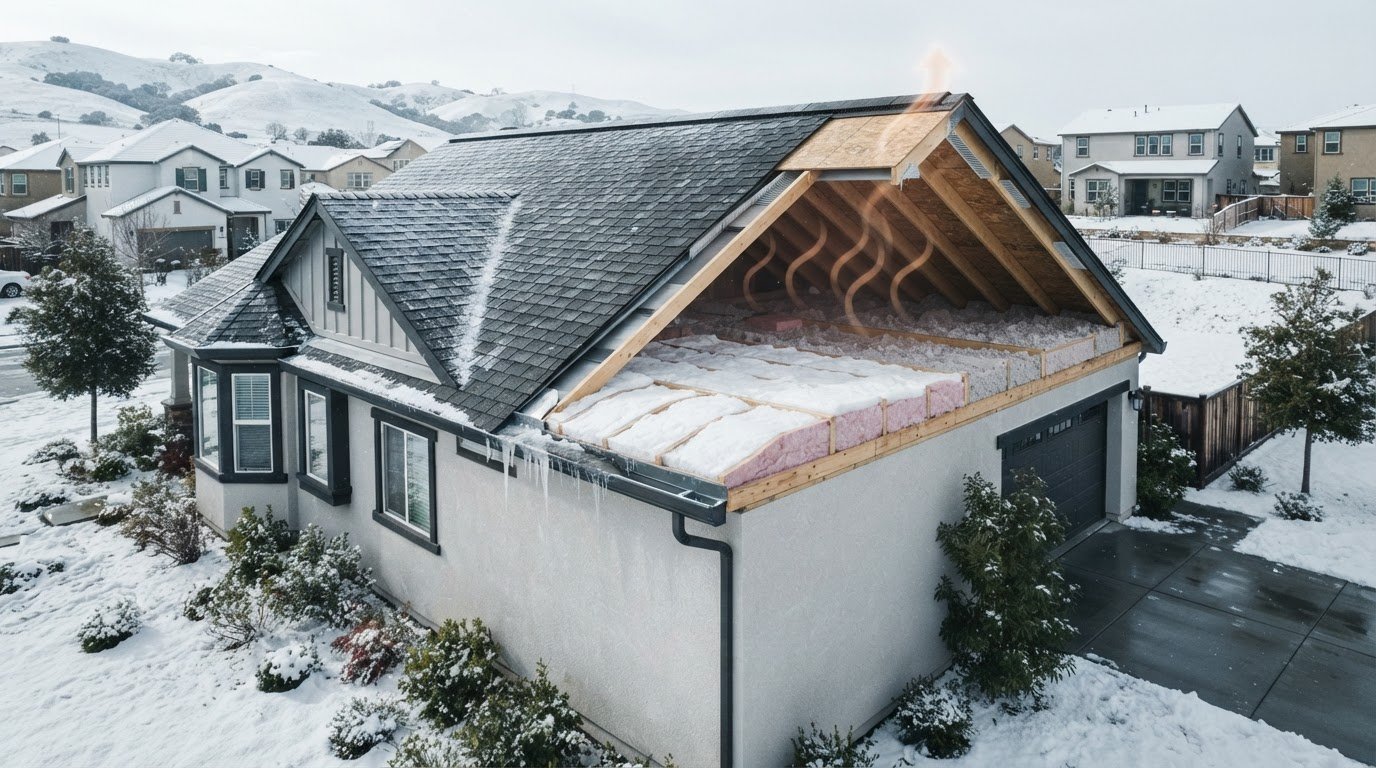
What if the first contractor to recommend a new roof isn’t the only one worth listening to? Roof replacement for homeowners should begin with evidence, not pressure: visible damage, recurring leaks, or other signs that repairs may no longer be practical. Ask what the inspection found and how those findings support the recommendation before deciding.
It’s understandable to feel uncertain when a major project involves technical details, different proposals, and questions about permits or disruption at home. A clear assessment and a defined scope make it easier to compare options, while planning ahead can surface potential complications before work begins.
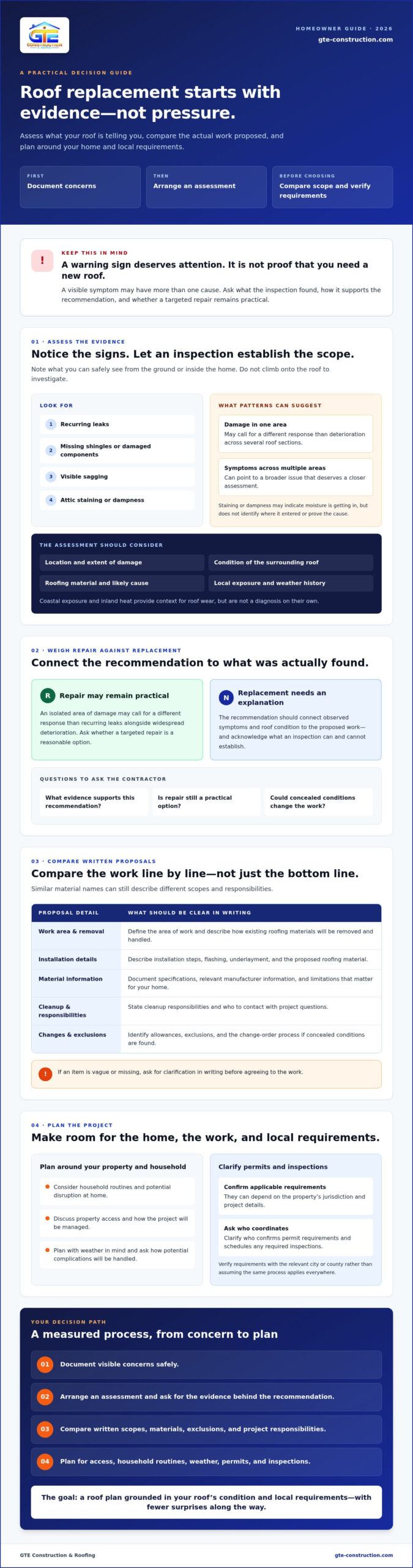
This practical 2026 guide explains how to assess your roof, weigh repair against replacement, and compare contractor proposals for scope, materials, and project management. You’ll also learn what to clarify about permits, scheduling, and unexpected work, and how to evaluate a local contractor. The goal is a replacement plan grounded in your roof’s condition and local requirements, with fewer surprises along the way.
Key Takeaways
- Visible wear doesn’t automatically mean you need a new roof. Learn which signs may indicate that repair alone isn’t enough.
- Use a written proposal to compare project scope, materials, roof removal, flashing, underlayment, cleanup, and exclusions.
- Ask contractors to explain their assessment and whether repair remains a practical option.
- Plan around your property, household routines, access, and weather. Confirm permit and inspection requirements with your local jurisdiction.
- Follow a measured process: document concerns, arrange an assessment, compare scopes, and verify requirements before choosing a contractor.
When Does a California Home Need Roof Replacement Instead of Repair?
Visible wear can be unsettling, but it doesn’t automatically mean your roof needs full replacement. A missing shingle or a leak near one roof feature may point to limited damage. The same symptoms across several areas could signal a broader issue. For roof replacement for homeowners, the first step is to understand what an inspection finds, rather than deciding based on a single mark or stain.
A roof is a system of covering and supporting components, not just the visible surface. This overview of how roofs are constructed can help explain why a visible symptom may have more than one possible cause. An appearance-based observation alone can’t confirm hidden damage or establish that replacement is necessary.
Which roof symptoms deserve a closer look?
Arrange a professional evaluation if you notice recurring leaks, missing shingles, visible sagging, or roof components that appear damaged. Check for signs indoors, such as attic staining or dampness. These may indicate moisture is getting in, but they don’t reveal where it entered or prove what caused it.
Pay attention to the pattern and location. Damage limited to one area may call for a different response than deterioration across multiple roof sections. Note what you can see safely from the ground or inside the home. Don’t climb onto the roof to investigate.
When might repair remain a reasonable option?
Before recommending repair or replacement, a contractor should assess the location and extent of the damage, the condition of the surrounding roof, the roofing material, and the likely cause. An isolated area of damage may call for a different response than recurring leaks alongside widespread deterioration. Ask what evidence supports the recommendation and whether a targeted repair is practical.
A warning sign deserves attention, but it isn’t proof that a roof needs replacement. A clear explanation should connect the symptoms observed to the proposed work and acknowledge what an inspection can and can’t establish.
Local conditions also matter. Coastal exposure, inland heat, and the property’s weather history can affect how a roof wears over time. These factors provide context for an assessment, but they aren’t a diagnosis on their own. Ask the contractor to explain how the roof’s condition and local exposure informed the recommendation, and what findings make repair or replacement the more suitable next step.
What Should a Homeowner Check in a Roof Replacement Proposal?
A proposal is useful only if it makes clear what work is included and how the contractor arrived at that scope. Compare written proposals line by line, not just by their summary or bottom line. Ask how the existing roof was assessed, which conditions support the recommendation, and whether the scope may change if removal reveals concealed conditions.
How can homeowners compare roofing materials?
Material choice should reflect the roof’s design, local exposure, and your maintenance expectations. Asphalt shingles are one common category, but they aren’t the only possible option. Ask the contractor to identify the proposed material and document its specifications, relevant manufacturer information, and any limitations that matter for your home. For more installation context, see this guide to professional new roof installation.
Which details should every written proposal clarify?
Look for a defined work area and a description of roof removal, installation steps, flashing, underlayment, and cleanup responsibilities. Check how existing materials will be handled and what happens if concealed conditions require a change. The proposal should also identify allowances, exclusions, the change-order process, and who to contact with project questions. Compare like with like: two proposals may name similar materials but include different work.
A useful roofing proposal clearly describes the scope of work and each party’s responsibilities. If an item is vague or missing, ask for clarification in writing before agreeing to the work.
What should you clarify about permits and inspections?
Ask whether the proposal includes permit coordination and who will confirm applicable permit and inspection requirements. Requirements can depend on the property’s jurisdiction and project details, so verify them with the relevant city or county rather than assuming the same process applies everywhere. Clarify who schedules any required inspections and how they fit into the project sequence.
A thorough proposal comparison means reviewing scope, material details, responsibilities, and how questions or changes will be handled, not simply choosing the shortest proposal. For a local option, GTE’s roofing and installation services include residential roof replacement, installation, and repair.
How Can Homeowners Evaluate Contractors and Resolve Repair-versus-Replacement Concerns?
Choosing a roofer is easier when you compare the quality of the assessment and the clarity of the proposed work, not just the confidence of the sales pitch. A sound recommendation for roof replacement should connect observed conditions to a defined scope and explain why repair is or isn’t practical.
What should homeowners ask before choosing a roofer?
Use the same process to evaluate each contractor:
- Check credentials. Look up the contractor’s current license information through the California Contractors State License Board license lookup. Confirm the details match the contractor and the work being proposed.
- Request a written scope. Ask for a clear description of the proposed work, the areas it covers, and any exclusions. Written details make it easier to compare contractors on equal terms.
- Ask about project communication. Find out who will supervise the work, communicate schedule changes, coordinate site access, and answer questions as the project progresses.
- Review relevant experience. Request references or examples of similar projects, then check whether they reflect the type of roof and scope you’re considering.
- Clarify how changes are handled. Ask how existing conditions will be documented and how unexpected discoveries will be explained before additional work is proposed.
How can you assess a replacement recommendation fairly?
Ask the contractor to identify the conditions observed during the assessment and explain how each one affects repair options. If replacement is recommended, ask what makes a repair unsuitable. If repair may be appropriate, request a separate repair scope when available so you can compare what it addresses and what it leaves unchanged.
Compare the explanations and supporting documentation. Photos or written notes can help you understand which areas were assessed and how the proposed scope relates to the findings. If a contractor relies on urgency or makes broad claims without explaining the evidence, pause and ask specific follow-up questions. You can seek another assessment if the recommendation remains unclear.
A useful comparison doesn’t require every contractor to reach the same conclusion. It does require each recommendation to be explained in terms you understand, including the limits of repair and the reasons for replacement. That gives you a basis for weighing options without feeling pressured to decide before your questions are answered.
GTE’s website outlines its roofing services, including residential roof replacement, installation, and repair.
How Should You Plan a Roof Replacement in the Bay Area or Sacramento Region?
Good planning starts with the property, not a one-size-fits-all schedule. In the Bay Area and Sacramento region, site access, the home’s layout, household routines, and the forecast can all affect how work is coordinated. Discuss these details with the contractor in advance, and treat any proposed schedule as subject to weather, inspection findings, and local approval.
What local requirements should homeowners verify?
Contact the building department for the city or county where the property is located to confirm current roofing permit and inspection requirements. Ask the contractor how the proposed roof assembly addresses applicable state and local building requirements, and clarify who will coordinate permit and inspection steps. Don’t assume neighboring cities follow identical procedures. Requirements can vary by jurisdiction and project.
Separate what’s established from what still depends on review. The written proposal may define the planned work and materials, while permit conditions, inspection decisions, weather, or conditions uncovered during the project may affect the next steps. Ask how changes will be communicated and documented before work proceeds.
How can a household prepare for the work?
Before the start date, agree on practical arrangements with the contractor. Confirm where vehicles can be parked, which areas need to remain accessible, and how the crew will reach the work area. Move or protect outdoor items near the home, and discuss precautions for landscaping, driveways, and entry areas where materials or debris may pass.
Ask how debris will be collected, what daily cleanup includes, and how you’ll be notified if a forecast change affects the plan. Make sure everyone at home knows which entrances or outdoor spaces may be affected and who to contact with questions. A clear communication plan helps you adjust routines without assuming a fixed work duration.
For broader planning principles, review this home renovation project management guide. The same habits apply to roofing: clarify responsibilities, sequence, access, and how decisions will be handled if conditions change.
For homeowners in San Francisco, Sacramento, Alameda County, and Contra Costa County, GTE Construction & Roofing provides residential roofing and gutter services. Learn about GTE’s roofing services and consider what needs to be planned for your home.
What Are the Next Steps for a Residential Roof Replacement with GTE?
A roof project doesn’t need to begin with a commitment to replace the entire roof. Start by recording what you’ve noticed, then use an assessment and a clear written scope to understand your options. This measured process helps you move from concern to an informed decision, whether repair or replacement is the appropriate next step.
What information should you gather before requesting an assessment?
Before speaking with a roofing contractor, collect details that can help explain the history of the concern. Note when a leak or visible change first appeared, where it occurs, and whether it returns after particular weather. Gather any roof records you have, including details of previous repairs. Photos taken safely from the ground can also help document visible changes. Don’t climb onto the roof to take pictures.
Prepare questions in advance, such as:
- What conditions did the assessment identify, and how do they affect repair options?
- Which roofing materials are being considered, and what specifications or limitations should I understand?
- What work does the proposed scope include, and what might need clarification?
- Which permit or inspection requirements should I confirm with my local jurisdiction?
How can you move from assessment to a clear project plan?
Once you have a written proposal, review it carefully before authorizing work. Confirm the work area, installation steps, cleanup responsibilities, and exclusions. Ask the contractor to explain anything unclear, including how changes will be documented if unexpected conditions are found. Make sure you understand who will communicate project updates, how site access will be coordinated, and how change orders are handled.
Compare the recommendation with the evidence and the alternatives discussed. If repair is presented as an option, make sure you understand what it addresses. If replacement is recommended, ask how the proposed scope responds to the assessment findings. For homeowners considering roof replacement, these conversations help build a project plan based on documented conditions rather than assumptions.
GTE Construction & Roofing provides residential roof replacement, new roof installation, and roofing repair in San Francisco, Sacramento, Alameda County, and Contra Costa County. If you’re considering work on your home, discuss your roof concerns, proposed project scope, and questions about next steps with GTE. A clear conversation can help you identify what to clarify before deciding how to proceed.
Make Your Roofing Decision with Confidence
A sound roof replacement decision starts with evidence. Visible wear deserves attention, but an assessment should clarify whether repair remains practical or broader work is warranted. Then compare written proposals for scope, materials, exclusions, and how the project will be managed.
For roof replacement for homeowners in California, planning also means confirming permit and inspection requirements with the local jurisdiction and discussing access, cleanup, and weather-related adjustments before work begins. Clear questions and written answers help you distinguish what’s established from what may depend on inspection or approval.
GTE Construction & Roofing provides residential roof replacement, installation, and repair in San Francisco, Sacramento, Alameda County, and Contra Costa County. If you’re weighing repair against replacement or want to discuss a project scope, contact GTE Construction & Roofing about your roofing project. A thoughtful assessment and clear plan can help you take the next step with greater confidence.
Frequently Asked Questions
How do I know if my roof needs replacement or just a repair?
You’ll need a professional assessment to determine whether repair or replacement is appropriate. Recurring leaks, missing shingles, widespread deterioration, or visibly sagging areas deserve closer attention, but a single symptom doesn’t prove the whole roof needs replacing. Ask the contractor to identify the affected areas, explain what the findings mean for repair options, and describe why the proposed work fits your roof’s condition, material, and pattern of damage.
Can a roofer recommend replacement without showing evidence of roof damage?
A recommendation should come with a clear explanation of the conditions observed and how they support the proposed scope. Ask for photos, notes, or a written description of the affected areas, and ask directly whether repair is viable. If the assessment or reasoning remains unclear, you can seek another opinion before deciding. A roof replacement for homeowners should be based on documented findings, not pressure or unsupported claims.
What should a roof replacement estimate include?
A useful estimate should describe the work area, removal approach, proposed materials, installation steps, flashing, underlayment, and cleanup responsibilities. It should also state exclusions, allowances, and how changes will be documented if unexpected conditions arise. Ask who will coordinate permits and inspections, subject to requirements in your jurisdiction. Before agreeing, clarify vague wording so you understand what the estimate includes and what may require a separate decision.
How do I compare roof replacement proposals from different contractors?
Compare proposals by scope and responsibilities, not just by the summary or final figure. Check that each describes the same work area, removal, materials, installation details, cleanup, and exclusions. Ask each contractor to explain the assessment and recommendation, including whether repair is an option. Also compare how questions, schedule changes, and unexpected discoveries will be handled. Homeowners in San Francisco, Sacramento, Alameda County, and Contra Costa County should verify contractor credentials and project requirements locally.
Do I need a permit to replace my roof in California?
Permit and inspection requirements depend on the property’s location and project details, so confirm them with the building department for your city or county. Ask the contractor who will clarify applicable requirements, coordinate permit steps, and arrange any required inspections. Don’t assume the process is identical across California or between nearby jurisdictions. Before work begins, make sure responsibilities and approval-dependent steps are explained in writing.
How long does a residential roof replacement take?
There isn’t one reliable timeline for every home. The schedule can depend on the roof’s size and layout, the work included, access, weather, inspection requirements, and conditions discovered during removal. Ask the contractor for an estimated sequence and what could affect it, including how forecast changes or permit reviews will be communicated. Treat the schedule as a planning estimate, not a fixed promise, and confirm how updates will reach your household.
What should homeowners do to prepare for roof replacement work?
Before the agreed start date, confirm where workers and materials can access the property, discuss parking, and move or protect outdoor items near work areas. Ask how the contractor will manage debris, daily cleanup, and changes caused by weather or newly discovered conditions. Make sure household members know which entrances or outdoor spaces may be affected and who to contact with questions. Take roof photos only from a safe place on the ground.