Did you know that approximately one in 35 insured homes files a wind or hail claim every single year? While a storm might seem like a passing inconvenience, hail larger than one inch often causes structural compromises that aren’t visible from the driveway. If you’re worried about hidden leaks or feeling overwhelmed by insurance paperwork, you aren’t alone. It’s natural to feel a sense of urgency about hail damage roof repair, yet you deserve a solution that prioritizes long-term stability over a rushed, temporary fix.
We’ve designed this guide to help you move from uncertainty to a position of quiet confidence. You’ll learn how to identify hidden structural issues, navigate the claims process effectively, and ensure your restoration meets the highest standards of craftsmanship. We will examine the specific methodology required for a durable repair and explain how to find a local, licensed professional who understands our region’s unique architectural needs. By following these steps, you can secure your home’s integrity and enjoy the peace of mind that comes with a job done right.
Key Takeaways
- Identify the subtle signs of functional impact, such as shingle mat fractures and granule loss, to prevent long-term structural rot.
- Learn why a systematic inspection of both soft metals and shingle surfaces is vital for a comprehensive assessment of your home’s integrity.
- Protect your property by verifying local contractor credentials and recognizing the red flags of aggressive out-of-state solicitation.
- Understand the methodology behind a professional hail damage roof repair, including the importance of a full material tear-off to inspect the underlying deck.
- Discover how impact-resistant materials can enhance your roof’s durability and provide lasting protection against future environmental threats.
Identifying Hail Damage: Signs Your Roof Needs Professional Assessment
Hail damage occurs when high-velocity ice impact displaces protective granules or creates fractures in the shingle mat. Understanding what causes hail helps explain why even small stones can be destructive. The kinetic energy from these impacts can compromise the roofing system’s ability to shed water effectively. While some damage is immediately obvious, much of it remains hidden until the next heavy rain reveals a leak. Identifying these issues early is the first step in maintaining your home’s structural health.
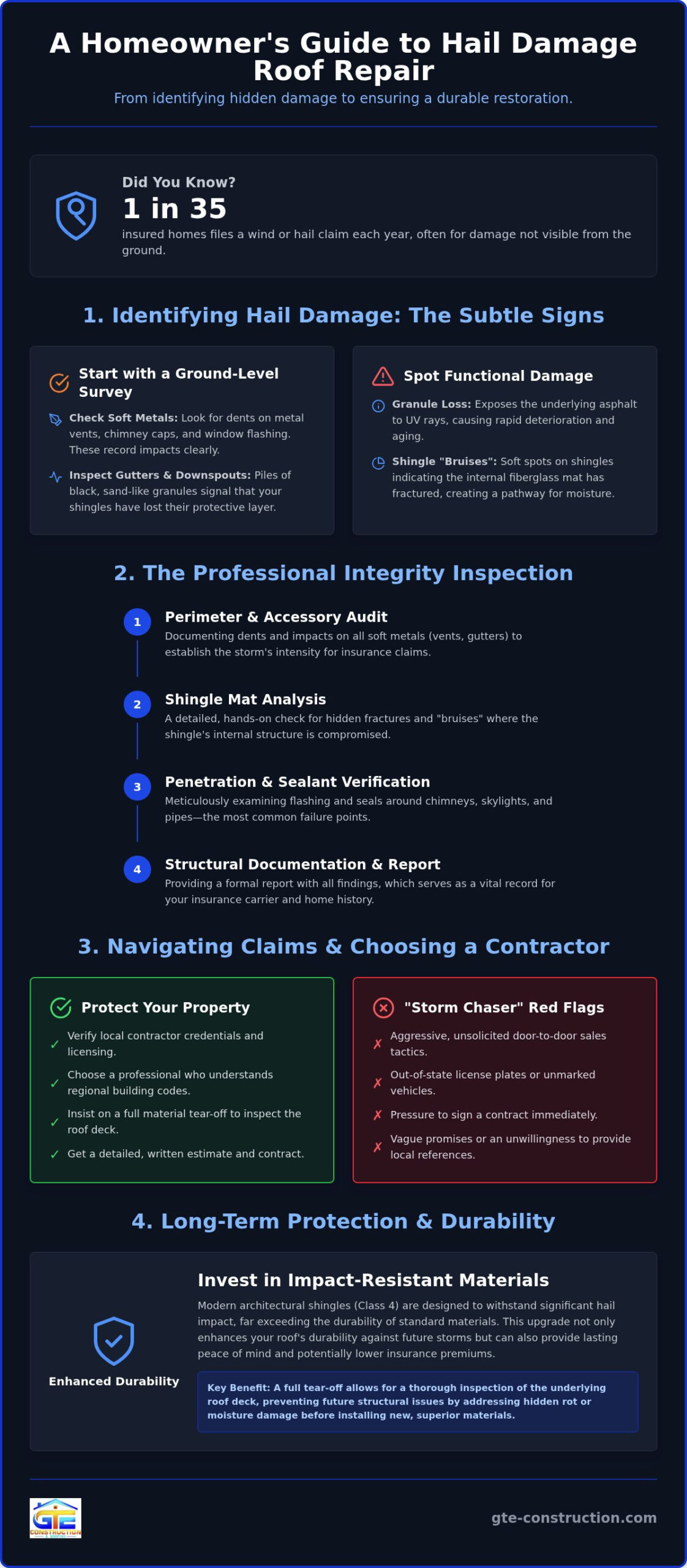
You don’t need to climb a ladder to find the first clues of a problem. A thorough ground-level survey often provides enough evidence to justify a professional inspection. Start by looking at “soft metals” around your property. Dented metal vents, chimney caps, or window flashing record impacts more clearly than asphalt shingles. Check your gutters and downspouts for excessive granule loss. If you see piles of mineral grit at the base of your downspouts, your shingles have lost their primary defense against the sun and rain. This loss of protection often makes a professional hail damage roof repair necessary to prevent premature aging and material failure.
Spotting Functional vs. Cosmetic Damage
It’s vital to distinguish between surface-level dents and functional failures that threaten your home’s interior. Dented gutters or downspouts are often a precursor to roof leaks because they demonstrate the intensity of the storm’s impact. Shingle granules serve a critical role in providing UV protection and fire resistance. When these granules are stripped away, the underlying asphalt becomes exposed to the sun, leading to rapid deterioration. You should also look for “bruises,” which are soft spots where the hail has compromised the asphalt layer. These areas feel slightly indented, similar to the soft spot on a piece of fruit, signaling that the internal mat has fractured and can no longer keep moisture out.
Why Immediate Action Prevents Structural Decay
Delaying a repair can turn a manageable issue into a structural crisis. Even micro-cracks allow moisture to reach the roof deck, where it can cause wood rot and mold growth over time. This moisture also compromises your attic insulation, leading to higher energy bills and a less comfortable home environment. Thermal shock is the rapid expansion and contraction of roofing materials caused by the sudden temperature drop during a hailstorm, which significantly accelerates material fatigue. Addressing these issues through a timely hail damage roof repair ensures the long-term safety and aesthetic integrity of your property while avoiding the high costs of total structural restoration.
The Professional Roof Integrity Inspection: A Systematic Approach
A professional assessment of your property is much more than a cursory glance at the shingles. It is a methodical audit of the entire roofing system, designed to identify both obvious failures and latent defects that could compromise your home’s safety. We follow a disciplined four-step process to ensure no detail is overlooked, providing a clear roadmap for any necessary hail damage roof repair.
- Perimeter and Accessory Audit: We begin with a comprehensive check of all soft metals, including gutters, downspouts, and vent hoods. By documenting the size and frequency of dents on these surfaces, we establish a verifiable pattern of impact that confirms the storm’s intensity.
- Shingle Mat Analysis: Our team performs a detailed analysis of the shingle mat to locate latent fractures. We look beyond surface granule loss to find “bruises” where the internal fiberglass mat has been broken, as these fractures are the primary entry points for moisture.
- Penetration and Sealant Verification: We meticulously examine the flashing and sealants around chimneys, skylights, and plumbing stacks. These transition points are often the first to fail under the stress of high-velocity impact.
- Structural Documentation: Every finding is recorded in a formal report. This documentation serves as a permanent record for your insurance carrier and provides a baseline for your home’s structural history.
Assessing the Roof Deck and Support Structure
True restoration requires looking beneath the surface. We evaluate the condition of the underlayment and the roof deck itself, checking for signs of sagging or moisture infiltration from the attic side. This internal perspective is vital because a damaged deck cannot properly support new materials. For a deeper understanding of this methodology, you can explore our professional roof integrity inspection services, which detail how we protect your home’s skeleton. If you suspect your roof has been compromised, reaching out for a professional structural assessment is the most reliable way to ensure your family’s safety.
Documentation for Peace of Mind
High-resolution photo evidence of all impact sites is the cornerstone of a successful restoration project. A written report from a licensed contractor carries significantly more weight than a simple estimate because it provides a technical justification for the scope of work. This detailed record helps you prepare an accurate “proof of loss” for your insurance adjuster, ensuring that the full extent of the damage is recognized. By prioritizing precision in our documentation, we help you navigate the complexities of hail damage roof repair with complete transparency and confidence.
Navigating Insurance Claims and Avoiding Storm Chaser Scams
The aftermath of a significant storm often brings a wave of “storm chasers” to local neighborhoods. These are out-of-state contractors who follow weather patterns to secure quick contracts before moving on to the next disaster. You can often identify them by their out-of-state license plates and high-pressure, door-to-door solicitation tactics. While their offers for a “free roof” may sound tempting, these fly-by-night operations frequently lack the necessary understanding of California building codes and rarely remain in the area to honor long-term warranties. Choosing a partner for your hail damage roof repair requires a focus on local stability and verified credentials rather than aggressive sales pitches.
Understanding your insurance policy is the next critical step in the restoration process. Most homeowners carry either Replacement Cost Value (RCV) or Actual Cash Value (ACV) coverage. An RCV policy covers the full cost of replacing your roof at current market prices, minus your deductible. In contrast, an ACV policy only pays out the depreciated value based on the roof’s age, which can leave you with substantial out-of-pocket expenses. Reviewing these details with a professional helps you set realistic expectations for the financial scope of the project. Before finalizing your budget, it is also worth understanding the cost to replace roof systems in 2026, including how updated California building codes and material requirements affect your total investment. A disciplined contractor will review your summary of loss to ensure the proposed scope of work aligns perfectly with your coverage limits.
Working with Your Insurance Adjuster
Your contractor should act as a technical advocate during the insurance adjuster’s site visit. By attending this meeting, the contractor can point out the specific fractures and soft-metal damage identified during the initial systematic inspection. This collaborative approach ensures the adjuster has a complete picture of the structural compromises. If a claim is initially underpaid or denied, we use high-resolution photo evidence and detailed structural reports to request a re-evaluation. It’s a standard professional practice to never sign a construction contract until your insurance claim has been fully approved and the scope of work is finalized.
Vetting Your Local Roofing Contractor
Reliability is built on a foundation of local presence and transparency. When vetting a professional, verify they maintain a permanent office address within the San Francisco or Sacramento regions. You should also confirm their standing with the California State License Board (CSLB) and ensure they carry active workers’ compensation and liability insurance. A reputable expert doesn’t need to use high-pressure tactics. Instead, they rely on a track record of precision and quiet confidence to earn your trust. This methodical vetting process ensures your hail damage roof repair is handled by a team that is deeply invested in the long-term safety of the local community.
The Hail Damage Roof Repair Process: Restoring Structural Stability
Once your insurance claim is finalized, the physical restoration of your property begins. A professional hail damage roof repair is a methodical structural overhaul that goes far beyond simply swapping out damaged shingles. The process starts with meticulous site preparation to protect your home’s exterior and landscape design. We utilize specialized tarps and barriers to shield your windows, siding, and ornamental plants from falling debris, ensuring your property remains pristine throughout the construction phase.
The core of a reliable restoration is the full material removal, often called a “tear-off.” While some contractors may suggest a roof overlay, we prioritize stripping the roof down to the wooden sheathing. This step is essential for a true assessment of the roof deck’s integrity. In many Northern California municipalities, including Sacramento, local building codes require a full tear-off to verify that the underlying structure is free from rot or moisture damage. Once the deck is exposed, we replace any compromised plywood and install a high-performance, synthetic underlayment that acts as a secondary moisture barrier.
The installation phase focuses on the precision application of new materials. We use high-quality shingles and specialized fasteners to ensure the new system can withstand future environmental stress. Every component, from the starter strips at the eaves to the ridge vents at the peak, is installed with a focus on longevity and wind resistance. If you are ready to secure your home with a team that values precision, you can request a comprehensive roofing restoration from our local experts.
Precision Flashing and Gutter Integration
A roof is only as effective as its drainage system. During the restoration, we pay close attention to “soft metals” like valley flashing and vent boots, which are often the first components to fail after a hailstorm. Professional gutter repair is often integrated into this stage to ensure that water moves efficiently away from your foundation. We verify that the roof edge and gutter system are seamlessly aligned, preventing the type of backsplash that causes fascia rot and siding damage.
Quality Control and Final Site Cleanup
The final phase of our process involves a rigorous quality control audit. We perform a “Magnetic Sweep” of your driveway, lawn, and walkways to ensure that every stray nail is safely removed from your property. A final structural walkthrough verifies that all components meet or exceed local building codes in San Francisco and Contra Costa County. We conclude the project by providing you with a detailed warranty and a personalized maintenance plan, ensuring you have the documentation needed for long-term peace of mind.
Long-Term Roof Protection and Longevity Post-Storm
Completing a successful hail damage roof repair marks the transition from crisis management to long-term asset protection. While the immediate goal is to restore a watertight seal, the materials and methodology you choose now will dictate your home’s performance for decades. In Northern California, where architectural styles vary from historic San Francisco Victorians to modern Sacramento builds, precision in material selection is vital. Understanding how long do roofs typically last provides a baseline for evaluating the return on investment for premium upgrades that can withstand our region’s environmental shifts.
Selecting impact-resistant materials is one of the most effective ways to break the cycle of storm-related damage. Class 4 shingles, which meet the UL 2218 industry standard, are designed to withstand the impact of a 2-inch steel ball dropped from 20 feet without cracking. By opting for these high-performance materials during your hail damage roof repair, you are not just fixing a leak; you are hardening your home’s exterior against future threats. This level of craftsmanship ensures that your property value remains high and your structural integrity remains uncompromised.
Upgrading for Future Resilience
Modern roofing restoration involves more than just shingles. It is an opportunity to evaluate the ROI of premium materials and advanced ventilation systems. A balanced attic ventilation system reduces heat stress on the shingle mat, preventing the premature aging that often follows a major weather event. Additionally, many insurance carriers offer significant premium discounts for homes protected by Class 4 impact-resistant shingles, allowing the upgrade to pay for itself over time. These methodical improvements ensure your roof remains a disciplined, protective shield for your family.
Your Next Steps for a Secure Home
Proactive maintenance is the key to extending the life of your new roofing system. We recommend maintaining a “Home Health” file that includes all repair records, construction permits, and warranty documentation. This organized approach simplifies future insurance claims and provides essential data for future buyers. It’s also wise to schedule a professional follow-up inspection after the next significant weather event to verify that all components are performing as expected. If your assessment reveals that a repair is no longer sufficient, exploring a professional new roof installation is the most reliable way to secure your property for the next generation.
Securing Your Home’s Future After the Storm
Restoring your property after a severe weather event is a methodical process that requires more than just a quick shingle replacement. By prioritizing a systematic inspection of your shingle mat and soft metals, you can identify the hidden fractures that lead to long-term structural decay. Navigating the insurance landscape with expert documentation ensures that your hail damage roof repair is comprehensive and fully covered, protecting your financial investment as much as your physical shelter.
As a Licensed General Contractor serving the Bay Area and Sacramento with quiet confidence, GTE Construction & Roofing specializes in the precision required for expert storm damage documentation and structural restoration. We focus on building trust through competence, ensuring that every component of your roofing system meets the highest standards of craftsmanship. You don’t have to manage the complexities of restoration alone; a reliable local expert can provide the guidance you need for total peace of mind.
Take the first step toward restoration today. Schedule your professional roof integrity inspection with GTE Construction & Roofing and ensure your home remains a safe, durable sanctuary for years to come.
Frequently Asked Questions
How long do I have to file a hail damage claim in California?
Most California insurance policies require you to file a claim within one year of the date of loss. However, it is vital to review your specific policy, as some carriers mandate notification within 30 or 60 days of the weather event. Prompt filing ensures that the damage remains clearly attributable to the storm rather than gradual wear and tear. Acting quickly also helps you avoid the risk of denied coverage due to delayed reporting.
Can I repair only the damaged shingles instead of replacing the whole roof?
You can repair isolated shingles if the impact is localized, but widespread hail damage usually necessitates a full replacement to maintain structural integrity. Patchwork repairs often fail to address the underlying mat fractures that lead to leaks. Additionally, if a significant portion of the roof is compromised, local building codes in areas like Sacramento may require a total replacement to ensure the entire system meets current safety and performance standards.
Will my homeowners insurance cover the full cost of a hail damage roof repair?
Coverage depends on whether you have a Replacement Cost Value (RCV) or Actual Cash Value (ACV) policy. An RCV policy typically covers the full cost of a hail damage roof repair minus your deductible. An ACV policy only pays the depreciated value based on the roof’s age. It is essential to have a professional contractor review the insurance estimate to ensure all necessary structural components and local code requirements are included in the payout.
What happens if I ignore minor hail damage on my roof?
Ignoring minor damage leads to progressive structural decay, such as wood rot and mold growth, as moisture seeps through micro-cracks. Over time, the exposed asphalt shingle mat will deteriorate under UV rays, significantly shortening the lifespan of your roof. What begins as a minor repair can evolve into an expensive emergency replacement that insurance may no longer cover. Proactive maintenance is always more cost-effective than addressing long-term neglect.
How do I know if a roofing contractor is a ‘storm chaser’?
You can identify “storm chasers” by their out-of-state license plates, lack of a permanent local office, and high-pressure door-knocking tactics. These contractors often follow storms across the country and may not be available to honor warranties once they leave the region. Always verify that a contractor holds a valid California license and has a established reputation in the San Francisco or Sacramento communities before signing any legal agreements.
Does hail damage always cause immediate roof leaks?
Hail damage rarely causes an immediate leak unless the stones are exceptionally large or the roof was already near the end of its life. Instead, the impact creates “bruises” or fractures that allow moisture to slowly penetrate the shingle mat. This process can take months or even years to manifest as a visible ceiling stain. By the time you see a leak, the underlying roof deck may already be compromised by rot.
Should I call my insurance company or a roofing contractor first after a storm?
You should contact a reputable local contractor first to perform a professional integrity inspection. Having a detailed damage report and photo evidence allows you to provide your insurance company with a clear scope of work from the start. A licensed contractor can also be present during the adjuster’s visit to ensure all structural compromises are identified. This collaborative approach helps prevent underpaid or denied claims during the hail damage roof repair process.
What is the difference between functional and cosmetic hail damage?
Functional damage involves a compromise to the roof’s ability to shed water, such as fractured shingle mats or displaced granules. Cosmetic damage refers to surface-level marks, like small dents on metal vents, that don’t affect the roof’s lifespan or performance. Many insurance policies now include exclusions for cosmetic issues. It is important to have a professional distinguish between the two to ensure your claim focuses on the repairs necessary for your home’s long-term safety.