What if the most dangerous threat to your home isn’t the storm you can see, but the structural decay you can’t? Many homeowners mistake a basic repair estimate for a true assessment of their property’s safety, only to discover hidden water damage after it’s already compromised the building’s bones. It’s a common source of anxiety, especially when you’re unsure if your current protection complies with the latest 2026 building standards or if you’re one heavy rain away from a total replacement. Utilizing professional roof integrity inspection services ensures that you aren’t just patching a symptom, but rather safeguarding the very foundation of your shelter.
We understand that your home is your most significant investment, and you deserve a partner who prioritizes longevity over a quick fix. You likely want more than a vague verbal quote; you want a clear, documented path forward. This guide will show you how a structural health assessment provides a prioritized maintenance roadmap and photo-documented evidence of your roof’s condition. We’ll explain the methodology behind a professional report and how it replaces confusion with the quiet confidence of a secure, well-maintained home.
Key Takeaways
- Learn why a comprehensive assessment treats your roof as a complete system, evaluating how the framing, deck, and surface work together to withstand environmental loads.
- Understand the difference between a basic repair estimate and professional roof integrity inspection services that prioritize long-term structural health over quick surface fixes.
- Recognize the “10-Year Rule” and why scheduling a baseline structural checkup is essential for preventing hidden decay as your roofing materials reach their first decade.
- Discover the internal signs of failure by learning how an attic survey can reveal ventilation issues and moisture intrusion that are invisible from the ground.
- Gain peace of mind by following a prioritized maintenance roadmap that addresses the weakest components of your roofing system first to maximize its total lifespan.
Defining Roof Integrity Inspection Services: More Than a Leak Check
Roof integrity is a comprehensive term that describes the ability of your entire roofing system to withstand environmental loads. It isn’t just about whether your shingles look good from the curb. True integrity involves the framing, the deck, and the surface layers working in unison to protect your home. When you invest in roof integrity inspection services, you’re looking for a diagnostic assessment of the moisture barriers, thermal regulation, and structural load-bearing capacity of the building. This multi-layered approach ensures that every component is performing its specific role in the larger system.
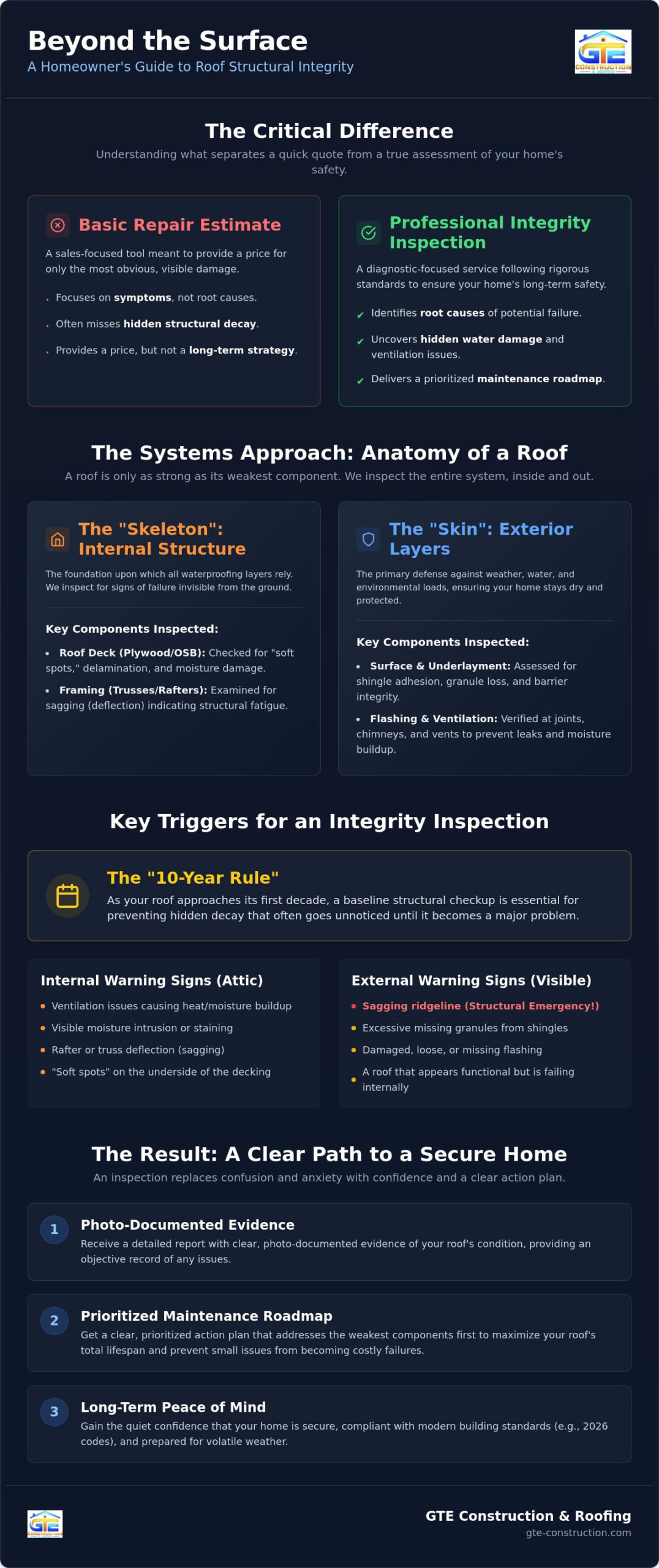
Many homeowners often confuse a basic free estimate with a professional integrity inspection. While an estimate is typically a sales-focused tool meant to provide a price for visible repairs, a professional inspection is a diagnostic-focused service. It follows the rigorous standards of a traditional building inspection, focusing on the root causes of potential failure rather than just the surface symptoms. We follow a clear philosophy: assessing the roof (Action) through professional standards and advanced diagnostic tools (Method) ensures the long-term safety and stability of your home (Result).
The Difference Between Cosmetic and Structural Damage
Understanding the distinction between cosmetic wear and structural failure is vital for any property owner. Missing granules on an asphalt shingle are often a sign of natural aging, but they don’t always signal an immediate crisis. Conversely, a sagging ridgeline indicates a structural integrity emergency that requires immediate attention. A roof can appear perfectly functional from the street while the underside of the deck is failing due to hidden rot or poor installation. The deck is vital because it maintains the home’s overall rigidity and provides the foundation for all other materials.
Why Integrity Inspections Are Essential in 2026
In 2026, the demand for these specialized services has grown as weather patterns become more volatile. Modern building codes have raised the bar for roof-to-wall connections and wind uplift resistance, making older homes more vulnerable by comparison. Choosing a preventive diagnostic service is a sound economic strategy. Whether you are consulting with roofing contractors Hackney or qualified professionals in your own region, it’s far better to identify a minor ventilation issue now than to face an emergency reactive repair during a storm. This proactive approach preserves your home’s value and provides the quiet confidence that your structure is prepared for whatever the season brings.
The Core Components of a Structural Roof Assessment
A professional structural roof assessment operates on a “Systems Approach,” which treats the roof as a unified assembly rather than a collection of independent parts. A roof is only as strong as its weakest component. For instance, poor attic ventilation acts as a thermal regulator; without it, heat builds up in the summer and moisture accumulates in the winter, both of which destroy the chemical integrity of asphalt shingles from the inside out. When we perform roof integrity inspection services, we look beyond the surface to ensure that flashing is acting as the primary defense for vulnerable structural joints like chimneys and dormers. We also evaluate the critical relationship between roof pitch and material selection to confirm that the system sheds water effectively. This evaluation often references applicable building codes and industry standards to ensure the current installation meets modern safety benchmarks.
The “Skeleton”: Inspecting the Roof Deck and Framing
The “skeleton” of your roof includes the deck and the framing. Inside the attic, we identify “soft spots” or delamination in the plywood or OSB decking that suggest internal moisture damage. We also look for truss or rafter deflection, which is a visible sagging that indicates structural fatigue. Identifying rafter deflection through a detailed interior attic survey prevents a localized failure from becoming a whole-house structural crisis. Our comprehensive roof integrity inspection services provide a clear picture of how these components interact. Roof deck integrity is the foundation upon which all waterproofing layers rely.
The “Skin”: Surface Materials and Underlayment
The “skin” consists of the surface materials and the underlayment. We assess the adhesion of shingles and the elasticity of underlayment membranes to ensure they haven’t become compromised by extreme heat or UV exposure. Underlayment serves as the secondary barrier; even if the shingles appear intact, a degraded membrane can allow water to seep into the wood. We pay close attention to valleys, where water volume is highest, and identify thermal cracking or wind-lift patterns that signal premature failure. Evaluating shingle adhesion via non-invasive testing ensures the system can withstand high-wind events without lifting.
The Drainage System: Gutters and Downspouts
A roof inspection is incomplete without a full gutter assessment. Clogged or improperly pitched gutters lead to “wicking,” where water is pulled back into the structural roof edge, rotting the fascia and the deck. Performing a full gutter assessment identifies these wicking issues before they compromise the perimeter of the building. A seamless gutter replacement is often the most effective solution for protecting the roof’s perimeter integrity. By ensuring water is moved away from the house efficiently, you protect the entire structure from the ground up.
If you’re concerned about the stability of your home, our team at GTE Construction & Roofing provides the detailed insights and professional reassurance you need to make informed decisions about your property.
When to Invest in a Professional Integrity Inspection
Timing plays a critical role in preserving the structural safety of your home. A roof approaching its tenth year of service sits at a significant crossroads. While materials may appear functional, a decade of thermal expansion and UV exposure often begins to degrade the chemical bonds of the shingles and the elasticity of the underlayment. Scheduling roof integrity inspection services at this ten-year milestone provides a vital baseline. This proactive assessment allows you to document the current state of the deck and framing, ensuring that minor wear doesn’t evolve into a structural crisis during the next decade of the home’s life. Understanding how long roofs typically last for your specific material type is an essential part of planning this milestone inspection effectively.
Extreme weather events serve as another primary trigger for a professional evaluation. High winds often create “wind-lift” patterns that break the adhesive seal of the shingles without blowing them off entirely. This damage is invisible from the ground, yet it leaves the structure vulnerable to water intrusion during the next rain. “No visible leaks” doesn’t mean “no structural damage.” Identifying these broken seals through a hands-on physical survey ensures that your moisture barrier remains intact before the next hurricane season or heavy snow load arrives. This methodical approach provides the quiet confidence that your roof is prepared for seasonal transitions. Similarly, after a severe storm, understanding the full scope of hail damage roof repair and professional restoration options is essential, as hail larger than one inch can cause structural compromises that remain completely invisible from the driveway.
In the real estate market, a comprehensive integrity report serves as a powerful negotiation tool. Whether you’re a buyer seeking peace of mind or a seller looking to justify a premium listing price, a documented structural health assessment adds transparency to the transaction. It moves the conversation beyond aesthetics and focuses on the actual longevity of the building envelope.
The Hidden Signs of Compromised Integrity
Your home often provides subtle warnings before a total failure occurs. An unexplained increase in monthly energy bills or rising indoor humidity levels can signal that attic ventilation has failed or that the insulation is damp from a slow, structural seep. Externally, look for subtle dipping in the roofline or “popping” nails that have backed out of the deck. Excessive sediment in your gutters, known as the “Granule Warning,” is a clear indicator that the protective surface of your shingles has thinned, leaving the underlying asphalt vulnerable to rapid decay.
The Professional Advantage Over DIY Observation
Relying on DIY observation is a significant risk to both your safety and your property. Professional inspectors use specialized safety equipment and training to access steep pitches that are dangerous for a typical homeowner. While drone photography has become a popular supplement, it cannot replace a physical, hands-on inspection. A drone can’t feel for “soft spots” in the decking or check the tension of a flashing seal. As licensed general contractors, we provide a holistic view of the entire building envelope, identifying how a roofing issue might be impacting your home’s overall structural rigidity.
A Step-by-Step Breakdown of the Professional Inspection Process
A methodical sequence is the hallmark of professional roof integrity inspection services. Instead of jumping straight to the shingles, a disciplined inspector follows a logical progression from the inside out. This ensures that the structural foundation is sound before evaluating the aesthetic or waterproofing layers. By following this Action-Method-Result approach, we provide a transparent view of your home’s health, ensuring no detail is overlooked during the assessment.
Phase 1: The Attic-First Methodology
Starting inside is the only way to identify “slow leaks” that haven’t yet manifested as stains on your ceiling. We examine the underside of the roof deck for mold, mildew, or dark staining that suggests recurring moisture intrusion. We also verify that insulation levels aren’t obstructing intake vents. Proper airflow is non-negotiable for preserving the chemical life of your materials and preventing the deck from warping over time.
Phase 2: The Exterior Perimeter Assessment
Once the interior is verified, we move to the perimeter walk. This involves a close inspection of the eaves, soffits, and fascia. We look for signs of rot or insect damage that often start at the roof’s edge. By evaluating the gutters and downspouts, we ensure the drainage system is effectively moving water away from the foundation. This step is vital because perimeter failure often leads to expensive structural repairs if left unaddressed.
Phase 3: The Technical Roof Surface Analysis
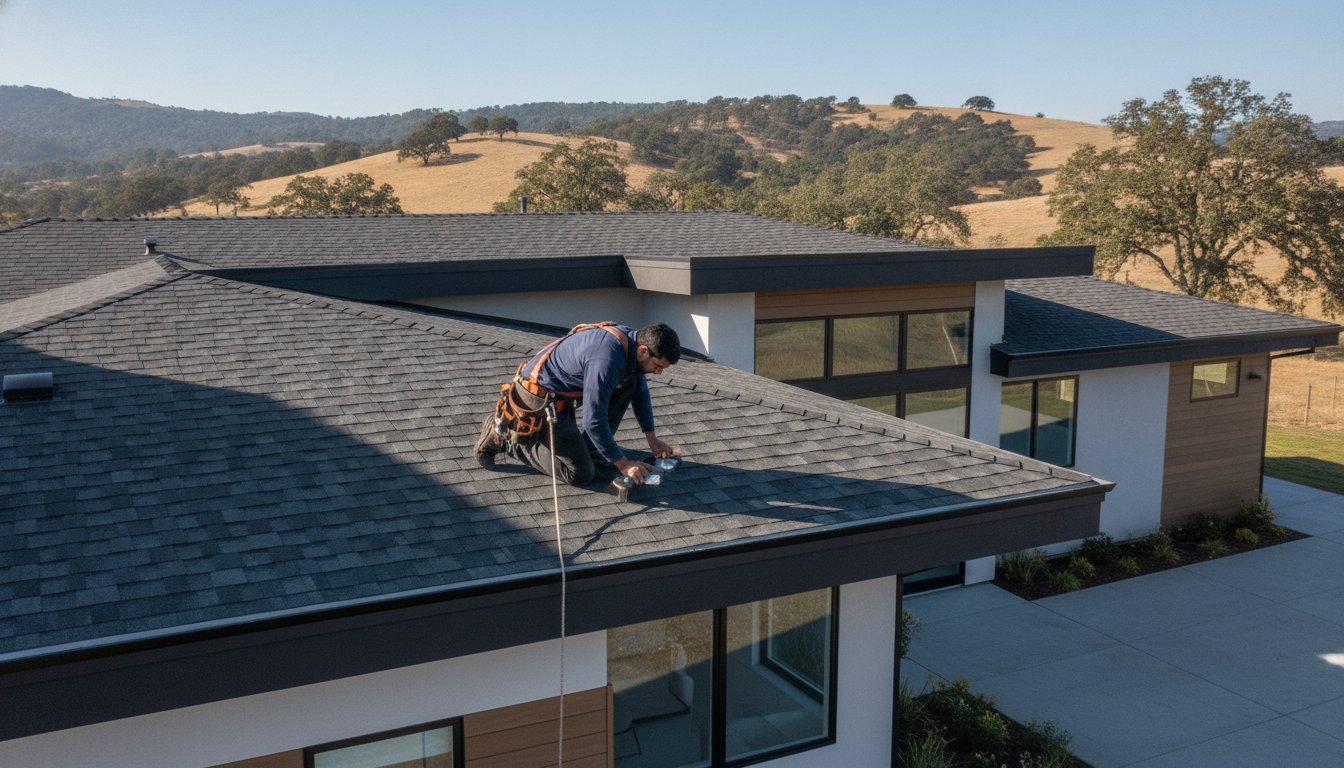
The rooftop evaluation is where we perform a hands-on technical analysis of the “skin” of your home. We pay special attention to chimney crickets and skylight seals, which are notorious for structural failure. In high-wind zones, we test the “pull-strength” of shingles to ensure the adhesive bond is still active and capable of resisting uplift. Every plumbing vent and exhaust fan is checked to ensure the boots are pliable and correctly sealed against the surface to prevent water from tracking down the pipes.
The Final Report: Understanding Your Options
The process concludes with a comprehensive, photo-documented report. Reading this report requires understanding the difference between Critical findings, which need immediate attention, and Advisory findings, which are part of your long-term maintenance roadmap. This documentation helps you transition into precision roof repair services for targeted fixes. It also serves as a financial planning tool, allowing you to budget for a new roof installation years before it becomes an emergency. If you’re ready for a clear, honest assessment of your home’s safety, the team at GTE Construction & Roofing is here to provide the expert guidance you deserve.
Preserving Your Home’s Value with GTE Construction & Roofing
GTE Construction & Roofing occupies a unique position in the industry as a licensed general contractor. While many firms focus exclusively on surface-level repairs, we approach every project with a holistic understanding of how a roof functions as a critical structural component. Our team doesn’t just look for leaks; we evaluate the load-bearing capacity and the health of the entire building envelope. This comprehensive perspective ensures that our roof integrity inspection services provide more than just a temporary fix. We offer a foundation of reliability that protects your most significant investment for decades to come.
Our commitment to “quiet confidence” means you’ll never face high-pressure sales tactics or aggressive marketing. We believe that true professional reassurance comes from competence and transparency. We provide honest assessments based on technical data and photographic evidence, allowing you to make informed decisions without the stress of an immediate sales pitch. This grounded, supportive approach aims to alleviate the natural anxiety associated with home maintenance. We value the long-term relationship with our clients as much as the technical execution of the work itself.
The GTE Difference: Craftsmanship and Precision
We apply an Action-Method-Result philosophy to every structural assessment we perform. By meticulously evaluating the roof’s internal and external health (Action) through standards developed for high-end residential construction and design (Method), we deliver a property that is both safe and durable (Result). We treat every roof as a vital element of the home’s overall structural integrity, utilizing only high-quality materials and disciplined methodologies. This dedication to precision ensures that your home remains a protective sanctuary for your family, regardless of the environmental challenges it faces.
Next Steps: Securing Your Home’s Future
Securing the future of your property begins with a clear understanding of its current condition. Scheduling a comprehensive integrity assessment is a straightforward process designed around your convenience. Beyond the initial report, GTE provides long-term support to help you manage your maintenance roadmap effectively. We’re here to serve as your protective guide, ensuring the aesthetic and structural integrity of your home remains uncompromised through every season. Schedule your professional roof integrity inspection with GTE Construction & Roofing today.
Taking the Next Step Toward Lasting Stability
Your home’s safety depends on more than just the shingles you see from the curb. It relies on a synchronized system where the framing, deck, and ventilation work together to withstand the elements. By shifting your focus from simple leak repairs to comprehensive structural health, you prevent minor decay from becoming a catastrophic failure. Professional roof integrity inspection services offer the diagnostic clarity needed to manage your property with confidence, replacing guesswork with a prioritized roadmap for maintenance or replacement.
As a Licensed General Contractor with deep expertise in both structural construction and roofing, GTE Construction & Roofing provides a holistic perspective that typical repair companies often miss. We deliver detailed, photo-documented integrity reports that give you a transparent view of your home’s bones. Don’t wait for the next storm to test your roof’s limits. Contact GTE Construction & Roofing for a Professional Integrity Assessment and gain the peace of mind that comes from knowing your structure is truly sound. We look forward to helping you protect your most valued investment for years to come.
Frequently Asked Questions
What is the difference between a roof estimate and a roof integrity inspection?
A roof estimate is a price quote focused on the cost of visible repairs or replacement, while roof integrity inspection services provide a diagnostic report on the structural health of the entire system. While an estimate focuses on labor and materials, an integrity inspection evaluates the framing, decking, and internal ventilation to identify the root cause of potential failures. This deeper analysis ensures you aren’t just patching a symptom but protecting the home’s skeleton.
How long does a professional roof integrity inspection typically take?
A professional inspection typically requires one to three hours to complete, depending on the size and complexity of your property. This timeframe allows the inspector to conduct a methodical interior attic survey before moving to the exterior perimeter and rooftop evaluation. Taking this time ensures a disciplined assessment of every component, from the structural trusses to the smallest flashing seals, providing a thorough understanding of the building’s condition.
Should I be present during the roof inspection process?
You don’t need to be present for the entire process, but we recommend being available for a brief walkthrough at the conclusion. This allows the professional to explain critical findings in real time and point out specific areas of concern that will appear in the final photo-documented report. Having this direct conversation helps clarify the distinction between urgent structural repairs and advisory maintenance items, giving you immediate peace of mind.
Can a roof inspection help with my homeowners insurance claim?
Yes, a professional integrity report serves as objective evidence that can support your homeowners insurance claim. By providing clear photographic documentation of structural damage rather than just cosmetic wear, you give your adjuster the technical data needed to evaluate the claim accurately. This professional record often streamlines the process, as it clearly identifies how storm events have compromised the roof’s moisture barrier and structural safety.
How often should I have my roof’s structural integrity checked?
We recommend scheduling a structural check every two to three years for most residential properties. However, roofs approaching the ten-year milestone or those recently subjected to extreme weather patterns should be inspected more frequently to catch hidden wind-lift or thermal cracking. Regular roof integrity inspection services act as a preventive diagnostic tool, ensuring your home remains compliant with modern building codes and avoiding the high costs of emergency reactive repairs.
What are the most common structural issues found during a roof inspection?
The most common issues include rafter deflection, plywood deck delamination, and compromised attic ventilation. Rafter deflection, or sagging, often indicates that the framing has reached its load-bearing limit or has suffered from long-term moisture exposure. Delamination occurs when internal humidity causes the layers of the roof deck to separate, which weakens the foundation and makes the entire system vulnerable to collapse during high-wind events.
Will a roof inspection identify issues with my gutters and drainage?
Yes, a full assessment of the gutters and downspouts is a vital component of a professional integrity survey. We look for improper pitch, clogs, and signs of “wicking,” where water is pulled back into the fascia and roof edge. Since drainage failures are a primary cause of perimeter rot and foundation issues, ensuring your gutters effectively move water away from the structure is essential for long-term home preservation.
What happens if the inspection reveals major structural damage?
If major structural damage is identified, we provide a prioritized roadmap that categorizes repairs by urgency. As licensed general contractors, we can explain the transition from the diagnostic phase to targeted structural repairs or a full system replacement if the damage exceeds local building code thresholds. Our goal is to provide a comprehensive solution that restores your home’s safety and aesthetic integrity without using high-pressure sales tactics.