
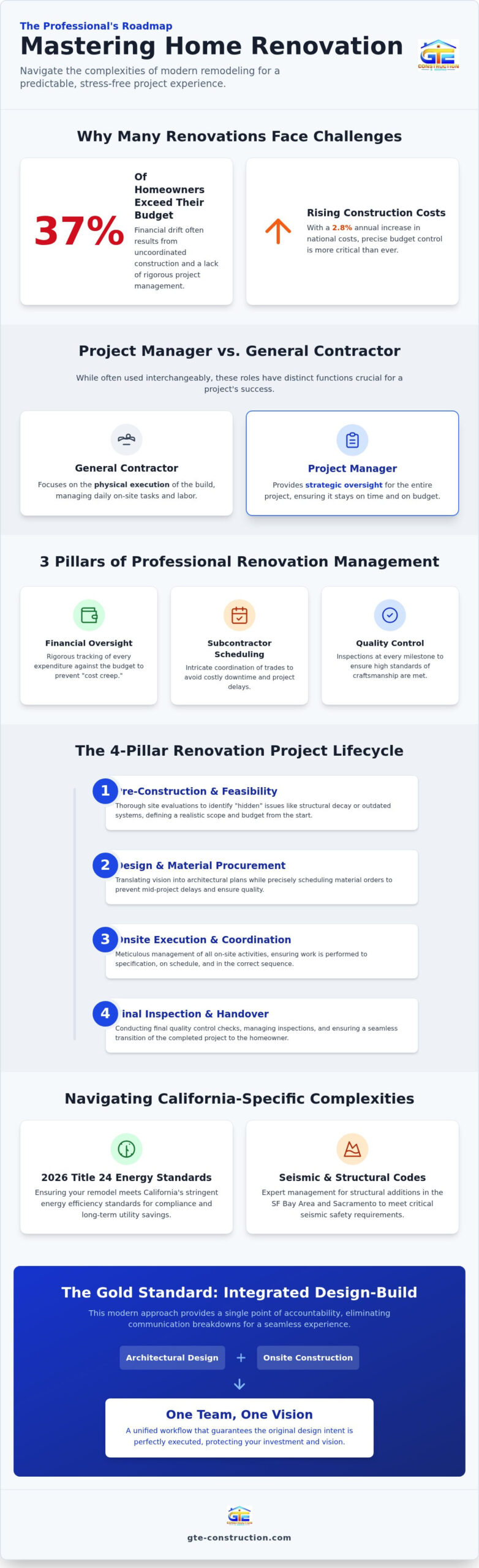
In 2025, 37% of homeowners who established a firm budget for their remodel ultimately exceeded it, a statistic that highlights the inherent risks of uncoordinated construction. This financial drift often stems from a lack of rigorous home renovation project management, where small oversights in scheduling or material procurement compound into significant delays. It’s natural to feel a sense of hesitation when faced with the dual challenges of contractor reliability and the stringent 2026 California Title 24 energy efficiency standards. You likely recognize the stress of balancing high expectations with the reality of rising national construction costs, which have grown by 2.8% over the past year.
We’ve developed this guide to replace that uncertainty with a disciplined, professional roadmap for your next project. You’ll gain the specific insights required to master the complexities of modern remodeling, from initial design through final inspection. We provide a structured roadmap by aligning architectural planning with meticulous onsite execution, ensuring your renovation remains both beautiful and compliant with local codes. We will examine the methodology behind successful renovations in the SF Bay Area and Sacramento, providing you with the transparency and technical knowledge needed for a stress-free experience that protects the long-term integrity of your property.
Key Takeaways
- Understand how professional home renovation project management differs from standard contracting to ensure every phase of your remodel is meticulously coordinated from start to finish.
- Learn the four essential pillars of the renovation lifecycle, beginning with feasibility studies and extending through precise material procurement to prevent mid-project delays.
- Evaluate the true cost of DIY management by uncovering hidden expenses related to scheduling errors and the lack of access to established subcontractor networks.
- Navigate the complexities of California-specific building codes, including 2026 Title 24 energy standards and seismic requirements for structural additions in the Bay Area and Sacramento.
- Discover why the integrated design-build model is the gold standard for modern remodeling, providing a single point of accountability that eliminates communication breakdowns.
What is Home Renovation Project Management?
At its core, home renovation project management is the disciplined application of Project management principles to the specific constraints of a residential remodel. It involves the meticulous stewardship of your home’s transformation, ensuring that every design choice, material order, and labor hour aligns with your original vision. While many homeowners use the terms “general contractor” and “project manager” interchangeably, they represent distinct functions. A general contractor focuses on the physical execution of the build, whereas a project manager provides the strategic oversight required to keep the entire lifecycle on track. This distinction is vital because a project can be built well but still fail if it exceeds the budget or misses critical deadlines.
For complex structural home additions or new builds, this level of professional management becomes a necessity rather than a luxury. You aren’t merely updating a surface; you’re modifying the structural integrity of your primary asset. Expert management ensures that architectural plans translate accurately into the physical structure while maintaining compliance with local codes. Beyond the technical requirements, professional oversight offers significant emotional benefits. It actively reduces decision fatigue by filtering complex choices and providing clear, actionable data. This grounded approach alleviates the anxiety often associated with construction, replacing it with the peace of mind that a seasoned expert is guarding your interests.
The Core Responsibilities of a Renovation Manager
Effective home renovation project management relies on three primary pillars of responsibility. First, we provide rigorous financial oversight. We track every expenditure against the initial budget, which prevents the “cost creep” that affects 37% of unmanaged projects. Second, we manage the intricate choreography of subcontractor scheduling. By coordinating plumbers, electricians, and framers in a logical sequence, we avoid the costly downtime that typically delays a remodel. Finally, we implement quality control inspections at every critical milestone. This methodical verification ensures that the craftsmanship meets high standards before the project moves to the next phase, protecting the longevity of your investment.
Cosmetic Updates vs. Structural Remodeling Management
The management approach varies significantly depending on the project’s scope. A cosmetic update, such as a kitchen cabinet swap or a minor bathroom refresh, focuses primarily on aesthetic coordination and material lead times. These projects are linear and relatively predictable. In contrast, structural remodeling or new home construction requires a far more complex management framework. These projects involve foundation work, seismic retrofitting, and the integration of new systems into existing structures. Because the stakes are higher, these renovations demand a protective guide who understands the architectural nuances of the SF Bay Area and Sacramento, ensuring the final result is both safe and aesthetically seamless.
The Four Pillars of the Renovation Project Lifecycle
A successful remodel doesn’t happen by accident; it’s the result of a methodical lifecycle that balances creative vision with technical constraints. Effective home renovation project management breaks the process into four distinct pillars, each designed to mitigate risk and ensure a seamless transition from one stage to the next. By following this structured progression, we protect your investment and maintain the aesthetic integrity of your property throughout the build. This organized approach transforms a chaotic list of tasks into a predictable, manageable journey.
Pre-Construction: Setting the Foundation
The first pillar focuses on feasibility and scope definition. Before any physical work begins, we conduct thorough site evaluations to identify potential “hidden” issues like structural decay or outdated electrical systems that could derail a budget. Engaging a whole house renovation contractor during these early stages allows for a more accurate assessment of what’s possible within your existing footprint. This is the time to establish a realistic 2026 budget, specifically accounting for the 2.8% year-over-year increase in national construction costs. We always recommend a dedicated contingency fund to handle the unexpected nuances of older California homes. For those new to the process, consulting a Beginner’s guide to managing a remodel can provide helpful context for creating an initial scope of work.
Procurement and Logistics Management
Once the design is finalized, the focus shifts to the second pillar: material procurement and logistics. In 2026, global supply chains still require proactive management of lead times, especially for custom kitchen and bathroom fixtures. We coordinate every delivery to ensure materials arrive exactly when needed. This prevents site congestion and protects delicate finishes from damage during the early phases of construction. This methodical approach ensures all components meet California’s rigorous quality and safety standards, including Title 24 energy efficiency requirements. By handling these logistics, we alleviate the decision fatigue that often overwhelms homeowners during the selection process.
The third pillar is the active construction phase, where the project manager serves as the primary point of contact for all site activity. This stage requires constant vigilance to ensure subcontractor adherence to the timeline and quality standards. We manage the daily choreography of trades to keep the project moving forward without compromising on craftsmanship. Finally, the fourth pillar involves post-construction activities, including the final punch list and mandatory inspections. We don’t consider a project complete until every detail meets our high standards and all municipal permits are officially closed. If you’re considering a significant update to your property, a detailed feasibility study is the best way to ensure a predictable and successful outcome.
Professional PM vs. DIY: Evaluating the Real Cost
The allure of managing your own remodel often centers on perceived savings, with some online communities suggesting a homeowner can reduce expenses by 20% through direct oversight. However, these estimates rarely account for the “hidden costs” that quickly erode those gains. DIY home renovation project management frequently leads to expensive errors, missed vendor markups, and an immense drain on your personal time. Professional managers don’t just oversee work; they leverage established subcontractor networks to secure priority scheduling and preferred pricing that isn’t available to the general public. When a tradesperson knows they’re working for a repeat professional partner, they’re often more motivated to maintain high standards and stay on schedule.
When you manage a project yourself, you assume the full burden of risk. This includes verifying that every tradesperson carries active workers’ compensation and liability insurance. A professional manager acts as a protective shield, ensuring that all insurance and warranty protections are in place before a single tool is lifted. While the management fee is a common point of hesitation, it’s helpful to view it as a strategic investment. By preventing the costly rework and budget overruns that plague over a third of unmanaged projects, a professional often pays for themselves through sheer efficiency and risk mitigation. You’re not just paying for a schedule; you’re paying for the technical competence that prevents a minor error from becoming a structural disaster.
The Value of Quality Craftsmanship
A dedicated manager is your advocate on the job site, ensuring every detail aligns with the standards of quality craftsmanship in home remodeling. There’s a profound difference between a finish that looks “good enough” and one that is professional-grade. Meticulous oversight during the structural phases prevents systemic failures that lead to long-term property damage. Understanding the technical markers of quality craftsmanship home remodeling — from precision framing to expert finish work — helps you evaluate whether your contractor is delivering true artisan-level skill or merely a polished surface. For instance, ensuring proper flashing and drainage during a roof installation is the most effective way to avoid the need for emergency roof leak repairs later. This focus on durability ensures your home remains a safe and beautiful sanctuary for years to come.
Time Management and Critical Path Analysis
Construction follows a rigid, logical sequence where the timing of one trade dictates the success of the next. You can’t hang drywall until the plumbing and electrical inspections are signed off; you can’t install flooring until the heavy cabinetry is in place. Professional managers use critical path analysis to identify which tasks are essential to the timeline. A single delay in material delivery or a subcontractor’s arrival can cascade through the entire schedule, pushing your completion date back by weeks. By maintaining a professional-led timeline, we provide the steady rhythm required to keep the project moving efficiently toward the finish line, alleviating the stress of a renovation that feels like it will never end.
Navigating California-Specific Project Management Challenges
California’s regulatory environment presents a unique set of challenges that can easily overwhelm an unassisted homeowner. Effective home renovation project management in regions like San Francisco or Sacramento requires more than just a schedule; it demands a deep understanding of the 2025 California Building Standards Code (Title 24), which became mandatory on January 1, 2026. This update introduces rigorous electrification pathways and energy efficiency requirements that dictate everything from insulation R-values to HVAC specifications. For projects in Alameda and Contra Costa Counties, managing these technical details is essential to passing inspections and ensuring the long-term safety of your property.
Seismic retrofitting is another critical component for any structural addition in our region. Because we live in a high-activity seismic zone, local building departments require specific engineering to ensure new construction integrates safely with the existing foundation. A professional manager coordinates between structural engineers and local inspectors to verify that these reinforcements are executed with precision. This methodical oversight prevents the frustration of failed inspections and costly mid-project corrections.
Permitting and Regulatory Oversight
The bureaucratic landscape of the Bay Area is notoriously complex. For a $150,000 kitchen remodel in cities like Los Gatos or Cupertino, permit fees typically range from $4,500 to $8,000. These costs don’t include the necessary architectural and engineering documents. A professional manager handles the entire submittal process on your behalf, navigating the varying timelines of different jurisdictions. This proactive stance avoids the pitfalls of unpermitted work, which can lead to significant legal and financial liabilities during a future home resale. We ensure every phase is documented and approved, providing you with a clean title and peace of mind.
2026 Technology in Construction Management
Modern management relies on sophisticated digital tools to maintain transparency. We utilize dedicated client portals that provide real-time photo updates and daily logs, allowing you to monitor progress from your phone. This digital document management system stores every change order, warranty, and permit in a central, accessible location. During the custom home building process, we also leverage 3D modeling to help you visualize structural changes before they’re built. This technology reduces errors and ensures the final result matches your aesthetic vision perfectly. If you’re ready to begin your project with a team that understands these local nuances, contact our licensed experts today to discuss your vision.
The GTE Advantage: Integrated Design-Build Management
The traditional construction model often creates a divide between the design phase and the physical build, a gap where many projects lose their momentum and budget control. By selecting a design-build contractor, you unify these essential services under a single point of accountability. This integrated approach is the gold standard for home renovation project management because it eliminates the “blame game” that frequently occurs between architects and builders. When one team is responsible for both the creative vision and the technical execution, communication remains seamless, and the project’s integrity is protected from start to finish.
At GTE Construction & Roofing, we approach every project with quiet confidence and professional reassurance. We don’t rely on high-pressure tactics; instead, we build trust through a commitment to high standards and specialized skill. Our deep roots in the SF Bay Area and Sacramento allow us to serve as a protective guide for your property. We understand the regional architectural nuances and environmental challenges, ensuring that your renovation doesn’t just look beautiful today but maintains its value and safety for decades. This local expertise is vital when navigating the specific seismic and energy requirements unique to California.
Methodical Execution for Peace of Mind
We utilize an “Action-Method-Result” structure to provide total transparency throughout the construction lifecycle. For instance, we secure your home’s structural integrity by implementing rigorous site inspections, resulting in a build that exceeds standard safety expectations. This level of discipline is evident in our precision roof repair services, where we diagnose the root cause of moisture intrusion rather than offering a temporary fix. Our punctual and detail-oriented teams take pride in their workmanship, treating your home with the meticulous care it deserves.
Starting Your 2026 Renovation Journey
Every successful transformation begins with an initial consultation designed to set realistic expectations for the 2026 construction landscape. We take the time to explain the “why” behind our methodology, moving from your conceptual vision to a disciplined, managed project plan. This steady, logical progression helps build a sense of security, knowing that no corners will be cut during the execution. If you’re ready to partner with a reliable local expert who values clarity and efficiency, contact GTE Construction for a professional project evaluation. We’re here to ensure your renovation is a source of pride rather than a source of stress.
Building Your Legacy with Confidence
Transitioning from a vision to a finished reality requires a disciplined approach that respects both your time and your investment. We’ve explored how professional home renovation project management acts as a safeguard against the complexities of modern construction, from 2026 Title 24 compliance to the meticulous coordination of high-end trades. By prioritizing a methodical lifecycle and leveraging the integrated design-build model, you ensure that your property remains a secure and valuable asset for years to come. This structured path replaces the typical stress of remodeling with a sense of steady, predictable progress.
As a Licensed General Contractor with deep expertise in San Francisco and Sacramento building codes, GTE Construction & Roofing is prepared to guide you through every phase of your transformation. We specialize in high-end kitchen and bathroom remodeling, bringing a level of craftsmanship and precision that typical generalists often overlook. You deserve a partner who values your peace of mind as much as the technical execution of the project. Partner with GTE Construction for your 2026 home renovation to ensure your project is handled with the care it deserves. We look forward to helping you create a space that reflects your standards and enhances your daily life.
Frequently Asked Questions
How much does a home renovation project manager typically cost in 2026?
Project management fees are generally structured as a percentage of the total construction cost, typically ranging from 10% to 20% for professional oversight. This investment covers the complex logistics of coordinating multiple trades, verifying material quality, and navigating the 2026 California building codes. By professionalizing the management of your remodel, you often offset these costs by avoiding the expensive rework and scheduling delays that plague unmanaged projects.
Do I really need a project manager for a small bathroom remodel?
Professional oversight is highly recommended for any project involving specialized trades like plumbing, electrical, or structural waterproofing. Even a compact bathroom requires precise sequencing to ensure that the moisture barriers and fixtures meet modern durability standards. A manager ensures that these technical details are executed correctly the first time, protecting your home from the long-term risks of water damage or code violations.
What is the difference between a general contractor and a project manager?
A general contractor is primarily responsible for the physical labor and onsite execution, whereas a project manager provides strategic administrative and financial oversight. In our integrated design-build model, we combine these functions to provide a single point of accountability. This approach ensures that the high-level design goals are never lost during the daily realities of the construction process.
How do I manage a renovation while still living in the house?
Successful live-in renovations require a methodical phasing plan that prioritizes your safety and comfort. We establish strict dust mitigation protocols and designated work zones to minimize the impact on your daily routine. Clear communication regarding daily start times and utility interruptions is essential for maintaining a sense of order while the transformation of your space progresses.
What are the most common project management mistakes in home remodeling?
The most frequent errors include failing to account for long material lead times and neglecting to establish a realistic contingency fund for older properties. Many homeowners also struggle with decision fatigue, which leads to mid-project changes that disrupt the critical path. Effective home renovation project management avoids these pitfalls through rigorous pre-construction planning and transparent budget tracking.
How long does a typical kitchen renovation project management cycle take?
A comprehensive kitchen transformation typically spans 10 to 16 weeks from the start of demolition to the final inspection. This timeline accounts for the installation of custom cabinetry, stone surfaces, and high-efficiency appliances that meet current Title 24 standards. We provide a detailed schedule at the outset to ensure you understand every milestone of the construction lifecycle.
What happens if we encounter structural issues during the renovation?
If a hidden structural defect is discovered, we immediately conduct a technical assessment to determine the safest and most efficient path forward. We coordinate with structural engineers to develop a remediation plan that complies with local seismic requirements. This proactive approach ensures the long-term integrity of your property is never compromised by unforeseen existing conditions.
How does GTE Construction handle change orders and budget adjustments?
We utilize a disciplined digital document management system to process every change order with total transparency. You receive a detailed explanation of the methodology and the resulting cost adjustment for your approval before any new work begins. This structured process prevents the “budget creep” that affects 37% of unmanaged renovations, keeping your project’s finances predictable and secure.







25 Responses