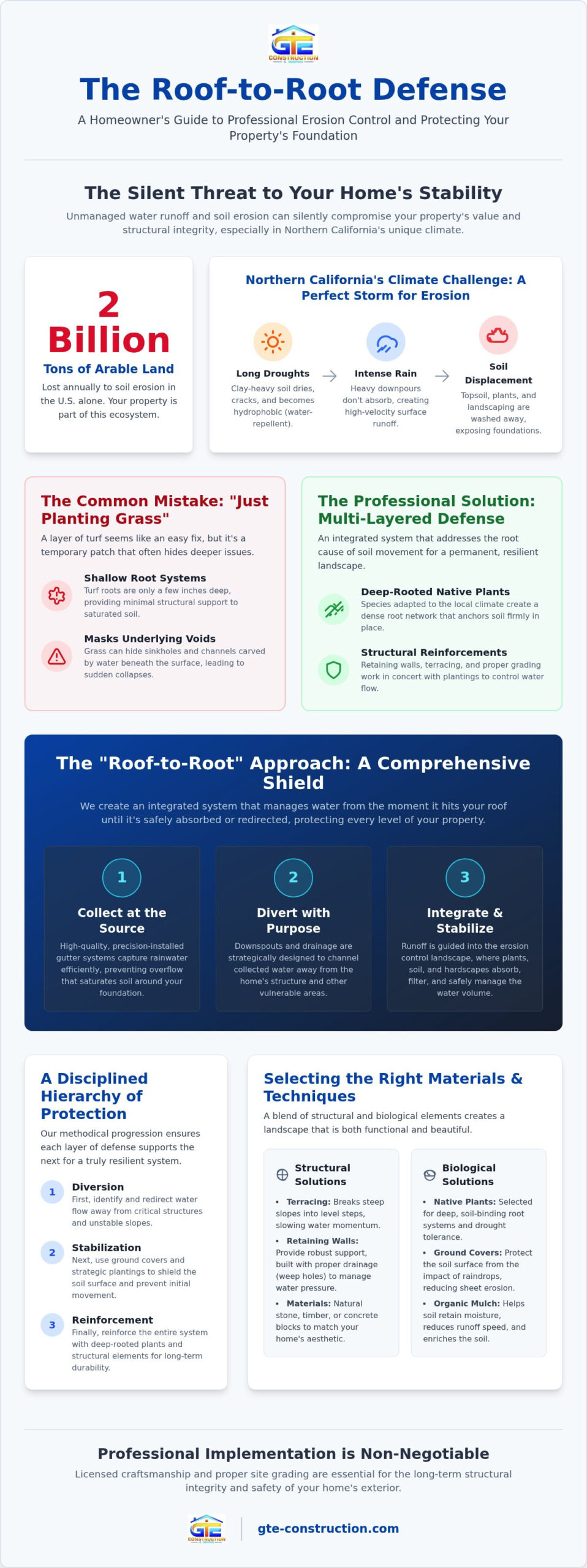
Imagine waking up after a night of heavy rain to find your meticulously manicured garden beds sliding across the driveway and your home’s foundation footings exposed to the elements. This isn’t just a messy cleanup; it’s a clear signal that your property’s structural defense is under threat. Nearly two billion tons of arable land are lost annually to soil erosion in the United States, and your private parcel is vulnerable to these same environmental forces. Implementing professional erosion control landscaping is the most effective way to halt this degradation before it compromises your home’s long-term value.
We understand the frustration of watching expensive plants and topsoil wash away during our region’s intense atmospheric rivers. You deserve the peace of mind that comes with a stable, dry property that stands the test of time. This article explains how to secure your investment using a professional “roof-to-root” approach to water management. We will preview how integrating precision gutter systems with strategic landscape design creates a comprehensive shield for your home. By the end, you’ll understand how to achieve a landscape that remains beautiful and functional, regardless of the weather.
Key Takeaways
- Establish a professional hierarchy of protection by implementing diversion and reinforcement strategies to secure unstable soil on your property.
- Understand how Northern California’s distinct seasonal cycles affect soil integrity and why selecting deep-rooted native plants is a vital step for lasting results.
- Master the “roof-to-root” approach by integrating high-quality gutter systems with erosion control landscaping to manage water volume effectively at every level.
- Identify the structural materials and organic ground covers that shield the soil surface from impact while enhancing your home’s aesthetic appeal.
- Learn why professional site grading and licensed craftsmanship are essential for maintaining the long-term structural integrity of your home’s exterior.
Understanding Erosion Control Landscaping for Property Protection
Erosion control landscaping is a specialized discipline that integrates biological and structural elements to stabilize soil and manage water flow. For many homeowners, it’s the difference between a secure property and a structural liability. Effective management involves more than just aesthetics; it’s a protective measure that preserves the ground beneath your home’s foundation. By deploying strategic erosion control methods, we can redirect high-velocity runoff and anchor loose topsoil, ensuring that your property remains intact through the most severe weather events.
In regions like Sacramento and Alameda, the primary challenge is the extreme shift between seasons. Long periods of drought are frequently followed by intense atmospheric rivers, creating a perfect storm for soil displacement. When soil isn’t properly managed, uncontrolled runoff and steep gradients can lead to significant land loss. This isn’t just about losing mulch or plants. It’s about maintaining the structural integrity of your home, as shifting soil can eventually lead to foundation cracks and settling issues.
The Science of Soil Displacement in Northern California
The San Francisco Bay Area is known for its clay-heavy soils, which behave like sponges that expand when wet and shrink when dry. During our long summer droughts, the soil surface can become hydrophobic, meaning it actually repels water instead of absorbing it. When the first heavy rains arrive, the water stays on the surface and gains speed, stripping away layers of earth. Sheet erosion is the uniform removal of soil in thin layers by the forces of raindrops and overland flow, which can silently degrade your property’s curb appeal and safety.
Why ‘Just Planting Grass’ Often Fails on Slopes
Many people believe that a simple layer of turfgrass will solve their drainage problems, but shallow-root systems rarely withstand high-velocity water. Turfgrass roots typically only reach a few inches deep, providing very little structural reinforcement against the weight of saturated soil. In fact, grass can often hide underlying soil voids and sinkholes that form as water carves out paths beneath the surface.
Professional erosion control landscaping utilizes a multi-layered approach, combining deep-rooted native species with structural reinforcements like retaining walls or terrace systems. This method ensures that water is slowed, filtered, and directed away from critical areas, providing a permanent solution rather than a temporary patch. By addressing the root cause of soil movement, we provide homeowners with a landscape that remains stable and resilient year after year.
Core Strategies for Stabilizing Slopes and Soil
A successful approach to erosion control landscaping follows a disciplined hierarchy: diversion, stabilization, and reinforcement. First, we identify how to divert water away from vulnerable areas. Next, we stabilize the surface to prevent initial soil movement. Finally, we reinforce the entire system with structural elements that provide long-term durability. This methodical progression ensures that each layer of protection supports the next, creating a resilient landscape that can withstand the unpredictable weather patterns of Northern California.
We utilize an Action-Method-Result framework to select the most effective stabilization techniques for your specific property. By analyzing the unique challenges of your land (Action) and applying precise engineering solutions like terracing or bio-engineering (Method), we achieve a property that is both structurally sound and aesthetically pleasing (Result). This transparency allows homeowners to understand exactly why a specific intervention is necessary for their home’s safety.
Terracing and Retaining Walls: Structural Solutions
Terracing is a sophisticated architectural solution that transforms a problematic slope into a series of functional, level planes. By breaking a steep incline into several shorter steps, we effectively interrupt the downward momentum of water and soil. This design prevents runoff from gaining the velocity needed to cause damage. We carefully select materials like natural stone, timber, or concrete blocks to complement the existing aesthetics of your home while providing the necessary strength. For those looking for inspiration on high-end outdoor transformations, United Poolscapes showcases how structural stability can enhance the overall beauty of a custom landscape.
The success of a retaining wall lies in the details that aren’t always visible. Proper backfilling with gravel and the strategic placement of weep holes are essential for managing hydrostatic pressure. Without these drainage features, water can trap itself behind the wall, leading to structural failure during heavy saturation. Working with a licensed general contractor ensures that these technical nuances are handled with precision, protecting your investment for years to come.
Ground Cover and Bio-Engineering Techniques
Bio-engineering offers a harmonious blend of natural materials and structural principles. Techniques such as live staking use dormant plant cuttings to create a living root matrix that anchors the soil. For areas with high-flow drainage, we often implement these strategies:
- Erosion control blankets: These biodegradable mats protect the soil surface while new vegetation takes root.
- Riprap: Large, angular stones are placed in channels to dissipate the energy of rushing water.
- Check dams: Small barriers in swales slow water velocity and allow sediment to settle.
Professional assessment is critical before starting any large-scale earth-moving project. Improper grading can inadvertently direct water toward your foundation or a neighbor’s property. A seasoned expert will evaluate your land’s topography to ensure every structural change enhances your home’s overall water management strategy.
Integrating Gutter Drainage with Landscape Erosion Control
Your home’s roof is effectively the largest water collection surface on your property. During a standard storm, thousands of gallons of water are funneled toward the eaves. If this volume isn’t managed with precision, it translates into a destructive force at ground level. This “roof-to-root” connection is a critical component of erosion control landscaping, and industry specialists like Sunny Roofing, LLC advocate for maintaining a high-performance roof as the first step in property protection. When water escapes the gutter system, it causes “impact erosion,” where the sheer force of falling water carves out the soil near your foundation and destroys your home’s structural defense.
Addressing these issues requires a unified strategy that looks beyond the garden beds. Investing in professional gutter repair services is a foundational step in any comprehensive erosion plan. We utilize an Action-Method-Result approach to gutter outflows: we identify where water concentrates (Action), install reinforced discharge points (Method), and ensure runoff is carried safely away from the home’s footprint (Result). This systematic approach prevents the localized scouring that often leads to foundation settling.
Managing High-Volume Runoff from the Roof
The choice of materials significantly impacts how well your home handles high-capacity deluges. When comparing aluminum vs vinyl gutters, aluminum often provides the durability needed for Northern California’s environmental shifts. Clogged systems are a primary culprit for “overflow erosion,” which can strip away expensive foundation-side plantings in a single afternoon. To maintain consistent flow during heavy storms, we recommend exploring various types of gutter guards that prevent debris from creating these destructive localized waterfalls.
French Drains and Dry Creek Beds
Once water leaves the downspout, it must be channeled to prevent soil saturation and subsurface instability. A French drain acts as a capture system, using a perforated pipe and gravel bed to move water away before it can destabilize the ground. For those seeking an aesthetic solution, dry creek beds provide a beautiful way to manage gutter discharge while preventing washouts. It’s wise to consider the cost of gutter repair as part of your broader landscape drainage investment. By coordinating these systems, you ensure that every drop of water is a managed resource rather than a threat to your property’s integrity.
Selecting the Right Materials: From Hardscapes to Native Plants
Choosing the correct materials for your property requires a delicate balance between aesthetic appeal and structural necessity. In Northern California, where clay and silt soils are common, the right components act as a physical shield against the elements. Effective erosion control landscaping isn’t just about covering the ground; it’s about creating a living, breathing system that manages water energy. We prioritize materials that offer long-term durability and complement the unique architectural nuances of the region.
Our approach follows an Action-Method-Result framework: we analyze your soil’s specific composition (Action), implement a multi-layered planting and hardscape strategy (Method), and deliver a property that is both fire-safe and erosion-resistant (Result). This thorough process ensures that every plant and stone serves a functional purpose in protecting your home’s foundation.
The Best California Native Plants for Soil Stability
Deep-rooted native California plants are the most reliable biological tools for soil stability. Unlike traditional turfgrass, these species have evolved to thrive in our specific dry-wet cycles. Ceanothus, also known as California Lilac, and Manzanita are excellent choices because their woody root systems penetrate deep into the earth, anchoring the soil against the weight of heavy saturation. For surface-level binding, we often recommend native bunchgrasses like Festuca californica, which create a dense network of fibrous roots that catch sediment and slow water velocity.
In cases where a large, bare slope needs immediate attention, hydroseeding is a highly effective professional method. This process involves spraying a specialized slurry of seed, mulch, and tackifiers over the area. It provides instant surface protection while the native seeds take root, preventing the “sheet erosion” mentioned earlier from gaining a foothold on your property.
Hardscape Materials and Permeability
Strategic hardscaping is a critical pillar of water management. Traditional concrete creates an impervious surface that increases runoff volume and speed, often overwhelming your drainage systems. In contrast, permeable pavers allow water to seep through the ground naturally, which reduces the burden on your gutters and prevents localized flooding. To ensure these structures last, we use high-quality geotextiles beneath gravel or stone to prevent materials from sinking into the soft clay over time. The interlocking benefit of specific stone shapes ensures that individual units remain stable under the pressure of moving water, preventing the shifting that often occurs with rounded river rocks.
When selecting these materials, we also prioritize fire-wise landscaping requirements. By choosing non-combustible hardscape materials and fire-resistant plants near the home, you can achieve a landscape that is both erosion-proof and wildfire-ready. If you’re looking for a partner to help you navigate these choices, our team provides expert landscape and design services tailored to the specific needs of Northern California homeowners.
Professional Implementation: Ensuring Long-Term Structural Stability
Executing a successful water management strategy requires more than just moving dirt or planting shrubs. It demands a high degree of technical precision and an understanding of how local topography interacts with seasonal weather patterns. At GTE Construction & Roofing, we approach erosion control landscaping as a specialized branch of residential construction. By integrating our expertise in roofing and gutter systems with advanced landscape design, we provide a unified defense that shields your home from the ground up.
A professional implementation follows a rigorous Action-Method-Result protocol. We first conduct a comprehensive site analysis to identify drainage vulnerabilities (Action). We then employ industrial-grade equipment and engineered materials to stabilize the terrain (Method). This meticulous process results in a property that remains secure, dry, and aesthetically consistent even during Northern California’s most intense storm cycles (Result). Relying on a licensed general contractor ensures that every structural modification complies with local building codes and industry standards.
The Role of Professional Grading and Site Assessment
Precision grading is the cornerstone of effective soil stabilization. While many DIY projects rely on “eyeballing” a slope, we utilize laser levels and detailed site maps to ensure water flows consistently away from your foundation. Improperly moved soil can lead to “unintended consequences,” such as creating new pooling areas against your home’s footings or inadvertently directing runoff toward a neighbor’s property. Professional grading accounts for the specific absorption rates of local clay soils, preventing the saturation that leads to subsurface instability. This level of accuracy provides the peace of mind that your land is working with the environment, not against it.
Planning Your Multi-Phase Exterior Renovation
We encourage homeowners to view erosion control as a fundamental component of their custom residential home design. A successful exterior renovation often works best when phased logically. We recommend starting with the “roof-to-root” hierarchy: ensure your roofing and gutters are in peak condition before finalizing the landscape. This prevents heavy construction from damaging new plantings or high-volume roof runoff from washing out freshly graded soil. Once the overhead water is managed, we can implement the permanent stabilization and reinforcement strategies discussed in previous sections. Homeowners planning broader interior upgrades alongside their exterior work may also find value in exploring open concept kitchen design ideas that respect the home’s structural foundation, ensuring that interior renovations and exterior stabilization efforts are coordinated for lasting results.
Maintaining these systems is equally vital for long-term success. A professional maintenance schedule includes clearing swales of debris, inspecting retaining wall weep holes, and monitoring new plant growth after the first few major rain events. If you have noticed soil washing onto your driveway or exposed roots on your property, the first step is scheduling a professional site evaluation. We can help you identify hidden vulnerabilities and develop a comprehensive plan to protect your home’s structural integrity for years to come.
Secure Your Property Against the Elements
Protecting your home requires more than just reactive fixes; it demands a proactive, integrated strategy. By adopting a “roof-to-root” approach, you ensure that every drop of water is managed from the moment it hits your shingles until it safely exits your property line. Professional erosion control landscaping provides the necessary stabilization for our region’s unique clay soils, combining structural grading with deep-rooted native vegetation to prevent costly foundation damage.
As a Licensed General Contractor serving San Francisco, Sacramento, and the East Bay, GTE Construction & Roofing brings specialized expertise in both roofing and landscape design to every project. We focus on high-quality craftsmanship and technical precision to ensure your exterior systems function as a single, durable shield. Protect your home’s foundation with a professional landscape and drainage evaluation from GTE Construction & Roofing. Investing in these systems today builds a resilient home that’ll stand firm for decades to come. We look forward to helping you achieve lasting peace of mind.
Frequently Asked Questions
What is the best ground cover for a steep slope in Northern California?
Native species with deep, woody root systems are the most effective choice for stabilizing Northern California slopes. Ceanothus and Manzanita provide excellent structural reinforcement because they thrive in local clay soils and anchor the earth deeply. For immediate surface binding, native bunchgrasses like Festuca californica create a dense fibrous network that catches sediment and slows water velocity during heavy rains.
How do I know if my erosion problem is caused by my gutters?
You can identify gutter-related erosion by looking for deep trenches or “scouring” directly beneath your roof’s drip line. If you see soil washing away primarily near downspout discharge points or find mud splashing onto your siding, your gutter system is likely failing to manage water volume. This localized displacement indicates that water is escaping the eaves rather than being channeled safely away from your foundation.
Do I need a permit for a retaining wall in Alameda or Contra Costa County?
Most municipalities in Alameda and Contra Costa County require a building permit for retaining walls that exceed three feet in height. Local building codes are very specific about structural engineering requirements to ensure the wall can withstand hydrostatic pressure. It’s essential to verify your specific city’s ordinances before beginning construction to ensure your erosion control landscaping project remains compliant and safe.
Can landscaping really stop a landslide?
Landscaping is highly effective at stopping surface-level soil displacement, but it cannot prevent deep-seated landslides. While a robust root matrix stabilizes the top layers of earth, massive slope failures often involve deep geological shifts that require advanced geotechnical engineering. Professional landscape strategies focus on preventing the saturation and runoff that often act as catalysts for more severe structural risks.
What is a French drain, and when do I need one?
A French drain is a subsurface drainage system consisting of a perforated pipe buried in a gravel-filled trench. You likely need one if you notice standing water in your yard or find that the soil near your foundation remains spongy long after a storm. This system captures ground-level saturation and redirects it to a reinforced discharge point, preventing moisture from destabilizing the ground beneath your home.
How much does professional erosion control landscaping cost?
The investment for professional services varies significantly based on your property’s topography and the complexity of the required structural solutions. Factors such as the degree of site grading, the installation of retaining walls, and the selection of mature native plants all influence the final scope. A professional site evaluation provides the most accurate assessment of the labor and materials needed to secure your specific landscape for the long term.
What are the first signs that my soil is eroding near my foundation?
Visible gaps between the soil and your home’s foundation or exposed concrete footings are primary indicators of active erosion. You may also notice fine silt accumulating on your driveway or small canyons forming in your garden beds after a rain event. Identifying these early warning signs allows for targeted intervention before soil loss compromises your home’s structural integrity or leads to foundation settling.
Are there drought-tolerant plants that also help with erosion?
Many California native species excel at both drought tolerance and soil stabilization. Plants like the Coffeeberry or various species of Sage develop extensive root networks that anchor the soil while requiring very little supplemental water once established. These plants are ideal for our local climate because they remain resilient during dry summers while providing a living shield against the impact of winter storms.




27 Responses